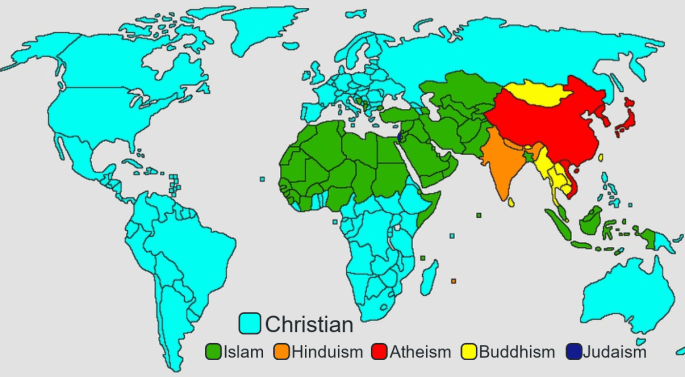
What Religion Are You?

When I say I’m an atheist, the very next question most people ask is: “Well, what were you raised? What were your parents?”

Human beings.

Somehow that answer isn’t good enough. They’re looking to place me in a spiritual box and lock me into a religion and all the stereotypes that go along with it.

All my life I’ve been told I’m a Jew — by my parents, by my relatives, by society at large, simply because my parents professed to be Jews. But if I don’t believe in god, or any supreme being, or even higher power; if entropy is what rules my universe, then am I still Jewish?

Jew’s believe in one god.

I believe in none.

Some would argue I am culturally Jewish, a product of my parentage. But it’s ludicrous I’m considered Jewish solely because my parents were (and technically just my mother need be, according to Jewish law). Let’s get one thing straight. Judaism is NOT a race. It is practiced globally, from members of our Supreme Court to jungle tribes in Africa that pray to one God with ancient Hebrew texts. The thread that holds them together is not racial, or even cultural, but spiritual — a belief system. There are no cultural similarities between the African tribes and our former or current Chief Justices. Take away the religious string and there’s really nothing left of their Judaism.

I adhere to no religion, don’t celebrate any religious holidays, and believe passing down to our children fantastical mythologies that promote intellectual laziness is dangerous at best. Growing up, my family celebrated the major Jewish holidays, though I never cared for the antiquated rituals and sexist roles we all played. Jewish parables were too often warped tales filled with praising their solipsistic god instead of people for their hard-earned achievements. I don’t like brisket, noodle koogle, or most deli foods. And as holidays go, the Fourth of July and Thanksgiving always meant the most to me culturally, and the food is far better.

If I’m culturally anything, it’s white, middle-class, American. Like most of us, I grew up with people of my socioeconomic status. I was raised in a relatively safe, suburban neighborhood — religiously, even racially diverse, but everyone made around the same amount of money. More fine grain, I’m culturally a native Californian. We have a whole other way of thinking out here than the rest of the world. Level of intelligence would be my third greatest cultural influence. I find I gravitate to thinkers — those who explore and question.

So how does this make me a Jew?

Liking bagels, or preferring salmon to ham, doesn’t define one culturally. Nor does espousing the virtues of education, or denouncing violence, or promoting empathy. These ideologies are widely held by most of our modern age. I’m not a Taoist because I believe in living a balanced life. And I’m not a Christian because I think Christ, or likely his myth, had a lot of charitable ideas.

What does it mean to say you are Jewish, or Christian, or Mormon, if you don’t embrace their belief system? If you were raised Christian and you didn’t believe in God, or Christ, would you still be considered a Christian? Hell, if you believed in God, but NOT Christ, could you still be a Christian?

What religion are you?

Most would respond with whatever religion we were raised. We practice the rituals our parents bestowed upon us. But the more important question is: What do you believe?

Think about it.

Have you let your parents define your spirituality? Beyond what you’ve been raised, have you considered what religious ideologies you actually believe in, if any? ‘Be kind. Work hard. Love your family and neighbors.’ These cultural beliefs began 200,000 years ago when we were still living in caves, and aren’t exclusive to any particular religion. They may have been adopted as Christian, or Jewish morality, but the truth is ‘Be kind’ stemmed from our need to be social. Humans are social creatures, and greedy, ungrateful, thoughtless behavior does not win friends, or attract lovers.

Omitting how you were raised, what do YOU actually believe in?

If you don’t believe the bible stories, Old or New Testament, are real — a recounting of historic events — then it’s likely you understand these books were written by literate MEN — the highest echelon of society at the time — to control the masses of illiterate layman with parables that instilled fear. You also likely know that these powerful men imposed rules and roles to maintain the social structure they created, and assigned the administration of this order to an almighty [jealous and vengeful (Nahum 1:2–8)] God whose authority could not (as an ethereal being), and must not be questioned. If you do not believe in this God, or that his adventures in these bibles are real, then you are likely an agnostic or an atheist.

ag·nos·tic (a la Google); noun

  1. a person who believes that nothing is known or can be known of the existence or nature of God or of anything beyond material phenomena; a person who claims neither faith nor disbelief in God.

a·the·ist (a la Google); noun

  1. a person who disbelieves or lacks belief in the existence of God or gods.

You don’t have to subscribe to a religion to be spiritual. You can feel connected to this earth and all that’s here without being a Buddhist. You can believe in charity without being a Christian. You can encourage education without being Jewish. You don’t have to pass on horrific tales to frighten children into adhering to rules handed down from men on high thousands of years ago. You can practice and teach values — choose to live a moral life: be kind, generous, honest, empathetic, loving, compassionate, without religion. Why would you choose to do so without a vengeful God threatening Hell if you’re ‘bad?’ You are advanced enough to understand each of us must continually contribute to humanity, and this planet we inhabit, for our race to survive, and thrive.

Atheism and Morality

An Atheist on Morality…

Einstein did not believe in God, as many [mistakenly] claim.

Albert Einstein said, “My position concerning God is that of an agnostic.” He clarified, “The word God is, for me, nothing more than the expression and product of human weaknesses, the Bible a collection of honorable, but still primitive legends. No interpretation no matter how subtle can (for me) change this.”

Atheists don’t believe in God either. Not any god/s. Ever. Unlike Agnostics, open to the possibility of a ‘higher power,’ or ‘collective, sentient being,’ Einstein believed in neither. Agnostic is politically correct, less threatening than Atheist, especially during Albert’s time, born a Jew, and existing on federal and university funding.

I am an Atheist. I do not recognize the Old or New Testament, and related works illuminating the adventures of a divine being as anything more than fiction — parables by some wise, some ignorant, but guaranteed partisan male scribes with an agenda to dominate and control others.

So, when I need money, [as an Atheist] why don’t I go rob someone? Or shoplift?

When I’m attracted to my neighbor’s husband, why don’t I hit on him, get intimate if he’s into it? 

When I get pissed off at the driver on their cellphone that just cut me off, why don’t I just shoot her?

Snatch & Run, illicit affairs, even murder these days, and the odds of getting caught for these crimes are somewhat nominal if done discreetly. Fear of being busted is not the main motivation that prevents me from committing these, and ‘lesser’ crimes, like lying, cheating, and behaviors that most would agree, religious or not, are moral infractions.

If I believe I answer to no higher power, where do I get my morality?

Einstein said, “We have to content ourselves with our imperfect knowledge and understanding and treat values and moral obligations as a purely human problem — the most important of all human problems.”

Without a priest, rabbi, or holy man telling me what to think and how to vote, and with no guidance from an omniscient god, or unbiased media outlet, I must consider my moral obligations

Why should I bother, and how do I know ‘right from wrong’ without a ‘divine doctrine’ to guide me?

If my parents had not gifted me life, and their parents before them…etc., I would not be here now, emersed in this experience of living. I am born owing Humanity and everything on this planet that supports our life here. We all are. All of us have a moral obligation to do our part to ensure the human race survives, and gift those to be the experience of being human.

Humans are social beings. It is mandatory we work together to survive and even thrive. We require a social structure — laws, and rules of conduct with mutually agreed-upon baselines we all must practice to partner. Breaking these rules annihilates our trust in each other, corrupting the very foundation on which relationships are built.

As an Atheist, why don’t I steal?

Do Not Steal is [generally] a mutually agreed-upon baseline. Contrary to religious rhetoric, it is not a biblical notion by some partisan scribe. Way before the written word, it proved to be a sensible rule to build trust.

I used to shoplift. My older sister showed me how when I was 7, and I stole from the local art supply store a few times until I got busted for pocketing Prismacolor pencils. The shop clerk called my mother instead of the cops. Riding home with my mom that afternoon, she explained to me that I was robbing her, my dad, and most everyone else, including myself because the store passed on the lost income from shoplifting by increasing the cost of their products. 

I created a rift with my mom, who was disappointed in me for stealing when she ‘taught me better than that.’ I created a rift with the art supply shop clerk who I saw often as a frequent customer of the store. And with my mom’s information, I understood I was serving no one shoplifting, perhaps especially myself.

Trust is the foundation of all relationships. It encourages communication, connection, and intimacy. Intimacy incentivizes reproduction. Having children ensures the human race continues to exist. (Most of us have heard the derisive term “Breeders,” referring to parents, but the absurdity of this view is lost on the idiots who use this word, as they could not utter it if they’d never been born.)

As an Atheist, why don’t I screw my neighbor’s husband?

I’ve been married for 27 years, and I have not and will never have an affair. Why? Thou shalt not commit adultery (Exodus 20:14) is not strictly biblical either. Ancient scribes adopted this notion as law from observing 200,000 years of human history.

If I have an affair with my neighbor’s husband (or wife), I am participating in creating a rift in their marriage. Even if our affair goes undiscovered, it changes the dynamic between the married couple with an intimate third now part of their once exclusive, mutually agreed-upon partnership. The rift generates a ripple effect of discord that touches the lives of many, even the adulterers, dividing households, destroying friendships, business relationships, and sometimes lead to war

Humans must work together to survive and thrive. War in our house or our nation is divisive and counterproductive to our continued evolution.

As an Atheist, why don’t I shoot the driver on her cell?

I fantasize about it sometimes, don’t you? Vaporizing at the idiot driver in front of you going 45 miles an hr in the fast lane while she’s texting. Seriously, I want her off the road, gone from harming anyone with her sheer arrogance in acting as if she is the One who can manage driving when statistically she is the cause of most accidents today. The cross dangling from her neck neglected to instill the value system Jesus preached: “Love your neighbor as yourself,” (Mark 12:31).

It is our moral obligation to watch out for each other. Caring for others beyond ourselves is part of what makes our social structure work. If that bitch behind the wheel on her cell hurts me, or my kids, or anyone I care about, I’m going to want to hurt her. It’s human nature to want to hurt those who have hurt us. Hurting each other, whether by thoughtlessness or intent threatens our survival and our ability to thrive.

Religion did not invent morality.

Our collective value system, the laws and rules of engagement most of us live by, religious or not, may have been written by biblical scribes, but not invented by them. The history of humanity has shown us what works and what doesn’t to preserve and encourage our evolution.

“…treat values and moral obligations as a purely human problem,” Einstein said. In other words, morality is determined by humans, not handed down from on-high by some obscure being requiring blind obedience invented by partisan men looking to control the masses.

Praying for less extreme weather [from global warming], or lunatics with AR-15s to stop mass killings, or for equitable socioeconomics won’t change anything. Even if you don’t text or scroll while driving, or participate in sexual affairs, or steal, we all have a moral obligation to ensure life continues here long after we’re dead. We owe those that follow us the complex and spectacular journey of being human that we have been gifted.

Atheist or religious, we all must recognize and actualize our moral obligations to each other and this planet for humanity to survive, and thrive.

— 

Cited Notable Facts:

Murder rates are lower in more secular nations and higher in more religious countries where belief in God is deep and widespread. (Jensen 2006; Paul 2005; Fajnzylber et al. 2002; Fox and Levin 2000)

Within U.S., the states with the highest murder rates tend to be highly religious, such as Louisiana and Alabama, but the states with the lowest murder rates tend to be among the least religious in the country, such as Vermont and Oregon. (Ellison et al. 2003; Death Penalty Information Center, 2008)

Rates of most violent crimes tend to be lower in the less religious states and higher in the most religious states. (United States Census Bureau, 2006)

The top 50 safest cities in the world, nearly all are in relatively non-religious countries, and of the eight cities within the United States that make the safest-city list, nearly all are located in the least religious regions of the country. (Mercer Survey, 2008)

Domestic terrorists of the American far right are driven by zeal for heretical distortions of Christian theology. (Paul de Armond, DOJ, 1999) Christian nationalism [is] a serious and growing threat to our democracy. (Robert P. Jones, TIME Magazine, 2022)

Marketing Religion blog post with additional cited notable facts.

Image by Stefan Keller from Pixabay

An Atheist on Morality

Einstein did not believe in God, as many [mistakenly] claim.

Albert Einstein said, “My position concerning God is that of an agnostic.” He clarified with, “The word God is, for me, nothing more than the expression and product of human weaknesses, the Bible a collection of honorable, but still primitive legends. No interpretation no matter how subtle can (for me) change this.”

Atheist don’t believe in God either. Not any god/s. Ever. Unlike Agnostics, open to the possibility of a ‘higher power,’ or ‘collective, sentient being,’ Einstein believed in neither. Agnostic is politically correct, less threatening, especially during his time, born a Jew, and existing on federal and university funding.

I am an Atheist. I do not recognize the Old/New Testament, and related works illuminating the adventures of a divine being as anything more than fiction—parables by some wise, some ignorant, but guaranteed partisan male scribes with an agenda to dominate and control human behavior. (The defense that organized religion was necessary to reign us in when we were small warring tribes has been [and still is] proselytized by every power-hungry, self-proclaimed ‘person-of-god’ out there.)

So when I need money, [as an Atheist] why don’t I go rob someone. Or shoplift?

When I’m attracted to my neighbor’s husband, why don’t I hit on him, get intimate if he’s into it?

When I get pissed off at the driver on their cellphone that just cut me off, why don’t I just shoot her?

Snatch & Run, even drive-by’s these days, and the odds of getting caught for these crimes is somewhat nominal if I’m discreet. Fear of being busted is not the main motivation that prevents me from committing these, and ‘lesser’ crimes like lying, cheating and behaviors that most others would agree, religious or not, are moral infractions.

If I believe I answer to no higher power, where do I get my morality?

Einstein said, “We have to content ourselves with our imperfect knowledge and understanding and treat values and moral obligations as a purely human problem—the most important of all human problems.”

Believer or not, what are your ‘Moral Obligations?’

Mine, as an Atheist and a Human being, is to support our continued evolution. Part of my Moral Obligation is to reproduce, and extend the magnificent, wondrous, glorious feelings of being alive to someone else, as it has been gifted to me. In keeping with this particular Moral Obligation, bringing kids into the world comes with more Moral Obligations. Reproducing requires me to care for my progeny above myself, especially through childhood, teach them things I’ve learned so far, and to lay a foundation of trust, respect and love that my parents neglected to give to me. But my moral obligations extend far beyond having kids.

I am born owing Humanity that came before me, and everything on this planet that supports us.

We all are. Global warming, climate change, believe in them or not, what is your Moral Obligation to creating a more sustainable future for everything here? It may seem we have little control over our environment, but we have more than we think, or at least are practicing. My M.O. is to do better at preserving life, and the earth itself from our crap—our toxic emissions, our trash, our fecal waste, killing forests for toilet paper, over-farming, over-fishing, fracking, and the list goes on and on.

Another M.O. I follow is to THINK, a lot, about most anything and everything. Research, question, and learn are all important M.O.s. So, I research how I, as just one person, can fulfill my Moral Obligation to care for our planet better and came up with a lot of ways:

  • Use LED or CFL lightbulbs
  • Stop eating beef
  • Stop eating fish unless it is sustainably caught
  • Drive a fuel-efficient vehicle
  • Recycle
  • Use recycled products

Sure, I can use the excuse that as only one person doing any of these things won’t matter to the big picture. But I’d be denying one of my Moral Obligations to do better at preserving life here. Praying for better weather won’t change anything. I must actualize the action items in the list above to do my minuscule part in insuring life here continues long after my time, and that my children’s children’s children evolve to more fully embrace our spectacular creativity, our ingenuity, our capacity for kindness and our amazing ability to share love.

“…treat values and moral obligations as a purely human problem,” Einstein said. In other words, morality is determined by human beings, not handed down from on-high by some obscure being requiring blind obedience invented by men looking to control the ignorant masses.

Religious or Atheist, we all must recognize and actualize our Moral Obligations to each other and this planet for humanity to survive, and thrive.

Cited Notable Facts:

Murder rates are lower in more secular nations and higher in more religious countries where belief in God is deep and widespread. (Jensen 2006; Paul 2005; Fajnzylber et al. 2002; Fox and Levin 2000)

Within U.S., the states with the highest murder rates tend to be highly religious, such as Louisiana and Alabama, but the states with the lowest murder rates tend to be among the least religious in the country, such as Vermont and Oregon. (Ellison et al. 2003; Death Penalty Information Center, 2008)

Rates of most violent crimes tend to be lower in the less religious states and higher in the most religious states. (United States Census Bureau, 2006)

The top 50 safest cities in the world, nearly all are in relatively non-religious countries, and of the eight cities within the United States that make the safest-city list, nearly all are located in the least religious regions of the country. (Mercer Survey, 2008)

Domestic terrorists of the American far right are driven by zeal for heretical distortions of Christian theology. (Paul de Armond, DOJ, 1999) Christian nationalism [is] a serious and growing threat to our democracy. (Robert P. Jones, TIME Magazine, 2022)