Grand Fu*k*ng Cyn

On our drive from school the other day my tweenage son told me a classmate had offered him a joint. I’d been preparing for this moment, staging it in my head for years, ready with my bag full of allegorical stories of my reckless youth before easing into the “Why drugs are bad for you” speech. But as I drove home searching for how to begin, I remembered when I was a teen, walking in on my sister’s confession, and my twisted interpretation of her troubling story…

I was fourteen, finishing 8th grade. Another sunny day in L.A., and I came into my house sweating from my twenty-minute walk home from middle school. I heard my sister talking in our parent’s bedroom, which was usually off-limits to anyone but them. When I got to their doorway, I saw my sister and mom sitting next to each other on the end of our parent’s bed. They stared at me standing in the threshold, looking more like siblings the way their short, thick dark hair framed their tear-streaked faces.

I migrated into the room looking back and forth between them and asked what was going on. They shared a non-verbal exchange as I sat across from them on the little cushioned chair in front of the mirrored vanity. After some time trying to gain her composure, Mom finally launched into the reveal. She wiped away her tears, then told me that my sister had been ill. This was not hard for me to fathom, since in the last year she’d dropped a lot of weight, and more recently, her skin was turning orange.

We were not close siblings. She was two years older and had worn her weight loss like a badge of honor, but with my mom’s assertion I felt the ground falling away thinking of cancer or some other horrible life-threatening illness. My mother continued to explain that my sister had been starving herself for the last few years to lose weight, and had started vomiting most of what she did eat this past year to stay thin. She became so overwhelmed with grief in the telling that fresh tears slid down her cheeks. She covered her mouth and sobbed.

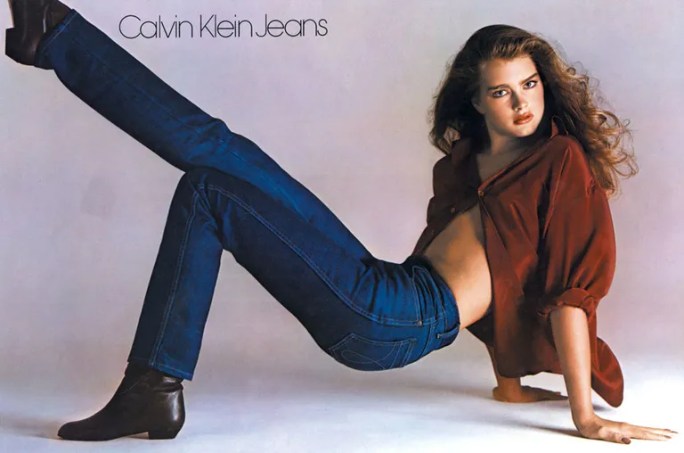
My sister took over, delivering her words vacillating between shame and pride. She sat perched on the edge of the bed and confessed to years of fasting and purging because skinny was in, and she didn’t want to be left out. She touched on her orange skin from eating lettuce and carrots exclusively for days. She talked about losing her period, her reason for confessing to our mother, afraid she’d become sterile. Then she changed tracks, and clearly delighted, she spoke of shopping with friends, and finally fitting into the skin-tight Calvin Klein jeans that the actress Brook Shields famously posed in. My sister had become part of the in-crowd and reveled in being desired by the popular boys in school. Like most of her high-school girlfriends, she’d finally achieved what I thought impossible for our well-endowed family lineage. She was unarguably thin.

My mother had regained her composure and sat next to my sister silently ringing her hands. I sat on the little cushioned stool staring at my skinny sister, consumed with jealousy. I wanted to be her. I, too, wanted to be rail thin, heroin chic, a cover-girl stunner like my big sister. To me, she was beautiful — sleek, tight, hip, slick and trendy. She was what I too aspired to be, what every magazine, TV show, and movie showed attractive, desired women should be. Thin.

And she’d just told me how to get there.

What I heard her say that afternoon was starving and vomiting worked to lose weight. I failed to acknowledge her detailed account of the toll the eating disorder took on her body and mind. I stopped listening right after she told me how she’d gotten skinny. Everything that followed was white noise.

From that day forward, and for the next five years I threw up frequently after eating to purge my body of the calories. I starved myself for days, sometimes going for weeks eating just vegetables. I tried to ignore that I was tired all the time, and chronically cranky, and falling into a black kind of depression. The desire to be thin superseded all reason. If my sister could do it, I could, and would, and did, regardless of the health risks.

Several years in therapy with a nutritionist gave my sister the fortitude to eat healthy, combat social pressures and become more accepting of her body. I learned to control my weight with exercise. Racquetball and running eventually replaced retching, but every time I over-indulge I consider throwing up to rid my body of the unwanted calories. To this day my sister’s words still echo in my head and taunt me — not all of what she said, only what I heard.

I pulled my Prius into the garage this afternoon and I looked at my beautiful son in the rearview mirror awaiting my lecture. My stomach hurt from the pasta salad I’d eaten for lunch earlier. My heart hurt — lost for words of wisdom for my kid. I wanted to purge my body of the heaviness, then shook my head in disgust at the notion, hoping my son didn’t catch it. Thirty years later, I’m still fighting the voices inside my head that rationalized my sister’s eating disorder as a workable solution to weight loss.

I led my son into the house for a snack and a chat. And I lied. I made up a tale of a friend’s reckless behavior that led to disaster. I told story after story of kids I went to high school with who were users and grew up to be losers (though I knew none). I assured him popularity did not come with using. I left no space for him to surmise drugs were simple fun, or required to be ‘in.’ I chose my words carefully, considered them from many angles for possible distortion before speaking, even asked him to summarize what I’d said often to make sure we were on the same page. And though he parroted my sentiments in detail, in recalling my experience with my sister, I am left with lingering concern he didn’t really hear me.

Sometimes, between what is said and what is heard is the Grand f***ing Canyon.

On Being Fat

On the plane coming back from Hawaii, the guy seated in front of me was easily over 300 pounds. He bulged over the armrests on either side of him. When he leaned his seat back, it came back so far it was virtually in my face. A teenage boy of equal girth sat next to him and crowded the small Asian couple on his left.

I felt annoyed, their big bodies invading the little space we all had. Then the woman across the aisle from them handed each a burger, dripping with cheese, and big bags of french fries. I went from irritated to disgusted.

Our family vacation this summer began on the Big Island. Traveling around through large and small towns, within days it was impossible to ignore that a good percentage of the tourists, and seemingly the majority of natives were extremely heavy to outright obese.

Genetically destined to be fat?

Bullshit.

Never been scientifically proven. No one has even come close to finding a ‘fat gene’ that dictates you will or won’t be obese, regardless of calorie intake and lifestyle.

True, it’s been shown that certain genetics pass on the propensity towards producing similar body types of the parents, but ultimately diet and exercise determine individual body mass.

Much more troubling than genetics, studies have also shown cultures pass on habitually destructive behaviors from one generation to the next. Clearly, this plays out on Hawaii’s Big Island, where the pace is beyond slow, bordering reverse. The warm, humid air stifles motion; and the narrow, curvy, hot roads surrounded by desolate lava flows do not entice jogging, or cycling, or even rollerblading any distance. Typical cafes and family restaurants served large portions, piled high with fatty foods, and most were consumed quickly.

It’s no wonder so many Hawaiians we saw were fat

Been there. Done that. Spent my youth in front of the TV, and ate. Of course, I was overweight. Took a lot of ribbing as a plumb kid, and rarely got asked out on a date in my teen years. Made to feel small for being big, so I took the defensive pose and stood on [faulty] moral grounds instead of doing the hard work I knew it would take to lose the weight.

The summer before my senior year of high school my best friend gave me some black pills from her mother’s medicine supply. We both dropped 25 pounds before Christmas break, with ease. It would be another five years before replacing pharmaceuticals with racquetball, but eventually I learned to maintain a ‘normal’ body weight with diet and consistent, rigorous exercise. And I’d love to say staying fit gets easier to maintain with practice, but that too would be crap. A huge amount of my energy is still spent on my internal battle between reason and desire.

I love food. I have a slow metabolism. I always feel hungry. Working out hurts. I’m weak. Addicted. Old, now.

Whatever my excuses, the absolute truth is even running three miles five days a week, and mindful of every mouthful, when I put into my body more calories than I burn, I gain weight. Like it or not, the reality is food has calories that turn to fat if they are not burned for energy. Simple laws of physics, and believe in them or not, we are all beholden to them regardless of genetics.

I am cursed with the proclivity towards obesity. My blood pressure is low, probably from running, which is known to lower heart rate. It takes me longer to use calories than say, my husband, who has always been thin with a fast metabolism. Three out of four of my grandparents died of complications from adult onset diabetes, brought on by consuming too much, and moving too little. My father’s been fat as long as I can remember; desserts high up on his reason for living, and a self-proclaimed connoisseur of just about anything eatable. Sports meant exercise, which was too taxing to even watch on TV, but he loved cop/court dramas, only getting off the couch to get another snack.

I work very hard to maintain what so often feels a facade— my lazy kid who loves to eat always lurking just beneath the surface. She taunts me, tells me sugar cubes aren’t as bad as say, donuts, and tries to persuade me to remain inert since exercise hurts. Well, no shit. Fatiguing and stretching muscles is going to hurt. Jogging is jarring on bones and joints, no doubt. But pursuing trim isn’t simply a matter of being ‘in,’ as in hip, slick and trendy. It continually proves to be healthy.

Running is the quickest calorie burn for me, which is why I do it, but most any rigorous exercise that makes you sweat for half hour or more a day shows substantial health benefits. Cardio workouts are known to strengthen the heart, and our immune system to fight off colds, flu, cancer and more. Staying light increases life expectancy, neural connectivity, reduces depression, and mood swings, and makes it a hell of a lot easier to run. And stretching muscles keeps us limber, less likely for bone loss, or injury, and quicker healing.

And being fit isn’t only socially acceptable, it’s socially responsible. Close to one quarter of our health care costs goes to complications from obesity.

I met a friend at a restaurant in Walnut Creek for dinner last week. I watched her bump and push her way through the crowded entrance. She’s been fat as long as I’ve known her, stands only five feet and weighs no less than 250 pounds. After squeezing into our booth across from me, she first described her recent knee surgery, only months after her back surgery, then spoke at length of her upcoming retirement plans, projecting a long, healthy, happy future well into her 90s.

She had to be kidding.

Obesity takes years off life expectancy, regardless of heredity.

On the plane home from Hawaii, on my way back from the tiny bathroom, I noticed “Proud to be big,” printed across the sweatshirt of the large teen next to the fat guy in front of me. Facebook returned 472 pages of “Fat and Proud” groups.

Are they for real?

Be proud for winning the row with your inner-child demanding instant gratification, not for giving into the brat.

Let’s take off the politically correct gloves and get down to brass tacks.

Nearly 34% of American adults and close to 20% of our kids are obese—30 or more pounds overweight, setting them up with health issues for the rest of their lives

We may have the right to do what we want with our body, but beyond the cost to society, modeling obesity condemns our children to a shorter life, full of health problems, body issues and social stigmas. And, it’s true you don’t have to be a young, anorexic model to be beautiful— but illness is never pretty.

Fat is NOT a state of being. For most, it’s merely a state of mind. Eat salad and fish, not burgers and fries; include a rigorous workout daily, religiously, and most anyone can achieve and maintain fit. It’s going to hurt, especially at first. Get over it. Start slow, work up. Deny yourself that dessert on the knowledge the sugar rush is bad for your body, thin or fat, and calories from sugars convert quickly to fats. Think before shoving crap in your mouth, and get off the couch, and odds are you’ll ultimately feel better, have more energy, get more done; be healthier, happier, smarter, and live longer. Best of all you’ll be modeling healthy living to our kids, and grandkids, and possibly a few generations down the line obesity will be a thing of the past.

Why NOT to Be Proud You’re Fat

#Litchat hosted an author on Twitter who’d recently written a book about being proud to be obese. The author tweeted of being 310 pounds on her 5′ 5” frame. She touted that she was in “great shape, healthy and happy.” Others joined in and congratulated her on finally accepting herself for being fat.

And I had a problem with that.

Annoyed with the conversation, and the politically correct, yet ignorant people stroking the author’s ego with praise, I joined in the dialog.

I tweeted: “As a society, we need to stop making excuses for poor diet and giving into every whim. Self-discipline is key, not self-acceptance.”

The author tweeted back: “I can’t help being fat.”

The following 5 tweets were from the politically correct folks slamming me for being rude to the author.

My next tweet to the author: “Are you one of the less than 2% with a thyroid problem or other medical condition to account for being overweight?”

The author didn’t respond, but the PC tweeters did: “Why so intolerant and provoking to the guest author @jcafesin?” This was retweeted at least 5 times.

While it’s politically correct to have ‘tolerance’ for fat people, it serves only the PC tweeters— helps them look kindly at themselves in the mirror, assure themselves that they are ‘good’ people. But are they? Promoting acceptance of bad/destructive behavior has led to an increase in U.S. obesity prevalence from 30.5% in 2000 to 41.9% by 2020. During this same time period, the prevalence of severe obesity increased from 4.7% to 9.2%.

We all know the facts on obesity. If you don’t, here’s just a few from the CDC

● Obesity-related conditions include heart disease, stroke, Type-2 diabetes, and certain types of cancer, some of the leading causes of preventable death.

● Obese people generally have compromised immune systems that lead to chronic inflammation, metabolic abnormalities, and they’re more likely to contract pandemic influenza, including Covid-19.

● The estimated annual medical cost of obesity in the U.S. was nearly $173 billion in 2019. Medical costs for adults who had obesity were $1,861 higher than medical costs for people with healthy weight.

● Childhood obesity has more than doubled in children and quadrupled in adolescents in the past 30 years.

● Children and adolescents who are obese are at greater risk for diabetes, cancer, Covid-19, bone and joint problems, sleep apnea, as well as social and psychological problems.

● Obese children are likely to become obese adults.

While the politically correct tweeters strive to appear tolerant, they are, in fact, promoting bad behavior by accepting the author’s premise that being fat is just dandy. Accepting obesity inadvertently teaches our children that there’s nothing wrong with being fat. But this is a lie. Promoting self-acceptance of obesity, instead of teaching self-discipline— good eating habits and daily exercise— allows our kids to continue being lazy and making poor eating choices, thus damning them to a host of health problems throughout their lives.

The cost of medical insurance is based on demand of medical services. The more demand, the higher the cost we all pay, fat or not. Every one of us is paying the price to care for medical problems that arise from being obese, from treatment of heart disease, to cancer, to Covid-19.

Google returned 38,200 results for ‘books on “proud to be fat.”‘ Proud to be Fat is a powerful, though misguided movement, spawned by either overweight and/or politically correct people looking to feel good about themselves whatever they do, or choose to be. The Litchat guest author of the proud to be fat book, and the PC tweeters that attacked me copped an attitude that I was cruel and prejudice with my first comment. This too is misguided. I have been fat, spent my youth eating in front of the TV, so of course I was overweight. Growing up in chic L.A., I was bullied and rejected until I lost weight in my junior year of high school. I have struggled with self-discipline my entire life, but it’s a fight worth waging. I am healthier, physically and mentally now that I am in shape.

Contrary to the PC tweets, it IS the author’s fault that she is fat, assuming she is disease free. If I’d had the support of other tweeters, my comments could have been construed as refreshing, enlightening, even rather freeing. My tweet responses, and subsequent healthy suggestions could have empowered her with the knowledge she could, in fact, change— workout, eat right, and really get fit.

Social media is filled with politically correct tweeters, Facebook updaters, bloggers…etc., that tow the PC line, generally serving themselves and no one else. The internet is an incredibly powerful communication tool. For the first time in history it’s providing us a method to individually reach the masses, in which we can effectively help each other be better, smarter, healthier, reach our creative and compassionate potential. But we have to be willing to go out on a limb, stand alone among the hordes of the self-serving ignorant and promote the truth.

Between What is Said and What is Heard

On our drive from school the other day my tweenage son told me a classmate had offered him a joint. I’d been preparing for this moment, staging it in my head for years, ready with my bag full of allegorical stories of my reckless youth before easing into the “Why drugs are bad for you” speech. But as I drove home searching for how to begin, I remembered back when I was a teen, walking in on my sister’s confession, and my twisted interpretation of her troubling story…

I was fourteen, finishing 8th grade. Another sunny day in L.A., and I came into my house sweating from my twenty minute walk home from middle school. I heard my sister talking in our parent’s bedroom, which was usually off limits to anyone but them. When I got to their doorway I saw my sister and mom sitting next to each other on the end of our parent’s bed. They stared at me standing in the threshold, looking more like siblings the way their short, thick dark hair framed their tear-streaked faces.

I migrated into the room looking back and forth between them and asked what was going on. They shared a non-verbal exchange as I sat across from them on the little cushioned chair in front of the mirrored vanity. After some time trying to gain her composure, mom finally launched into the reveal. She wiped away her tears, then told me that my sister had been ill. This was not hard for me to fathom, since in the last year she’d dropped a lot of weight, and more recently, her skin was turning orange. We were not close siblings. She was two years older and had worn her weight loss like a badge of honor, but with my mom’s assertion I felt the ground falling away thinking of cancer or some other horrible life-threatening illness. My mother continued to explain that my sister had been starving herself for the last few years to lose weight, and had started vomiting most of what she did eat this past year to stay thin. She became so overwhelmed with grief in the telling that fresh tears slid down her cheeks. She covered her mouth and sobbed.

My sister took over, delivering her words vacillating between shame and pride. She sat perched on the edge of the bed and confessed to years of fasting and purging because skinny was in, and she didn’t want to be left out. She touched on her orange skin from eating lettuce and carrots exclusively for days. She talked about losing her period, her reason for confessing to our mother, afraid she’d become sterile. Then she changed tracks, and clearly delighted, she spoke of shopping with friends, and finally fitting into the skin-tight Calvin Klein jeans that the actress Brook Shields famously posed in. She’d become part of the in-crowd and reveled in being desired by the popular boys in school. Like most of her high-school girlfriends, she’d finally achieved what I thought impossible for our well-endowed family lineage. She was unarguably thin.

My mother had regained her composure, and sat next to my sister silently ringing her hands. I sat on the little cushioned stool staring at my skinny sister, consumed with jealousy. I wanted to be her.

I, too, wanted to be rail thin, heroin chic, a cover-girl stunner like my big sister. To me, she was beautiful— sleek, tight, hip, slick and trendy. She was what I too aspired to be, what every magazine, TV show and movie showed attractive, desired women should be. Thin.

And she’d just told me how to get there.

What I heard her say that afternoon was starving and vomiting worked to lose weight. I failed to acknowledge her detailed account of the toll the eating disorder took on her body and mind. I stopped listening right after she told me how she’d gotten skinny. Everything that followed was white noise.

From that day forward, and for the next five years I threw up frequently after eating to purge my body of the calories. I starved myself for days, sometimes going for weeks eating just vegetables. I tried to ignore that I was tired all the time, and chronically cranky, and falling into a black kind of depression. The desire to be thin superseded all reason. If my sister could do it, I could, and would, and did, regardless of the health risks.

Several years in therapy with a nutritionist gave my sister the fortitude to eat healthy, combat social pressures and become more accepting of her body. I learned to control my weight with exercise. Racquetball and running eventually replaced retching, but every time I over-indulge I consider throwing up to rid my body of the unwanted calories. To this day my sister’s words still echo in my head and taunt me— not all of what she said, only what I heard.

I pulled my Prius into the garage this afternoon and I looked at my beautiful son in the rear view mirror awaiting my lecture. My stomach hurt from the pasta salad I’d eaten for lunch earlier. My heart hurt— lost for words of wisdom for my kid. I wanted to purge my body of the heaviness, then shook my head in disgust at the notion, hoping my son didn’t catch it. Thirty years later, I’m still fighting the voices inside my head that rationalized my sister’s eating disorder as a workable solution to weight loss.

I led my son into the house for a snack and a chat. And I lied. I made up a tale of ‘a friend’s’ reckless behavior that led to disaster. I told story after story of kids I went to high school with who were users and grew up to be losers (though I knew none). I assured him popularity did not come with using. I left no space for him to surmise drugs were simple fun, or required to be ‘in.’ I chose my words carefully, considered them from many angles for possible distortion before speaking, even asked him to summarize what I’d said often to make sure we were on the same page. And though he parroted my sentiments in detail, in recalling my experience with my sister, I am left with lingering concern he didn’t really hear me.

Sometimes, between what is said and what is heard is the Grand f***ing Canyon.