Racism—Up Close, and Personal

My daughter came home crying from her job as a barista for a local Boba Tea shop.

“They don’t like me, Mom! I’m doing the exact same level of work that all the new kids are, and they keep calling ME out cuz I’m not Asian.”

Several other barista-type jobs at various local businesses to which she applied told her flat out they only hire Asians (which, at least in my neighborhood, includes Indians, from India). Since most of the fast food and convenience stores here are owned by Asians, this has severely limited her choices for simple, flexible, part-time work while in high school.

A month ago, on the first day of this first job my daughter’s ever had, she came home and said, “My manager called me their “diversity hire,” since I’m the only White person who works there. It hurt my feelings. He made me feel like I didn’t get the job cuz I deserved it.” Every day since, she’s come home with other racist comments most of her managers continue to make.

Our daughter has a 4.3 gpa, is a hard worker academically, and socially. She is the only White person in her small group of all Asian friends. She’s worked very hard, and continues to do so, to be a part of this bunch of kids, to fit into the Asian culture that is now well over 75% of her high school in our East Bay suburb of the San Francisco Bay area.

My son wasn’t so lucky. Boys going through puberty are all about bravado, one-upping each other. Girls are about connecting, communicating, building their community. Our son was excluded and bullied for not being “A”sian, throughout middle and high school. He had no friends at all, though he tried again and again to ‘fit in’ with them, from Karate to Robotics to Chess club and more. It broke his heart daily, and mine as well, watching my beautiful, open, kind kid ostracized for being White. He will likely struggle with a damaged self-image for the rest of his life because of those formative experiences.

Yet, neither of my children are racists, unlike so many of their classmates. My daughter gets bullied often, even by her ‘friends’ with thoughtless comments: “I only date Asians. I don’t find White girls attractive,” from the 4 out of 5 boys in her group. My daughter would love to get asked to proms, on dates. She watches her Asian girlfriends get asked out. She does not.*

These are REALITIES for all of us, Asians and Whites, here in the global melting pot of the San Francisco Bay Area.

My daughter’s half-White, half-Chinese best friend had a sleepover the weekend before Thanksgiving. Her BF told me their family didn’t celebrate the holiday. Her mother is a tech-visa transplant from China. She had no association with U.S. traditions and did not adopt them for her kids. My daughter’s BF confessed she’d always dreamed of celebrating Thanksgiving. Well, of course, I invited her, and her mom and brother, right then. She was so excited she texted her mom the invite, and the girls were jumping up and down, cheering, moments later with her mother’s response.

The seven of us ate turkey, and stuffing, and shared stories of thanks around the table that night. We played Pictionary after dinner and laughed and laughed. When the kids exited the scene to play video games, Yi, my husband and I spoke of relationships, politics, religion, ignoring social lines of polite conversation. And though we have radically different perspectives, and I felt no personal connection with few common interests, a profound one exists between us. Yi is raising two kids, same ages as mine, and Yi loves her children the exact same way — with the same intensity — as I do mine.

Globalization is a REALITY. It’s happening right now. Most first world nations are being inundated with immigrants looking for that illusive ‘better life.’ Like it, or not, global integration is here, and, as my husband, and our kids know, it is mandatory, simply must happen, for humanity, and our very small planet to survive.

My husband is a software architect. He’s been creating and deploying SaaS offerings for over 25 years here in Silicon Valley. Every job he’s ever had in the software industry, and trust me, he’s had a lot of jobs, he’s worked almost exclusively with Asians. While offshore H1B labor has been brought here by the tech industry since 1990, this massive Asian influx into the U.S. was not anticipated. In the last five yrs, the companies he’s worked for in software development, or any other department now, whether the staff is 30 or 3000, 60% or more are of Asian descent. And yet, my husband is not racist, though he’s been passed up for many positions by Asians on work visas and H1Bs.**

“One wish,” my mom asked my sister and me on our drive home from elementary school back in the old days. “Anything you want, what would it be.”

“World peace,” I’d said. It was the mid-1970s, and a common catch phrase, but I meant it. Without war, or economic disparity, I believed in our creative potential to problem solve, and our unique ability to work together to realize our fantastical visions. I didn’t know about the hunger of greed then, insatiable, and colorblind.

It has been particularly hard on my kids, this globalization process. It deeply saddens me that they must suffer the slights of blind prejudice, just as the Asians in past generations, and today have to suffer the racism of the ignorant Whites here. It terrifies me — the global competition for fewer jobs my kids will be competing for after college. Yet, I still advocate for globalization. This very small planet must integrate, or we will perish, and likely take much of the life here with us.

My daughter worries she’ll never meet anyone to date, yet alone marry, but I assure her she likely will. And it’s even likely that man will be Asian, since 60% of the global population are Asian*** and more than half of them are men. “It doesn’t matter where someone came from, what their heritage, or place of origin on the planet,” I’ve preach to my kids. “Choose to be with someone kind.”

A border wall surrounding the U.S. entirely will not stop Asians from flying in from China and India, Korea, Viet Nam, Indonesia and other emerging Asian nations. Nor will it stop the Middle East, South Americans, Cubans from coming here. Seeking to keep us separate is a fool’s play. Communication is key to build bridges over our differences, allowing us to meet in the middle and mutually benefit from our strengths. Ignorance and mistrust breed with distance. Nationalism is just thinly disguised racism.

Asians, Latinos, Syrian’s, and Palestinians, are all different cultures, not separate races from Caucasian. We are one race, the human race. Globalization — the blending of cultures — is hard for everyone, scary, new, threatening to our social structure, but a must if humanity is to survive, even thrive. The beauty of interracial marriage is the same thing that bonds Yi and I, as parents. We both passionately love our kids. She can’t possibly hate Whites, since her children are Asian/White. Combining two cultures, at least on a localize level, defeats racism, as most every parent loves their kids with the intensity Yi and I do. It’s one of our best bits about being human — the magnificent, spectacular, all-encompassing love we get to feel, and share.

*Dating app data (in the U.S. and abroad) shows White men prefer Asian women.

**Hiring offshore workers for less money, now being exploited by every social network from Facebook to Instagram to YouTube, to Mr. Trump’s summer staff at his Mar-a-Lago estate, lowers the pay rate for all of us. It’s no wonder U.S. income levels have been stagnant for years. There has been 308,613 H1B registrations for 2022, a 12.5% rise over 2021.

***Asia Population 2022 (Demographics, Maps, Graphs) (worldpopulationreview.com)

Between What is Said and What is Heard

On our drive from school the other day my tweenage son told me a classmate had offered him a joint. I’d been preparing for this moment, staging it in my head for years, ready with my bag full of allegorical stories of my reckless youth before easing into the “Why drugs are bad for you” speech. But as I drove home searching for how to begin, I remembered back when I was a teen, walking in on my sister’s confession, and my twisted interpretation of her troubling story…

I was fourteen, finishing 8th grade. Another sunny day in L.A., and I came into my house sweating from my twenty minute walk home from middle school. I heard my sister talking in our parent’s bedroom, which was usually off limits to anyone but them. When I got to their doorway I saw my sister and mom sitting next to each other on the end of our parent’s bed. They stared at me standing in the threshold, looking more like siblings the way their short, thick dark hair framed their tear-streaked faces.

I migrated into the room looking back and forth between them and asked what was going on. They shared a non-verbal exchange as I sat across from them on the little cushioned chair in front of the mirrored vanity. After some time trying to gain her composure, mom finally launched into the reveal. She wiped away her tears, then told me that my sister had been ill. This was not hard for me to fathom, since in the last year she’d dropped a lot of weight, and more recently, her skin was turning orange. We were not close siblings. She was two years older and had worn her weight loss like a badge of honor, but with my mom’s assertion I felt the ground falling away thinking of cancer or some other horrible life-threatening illness. My mother continued to explain that my sister had been starving herself for the last few years to lose weight, and had started vomiting most of what she did eat this past year to stay thin. She became so overwhelmed with grief in the telling that fresh tears slid down her cheeks. She covered her mouth and sobbed.

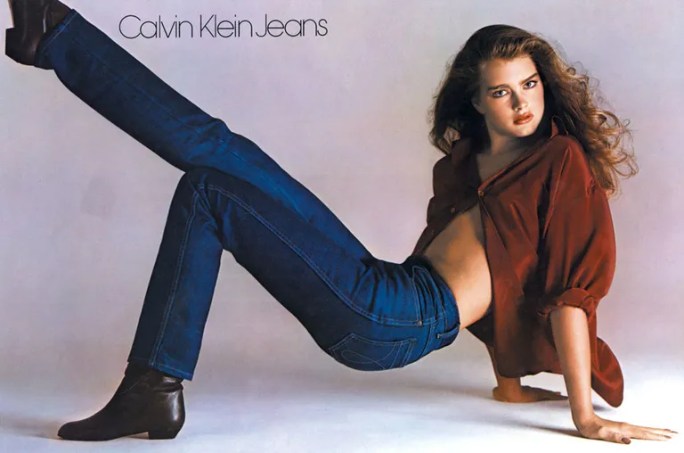
My sister took over, delivering her words vacillating between shame and pride. She sat perched on the edge of the bed and confessed to years of fasting and purging because skinny was in, and she didn’t want to be left out. She touched on her orange skin from eating lettuce and carrots exclusively for days. She talked about losing her period, her reason for confessing to our mother, afraid she’d become sterile. Then she changed tracks, and clearly delighted, she spoke of shopping with friends, and finally fitting into the skin-tight Calvin Klein jeans that the actress Brook Shields famously posed in. She’d become part of the in-crowd and reveled in being desired by the popular boys in school. Like most of her high-school girlfriends, she’d finally achieved what I thought impossible for our well-endowed family lineage. She was unarguably thin.

My mother had regained her composure, and sat next to my sister silently ringing her hands. I sat on the little cushioned stool staring at my skinny sister, consumed with jealousy. I wanted to be her.

I, too, wanted to be rail thin, heroin chic, a cover-girl stunner like my big sister. To me, she was beautiful— sleek, tight, hip, slick and trendy. She was what I too aspired to be, what every magazine, TV show and movie showed attractive, desired women should be. Thin.

And she’d just told me how to get there.

What I heard her say that afternoon was starving and vomiting worked to lose weight. I failed to acknowledge her detailed account of the toll the eating disorder took on her body and mind. I stopped listening right after she told me how she’d gotten skinny. Everything that followed was white noise.

From that day forward, and for the next five years I threw up frequently after eating to purge my body of the calories. I starved myself for days, sometimes going for weeks eating just vegetables. I tried to ignore that I was tired all the time, and chronically cranky, and falling into a black kind of depression. The desire to be thin superseded all reason. If my sister could do it, I could, and would, and did, regardless of the health risks.

Several years in therapy with a nutritionist gave my sister the fortitude to eat healthy, combat social pressures and become more accepting of her body. I learned to control my weight with exercise. Racquetball and running eventually replaced retching, but every time I over-indulge I consider throwing up to rid my body of the unwanted calories. To this day my sister’s words still echo in my head and taunt me— not all of what she said, only what I heard.

I pulled my Prius into the garage this afternoon and I looked at my beautiful son in the rear view mirror awaiting my lecture. My stomach hurt from the pasta salad I’d eaten for lunch earlier. My heart hurt— lost for words of wisdom for my kid. I wanted to purge my body of the heaviness, then shook my head in disgust at the notion, hoping my son didn’t catch it. Thirty years later, I’m still fighting the voices inside my head that rationalized my sister’s eating disorder as a workable solution to weight loss.

I led my son into the house for a snack and a chat. And I lied. I made up a tale of ‘a friend’s’ reckless behavior that led to disaster. I told story after story of kids I went to high school with who were users and grew up to be losers (though I knew none). I assured him popularity did not come with using. I left no space for him to surmise drugs were simple fun, or required to be ‘in.’ I chose my words carefully, considered them from many angles for possible distortion before speaking, even asked him to summarize what I’d said often to make sure we were on the same page. And though he parroted my sentiments in detail, in recalling my experience with my sister, I am left with lingering concern he didn’t really hear me.

Sometimes, between what is said and what is heard is the Grand f***ing Canyon.