Reaching Acceptance

For anyone experiencing grief from loss…

The fetus inside me, my potential daughter, was diagnosed XXX from a tissue sample taken during an amniocentesis my 14th week of pregnancy. We’d named her Sierra, since she made it past the first trimester, after losing two of the triplets in utero the first month.

I’d had three pregnancy losses before the triplets. I was in my late 30s, maybe too late for kids I feared, which is a pedestrian way of saying I was scared out of my fucking mind I’d never have them. And for as long as I can remember, I’ve always wanted children. Sierra was wanted.

My 15th week of pregnancy another ultrasound showed us our daughter inside me. “The ghost in the machine,” my husband had said quietly. By then we’d decided raising a child — ill from birth who’d likely never survive to adulthood — was beyond our financial, parental, and emotional capabilities.

After the abortion my husband was driving us home on the icy road and I started shaking. Then I threw up all over myself, the passenger seat and the floor. We figured it was the anesthesia wearing off but it continued for days. I threw up most everything I ate. I hardly slept. I had a debilitating back ache — like someone was drilling a hole into my lower back with a power tool. And I could not stop crying.

I’ve been a staunch pro-choice supporter since I found out what it meant. Women must retain or be given back the RIGHT to control our bodies, especially since an est. 33% of men leave the woman to care for the child alone. Regardless, I’d never had an abortion, and the events of that day kept replaying, looping in my head — from crossing the line of protesters with the aid of private police hired by the clinic, to the procedure, which I was semi-conscious for throughout, and was as horrific as it sounds.

A week later my back was still killing me, waking me at night. I couldn’t sit still during the day. I figured I deserved the pain for what I’d done. The loss of my daughter was crushing. Regret consumed me. I didn’t deserve to have kids anymore. I’d wanted her so badly but was too afraid of losing her too young, of watching her suffer with little we could do to help her. I was afraid we couldn’t afford her quality care. I was afraid… And I hated myself for letting my fear rule me.

I cried waking each morning to my empty womb, then several times a day and into a restless night’s sleep through the holidays. I got up many times at night, and since I’m allergic to aspirin I paced the living room to assuage my back pain. I couldn’t sit in a car for long to go to family celebrations, and didn’t have the bandwidth to put on a face for them. Instead we stayed home and I painted an old army footlocker of my father’s in coat after coat of thick black lacquer. Took days after Christmas for the doctor to get back to my husband about the state of his wife. He prescribed me some pain medication for my back, and bed rest, and told me I’d start to feel better in a few days.

I didn’t. Days, weeks, months went by and I could not stop crying. I took the prescribed meds and it helped my back but not my state of mind. Several months after the abortion I went back to consulting and took on marketing campaigns, one of which was Toys R Us. I broke down in my car in the parking lot of the agency I’d just signed contracts, and cried throughout the two-week project in my home office. Work was not distracting enough for the self-loathing rhetoric inside my head.

Six months later and the Concord MA landscape was flush with greenery. It was my first full summer there and compared to the gray, cold winter, it was beautiful, but I didn’t really see it. It was humid, sticky, unlike California’s dry heat. It was buggy, full of mosquitos. It poured from thunderstorms and flooded our basement every time. Beyond my daily crucifixion, a gnawing hope lingered that I’d get pregnant again, so I continued working out to keep my body fit, but that was about it. We stopped going out to dinner because when I ate it was hard to swallow. I had no interest in going to the movies, seeing friends or family. Road trips stopped. Singing stopped. Listening to music stopped. If I got pregnant again, no matter what, I’d keep the baby.

I didn’t get pregnant again in the following six months. My husband and I looked into adoption. We attended a China Adoption With Love seminar, and left cautiously excited. Sort of. The black cloud did not lift. I still woke crying, and wept in quick bursts throughout most days, and often for longer in the night. My husband was rightfully concerned and asked me to see a therapist. I’ve seen many in my lifetime, starting when my mom sent me to one when I was 13. None have helped me [even remotely] to better navigate my world. I didn’t need to cry to some psychologist who’s job it is to be supportive. My husband, in his weird way, was trying to be. He’d experienced the loss of Sierra more as a matter of course — we’d decided to terminate. Move on.

I could not move on. I could not go back and do it different. Stuck in purgatory, I agreed to see a psychiatrist when my husband insisted I “do something.” I’d never seen one before, only LMHCs and LMFTs, none of which were doctors. Maybe they could prescribe something to help me stop crying all the time. Something safe for pregnancy…just in case.

A well-groomed, graying hair, bearded man in his early 60s shook my hand and introduced himself when I entered his office.

I sat on the leather couch across from his swivel chair. I’d had no contact with the man until right then as his front desk arranged the appointment. And I had no idea how psychiatry worked. Should I begin with my parents, or should I start with why I was there and what I wanted from the sessions, assuming there’d be more than one. Likely many, as therapists hope for.

Tell me why you’re here, and what you hope to get from meeting with me,” the doctor said.

And I launched into my pregnancy with Sierra after losing three others in utero before the triplets. Took me half the session to get through the abortion since I was sobbing so hard. The psychiatrist wrote on his pad, and provided a box of tissues, but seemed unmoved by my hysteria. When I finally shut up and calmed down a bit he asked me again what I hoped to get from coming to him.

An anti-depressant that’s safe in case I get pregnant again.”

I’m not going to give you drugs,” he said flatly. “None are without risk if you’re trying to get pregnant.”

He gave me five, 45-minute sessions. I cried, a lot, at first. We talked about grief, about unfulfilled expectations, about loss of self, my growing thoughts of suicide — turn off, feel nothing ever again. Our last session started out as usual with me describing my week. I’d been crying less, which was good. But I continued to visualize methods to commit suicide, vacillating between a drug overdose, or carbon monoxide poisoning.

This is our last session,” the doc said, legs crossed, his pad in his lap. Expressionless.

I stared at him sitting ‘properly’ in his swivel chair with one foot on the ground. Assessing me. I’m not sure if I was glaring at him but I didn’t look away. He was just like therapists, albeit way less supportive, though more informative with studies and statistics. And he was ending our sessions when he hadn’t helped me at all! “But I don’t feel any better,” I blurted. Seriously, what was this guy’s benefit-add for his exorbitant hourly rate.

I’m not a therapist, here to make you feel better.” He paused, and continued to watch me. “The hard truth is it’s going to hurt every time you recall the abortion, or think about the potential child you chose not to have. It is going to hurt. As we’ve discussed, you’ll never know if you’d have lost her in utero, like you have all your other pregnancies; or you’d spared her a lifetime of hardship. Regret and self-doubt will feel overwhelming at times. When she crosses your mind in the future, it’s going to hurt. Hopefully a bit less over time, but every time you remember the events of this period in your life, it is going to hurt.” He still did not look away. But I did.

I know,” I whispered, bawling again. “But it’s been over a year and I’m still crying all the time. I don’t know how to let it go. ‘Move on,’ like my husband has,” I said bitterly.

Each of us processes grief in our own way and time. Regardless how long it takes you to ‘feel better’ over this loss, you’ll likely face many painful events in your life. The trick is not to let them stop you from living. Being alive means feeling — happy, sad, good, bad, whatever. And feelings are transient, sparked by circumstance. You can leave here today, go home and hang yourself in your doorway. I certainly can’t stop you.” He paused, to let it sink in, I assumed. “Or you can go live your life forward, move through the process of grieving, and further away from this loss with each new experience. Biologically, you’re still fertile, and seemingly have no issue getting pregnant. If you do, may it be healthy,” he said softly, his eyes stayed fixed on mine.

Doesn’t matter if it is,” I proclaimed through sobs, but to this day I can’t tell you that I fully meant it knowing the chances of chromosomal damage during gestation happening again with my advanced age. “I’m going to have kids. Either birthing them or adopting them, I’m going to raise kids,” I said definitively, and in that moment the black cloud began lifting.

I believe we’ve gone as far as we can together.”

I never saw him again. Clearly, I did not commit suicide that day. I had two healthy children — our son ten months after that last session, and our daughter two and a half years after that. As devastating the loss of Sierra, the pervasive black hole inside has filled with the inconceivably humbling love I get to feel for my kids.

Painful events will follow joyful ones throughout this process of living. Twenty plus years later, the psychiatrist’s words still resonate, helping me get through the tough times in my life now knowing that beyond recurring periods of darkness there will be times of brilliant bright light.

Parental ADHD

My husband’s sister has two children. Her oldest, 15, was diagnosed with ADD when he was 9, and has been on Ritalin since. He’s failing out of the private high school he attends in Manhattan. He lies, cheats, and steals when it suits him. He is volatile (way beyond normal teenage angst), and often violent with his mom and sister.

Her daughter, 11, also has trouble in her private school. According to her mother, she too has learning disabilities. She has very few friends, and is often cutting and cruel. She also lies constantly to get what she wants, and does whatever she wants regardless of opposition from authority.

The three of them live on the 10th floor of a posh apartment complex, in a huge flat overlooking the Hudson River in Battery Park. The Statue of Liberty, holding the torch of truth stands boldly in the bay and can be seen from almost every room of their home. My sister-in-law and her ex-husband are very successful in their careers. She broke the glass ceiling only a few years out of graduate school and is now a top executive at the New York Stock Exchange. He is an architect. His style is distinct, and sought after, and can be seen all around Manhattan. Since both claim to be busy professionals, the maid of the month raises their kids during the long work week.

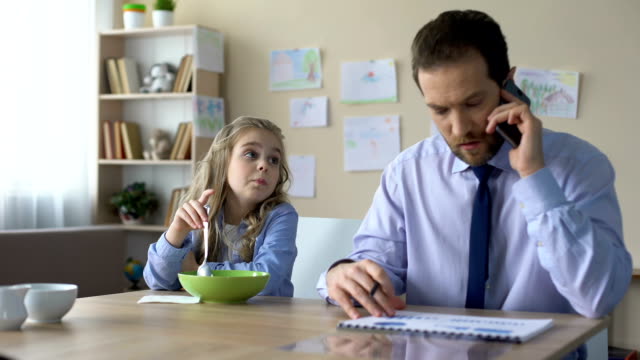
Every time we get together they virtually drop off their kids to my care. Dad, before and after the divorce, has always been a marginal part of the scene, off to work, or squash, or rollerblading along the waterfront. Mom stays with us, but she’s not really with us. She’s on her phone texting her secretary, or chatting it up with some high powered executive about market trends, or on her laptop writing reports. She goes out for a two hour run, or off to the store for diet soda. The entire time we’re together she has little to no contact with her children.

My sister also has kids, a boy and a girl, a couple of years apart. During their formative years she was a stay-at-home mom…sort of. Her husband, a successful real estate broker who used his limited free time for cycling, skiing, rock climbing, provided his family a McMansion with all the trimmings in a desirable suburb north of L.A. He hired a live-in maid to clean house and handle the mundane aspects of child care so my sister could pursue her many muses. And pursue them she did. She played tennis several hours a day. She went out with friends; shopped, and shopped; redecorated her house every year. She took classes in cooking, massage, religion, exercise, went to music camps back east for the summers, and left the kids with grandparents, or the revolving housekeepers. She was one of those soccer moms who sat in the stands and gossiped, or read People or Jane, or was on her phone every other minute, attending the game but not really there.

Unable to manage her son’s disruptive behavior, my sister took him for counseling when he was 10. He was diagnosed with ADHD. He took Ritalin from 12 until he was 20. Now 27, he smokes pot every day, pays his rent and bills with poker winnings and a small stipend from an inheritance trust fund, has not gone to college and has little prospects for the future. Her daughter, 24, is still only a junior after six years in college. She’s had few friends over the years, even fewer dates, and only recently her first [very] short term relationship. She lives on the money her parents provide without a clue how to make it on her own.

These two sets of kids struggle in life because their parents consistently catered to their own needs over those of their children. In doing so, they abandoned their kids to their own device, and left them to strangers, relatives, and society at large to raise them. Restrictions on behavior came from teachers, religious leaders and caretakers as commands—discipline imposed without love. Their parents didn’t bother to invest the staggering amount of time and thought required to help their kids decipher feelings, or examine abstractions like morality or values, or why they are important, or impart to them the seemingly endless list of rules we all must follow to get along.

The other day I was at the neighborhood pool watching my kids swim and play. All went well until a well-known rowdy kid arrived with his mom. She stood with her back to the pool and chatted on about her job, the upcoming hundred mile extreme run she was training 20 miles a day for, and the third Bruce Springsteen concert she and her husband had been to that week. She did not notice her nine year old son shoving kids into the pool, holding them underwater, pouncing, splashing and causing general havoc. Most everyone agrees her son, and six year old daughter, have severe ‘discipline’ problems. Though their mom labeled them ‘passionate,’ she admitted she was seriously considering her colleague’s suggestion to have her kids examined for ADHD.

Even Wikipedia can not state without dispute what ADHD actually is, though a wide cross section of sources seem to agree it’s a ‘behavioral disorder.’ Symptoms include Hyperactivity—like working all day, everyday, never putting your cell phone or laptop away; Inattention, the lack of ability to focus for an extended period of time—like creating multiple distractions such as tennis, classes and vacations for your entertainment instead of following through with any one thing. Impulsiveness is also an indicator, like going to see Bruce multiple nights in a row instead of doing the responsible thing and being at home with your kids.

Though they possess all the symptoms, these parents have never been diagnosed or even suspected of having ADHD, even though most have had at least some experience with therapy. Their kids did not inherit their lack of focus. The Attention Deficit Disorder they ostensibly suffer from by and large comes from parental neglect, adults who haven’t figured out that once they produce children, most of their own priorities must become secondary to the needs of their kids.

Rich or not, working—having to, or not—parenting is about paying attention, being attentive and present, being there when you’re with your kids. Certainly, rules need to be continually taught and enforced, but also discussed at length, not handed down as edicts from on high. Kids need detailed explanations, reasons to partake in our code of ethics, and out of desire, not disdain. Society is not sustainable filled with resentful children who grow into parents that never mature beyond self-interest. Children can not raise themselves above solipsism without example from those who have.

Letting Go of Our Kids

Our son went on a camping trip with his 5th grade class last week. He was gone four days, spent three nights bunking with eight of his classmates and a high school chaperon. They shared a cabin (with heated floors and a private bathroom), one of many scattered around Camp Arroyo, nestled in the eastern foothills of the San Francisco Bay.

High drama days before he left. Lots of spontaneous hugs. He’d grab me on the stairs, or in the kitchen while I stood cooking at the stove, wrap his arms around my waist, bury his face in me and say, “I’m going to miss you, mom.” And, of course I returned the sentiment, which seemed to sate him, and me momentarily. I put on a brave front, but as his day of departure drew nearer, I dreaded how much I’d surely miss him.

My son’s first overnight experience without mom or dad was a weekend on his first Boy Scout camp-out. He didn’t seem all that enamored with camping. Dirty and tired when he got back (after less than 24 hours away), he endlessly repeated, “It’s so great to be home.”

My son was not the only kid feeling nervous about the 5th grade camp-out. Two of his friends admitted feeling scared. Several parents laughingly confessed to feeling anxious about missing their kids over the four days they’d be gone. Many had yet to be away from their children for more than a weekend, during sleepovers at the grandparents.

I, too, felt apprehensive. My child wouldn’t be safe at home where I could watch out for him, be there for him if he needed me. A long time ago, when I was in my late teens, my mother told me she never fell asleep all the way until me and my sister were safely ensconced in our beds at night. Only then would she be able to rest. At the time, I figured she was trying to guilt me out for coming home late a lot. But as I helped my son pack for camp the night before his departure, I anticipated three restless nights without him.

Dropped him off at school the next day like any other morning, except for the sleeping bag and pillow he put down on the curb so he could hug me goodbye. He held me hard, and long, which was weird right in front of his school and classmates. I hugged him back, tried to transfer my love without too much drama and left. Heavy sigh as I drove away, watching him in my rear view mirror struggle with his gear and then disappear into the school.

And quite unexpectedly, I burst out crying.

My son was growing up. He needed me less and less. As he moved into his teen years we’d naturally separate, until he’d no longer be completely immersed in my life. We’d been bonded for 11 plus years and I could feel it coming to an end. And sadness consumed me on my way back home, but only for the first block from the school.

As suddenly as I started crying, I stopped. The next four days I didn’t have to stop working at 2:30 p.m. (and 1:00 p.m. every Wednesday) when he came home from school. I didn’t have to be the constant nag, reminding him every other minute to study, practice guitar, do his homework or his chores. The dinner menu didn’t need to be altered to my son’s particular tastes. Sushi was a distinct possibility since our daughter was generally open to trying different foods. And best of all, I didn’t have to play ref or break up their petty sibling rivalries.

The four days my son was away with his 5th grade class passed in the blink of an eye. I published two new articles, finished the second chapter of the final, final, final…etc. draft of my second novel. I finished the French screens I was building, found and set my daughter up with a great new 2nd grade math program, and shared with her some of the best Japanese food ever—turning her on to a brand new cuisine. There were no sleepless nights while my son was gone.

He hugged me when I picked him up from school after his trip last Friday. His embrace was warm, and tender as usual, but over quickly. He pulled away, looked around to see if anyone saw him, and then picked up his stuff. I carried his pillow to stop him dragging it along the ground as we walked home. He told me about his time away, but I had to prompt him a lot, and though he insisted he was just tired, I felt a contextual difference between us, a distance imposed by him, or me, or both.

We were quiet for quite a bit of the walk, but it didn’t feel awkward. He seemed introspective, more grown up than little kid. His youth, like much of our time together was passing, as it should be, but none the less, there is sadness in this. The upside is as my son moves on, I get to as well. As he embarks on life on his own, I can get back to mine—the life that became secondary when my kids arrived on the scene. From the day they were born they’ve been my first priority, and though perhaps they always will be, their daily demands are getting less as they become more self-sufficient. And as we all grow and mature, I find I no longer fear, but accept, and even sometimes welcome the natural separation occurring between us.