Reaching Acceptance

For anyone experiencing grief from loss…

The fetus inside me, my potential daughter, was diagnosed XXX from a tissue sample taken during an amniocentesis my 14th week of pregnancy. We’d named her Sierra, since she made it past the first trimester, after losing two of the triplets in utero the first month.

I’d had three pregnancy losses before the triplets. I was in my late 30s, maybe too late for kids I feared, which is a pedestrian way of saying I was scared out of my fucking mind I’d never have them. And for as long as I can remember, I’ve always wanted children. Sierra was wanted.

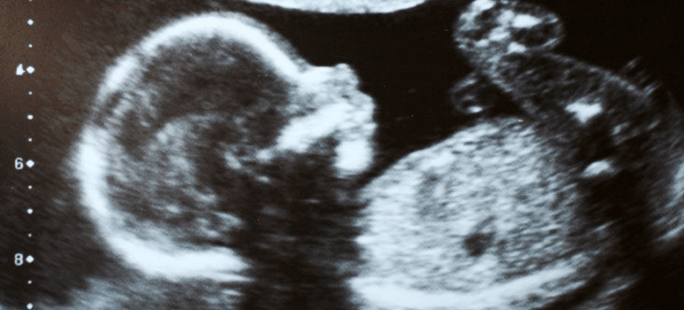
My 15th week of pregnancy another ultrasound showed us our daughter inside me. “The ghost in the machine,” my husband had said quietly. By then we’d decided raising a child — ill from birth who’d likely never survive to adulthood — was beyond our financial, parental, and emotional capabilities.

After the abortion my husband was driving us home on the icy road and I started shaking. Then I threw up all over myself, the passenger seat and the floor. We figured it was the anesthesia wearing off but it continued for days. I threw up most everything I ate. I hardly slept. I had a debilitating back ache — like someone was drilling a hole into my lower back with a power tool. And I could not stop crying.

I’ve been a staunch pro-choice supporter since I found out what it meant. Women must retain or be given back the RIGHT to control our bodies, especially since an est. 33% of men leave the woman to care for the child alone. Regardless, I’d never had an abortion, and the events of that day kept replaying, looping in my head — from crossing the line of protesters with the aid of private police hired by the clinic, to the procedure, which I was semi-conscious for throughout, and was as horrific as it sounds.

A week later my back was still killing me, waking me at night. I couldn’t sit still during the day. I figured I deserved the pain for what I’d done. The loss of my daughter was crushing. Regret consumed me. I didn’t deserve to have kids anymore. I’d wanted her so badly but was too afraid of losing her too young, of watching her suffer with little we could do to help her. I was afraid we couldn’t afford her quality care. I was afraid… And I hated myself for letting my fear rule me.

I cried waking each morning to my empty womb, then several times a day and into a restless night’s sleep through the holidays. I got up many times at night, and since I’m allergic to aspirin I paced the living room to assuage my back pain. I couldn’t sit in a car for long to go to family celebrations, and didn’t have the bandwidth to put on a face for them. Instead we stayed home and I painted an old army footlocker of my father’s in coat after coat of thick black lacquer. Took days after Christmas for the doctor to get back to my husband about the state of his wife. He prescribed me some pain medication for my back, and bed rest, and told me I’d start to feel better in a few days.

I didn’t. Days, weeks, months went by and I could not stop crying. I took the prescribed meds and it helped my back but not my state of mind. Several months after the abortion I went back to consulting and took on marketing campaigns, one of which was Toys R Us. I broke down in my car in the parking lot of the agency I’d just signed contracts, and cried throughout the two-week project in my home office. Work was not distracting enough for the self-loathing rhetoric inside my head.

Six months later and the Concord MA landscape was flush with greenery. It was my first full summer there and compared to the gray, cold winter, it was beautiful, but I didn’t really see it. It was humid, sticky, unlike California’s dry heat. It was buggy, full of mosquitos. It poured from thunderstorms and flooded our basement every time. Beyond my daily crucifixion, a gnawing hope lingered that I’d get pregnant again, so I continued working out to keep my body fit, but that was about it. We stopped going out to dinner because when I ate it was hard to swallow. I had no interest in going to the movies, seeing friends or family. Road trips stopped. Singing stopped. Listening to music stopped. If I got pregnant again, no matter what, I’d keep the baby.

I didn’t get pregnant again in the following six months. My husband and I looked into adoption. We attended a China Adoption With Love seminar, and left cautiously excited. Sort of. The black cloud did not lift. I still woke crying, and wept in quick bursts throughout most days, and often for longer in the night. My husband was rightfully concerned and asked me to see a therapist. I’ve seen many in my lifetime, starting when my mom sent me to one when I was 13. None have helped me [even remotely] to better navigate my world. I didn’t need to cry to some psychologist who’s job it is to be supportive. My husband, in his weird way, was trying to be. He’d experienced the loss of Sierra more as a matter of course — we’d decided to terminate. Move on.

I could not move on. I could not go back and do it different. Stuck in purgatory, I agreed to see a psychiatrist when my husband insisted I “do something.” I’d never seen one before, only LMHCs and LMFTs, none of which were doctors. Maybe they could prescribe something to help me stop crying all the time. Something safe for pregnancy…just in case.

A well-groomed, graying hair, bearded man in his early 60s shook my hand and introduced himself when I entered his office.

I sat on the leather couch across from his swivel chair. I’d had no contact with the man until right then as his front desk arranged the appointment. And I had no idea how psychiatry worked. Should I begin with my parents, or should I start with why I was there and what I wanted from the sessions, assuming there’d be more than one. Likely many, as therapists hope for.

Tell me why you’re here, and what you hope to get from meeting with me,” the doctor said.

And I launched into my pregnancy with Sierra after losing three others in utero before the triplets. Took me half the session to get through the abortion since I was sobbing so hard. The psychiatrist wrote on his pad, and provided a box of tissues, but seemed unmoved by my hysteria. When I finally shut up and calmed down a bit he asked me again what I hoped to get from coming to him.

An anti-depressant that’s safe in case I get pregnant again.”

I’m not going to give you drugs,” he said flatly. “None are without risk if you’re trying to get pregnant.”

He gave me five, 45-minute sessions. I cried, a lot, at first. We talked about grief, about unfulfilled expectations, about loss of self, my growing thoughts of suicide — turn off, feel nothing ever again. Our last session started out as usual with me describing my week. I’d been crying less, which was good. But I continued to visualize methods to commit suicide, vacillating between a drug overdose, or carbon monoxide poisoning.

This is our last session,” the doc said, legs crossed, his pad in his lap. Expressionless.

I stared at him sitting ‘properly’ in his swivel chair with one foot on the ground. Assessing me. I’m not sure if I was glaring at him but I didn’t look away. He was just like therapists, albeit way less supportive, though more informative with studies and statistics. And he was ending our sessions when he hadn’t helped me at all! “But I don’t feel any better,” I blurted. Seriously, what was this guy’s benefit-add for his exorbitant hourly rate.

I’m not a therapist, here to make you feel better.” He paused, and continued to watch me. “The hard truth is it’s going to hurt every time you recall the abortion, or think about the potential child you chose not to have. It is going to hurt. As we’ve discussed, you’ll never know if you’d have lost her in utero, like you have all your other pregnancies; or you’d spared her a lifetime of hardship. Regret and self-doubt will feel overwhelming at times. When she crosses your mind in the future, it’s going to hurt. Hopefully a bit less over time, but every time you remember the events of this period in your life, it is going to hurt.” He still did not look away. But I did.

I know,” I whispered, bawling again. “But it’s been over a year and I’m still crying all the time. I don’t know how to let it go. ‘Move on,’ like my husband has,” I said bitterly.

Each of us processes grief in our own way and time. Regardless how long it takes you to ‘feel better’ over this loss, you’ll likely face many painful events in your life. The trick is not to let them stop you from living. Being alive means feeling — happy, sad, good, bad, whatever. And feelings are transient, sparked by circumstance. You can leave here today, go home and hang yourself in your doorway. I certainly can’t stop you.” He paused, to let it sink in, I assumed. “Or you can go live your life forward, move through the process of grieving, and further away from this loss with each new experience. Biologically, you’re still fertile, and seemingly have no issue getting pregnant. If you do, may it be healthy,” he said softly, his eyes stayed fixed on mine.

Doesn’t matter if it is,” I proclaimed through sobs, but to this day I can’t tell you that I fully meant it knowing the chances of chromosomal damage during gestation happening again with my advanced age. “I’m going to have kids. Either birthing them or adopting them, I’m going to raise kids,” I said definitively, and in that moment the black cloud began lifting.

I believe we’ve gone as far as we can together.”

I never saw him again. Clearly, I did not commit suicide that day. I had two healthy children — our son ten months after that last session, and our daughter two and a half years after that. As devastating the loss of Sierra, the pervasive black hole inside has filled with the inconceivably humbling love I get to feel for my kids.

Painful events will follow joyful ones throughout this process of living. Twenty plus years later, the psychiatrist’s words still resonate, helping me get through the tough times in my life now knowing that beyond recurring periods of darkness there will be times of brilliant bright light.

An Inconvenient Truth About Men and Women

“You are so beautiful, my baby. Once you slim down boys will notice and you’ll get as many dates as you want,” my mother promised me in her kitchen when I was 16, her response to my crying to her how lonely I felt with no one asking me out. “I guarantee you, you’ll have your pick of boys if you just lose weight.” She assured me that afternoon that thin was in, and if I wanted to be I would have to capitulate to the social standards of Los Angeles in the late 20th century.

I mistakenly believed her that day.

Indeed, heroin thin was in in the 60s — 90s, when actresses like Audrey Hepburn and supermodels like Twiggy were the iconic images of feminine beauty. And thin still is in, even today. Especially in L.A. In fact, thin as a beauty standard goes back to the ancient Greeks, with marble statues of athletic but slender women. (Plump [not fat] was in for a very elite group and only for a short while in history as a display of wealth, in contrast to most of the starving population.)

Weeks after my mother’s guarantee I’d be popular and have all the dates I wanted with my pick of boys if I got thin, I was in the high school gym and a senior was giving out Black Beauties with promises it was a miracle drug for weight loss. She got the little black capsules from her mother’s medicine cabinet and was hoping the girls she turned on to the amphetamine would pay for more. She turned out to be right.

Took me about 6 months, on Beauties almost daily, until I lost the extra weight I’d carried since early childhood. I got pretty my senior year in high school. I was socially acceptably thin. My mother was so proud. I’d come into the kitchen in the afternoons after school and she’d gush over how ‘shapely’ I looked in those jeans or that cami or fitted T. She was clueless I was on pharms, stolen from a classmate’s mother.

Boys at school, men at my work, and when I was out and about started to notice me. And for a bit, it felt empowering finally being an object of desire. Flirting was fun on campus, especially with boys who’d ignored me before. And to my mother’s point, I did get asked out occasionally.

Even pudgy, I’d not considered dating high school boys since the 9th grade. Male puberty had most all of them thinking through their ‘little head’ 24/7, and I wanted so much more than being another notch on some teen boy’s bedpost. Grown men were more mature, I assured myself.

Turns out, most are not.

Not then. Not now.

Being objectified for my body got old quick. The more dates I had, the more I realized the ‘men’ had asked me out for one reason only — to get laid. During most ‘dates,’ I basically had to interview the guys as they never asked me anything, or even turned my questions around. It was all about them all the time. After the date, they expected to come back to my place, or go to theirs and fuck. ‘Make love.’ ‘Get intimate.’ These colloquialisms are lies. There is nothing ‘intimate’ about fucking a stranger. And to achieve our highest attainment — love — requires more like hundreds of dates.

By the time I turned 30 the canonical line among most single working women I knew or met was: “Men want a mother in the form of a whore.” And for the most part, I had to agree. It seemed most heterosexual men I went out with, or even ended up dating a while ultimately wanted a woman who would listen to them, admire them, adore them, and have sex at their will. They had little to no interest in my mind — what I thought about or what mattered to me. And none had any interest in learning from me, but were always happy to spout their knowledge and wisdom.

From fourteen till I married at 37, I literally dated hundreds of men, so my sample size is not tiny, especially if you add in the thousands of women I’ve listened to over the years recounting their dating history. And quite frankly, their marriages haven’t turned out much different.

I get it. I do. Men have been on top of the social order from our beginnings. Might equals right, so men made the rules, wrote the bibles, set up the laws, and subjugated women because, well, they could (and still do with the 6 male members of our Supreme Court). Move forward from bringing home the mastodon to bringing home a salary — men have also been burdened with being the providers, so I understand why most men felt it was their God-given right to rule the roost they provided for.

The problem is, the world I grew up in is changing, while most men are not. Women were given equal rights under the law with The Equal Rights Amendment (ERA) in 1972, but we were not, and are still not seen as social equals to men. Back in the 80s, if we worked, which most of us did by then, we were teachers, nurses, admin, therapists, or careers in the Arts, as was mine as a graphic designer. I, personally, made half the salary of the man in the cubical next to me. And even today, women make roughly 22% less than men doing the exact same job. And even worse, a quarter of the way into this new millennium, my 22 yr old daughter, and most all of her girlfriends still have the exact same issues with men I did when I was single.

At her college graduation in June, my beautiful baby bemoaned the fact that she didn’t have a boyfriend like most of her girlfriends had acquired during their years on campus.

“Do you like Del’s boyfriend?” I asked her.

“No. He’s a dick. He doesn’t listen to a word she says. All he wants her for is free sex.”

“What do you think of Jenny’s guy?”

“OMG. He’s so cringe! He spends more time with his guy friends than her, except when he comes over drunk to get laid.”

“And what about Nik’s boyfriend? She’s been dating him since her Sophomore year.”

“He’s Muslim, so he doesn’t want sex before marriage, though they do everything else. But he treats her like a possession — at his beck and call, and he’s all over her in public to make sure everyone knows she’s his.”

Like her female peers, my daughter dated guys she met on campus and online throughout her college years. None worked out beyond the first date, and most never even made it that far. A few text exchanges made it clear the guy was looking for a hookup. My daughter is not. Nor does she want to model her friends “just to have a boyfriend.”

“I’m a social pariah since I haven’t had sex yet, Mom,” my daughter assured me at her graduation dinner. “But I want so much more than what my friends have settled for.”

Ah, from the mouths of babes…

Dating, in a short or long-term relationship, or married, most women I know or have met along the way seemingly want more from most men than they’re getting. As men are no longer the sole provider for most households, some women, like my daughter, (and 60+ yr old wives driving the current divorce rate) are demanding more. Sadly, so many of her peers are still role-modeling ancient times to the early 1970s when there was no such thing as equal rights, accepting selfish, disrespectful behavior from their boyfriends so they can be in — show their peers to their parents that they are socially acceptably desired. Women are groomed from birth to be physically desirable.

Equal rights does not stop at equal pay. Money is not the end all that will move society to treat each other equitably. Truth is, it really is up to women to create a more equitable society.

  1. Women must learn to value our minds over our physicality.
  2. Women want equality — to get paid the same in the workplace, and treated equally in public and private relationships. WE want the change, not men who’ve sat on top of the social order for eons. Women have to create the change we want, beginning with our self-perception. We have to fight to be heard and recognized for our knowledge and achievements. We must demand compromise instead of simply giving [in]. It’s hard to do for most of us, often impossible for many women to put self before others. Women are groomed from birth to be maternal.
  3. Even today, most of childhood parenting is still done by the mom. Let’s teach our daughters, and even our sons out of the womb that humanity is one race, and we are better when we work together. Mom and Dad, reject the gender hierarchy established at the dawn of the human race that has been playing out through the generations like a genetic disease. Teach our kids to respect, consider, and communicate with each other regardless of race, age, or gender. Then perhaps our daughter’s daughter’s daughter will never know the oh so very lonely chasm inherent in the gender divide of yesteryear and today. Instead, our great-great-great-grandchildren will get to experience the deep intimate connection that can only be achieved with true equality.

How to End SEXISM

My father raised me to believe my mother was ignorant. “Your mother, (implying like most women) is irrational. Fickle. Full of love and lightness, but not really a [deep] thinker.”

All women were (are) not as… capable as men, according to my father, as the woman’s primary job— her role in society of mom, caretaker, homemaker— isn’t like a real job and doesn’t take much brain power. He actually said to me, “Isn’t it odd that women can’t walk and talk at the same time,” and stopped to tell me this in all seriousness, while we were walking.

My father thought he was inherently smarter than my mother, or any woman. He was a MAN, after all. He claimed to be well read, had to be for business in the real world, unlike silly homemakers. (My mother read the newspaper daily, news magazines, new non-fiction and fiction monthly. My father read only Popular Mechanics, and watched TV. Cop and detective shows mostly, where the main white male character was rescuing ditsy, busty women.)

My mother graduated high school at 16, and attended Florida State University two years before most of the classmates she left behind in New Jersey. My father has no degree beyond high school.

My father went through five or more businesses, several of which failed, none of which ended up in substantial wins. My mother started a pilot magnet program at Cabrillo Marine Museum for underprivileged East L.A. kids, to teach them marine science. For almost 20 yrs she touched thousands of lives, many of whom I met personally, in the store or mall, when they stopped my mom to gush that they were now oceanographers and scientist because of her program. As a woman, she made 1/3 of the men whom she worked beside, offering comparable programs.

What is SEXISM?

Sure, most of us will agree equal pay for equal work, regardless of gender is an important step in ending sexual inequality. According to Variety, the top paid actress for a single film of 2021 was Jennifer Lawrence, at $25M. Actor Daniel Craig, made $100 million. Women had only 34% of the speaking roles in major movies, according to Women and Hollywood. (Women are half of the human population, yet no actress is even close to #2, 3, 4, in equal pay or presence in film.)

In 2020, almost 60 years after the United States passed the Equal Pay Act, Pew Research says a woman earns only 84% of what a man makes.

So, why, even today, are women fighting so hard for equal pay, which most of us agree is one obvious step to ending SEXISM?

BELIEF. Both sexes still believe women are ‘less’ than men.

My father was born in 1929, when MEN WERE MEN, and everyone ‘knew their role.’ His mother, my grandmother, was a homemaker. His father, my grandfather, was a pianist for the New York Philharmonic, and the breadwinner for his family. To make it through the depression years, and the harsh realities of being a Jew through WW2, each family member had a role, a function to fulfill to assure the family unit was maintained—literally stayed alive, however modest an existence.

From caveman days through the 1940s many jobs required physical labor suited to a man’s physiology, as technology wasn’t here yet. Humans, not robotics, built our vehicles and appliances, and manufacturing was a man’s job even after the war, before it went offshore.

Fast forward to present day. Last Sunday my husband is reading me an article on the feminist #MeToo movement in the New York Times, while I cook pancakes for him and our two teens. At the end of the article he sighs heavily, his ‘this is absurd’ sigh, and says, “It gets so tiresome hearing women complain how hard they have it. It’s equally hard on men, and always has been.”

I looked at him incredulously, and said, “How many times have you been sexually assaulted on the job?”

He didn’t respond to my rhetorical question. I already knew his answer. Zero. He didn’t turn my question around. He knew an investor in my very first startup tried to rape me in my office at our Christmas party, then fired me that night for not letting him assault me. He knew my second job out of college, as an Art Director for 1928 Jewelry Company, the CEO came into the empty conference room moments after me, introduced himself, and instead of taking my outstretched hand, squeezed my breast, as if checking the firmness of an orange. I’ll never forget, he said, “Mmm, Nice!” before I pulled away, shamed as others I’d yet to meet walked in.

My husband wasn’t at my housewarming party, when a relative accompanying an invited guest tried to assault me when I found him at my work-space on my Mac. I could go on, but you get my point. And even knowing all this, my husband is “sick of hearing women whine about how hard we have it.”

Can’t blame him, really. My father-in-law talked down to my mother-in-law, probably all their lives together, but clearly in the 20 years I’d been on the scene of their married life. He was cruel and cutting with a continual barrage of snide ‘jokes,’ if he listened to her at all. My husband tells tales of his mom going ballistic on his dad every few months, probably when she’d had enough of trying to communicate with him while he verbally slammed her, or, by and large, ignored her.

To this day, most men do not BELIEVE a woman is as ‘equal’ to them as other men.

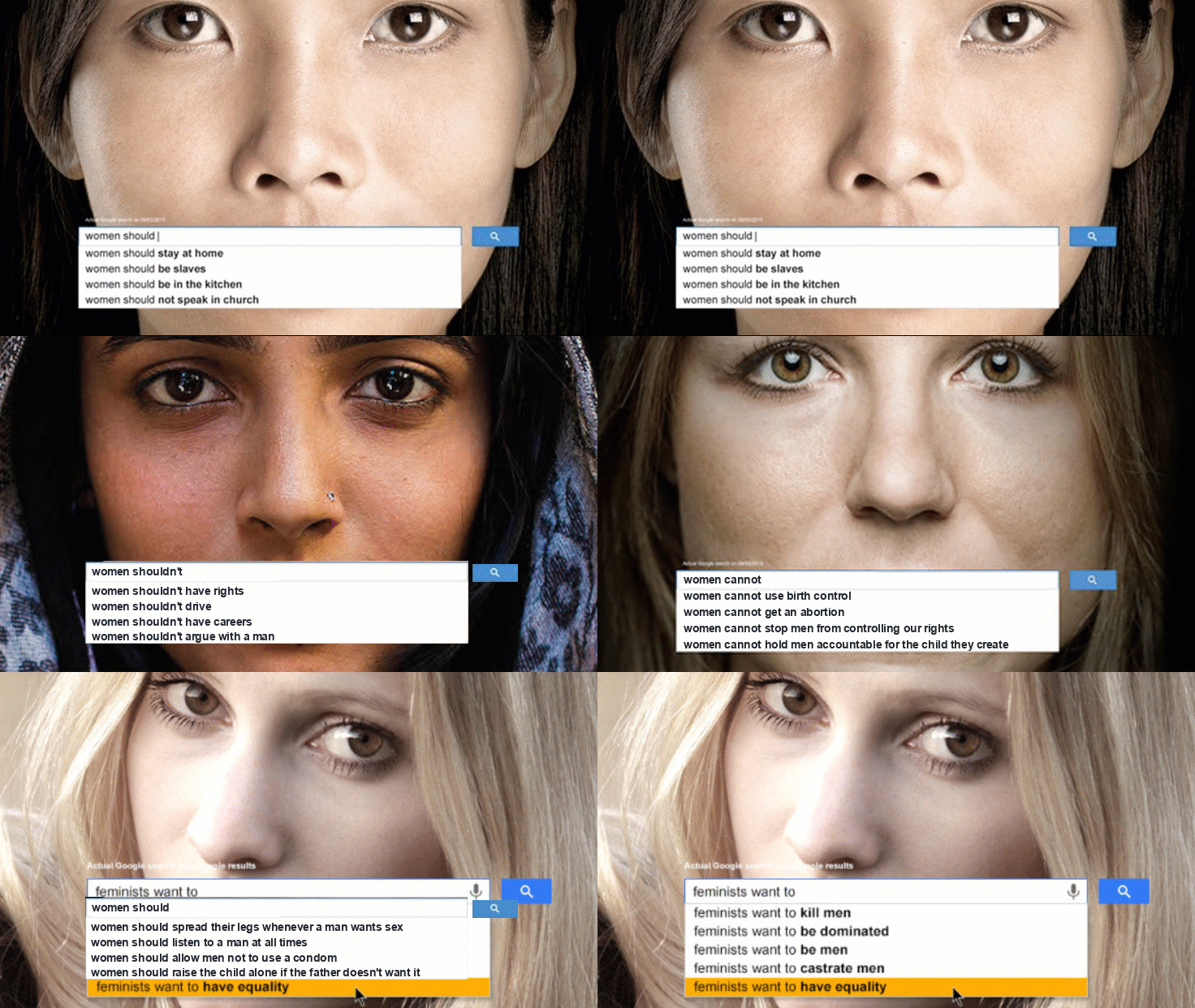
The problem is, most women BELIEVE this too. We do not feel equal. Why would we? We get paid less for the same job. Our bodies are more valued then our minds (as so many men, especially wealthy men—think Amazon’s Jeff Bezos, Fox News Roger Ailes, or Pres. Clinton—can’t seem to get their brain out of their little head). Our personal rights are being stripped away state by state as our Supreme Court dictates what we can do with our own bodies. Women are rarely taken seriously by the overwhelmingly male controlled business world, nor in our home environments.

How many women reading this post did most of the cooking and serving of your last holiday meal, even with a career/job? How many of you do most of the cooking, cleaning, chauffeuring of the kids, even working full time? The fact is, according to the 50 news articles I just read, women still do 80 – 90% of all domestic chores, including kid care, regardless of her job status. Equal pay for equal work, of course, but also equal WORK must be invested by both genders to reach sexual equality.

How do we get there from here? I honestly have no idea, other than to stand up, and say, “NO! Not OK,” whenever you are a victim, or see the action of SEXISM.

Since the mastodons are all gone, and we can now buy packaged meat at Safeway, we no longer require the muscular physique of the male physiology to survive as a race. Since most women are now bringing to the table of any union equal intellectual, logistical and financial support, men are rapidly losing their position of strength, figuratively and literally (with obesity at an all time high).

Men have dominated the business world from the beginning, and this too must change. It isn’t “locker room talk.” It is degrading, and women buy into it, thinking our value really is just in our breasts and how accessible our vagina to those that show interest. At the very least, women are made to feel we must acquiesce to this humiliating behavior men dish out to be heard at all.

This BELIEF, that women are lesser than men, by both genders must end, before SEXISM is a non-issue.

Humans, all of us, ACT as we BELIEVE.

Change the BELIEF, and change the actions of SEXISM.

STOP Believing. START THINKING

My father is a fervent Republican. My mother was a Democrat. I once saw him put his fist through the maple cabinet an inch from my mother’s head because her vote was going to cancel his in the second Reagan election. Though he never hit her, connected anyway, he often shouted, slammed things, threw things, even at me, when he encountered resistance (reason) when espousing his conservative views.

My father doesn’t believe Global Warming is real or caused by us in any way (absolving himself of conserving resources).

My father believes all non-believers — atheists and agnostics — are dangerous fools to be converted.

My dad distrusts all Muslims.

My dad believes in trickle-down economics, though it’s been proven again and again it makes the rich richer while wiping out the middle class.

My father doesn’t believe in gun control. “If they come for me, I’ll stop them at the door.” He quotes the NRA with fervor! “Take away what kind of guns we get to own, and you chip away at the foundation of the 2nd Amendment,” he preaches.

I remind him he can’t stop a tank with an AK-47. I implore him to examine history, and context, that the right to bear arms our forefathers were talking about were pistols and shotguns that took three minutes to load and didn’t fire straight or would blow up in your face. Automatic assault weapons were neither considered, nor anticipated when the 2nd Amendment was written.

He scoffs. As his daughter, and a woman, I am clueless.

As a mother of two amazing, spectacular children, I am horrified, not only by mass shootings on school campuses, but everywhere else, every time an assault weapon is used against our own because the NRA wants to stay rich. And our government officials, Republican senators in particular, ostensibly “by the people, for the people,” are paid off by gun lobbyists to let them.

I grew up in L.A., on the Valley side of the Hollywood Hills. I went to school with writers, producers, directors’ kids, all fairly to extremely liberal. My father was the outlier in our neighborhood and among my parents’ colleagues and friends. The Great Divide between the Republicans and Democrats, fueled by Reagan pushing religion, conservatism, then ignited by Bush Jr’s Christian administration, and then concretized in lies, ignorance, and hate by Trump, didn’t exist yet. My parents lived together in relative peace, except around election times.

We have become a polarized nation and this serves no one here. On the personal level, it has divided me from my family. My siblings, like my father, are fervent Republicans. My sister, disgusted we’re raising our kids without religion, decided she’d had enough of my liberal leanings and checked out of our lives entirely, leaving our kids deeply hurt their aunt had abandoned them. My brother used to forward me emails from his Born-Again community that Obama was a Jew-hating Muslim who believed it’s okay to kill babies. Trump Made America Great — empowering men to be men again by stripping women our rights. My brother’s ignorance is only eclipsed by his blind faith in his Christian leaders’ conservative rhetoric.

The chasm in our morality and our philosophies is so diametrically opposed at this point that the rare times I talk with my father our dialog quickly sours, then invariably turns contentious. I’ve told him time and again I won’t discuss politics with him, but he insists on little digs, like, “Do you care about your kids?” He has not spoken with our children, his grandkids, in 7 years, or acknowledged them in any way, not birthdays, no calls, ever, and virtually never inquirers about them when I call him, which I always do because he doesn’t call me.

Truth is, it’s getting harder and harder to call him. Almost two decades after my mom’s death, my father is undaunted by age or illness in his quest to spread conservative lies. He’s a true believer (as are most hard-core Republicans) because believing is easier than thinking. Being told what is right and wrong, good or bad, is simpler than considering the complexities of our behavior, and our obligations to each other and the world we inhabit.

My remaining family believes women should not have the right of choice with our own bodies.

My father and siblings believe gays should not have the legal, nor moral right to marry. They believe homosexuality is a mental illness.

My family espouses they believe in “less government,” preaching the Republican’s canonical tagline but want to govern (restrict) women’s choice and limit our birth control resources; govern who is allowed to marry; limit healthcare to those who can afford it; allow corporations to buy politicians for corporate profit. They’d prefer to believe the GOP rhetoric that Global Warming isn’t happening and support the ‘rights’ of Big Oil to drill and frack our planet to death, instead of investing in renewable energy for our kids, and the welfare of Earth forward.

I’ve been wondering when it’s time to say goodbye to family, even before they die. I’ve been grieving my sister’s departure from our lives since her exit 15 yrs ago. The little connection I retain with my brother and father seems… over. My kids have no relationship with either. We have virtually no common ground and share little time that doesn’t quickly turn combative. So really, what’s the point of trying to stay in touch? Harsh? You bet. Ugly? Yeah. I’m profoundly saddened that we’ve come to this impasse. Hurts. A lot, knowing almost half our nation feels as my family does. And I am mystified, disgusted, and shamed by their gullibility in choosing blind faith over science, thought, and reason.

We are again on the precipice of our survival as one nation, but this time the war isn’t with rifles that blow up in our faces. Now we must recognize the enemy is ourselves — choosing ignorance over reason because it’s easier to binge-watch Netflix, peruse Instagram, or stream gameplay on Twitch than it is to think.

My daughter, a recent college grad, told me most of her friends — this new round of young voters — didn’t vote in this last election. They were ‘taking a stand,’ showing how they feel about our government, they claimed, neglecting to understand without voting they essentially voted in Trump. They were told not to vote by Republican ads targeted at them through social media, and blindly believe their feeds, not knowing, or even caring that what they are scrolling through is personally targeted at them, and designed to manipulate them to buy, try, subscribe, and believe in snake oil.

The chasm between us will continue to grow with more believers buying into the derisive rhetoric of their online feeds, their religious leaders, politicians, Google’s search results, and ‘personalized’ targeted marketing on social media platforms and apps. More families are finding themselves on opposite sides of an ideological divide that will likely tear them apart, like mine, unless we STOP believing and start thinking what is right, not only for ourselves and our family, but broader, more complex considerations that include finding and creating ways to help our neighbors, community, this country, and our planet thrive.

VOTE your conscience.

Abortion and Choice

I was 16 weeks pregnant, with my first baby, when the results of an amnio told me that the wanted child I was carrying was not healthy. I have always been pro-choice, and never considered it a moral dilemma to terminate a fetus with severe Down’s Syndrome, or other life threatening, or debilitating abnormalities. Although I was aware that my advanced age of 39 increased my risk of potential problems, I was totally unprepared for the results from this technology, and the choice I would have to make.

We received the news on a gray Thursday afternoon in late December that the baby girl inside of me had an extra X chromosome, also known as Trisomy 47XXX. While waiting for clarification from a genetic counselor on the following Monday, I spent the next three days searching for information. I sat in the old, stone library in Concord, Massachusetts, crying uncontrollably with each line I read from a Psychology Today article on XXX. “Severe learning disabilities.” “Severe emotional disabilities.” “Slow motor development.” “Shy.” “Withdrawn.” I rubbed my swollen belly, trying to feel my daughter inside of me, fear welling up and gathering momentum. My stoic husband sat next to me, silently reading along. On the way home we talked, we cried, we argued about what to do next. We decided to wait to make any decisions until we could get more information, except there was little out there, and everyone we spoke with had some kind of agenda.

The genetic counselor insisted that the information we had gathered over the weekend was outdated and biased. A few minutes later she called in a staff OB/GYN who showed us a picture of a beautiful 8-month old XXX baby, swinging in her electric swing on a whitewashed, sun-drenched porch, smiling happily for the camera. The doctor then asked us if we would be willing to participate in her study if we decided to “keep our daughter.” During the following week, we spoke with doctors from around the world with any knowledge of XXX, who gave us a positive or negative spin depending on their personal views on abortion. We spoke with a social worker that dealt with the parents of handicapped children, who was subtly but clearly for termination.

I solicited advice from my parents. My father (who never changed a diaper in his life) told me to keep her. My mother said not to. We spoke with parents of XXX children. All of the children had suffered learning disabilities, delayed motor skills, were withdrawn, and had required special education. They told us how exhausting it was, how expensive raising a handicapped child. They spoke about mortgaging their home, and going into debt to afford the special care they needed for their XXX child. They spoke of the constant heartache watching their child suffer with depression, anger, loneliness, growing up both physically and academically challenged. But all the parents claimed they loved their daughters.

A decision had to be made quickly, before I felt her moving inside me. I knew if I felt her I could never give her up. At just 4 months, an insentient collection of cells inside me, she was still an abstraction, even though on ultrasound I had seen her entire body, the emerging vertebrae of her backbone, the two hemispheres of her brain, the protrusions of tiny feet and hands. “The ghost in the machine,” my husband had called her. I held my belly and begged my daughter to tell me what she wanted me to do, knowing the decision would be mine, feeling the weight of that decision ripping apart the fabric of my tightly woven self-image.

What kind of person was I that I would kill my daughter because she wasn’t perfect? Faced with the probability of a slow child, spending the rest of my life watching her struggle to fit in, feel accepted beyond our family, focusing every day on the care of a handicapped child, seemed overwhelming. The cost of raising kids without illness would require both my husband and I to work till we died. And while I’d always pictured having two children, gifting them a sibling, a confident for each other, we’d have to forego having another child to afford the continual care required for our XXX daughter.

It occurred to me that most of us go through life thinking we are generally good, honest, caring people because this view is rarely challenged, as most of our actions aren’t based on critical, pivotal, character-defining decisions. From the moment I got the amnio results, I knew my life would never be the same again. Technology had given me insight, and now forced me to make a choice.

This was undoubtedly the hardest decision my husband and I would ever have to make, but it was ours to decide, granted to us alone in a state where abortion is still legal. Only we, the parents of the pregnancy, could decide what we felt capable of providing our child. If we lived in Texas, the state could force us to give birth to an ill baby, spend everything we made on drugs, specialize schools and care, and damn us to the unbearable torture of watching her struggle daily, likely for the rest of our lives.

A week later we arrived at a Planned Parenthood clinic in Waltham, and were assaulted by protesters. They held signs that read, “Save Unborns,” and “Choose Life.” They crowded around my husband and I shouting, “Baby Killers!” and “Murderers!,” preventing us from getting into the building until a cop came out and pushed them back. They were amped on self-righteous indignation, full of religious fervor. They’d go home to their Christian conservative families feeling proud of themselves for making our passage into the clinic even more a nightmare than it already was. Most were young, more men than women, in their teens and early 20s, and likely had no children at all. They had no conception of what it took to raise healthy kids, yet alone devote their lives caring for a physically and emotionally afflicted child.

Doubting our own abilities to provide for a sick child pushed us into the decision that to this day, 20 yrs later, I still find shame in. But I honestly don’t know how the other decision would have played out. One of the mothers of an emotionally and physically disabled XXX 8 year old told me that if she had known that her daughter had the anomaly before she gave birth, she doubts she would have chosen to keep her. I guess when we make a decision with no good choices, the decision we make will never be okay. While I am grateful that the choice was ours to make, the trick is, finding a way to live with that choice.

A year later, and two on that, I was graced with two healthy children, now grown and on their own. But I think of Sierra often, who she would have been, how she would have been, and the lives we would have led with her. And I still ache for her. Through all the heartache that comes with raising a handicapped child, I know I would have loved her, passionately, wholly, felt that awe-inspiring humility, that magnificent intensity of love for her that I get to feel for my kids every day. And to this day, I still question my choice not to have her.