Don’t Press Send

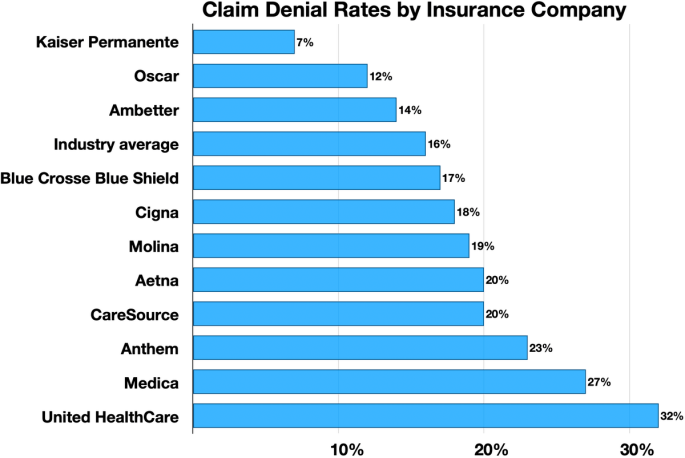
I called my medical insurer to dispute some doctor bills I’d received that they denied. The recorded voice of a lovely woman led me through the maze of prompts telling me what to press on my phone to ‘better serve me.’ After getting through the first number sequence that vaguely applied to my needs, my 16-digit account number was requested. I managed to key it in right the third time and the charming voice directed me to their website for service, along with a sales pitch while I waited on the line for another 10 minutes.

I wanted to hang up, but didn’t. I had several questions, and it would take me too long to describe my issues clearly in writing, so I had to talk with them to resolve the problem. But left waiting on hold it occurred to me that they don’t want problems. And questions answered directly are a liability. And issues? Well, we all have issues, honey.

I let fifteen more minutes pass before hanging up.

Two days later I called again, with the exact same results. I hung up twenty minutes into the call. I didn’t have the time to wait on the line while getting two kids ready for school before going to work that morning.

A few days later I called again. After running the gauntlet a third time I waited on the line to connect with a Customer Service Rep and found myself getting more and more agitated with each passing moment. They were blowing my time and I knew they didn’t care. I guess to them, cutting staff for the minimal cost savings, and enacting the insurance industry’s creed of “delay, deny, defend” was worth part of my sanity.

I waited on hold for 15 minutes when the operator finally came on the line. The first thing she asked for was my account number, the same one I punched into the phone earlier. After a series of ‘security questions,’ twenty minutes into the call we at last got around to my issue, which I explained in great detail. The CSR put me on hold for 10 more minutes before she came back on the line and informed me her records only went back 90 days, which did not address the bills in question. Her managers had access to my full records, but they were in meetings all day and I’d have to call back, or I could go to their website and file a dispute.

A half hour into the call and my blood was boiling. With a curt ‘Thank you,’ I hung up and logged onto their website knowing it would yield no results.

In ten seconds I was on a webpage with a blank field for writing to Customer Care. It took me a good hour to construct a document that explained my problem clearly, and I sent it to them. The next day I got an email back from a service rep that told me he could not release my records without ‘security information’ that he advised me not to give online, and then gave me an 800 number—the same one I had been calling for days—to contact a manager to assist me.

I went back to their website. Anger poured off my fingers and into my words as I typed. I cursed them for making it as time consuming and difficult as possible to communicate. I indicted them for the billions they make annually from all the erroneous bills paid by customers who don’t have the time or the will to run their maze to correct discrepancies. I threatened to choose a different insurer, knowing it was futile since pretty much all corporations rip us off these days. I let my hate for the Insurance industry pour off my fingers, a pyramid scheme from its onset, stealing from clients daily, denying legitimate claims and no one is stopping them. (They are the third largest lobbyists in this country. They get what they want from our govt.) I pointed out social media’s response to the shooting of the United Healthcare CEO, and even confessed to siding with the guy. I purged because I could, because there was no one real on the other end. In fact, I knew anyone who read my email would not care they were stealing from me to keep their job.

It took me less than 10 minutes to exorcise my rant and I was still on rails when I dismissed the idea of deleting it. I pressed send.

That was a mistake. Within an hour I got a call from my husband. He’d been called by the head of HR at the multi-national corporation he worked for to inform him his wife had threatened to shoot the employees of their insurance carrier. My passionate denial and explanation of events leading to my email outburst saved me from prosecution. But in an ironic twist, I did finally get to talk to a customer service manager, who researched my claims, and in the end the insurance company paid the doctor bills in dispute.

Dec 2024

On Medicine Today

Got Covid again last month. Second time, close to a year after my first go-round with it. I’m fully vaxed. Workout 5 miles a day, 5 days a week. No underlying medical conditions. Low-risk age group.

I got Covid the first time at a karaoke bar when the person sitting next to me literally spit in my mouth. Not purposefully. She was singing with the tone deaf performer, along with most of the bar. It lasted 5 days. I had the typical symptoms and I thought it was done, but 4 weeks after I tested negative, I ended up with a vitreous detachment in my right eye. Two weeks after that, I was in the hospital with vertigo.

My husband took me to Emergency, and after throwing up in the empty waiting room for 20 minutes we followed a nurse into a small glass enclosure. She instructed me to get into the bed while she asked me questions I could barely answer, entered my information into her iPad, and left. The doctor came in 30 minutes later and asked the exact same questions as the nurse. The doctor instructed the nurse what medication to give me intravenously, and what prescriptions I should pick up on my way home, then left. I did not see him again, and was released from the hospital half-hour later.

I was at the hospital for about two and a half hrs, 20 minutes of which I spent in the waiting room, and another 30 waiting for the doctor. Besides the nurse, the only other person who came into the enclosure was a woman collecting $350, credit cards accepted into her handheld payment device. I received a saline solution for hydration, and Metoclopramide to curb the nausea, (though by the time it was administered, my nausea had passed). Oh, and I saw the doctor for less than 5 minutes.

The hospital bill for my Emergency visit was over $3,500. I personally paid out-of-pocket close to $1,200, though I am fully insured and pay $700+ monthly for Blue Shield medical insurance.

Getting the picture why I was scared out of my mind of having Covid again?

Beyond the damage to my health the virus was undoubtedly doing, how much was this second round of Covid going to cost me in downtime and money?

I’d heard of Paxlovid from their constant TV commercials. Pfizer, and their like seem to sponsor most network news these days. “If taken within 5 days of symptoms, Paxlovid reduces severe Covid symptoms in high-risk patients by 86%,” the authoritative male voice-over proclaimed. The ad closed with a quick list of all the reported side effects, including, but not limited to death.

The commercial ran through my head as I lay awake with body aches and sweats. Four days into suffering from this new round of Covid, I asked my husband to call the doctor I’d seen only once, the previous year, for my Long Covid symptoms, and get a prescription for Paxlovid. A part of me didn’t think the doctor could legally prescribe the drug since I don’t exactly fit the ‘high-risk’ profile. The on-call doctor who I’ve never met prescribed me Paxlovid, assuring my husband it was the best course of action to shut down the virus and minimize the risk of another round with Long Covid.

Promises. Promises.

During the time DH was procuring the Paxlovid from our local pharmacy, I searched the internet for data from studies on the drug. The first 5 pages of Google returns were from Pfizer and other Big Pharma corps. Big Pharma pays Google billions annually to advertise their offerings, so of course, Google’s top search results are from their highest paying clients. Google’s returns also included a range of ‘medical’ websites, like WebMD, CVS.com, and Medical News Today, supported by pharmaceutical giants through affiliate marketing. Nine out of ten medical sites pulled their content from Pfizer’s website, all proclaiming the wonders of Paxlovid.

Feverish and exhausted, I searched for FACTS. I started crying reading all the lies from Pfizer, and every other site Google returned, all of them dismissing the complaints from people on Reddit or other discussion forums about their horrible reactions to Paxlovid. Pfizer, and therefore every site that got their content from Pfizer, were all spreading PR lies claiming there was no proof the ill effects reported from taking Paxlovid were related to their drug.

Frustrated and desperate to get the TRUTH, I called the doctor who’d given me the prescription. Talking to him was on par with reading Pfizer’s website — he literally quoted their PR, told me everything I’d read already. When I questioned him about, well, anything negative I’d read in my research, he told me, “Don’t get on the internet and look this stuff up. All it’ll do is scare you.” He went on to instruct me to take the Paxlovid for the next 5 days as prescribed, and I’d be fine. “You may get a slight metallic taste in your mouth, but that’s about it, and that hardly happens to anyone, like 3%.” This was a direct quote from Pfizer I’d read many times in my research. My doctor was repeating to me the same bullshit that the sexy, busty, bubble-headed female Pfizer rep sold to him about Paxlovid.

I had almost every side effect, other than dying, (though some moments I wished I would) from taking Paxlovid. The metallic taste in my mouth was so severe it made me sicker than Covid. I could barely eat. It made me dizzy, and nauseous. I had trouble sleeping while on it. But worse, I got Covid again, a third time, 2 weeks after I had a negative test. And Pfizer KNEW I WOULD. They call it “Rebound” cases, and if you look on Reddit, you’ll find MOST WHO TOOK PAXLOVID GOT A REBOUND CASE — meaning they tested positive for Covid again, weeks after they thought it was over. Without Paxlovid, I got over my first round of Covid in 5 days. It took me almost a month to clear my system of the virus on Paxlovid.

Until Covid, I’d been in the hospital 3 times in my life. I wiped out on my bike and screwed up my knee at 23. I ended up at a Public hospital without insurance at the time (staffed by young intern doctors and training nurses relatively clueless about medicine beyond gunshot wounds and ODs). The other two were to birth my kids.

What these recent experiences have taught me:

  • Google returns and promotes LIES. Google is the ONE (and only) SOURCE MOST USED to get their information.
  • Doctors LIE. They are clueless about most new pharms they prescribe. They simply repeat what these pretty young women are selling them, accepting ‘gifts’ of cash and vacation perks; or maybe they’ll check out the link Pfizer sent them about their new ‘targeted’ cure for Covid.
  • Big Pharma LIES. They consistently over-promise and under deliver. They steal from consumers because our govt lets them. Hundreds of billions of our tax dollars go to fund Pfizer and their like. They should be GIVING AWAY THESE DRUGS because U.S. citizens have PAID FOR THEM WITH OUR TAXES. Yet, they charge us fortunes while making themselves billions annually.
  • Our medical system is BROKEN. Medical debt is the #1 reason for bankruptcy in this country. Money for medicine DOES NOT WORK for anyone other than the wealthy, and the U.S. congress, and our elected officials.

What to do with these FACTS?

  1. Get your information from MANY SOURCES, not just Google!
  2. Don’t blindly believe your doctors, as they choose to remain ignorant to the fact that 74% of the 50 new drugs approved by the FDA in 2022 had little proof they actually worked. Research! Reddit. Discord. DuckDuckGo. Bing. White papers, valid medical studies (called Abstracts)…etc.
  3. VOTE BLUE, as Republicans want to take away Medicare, Medicaid, and most social services. They believe in “Trickle Down Economics” which has created more oligarchs than any other socioeconomic practice — loosening regulations and providing tax ‘incentives’ for corporations and individuals with high incomes. Democrats, though not much better as they are still slaves to Corporate America’s lobbyists, at least have an eye out for the middle class in this country. They support more social services, like the Affordable Care Act (‘Obamacare’), mental and reproductive healthcare, Medicaid and Medicare, and lower prescription drug costs. In 2024, close to 69% of the world’s population has some form of Universal Healthcare, while the U.S. still does not. UHC is not socialism. Access to quality medical care regardless of income should be a Civil Right. Let’s do better — serve the many, not just the few! VOTE BLUE.

    The Layering of Life

    Hiking on the Matanuska Glacier in Alaska a few weeks ago, I was trying to capture the iridescent blue/green light coming through the ice below my feet with my Canon Digital SLR. I took a few shots, with different apertures, from different P.O.V.s, but knew when I put them on the computer the picture would flatten. The spectacular translucence would be lost—look like a blue/green patch on dirty white ice.

    At a photography store in Anchorage a few days later, I asked the guy behind the counter how one could pick up that exquisite depth of field of the light coming through the glacial ice on camera. Can’t, he said. But you can create it in Photoshop. Layering the image multiple times should bring back some of the depth the camera can’t pick up.

    Layering…

    It was like a light bulb went on in my head. He was right, of course. The camera can’t pick up the photons moving through ice, only the ones reflecting off the surface. But the word LAYERING reverberated in my head, as I’d been thinking about layering for quite some time.

    When I’m not writing fiction [or blogs], I’m developing and designing marketing and advertising campaigns. I recently created an illustration of sound waves using an image off Google. Simply adding filters to the image made it brighter, or weirder, but still left it rather…flat. I lifted another image of radio waves, and layered it over the sound wave, filtering it to 50% opacity so the base image showed through. Then I went back to Google Images and got another light wave, and another, and layered them with effects too. As I built out the image, layer upon layer, the picture became richer, deeper, more 3D, almost in motion.

    Layering made the image alive.

    A while back my father took a painting class where students replicated a favorite work of a Great Master. Dad picked Vermeer’s Girl with a Pearl Earring. It took him five months to paint, which upon completion looked virtually identical to the real one.

    How did you do that? I inquired upon seeing his work. Did you know you could paint like that? My dad had been a weekend painter most of his adult life. This class, a first since college, was his attempt in retirement to reinvent himself as an artist.

    No! He practically giggled with delight. Honestly, this teacher was fantastic. She taught us all about Layering, from when the Romans began using it, to the Masters, to the Impressionists. I’ve been painting for 40 plus years layering two, maybe three colors or tones. But in some areas on this canvas I must have used fiftyHe proudly showed me highlights on the girl’s face that nearly glowed, bringing her right off the canvas, as in Vermeer’s original. It’s all in the layering, my dear, he’d said back then with a grin.

    Layering… hmm… As I considered it, the more I could see how integral layering is to being alive.

    I’ve always been scared of old age. The prospect of getting old is so terrifying, at times not getting there seems the better option— hasten the end instead of dragging it out with modern medicine. Watching my mother die of cancer and my father age hasn’t been pretty. It’s pretty scary. And I’m right behind them. Other than senior discounts, the upside of aging seems rather illusive.

    Driving my daughter and her teammates to soccer last Friday, they chatted in the back seat about science class. They were amazed by the video of Neil Armstrong on the moon, each trying to quote his words upon stepping on the lunar surface, required for their test on Monday. They didn’t know we all heard him grammatically wrong—that he said, “One small step for [a] man,” not man in general. They hadn’t been there to see the grainy black and white image turn upside down on TV. They hadn’t held their breaths, or felt the collective sigh of a nation, and of the world, when our astronauts returned safely home. They hadn’t experienced the layers of that moment, that day, all the days of the moon mission, or the ones leading up to it, or since, for the most part.

    Mankind’s first steps on anything but our home planet is a mere footnote to the 5th graders in the back seat of my car. The video image they watched in Science was a flat view of a definitive leap in human history. I’ve learned an undeniable gift of adulthood is understanding the significance of a given moment because of the layers of experience proceeding it. At 10, kids images are still just forming, their depth of field still limited to what reflects them, like the photons on the glacial ice.

    Experiencing the moon landing as it was happening created a page, a layer, a memorable slice of my time. Aging’s saving grace may be the collection of these moments of living, layered upon each other, giving, if not wisdom, at least a broader range of awareness, and experience, for a rich, vibrant life picture.