Do you FEEL before you THINK? Or do your THOUGHTS generate your FEELINGS?
Psychology is split on this. Old world believed it was THOUGHT first, i.e. behavioral/cognitive therapy. New world has finally come around to what seems to me so blatantly obvious:
The Human Psyche: FEELINGS lead to THOUGHTS, and THOUGHTS lead to ACTIONS.
Human beings are FEELING creatures FIRST and foremost. Being ALIVE means FEELING, even if just in the physical realm — feeling healthy, sick, in pain, tired, hungry, full, cold, hot…etc.
Infants don’t ‘think.’ New parents like to pretend they do, anthropomorphize their babies by projecting all kinds of genius behavior from their infant. But after raising two kids and caring for many of family and friends, the fact is they don’t really start to think until close to a year into living. They sure FEEL a lot though! Hungry. Cold. Scared. These feelings are so overwhelming that infants will cry, even wail until they’re fed. Warm. Comforted. Babies start to smile at 2–3 months in response to external cues, like someone smiling at them, or making cooing sounds. These smiles reflect the BASE FEELINGS of happy, content, sated, without a lot of thought behind these emotions. It takes infants between 6–9 months to laugh in response to games like peek-a-boo. Again, not a lot of thinking going on for that game.
THOUGHTS are constructed with words, language to express them, even to yourself inside your head. No language. No actual thoughts. Most infants are basically mute until almost a year old, and then the only words they express for months are simple monikers like ‘Mom. Dad. Dog.’ Not a lot of thought there either. Clearly. The neurological wiring of an infant’s brain isn’t connected enough to understand language, therefore they’re unable to form the complexities of ‘thought’ yet.
Everything ALIVE here FEELS the physical realm to varying degrees. Even foliage requires sustenance to live, and on the most rudimentary levels FEELS healthy, sick, hungry, thirsty…etc.
Extract the physical realm from FEELINGS, and we are left with EMOTIONS.
There are a few BASE emotions that connect all humans, but beyond us, it connects most mammals here. My dog feels the same BASE emotions I do. Sometimes Ellie’s sad. Happy. Scared. Excited. These are foundational emotions, generally from LEVEL1 through LEVEL3. But humans are the most complex brains on the planet (we know of). The more complex the brain, the more it seems to create additional layers—L3+—of EMOTIONS atop the foundational sets.
Hierarchy of Emotions:
L1 BASE Emotions:
Good (positive)
Bad (negative)
L2 BASE Emotions (common to us all—’roots’ of our emotional palette):
Good: Happy/Glad, Sated/Content, Excited
Bad: Scared, Sad, Hurt (Anger is L3, an emotional response to Hurt)
L3+ COMPLEX Emotions (atop L2):
Humans never really feel neutral. It may feel in any given moment we’re not feeling anything, but this is a missed perception. Most of us go through our days unaware of how we are FEELING except in exceptional or volatile situations where emotions typically ‘run high,’ like a celebration, or the end of a relationship.
Absorbed in your work means you are engaged, interested, maybe even passionate about it, all ‘good’ feelings. Conscious or not, you are never feeling nothing at all.
Getting down to how we really FEEL takes work because humans lie to ourselves, and subsequently others. Our complex brains weave all kinds of fantasies to make ourselves feel smarter, talented, capable, valuable, in control of ourselves and our destinies.
To control our ACTIONS, it is essential to understand your actual, true EMOTIONS first, and then with THOUGHT (language) define the reasons for what you’re FEELING.
FEELINGS spark THOUGHTS which ignite ACTIONS/Behavior.
Most of us go through life never really understanding that our emotions, i.e. our FEELINGS (not our thoughts) are controlling our daily decisions.
Do you consistently drink too much? Eat too much? Do whatever too much, so much that it’s hurting more than helping you? You’ve tried to stop or modify your behavior, but you keep going back to destructive habits.
To change any of your behavior, you first must understand the FEELINGS that are motivating the THOUGHTS that are generating the ACTION that is preventing you from becoming who you want to be. The only way you’ll never repeat a destructive behavior/action is to let yourself FEEL [and remember] that sticky, grotesque, choking, powerfully negative emotion of shame. Avoid the action, avoid the feeling.
Being ALIVE means FEELING, so at any given moment, like NOW, ask yourself: What am I FEELING right now? Good? Bad? Happy? Sad? After defining the FEELINGS — L1-L3 and beyond — now THINK about what is generating them. The more in touch with your FEELINGS/EMOTIONS you become, the better you’ll be able to THINK about what you need and why, then put those THOUGHTS into productive ACTIONS to live the life you choose.
“I saw someone die today, Mom,” my daughter told me on the phone, her voice four octaves higher than normal, like she’d been sucking on helium.
“Where are you?” I heard street noise in the background.
“I’m on the 101. I’m driving home from the hospital.” Again, her voice was…off—too high, too cheery. “I saw her die, Mom. She was fine, then she flatlined and died.”
“You OK?”
“I am.” She was practically giggling. “Really. It was bizarre, for sure, but I’m fine.”
She didn’t sound fine. “Honey, I want you to get off the freeway at the next exit and pull over so we can talk about this.” I was in my office, a thousand miles away.
“I’m telling you, I’m fine. I can handle this, when I’m a doctor,” she insisted in that squeaky voice. “I was cleaning her room, and we were talking about her daughter at UCSD—” her voice cracked right then and she stopped talking.
“Jade, I want you to get off the freeway. Right now. How far to the next exit?”
“I’m taking it right now.”
“Pull over on a side street, and shut off your car, then talk to me.”
I raised our kids with an open forum, not the surface, pc-level shit most people spout. The ‘I’m fine! Biz is great! Everything’s dandy’ bullshit my parents and colleagues pushed down my throat daily wasn’t going to fly in the family I created (or my friendships that stick). “Talk to me,” is my personal mantra.
“OK. I pulled over,” my daughter said, her voice deeper now, though still not exactly normal.
“Good. Now turn off your car and tell me what happened.”
“She just had gallbladder surgery, just like you did last yea—year.” Her voice cracked, like a teen boy entering manhood. “She was fine…” Gasping breaths and I could hear, even feel her anxiety attack coming on. “Her daughter was in the hallway…When she flatlined a bunch of nurses came in and then doctors and they were shocking her and it didn’t work then they did it again and again and I just stood there, holding the trashcan I just emptied.” And I heard my beautiful daughter sobbing on the other end of the phone, and I was a thousand miles away from being able to hold her.
“Honey, I’m right here. You’re OK. Deep breaths. Breathe with me. Breathe in… Breathe out… It must have been really hard to witness that. I can’t imagine it. It’s why I never wanted to be a doctor,” I say deadpan to lighten the mood but could still hear her struggling to catch her breath. “OK. Let’s do some box breathing.” And we did, all four sides, in and out. In and out.
“Her daughter was my age,” she said, weeping as she spoke. “It could have been you, Mom. It could have been you and I can’t lose you yet.”
“I’m right here, baby. I’m healthy, and I’m active and I’m here for you.”
“Does this mean I’ll make a lousy doctor?”
Of course, I said it made her human—the best kind of doctor. Maybe too human, but I didn’t say that. I listened as she unraveled from giddy shock. She told me how one of the nurses asked her to get a sheet to cover the dead woman, then helped the nurse place it over the body. She saw the doctor talking to the daughter crying in the hallway.
“She kept asking the doctor, ‘What? What do you mean?’ like she didn’t believe him that her mom was dead. She wasn’t suppose to die, Mom. And now she’s dead. And I don’t want it to be you.”
“It isn’t me, Jade. I’m right here.”
“Now!” she almost yelled. “But what if you never get to know my kids, like that daughter today, or your mom?”
I listened, empathized, and helped quell her fears for another half hour before she was calm enough to get back on the road and go home to her shared apartment off-campus. She’d have roommates to talk to there, two young women also pursuing the medical pathway at UCSD. I told her to call or text me when she got home, just to check in she got home safely, and fifteen minutes later she texted she did.
Heavy sigh of relief, but in the distance, far beyond my grateful nod my daughter was safe to an almighty I don’t believe in, I felt…annoyed. I never wanted to be a doctor. Never played one as a kid. Didn’t like them because every time I had to see them either I, or someone I cared about was sick. And they’re so sure of themselves they don’t listen beyond test results, and half the time don’t know what they’re talking about even though they pretend they do. I don’t like doctors. And my daughter is on her way to becoming one.
I try to keep my personal disdain for her career choice to myself, but beyond my distaste for the medical community, I hate blood and gore. I can’t look at it on TV or in the movies. I have to look away because it literally makes me feel like I’m going to vomit. I won’t let her describe to me the process of guillotining rats for her spine research lab assistant position on campus, but on the phone I did remind her she got used to doing it after a few times.
My daughter’s wanted to become a doctor since she was child. At 10, when we allowed her an email account [under her choice of pseudonym], her first address was doctorscientistsoccer@. She got accolades when she told teachers to girl scout leaders she wanted to be a doctor, but that seemed to be the extent of her interest in medicine. She played soccer but I never saw her play doctor. People in wheelchairs or maimed or missing body parts scared her when she was young, and no matter what I said she would not engage with them. If a movie involved a child losing one or both parents, or parents losing their kid, she’d come undone—start crying that would sometimes escalate into a full-blown anxiety attack. She ran up to her room sobbing towards the end of Dances With Wolves when the wolf was killed.
Handling illness and loss didn’t exactly seem to be our daughter’s forte. Becoming a doctor requires compartmentalizing your feelings—locking yours away to deal with the patient or situation at hand. And maybe she could learn this skill over time, but I don’t want my daughter burying her emotions, denying her feelings, and becoming the automaton most doctors I’ve met seem to be. And let’s not forget, spending her career jumping through hoops of insurance companies to give patients the care they need without killing them financially. I wish for my daughter so much more than a lifetime of attending to others’ suffering.
I’ve never ever wanted to journey down the path of practicing medicine, yet I feel like I’ve been unwittingly roped into it. Along with her undergrad degree in Biology, volunteering at Palomar hospital was resume building for medical school. Before the death of this mom, she called me often to unload—overwhelmed by the coursework, or the illness she saw at the dermatology clinic she worked for, or torn over the moral quandary of ‘murdering rats’ in the lab.
Becoming a doctor requires more education than becoming a rocket scientist. I never considered endeavoring down such a very long, hard, expensive career path, self-doubt assuring me I’d fail if I attempted it. Since she’s ventured down the medical road, I’ve been our daughter’s emotional and financial support system through her undergrad degree; four, nail-biting waiting for scores, MCATs; spent months helping her edit countless essays for various med school applications. And right when I think maybe I can get a break from all this, she’ll be on pins and needles for the next 6 to 8 months waiting to hear where, if, she’s been accepted to study for four more years before another four to seven years of residency. And even when, if, she gets in, it’ll cost her $300k in student loans on top of the $100k we’ll give her. Becoming a doctor is very expensive!
When she was little, she used to build these incredible structures—towers 8 ft high out of Magnatiles. She has a great sense of physics and I used to imagine she’d get over saying she wanted to be a doctor when she realized what it takes to get there, and the hardship of constantly dealing with people in pain and corporate corruption. She’d become a civil engineer or architect, create structures of beauty and utility, and still live well.
I set up an open forum of communication for the family I created because I never had it in my own growing up. My ‘turn that frown upside down,’ or ‘make lemonade out of lemons’ mother denied every negative feeling of mine, of hers, until her deathbed when she spewed hate at her husband, my narcissist of a father, for two straight weeks before the cancer silenced her.
The next 2 to 3 months are going to be tense at home. We’re all waiting to hear from medical schools my daughter applied to that are interested enough to ask for ‘secondaries’—school‑specific applications requiring their own essays and fees. Assuming she gets requests for secondaries, I’ll have to work with her for another 2 months helping her edit more essays for each school. Then we have to wait another 3 to 5 months to hear if she’s been accepted anywhere.
My daughter is going to be a doctor. Oh joy!
Not so much…
Assuming she gets into a med school, I’m going to have to hear about gruesome details of human anatomy, disease, diagnosis, pain, death, and many of her experiences through residency. Except I never wanted to be a doctor, or walk the path of becoming one. And I still don’t. Just the thought of blood, cutting someone open in surgery, makes me ill. But a part of me, the adult part with a broader view than my personal gratification, understands my daughter is honoring my vision by choosing to devote her life to the welfare of others, and I’ll do whatever I can to support her achieving this goal.
I can hear the chorus of non-breeders and parents more devoted to their work than the kids they create dissing me for helicopter parenting. But the road to becoming a doctor, or even a rocket scientist isn’t like becoming a soldier or real estate broker where the barrier to entry is extremely low. “Emotional support from family is one of the strongest predictors of admissions and persistence in medical school,” AAMC, AMA, and tons of medical education studies have found.
We play God giving life, having kids. My sister had three. The first two she pursued her own bliss, playing tennis for hours daily, taking two week vacations 3 to 5 times a year leaving her kids with our mother, or a nanny. Her husband, their father, found his value devoting his life to his career. Both their kids struggled academically regardless that they had the financial means for expensive tutors. Both dropped out of college and have no discernible careers. At 46 and 44, they both are always hustling to make ends meet, pay the bills—get by.
My sister had her third child seven years after her daughter. This boy loved the violin from the first time he heard the instrument. My sister gave him one at 5 yrs old and signed him up for lessons. The instructor told her son the proper posture for holding and playing the violin, and for the next decade my sister worked with her son most every day, for an hour or more, coaching him to: “Lift your elbow. Drop your shoulder. Center your chin.” She took him to his lessons, attended his recitals and proudly invited friends and family. A guitarist herself, they played music together often—a bizarrely bonding experience (if you’ve not done it and don’t know). My sister formed a connection with her last child she’d neglected to establish with her first two. She gave her baby her most precious gift—her TIME.
Her son, at 37, is a successful ARTIST—likely the hardest career to attain. He got into the prestigious Berklee School of Music with my sister’s emotional and financial support from applying through attending. He now co-owns a gallery in the posh Wilshire district of L.A. where he showcases famous and up-and-coming artists. He shows and sells his work globally. Financially stable. Happily married with kids. A resounding success by every measure.
Tell me parental support doesn’t really matter and you’re lying to you.
I always wanted kids, not only to raise them better than my parents did, but to create human beings that were better than me—kinder, more receptive, perceptive, smarter choices and actions for themselves and the lives they touch. I had this notion that if each gen raised their children better than the last, people could rise above our petty prejudices and squabbles and learn from each other, work together and reach our true creative, compassionate potential. Our children’s children’s children wouldn’t know poverty, inequity, blind faith or hate. Imagine what we could create…
Thing is, most don’t share my vision, so absorbed in their day-to-day they can’t see the forests [we’re killing] through the trees [on their block]. And that’s a shame, really. Contrary to popular perception, our individual lives don’t really matter in the long run. Regardless of how famous you become, or the amount of money you make, or even your memories from life experiences, it all goes when you die. You may be remembered by family, friends or fans for a while, but even your memory will fade for most everyone in short order. The greatest contribution we can make in our lifetime is in service to others. Raising kids, supporting parents, friends, colleagues, strangers, we create a better world when we invest our time, energy, and heart into each other.
I called my medical insurer to dispute some doctor bills I’d received that they denied. The recorded voice of a lovely woman led me through the maze of prompts telling me what to press on my phone to ‘better serve me.’ After getting through the first number sequence that vaguely applied to my needs, my 16-digit account number was requested. I managed to key it in right the third time and the charming voice directed me to their website for service, along with a sales pitch while I waited on the line for another 10 minutes.
I wanted to hang up, but didn’t. I had several questions, and it would take me too long to describe my issues clearly in writing, so I had to talk with them to resolve the problem. But left waiting on hold it occurred to me that they don’t want problems. And questions answered directly are a liability. And issues? Well, we all have issues, honey.
I let fifteen more minutes pass before hanging up.
Two days later I called again, with the exact same results. I hung up twenty minutes into the call. I didn’t have the time to wait on the line while getting two kids ready for school before going to work that morning.
A few days later I called again. After running the gauntlet a third time I waited on the line to connect with a Customer Service Rep and found myself getting more and more agitated with each passing moment. They were blowing my time and I knew they didn’t care. I guess to them, cutting staff for the minimal cost savings, and enacting the insurance industry’s creed of “delay, deny, defend” was worth part of my sanity.
I waited on hold for 15 minutes when the operator finally came on the line. The first thing she asked for was my account number, the same one I punched into the phone earlier. After a series of ‘security questions,’ twenty minutes into the call we at last got around to my issue, which I explained in great detail. The CSR put me on hold for 10 more minutes before she came back on the line and informed me her records only went back 90 days, which did not address the bills in question. Her managers had access to my full records, but they were in meetings all day and I’d have to call back, or I could go to their website and file a dispute.
A half hour into the call and my blood was boiling. With a curt ‘Thank you,’ I hung up and logged onto their website knowing it would yield no results.
In ten seconds I was on a webpage with a blank field for writing to Customer Care. It took me a good hour to construct a document that explained my problem clearly, and I sent it to them. The next day I got an email back from a service rep that told me he could not release my records without ‘security information’ that he advised me not to give online, and then gave me an 800 number—the same one I had been calling for days—to contact a manager to assist me.
I went back to their website. Anger poured off my fingers and into my words as I typed. I cursed them for making it as time consuming and difficult as possible to communicate. I indicted them for the billions they make annually from all the erroneous bills paid by customers who don’t have the time or the will to run their maze to correct discrepancies. I threatened to choose a different insurer, knowing it was futile since pretty much all corporations rip us off these days. I let my hate for the Insurance industry pour off my fingers, a pyramid scheme from its onset, stealing from clients daily, denying legitimate claims and no one is stopping them. (They are the third largest lobbyists in this country. They get what they want from our govt.) I pointed out social media’s response to the shooting of the United Healthcare CEO, and even confessed to siding with the guy. I purged because I could, because there was no one real on the other end. In fact, I knew anyone who read my email would not care they were stealing from me to keep their job.
It took me less than 10 minutes to exorcise my rant and I was still on rails when I dismissed the idea of deleting it. I pressed send.
That was a mistake. Within an hour I got a call from my husband. He’d been called by the head of HR at the multi-national corporation he worked for to inform him his wife had threatened to shoot the employees of their insurance carrier. My passionate denial and explanation of events leading to my email outburst saved me from prosecution. But in an ironic twist, I did finally get to talk to a customer service manager, who researched my claims, and in the end the insurance company paid the doctor bills in dispute.
My period is six days late. I check throughout the day, hoping, but my old friend isn’t coming. There was a time when I would have been ecstatic it was late, gotten a pregnancy test and peed on the stick anticipating the plus sign. And there were times I would have been horrified I may be pregnant, too afraid to take the test while anxiously waiting for my period to start. But today there is a quiet sorrow, like mourning a loss. It’s possible I’ll never see my period again. Menopause has taken my friend and is robbing me of my youth.
Never in my life have I had the affection for my period I do now that it’s going away. Like most girls, I couldn’t wait for it to start. Menstruating turned a girl into woman, our mothers assured us. What my mother didn’t fill me in on were the cramps, the bloating, the wild mood swings, and the total hassle of bleeding for five days every single month. Once I became sexually active there was the constant concern of getting pregnant, regardless of using birth control. Everyone knows stories of women who claimed to be on the pill, or said they were using a condom but got pregnant anyway.
My period was more than a minor inconvenience; it was a major disruption to my life. I was one of the few women unable to take the Pill. Regardless of the dosage, it made me ill. I felt the full force of menstruation monthly. The gross mess and disgusting smell of the physical bleeding, on top of the intense cramping from passing clumps of bloody tissue were nothing compared to the mental ride every three weeks or so. Like clockwork after ovulation I’d get ravenously hungry, overwhelmingly tired, anxious, bitchy, with sudden bursts of manic energy. The closer I got to my period the more intense my feelings, all feelings would get. Right before I began bleeding, I often experienced bouts of deep sadness, wept with little provocation. But literally the moment my period began my darkness would lift as if it never existed.
Thirty seven years of this and I thought I’d be thrilled when menopause came along. It surprised me to feel so differently while waiting for my period to come and thinking it may not. Despite that I was one of those unlucky women with severe PMS, or PMDD, or whatever they’re calling it these days, my period gave me my kids. Having a period gave me the capacity to produce life. And though my two extraordinary children are all I’ll ever want, when my period goes I’ll lose the ability to have any ever again. What kind of woman will I be without the exclusive, inherently female capability to reproduce?
Menopause steals more than our ability to have children. According to Wikipedia, as women age our ovaries gradually produce lower levels of the natural sex hormones estrogen, progesterone, and testosterone until they diminish almost entirely. These are the hormones of youth. They keep our immune system and other vital body functions healthy so we are physiologically able to carry and bear a child, fulfill our biological imperative.
Estrogen accelerates metabolism (to burn fat faster). It increases bone density, and vaginal lubrication for better sex. Estrogen promotes healthy cholesterol levels. It helps regulate fluid balance which controls water retention. It aids lung function and reduces the risk of several kinds of cancers.
Progesterone acts as an anti-inflammatory and regulates the immune response. It normalizes blood clotting and cell oxygen levels, and use of fat stores for energy. It decreases risk of gingivitis and tooth decay. It appears to affect synaptic functioning, improve memory and cognitive ability. And progesterone also seems to reduce the risk of several deadly cancers.
And everyone knows testosterone is the premiere sex hormone — that sweet, dense scent that leeches through the pours right before orgasm. It also controls libido and clitoral engorgement. It increases muscle strength and mass, mental and physical energy. Maintaining testosterone levels has been shown to reduce the risk of cardiovascular disease, decrease fat and increase lean body mass.
The payoff to enduring my menstrual cycle was clearly much more than producing kids. In losing my period, I am not only grieving the loss of childbearing but the hormones that provided me privileges and protections. The end of menstruation feels harder, darker than the onset. Girls speculate in wonder waiting for their periods to begin. In menopause, women must undergo drenching sweats, memory loss, weight gain, and phantom pain. Get through all that and the light at the end of this ordeal turns out to be a death bullet. Perimenopause begins in our early 50’s and full menopause last upwards of 10 years or more. Surviving menopause means then confronting the perils of old age, and coming to terms with my eminently closer demise.
Dye my hair, work out daily, dress casual but chic, and still, losing my period means unequivocally, undeniably I am no longer young. I miss my old friend right now and wonder if like my youth it is gone forever.
Will shooting them all stop these corps stealing from the 99%?
I’m writing a dystopian novel called The Power Trip about 4 Stanford undergrads that build a MMORPS game where PLAYERS manipulate other players — MARKS — to do what they ‘suggest.’
In one scene, the fictional CEO of fictional HealthNet is shot to death on a street in San Francisco by a social activist who lost his parents in the Nipah outbreak of ’36 due to poor care at Stanford Hospital. I wrote this scene a decade ago, enraged by our healthcare system in the U.S.A., and was reviewing it as it played out in real life last Wednesday on a street in New York City with the murder of the CEO of UnitedHealthcare.
And I’d like to tell you that I feel bad for his family that he was gunned down on a public street in broad daylight, but…
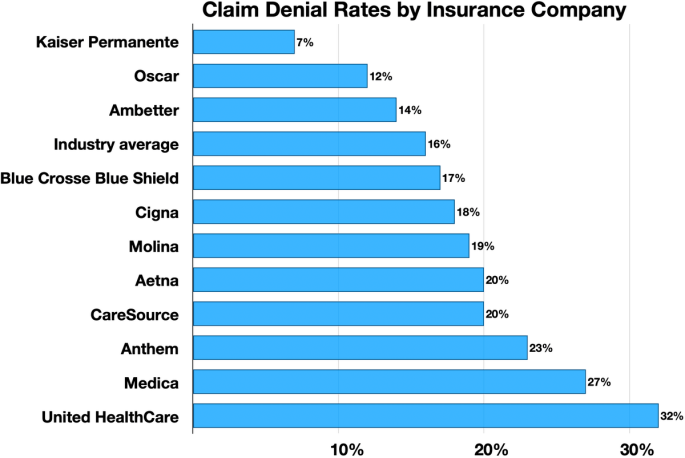
I really am conflicted on this one. Brian Thompson, the real life (though now dead) UnitedHealthcare CEO was not a benefit to society. He headed up an insurance company that kills people every day by limiting doctor care, drug pushing for big pharma, and denying claims with no foundation other than pure greed, destroying lives daily. He was a father, which makes him particularly dangerous because more like him in this country, on this planet will not help humanity thrive, but hurts our survival.
American’s have a SHORTER LIFE SPAN than China, Greece, United Arab Emirates, and 51 other nations on this planet. We are 55th in life expectancy because of the poor quality of our FOR PROFIT ‘healthcare’ system.
Was there another way to stop this CEO from hurting people than murdering him?
Not that I know of. And while I’m not an advocate of murder, unless you run a Power Trip on him to commit suicide, Brian Thompson wasn’t going to change his marauding ways.
Can’t sue him. Sue any major corp, and their stable of lawyers will tie you up in court until you or your organization can no longer afford representation for your case.
Can’t talk to him, convince him to do right by the patients who pay for his family, his lifestyle, and the politicians UnitedHealthcare supports. He exhibited his relentless greed, and clearly didn’t care about anyone outside his personal sphere.
In 2014, the U.S. Supreme Court decided that corporations are people too. In doing so, they expanded corporate rights to donate as much money, resources (lawyers), and lobbyists to whatever cause, and political agenda they wanted. Corporations control the politicians of this country. We are NOT “by the people, for the people.” The U.S. was started by oligarchs who convinced the rabble to fight their battle to avoid paying taxes to Britain.
The U.S.A. is now and likely has always been a totalitarian society ruled by oligarchs and the super wealthy who will do anything to get rich and stay rich. Brian Thompson’s estimated net worth at death was close to $50 million, which he made saving money for UnitedHealthcare by killing off patients. That $50M is public facing, not how much he likely had hidden in offshore accounts to avoid paying taxes.
So, do we kill all the oligarchs wrecking this country?
We can’t get rid of them legally. Our govt protects corporations and the executives who work for them, not the 99% of the rest of us in this country.
We can’t elect politicians that will be ‘by the people, for the people’ when the oligarchs and wealthy corps are paying our representatives to create laws that divests them of all culpability to keep them rich and in power.
What to do with the greedy oligarchs like Donald Trump, Elon Musk, Jeff Bezos, Bill Gates, Mark Zuckerberg, Charles Koch, Harold Hamm, Larry Ellison, Sergey Brin, Larry Page, Warren Buffet, and CEO’s like Dave Brown (CEO Xfinity), Gail Boudreaux (CEO of Anthem/Blue Cross), Patti Poppe (CEO of PG&E), Sarah Chavarria (CEO of Delta Dental), Michael L. Tipsord (CEO of State Farm Insurance), Thomas J. Wilson (CEO of Allstate Insurance), Gregory Adams (CEO Kaiser Permanente), David Cordani (CEO Cigna Health), Jason Hollar (CEO Cardinal Health), Mike Slubowski (CEO Trinity Health)…etc?
Would shooting them all stop these corporations from stealing from the 99% of the rest of us?
If it would lead to a more equitable system of government — ‘by the [majority of] people, for the [majority of] people,’ — is it then the ‘right thing to do’ to murder these people to change a corrupt system controlled by the greedy 1%?