On Raising a Doctor

“I saw someone die today, Mom,” my daughter told me on the phone, her voice four octaves higher than normal, like she’d been sucking on helium.

“Where are you?” I heard street noise in the background.

“I’m on the 101. I’m driving home from the hospital.” Again, her voice was…off—too high, too cheery. “I saw her die, Mom. She was fine, then she flatlined and died.”

“You OK?”

“I am.” She was practically giggling. “Really. It was bizarre, for sure, but I’m fine.”

She didn’t sound fine. “Honey, I want you to get off the freeway at the next exit and pull over so we can talk about this.” I was in my office, a thousand miles away.

“I’m telling you, I’m fine. I can handle this, when I’m a doctor,” she insisted in that squeaky voice. “I was cleaning her room, and we were talking about her daughter at UCSD—” her voice cracked right then and she stopped talking.

“Jade, I want you to get off the freeway. Right now. How far to the next exit?”

“I’m taking it right now.”

“Pull over on a side street, and shut off your car, then talk to me.”

I raised our kids with an open forum, not the surface, pc-level shit most people spout. The ‘I’m fine! Biz is great! Everything’s dandy’ bullshit my parents and colleagues pushed down my throat daily wasn’t going to fly in the family I created (or my friendships that stick). “Talk to me,” is my personal mantra.

“OK. I pulled over,” my daughter said, her voice deeper now, though still not exactly normal.

“Good. Now turn off your car and tell me what happened.”

“She just had gallbladder surgery, just like you did last yea—year.” Her voice cracked, like a teen boy entering manhood. “She was fine…” Gasping breaths and I could hear, even feel her anxiety attack coming on. “Her daughter was in the hallway…When she flatlined a bunch of nurses came in and then doctors and they were shocking her and it didn’t work then they did it again and again and I just stood there, holding the trashcan I just emptied.” And I heard my beautiful daughter sobbing on the other end of the phone, and I was a thousand miles away from being able to hold her.

Honey, I’m right here. You’re OK. Deep breaths. Breathe with me. Breathe in… Breathe out… It must have been really hard to witness that. I can’t imagine it. It’s why I never wanted to be a doctor,” I say deadpan to lighten the mood but could still hear her struggling to catch her breath. “OK. Let’s do some box breathing.” And we did, all four sides, in and out. In and out.

“Her daughter was my age,” she said, weeping as she spoke. “It could have been you, Mom. It could have been you and I can’t lose you yet.”

“I’m right here, baby. I’m healthy, and I’m active and I’m here for you.”

“Does this mean I’ll make a lousy doctor?”

Of course, I said it made her human—the best kind of doctor. Maybe too human, but I didn’t say that. I listened as she unraveled from giddy shock. She told me how one of the nurses asked her to get a sheet to cover the dead woman, then helped the nurse place it over the body. She saw the doctor talking to the daughter crying in the hallway.

“She kept asking the doctor, ‘What? What do you mean?’ like she didn’t believe him that her mom was dead. She wasn’t suppose to die, Mom. And now she’s dead. And I don’t want it to be you.”

“It isn’t me, Jade. I’m right here.”

Now!” she almost yelled. “But what if you never get to know my kids, like that daughter today, or your mom?”

I listened, empathized, and helped quell her fears for another half hour before she was calm enough to get back on the road and go home to her shared apartment off-campus. She’d have roommates to talk to there, two young women also pursuing the medical pathway at UCSD. I told her to call or text me when she got home, just to check in she got home safely, and fifteen minutes later she texted she did.

Heavy sigh of relief, but in the distance, far beyond my grateful nod my daughter was safe to an almighty I don’t believe in, I felt…annoyed. I never wanted to be a doctor. Never played one as a kid. Didn’t like them because every time I had to see them either I, or someone I cared about was sick. And they’re so sure of themselves they don’t listen beyond test results, and half the time don’t know what they’re talking about even though they pretend they do. I don’t like doctors. And my daughter is on her way to becoming one.

I try to keep my personal disdain for her career choice to myself, but beyond my distaste for the medical community, I hate blood and gore. I can’t look at it on TV or in the movies. I have to look away because it literally makes me feel like I’m going to vomit. I won’t let her describe to me the process of guillotining rats for her spine research lab assistant position on campus, but on the phone I did remind her she got used to doing it after a few times.

My daughter’s wanted to become a doctor since she was child. At 10, when we allowed her an email account [under her choice of pseudonym], her first address was doctorscientistsoccer@. She got accolades when she told teachers to girl scout leaders she wanted to be a doctor, but that seemed to be the extent of her interest in medicine. She played soccer but I never saw her play doctor. People in wheelchairs or maimed or missing body parts scared her when she was young, and no matter what I said she would not engage with them. If a movie involved a child losing one or both parents, or parents losing their kid, she’d come undone—start crying that would sometimes escalate into a full-blown anxiety attack. She ran up to her room sobbing towards the end of Dances With Wolves when the wolf was killed.

Handling illness and loss didn’t exactly seem to be our daughter’s forte. Becoming a doctor requires compartmentalizing your feelings—locking yours away to deal with the patient or situation at hand. And maybe she could learn this skill over time, but I don’t want my daughter burying her emotions, denying her feelings, and becoming the automaton most doctors I’ve met seem to be. And let’s not forget, spending her career jumping through hoops of insurance companies to give patients the care they need without killing them financially. I wish for my daughter so much more than a lifetime of attending to others’ suffering.

I’ve never ever wanted to journey down the path of practicing medicine, yet I feel like I’ve been unwittingly roped into it. Along with her undergrad degree in Biology, volunteering at Palomar hospital was resume building for medical school. Before the death of this mom, she called me often to unload—overwhelmed by the coursework, or the illness she saw at the dermatology clinic she worked for, or torn over the moral quandary of ‘murdering rats’ in the lab.

Becoming a doctor requires more education than becoming a rocket scientist. I never considered endeavoring down such a very long, hard, expensive career path, self-doubt assuring me I’d fail if I attempted it. Since she’s ventured down the medical road, I’ve been our daughter’s emotional and financial support system through her undergrad degree; four, nail-biting waiting for scores, MCATs; spent months helping her edit countless essays for various med school applications. And right when I think maybe I can get a break from all this, she’ll be on pins and needles for the next 6 to 8 months waiting to hear where, if, she’s been accepted to study for four more years before another four to seven years of residency. And even when, if, she gets in, it’ll cost her $300k in student loans on top of the $100k we’ll give her. Becoming a doctor is very expensive!

When she was little, she used to build these incredible structures—towers 8 ft high out of Magnatiles. She has a great sense of physics and I used to imagine she’d get over saying she wanted to be a doctor when she realized what it takes to get there, and the hardship of constantly dealing with people in pain and corporate corruption. She’d become a civil engineer or architect, create structures of beauty and utility, and still live well.

I set up an open forum of communication for the family I created because I never had it in my own growing up. My ‘turn that frown upside down,’ or ‘make lemonade out of lemons’ mother denied every negative feeling of mine, of hers, until her deathbed when she spewed hate at her husband, my narcissist of a father, for two straight weeks before the cancer silenced her.

The next 2 to 3 months are going to be tense at home. We’re all waiting to hear from medical schools my daughter applied to that are interested enough to ask for ‘secondaries’—school‑specific applications requiring their own essays and fees. Assuming she gets requests for secondaries, I’ll have to work with her for another 2 months helping her edit more essays for each school. Then we have to wait another 3 to 5 months to hear if she’s been accepted anywhere.

My daughter is going to be a doctor. Oh joy!

Not so much…

Assuming she gets into a med school, I’m going to have to hear about gruesome details of human anatomy, disease, diagnosis, pain, death, and many of her experiences through residency. Except I never wanted to be a doctor, or walk the path of becoming one. And I still don’t. Just the thought of blood, cutting someone open in surgery, makes me ill. But a part of me, the adult part with a broader view than my personal gratification, understands my daughter is honoring my vision by choosing to devote her life to the welfare of others, and I’ll do whatever I can to support her achieving this goal.

I can hear the chorus of non-breeders and parents more devoted to their work than the kids they create dissing me for helicopter parenting. But the road to becoming a doctor, or even a rocket scientist isn’t like becoming a soldier or real estate broker where the barrier to entry is extremely low. “Emotional support from family is one of the strongest predictors of admissions and persistence in medical school,” AAMC, AMA, and tons of medical education studies have found.

We play God giving life, having kids. My sister had three. The first two she pursued her own bliss, playing tennis for hours daily, taking two week vacations 3 to 5 times a year leaving her kids with our mother, or a nanny. Her husband, their father, found his value devoting his life to his career. Both their kids struggled academically regardless that they had the financial means for expensive tutors. Both dropped out of college and have no discernible careers. At 46 and 44, they both are always hustling to make ends meet, pay the bills—get by.

My sister had her third child seven years after her daughter. This boy loved the violin from the first time he heard the instrument. My sister gave him one at 5 yrs old and signed him up for lessons. The instructor told her son the proper posture for holding and playing the violin, and for the next decade my sister worked with her son most every day, for an hour or more, coaching him to: “Lift your elbow. Drop your shoulder. Center your chin.” She took him to his lessons, attended his recitals and proudly invited friends and family. A guitarist herself, they played music together often—a bizarrely bonding experience (if you’ve not done it and don’t know). My sister formed a connection with her last child she’d neglected to establish with her first two. She gave her baby her most precious gift—her TIME.

Her son, at 37, is a successful ARTIST—likely the hardest career to attain. He got into the prestigious Berklee School of Music with my sister’s emotional and financial support from applying through attending. He now co-owns a gallery in the posh Wilshire district of L.A. where he showcases famous and up-and-coming artists. He shows and sells his work globally. Financially stable. Happily married with kids. A resounding success by every measure.

Tell me parental support doesn’t really matter and you’re lying to you.

I always wanted kids, not only to raise them better than my parents did, but to create human beings that were better than me—kinder, more receptive, perceptive, smarter choices and actions for themselves and the lives they touch. I had this notion that if each gen raised their children better than the last, people could rise above our petty prejudices and squabbles and learn from each other, work together and reach our true creative, compassionate potential. Our children’s children’s children wouldn’t know poverty, inequity, blind faith or hate. Imagine what we could create…

Thing is, most don’t share my vision, so absorbed in their day-to-day they can’t see the forests [we’re killing] through the trees [on their block]. And that’s a shame, really. Contrary to popular perception, our individual lives don’t really matter in the long run. Regardless of how famous you become, or the amount of money you make, or even your memories from life experiences, it all goes when you die. You may be remembered by family, friends or fans for a while, but even your memory will fade for most everyone in short order. The greatest contribution we can make in our lifetime is in service to others. Raising kids, supporting parents, friends, colleagues, strangers, we create a better world when we invest our time, energy, and heart into each other.
© 2026 J. Cafesin

Don’t Press Send

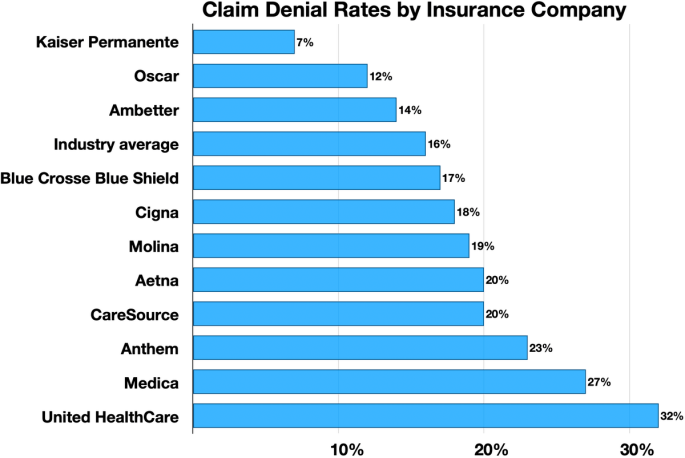
I called my medical insurer to dispute some doctor bills I’d received that they denied. The recorded voice of a lovely woman led me through the maze of prompts telling me what to press on my phone to ‘better serve me.’ After getting through the first number sequence that vaguely applied to my needs, my 16-digit account number was requested. I managed to key it in right the third time and the charming voice directed me to their website for service, along with a sales pitch while I waited on the line for another 10 minutes.

I wanted to hang up, but didn’t. I had several questions, and it would take me too long to describe my issues clearly in writing, so I had to talk with them to resolve the problem. But left waiting on hold it occurred to me that they don’t want problems. And questions answered directly are a liability. And issues? Well, we all have issues, honey.

I let fifteen more minutes pass before hanging up.

Two days later I called again, with the exact same results. I hung up twenty minutes into the call. I didn’t have the time to wait on the line while getting two kids ready for school before going to work that morning.

A few days later I called again. After running the gauntlet a third time I waited on the line to connect with a Customer Service Rep and found myself getting more and more agitated with each passing moment. They were blowing my time and I knew they didn’t care. I guess to them, cutting staff for the minimal cost savings, and enacting the insurance industry’s creed of “delay, deny, defend” was worth part of my sanity.

I waited on hold for 15 minutes when the operator finally came on the line. The first thing she asked for was my account number, the same one I punched into the phone earlier. After a series of ‘security questions,’ twenty minutes into the call we at last got around to my issue, which I explained in great detail. The CSR put me on hold for 10 more minutes before she came back on the line and informed me her records only went back 90 days, which did not address the bills in question. Her managers had access to my full records, but they were in meetings all day and I’d have to call back, or I could go to their website and file a dispute.

A half hour into the call and my blood was boiling. With a curt ‘Thank you,’ I hung up and logged onto their website knowing it would yield no results.

In ten seconds I was on a webpage with a blank field for writing to Customer Care. It took me a good hour to construct a document that explained my problem clearly, and I sent it to them. The next day I got an email back from a service rep that told me he could not release my records without ‘security information’ that he advised me not to give online, and then gave me an 800 number—the same one I had been calling for days—to contact a manager to assist me.

I went back to their website. Anger poured off my fingers and into my words as I typed. I cursed them for making it as time consuming and difficult as possible to communicate. I indicted them for the billions they make annually from all the erroneous bills paid by customers who don’t have the time or the will to run their maze to correct discrepancies. I threatened to choose a different insurer, knowing it was futile since pretty much all corporations rip us off these days. I let my hate for the Insurance industry pour off my fingers, a pyramid scheme from its onset, stealing from clients daily, denying legitimate claims and no one is stopping them. (They are the third largest lobbyists in this country. They get what they want from our govt.) I pointed out social media’s response to the shooting of the United Healthcare CEO, and even confessed to siding with the guy. I purged because I could, because there was no one real on the other end. In fact, I knew anyone who read my email would not care they were stealing from me to keep their job.

It took me less than 10 minutes to exorcise my rant and I was still on rails when I dismissed the idea of deleting it. I pressed send.

That was a mistake. Within an hour I got a call from my husband. He’d been called by the head of HR at the multi-national corporation he worked for to inform him his wife had threatened to shoot the employees of their insurance carrier. My passionate denial and explanation of events leading to my email outburst saved me from prosecution. But in an ironic twist, I did finally get to talk to a customer service manager, who researched my claims, and in the end the insurance company paid the doctor bills in dispute.

Dec 2024

Murdering CEOs is Trending

Will shooting them all stop these corps stealing from the 99%?

I’m writing a dystopian novel called The Power Trip about 4 Stanford undergrads that build a MMORPS game where PLAYERS manipulate other players — MARKS — to do what they ‘suggest.’

In one scene, the fictional CEO of fictional HealthNet is shot to death on a street in San Francisco by a social activist who lost his parents in the Nipah outbreak of ’36 due to poor care at Stanford Hospital. I wrote this scene a decade ago, enraged by our healthcare system in the U.S.A., and was reviewing it as it played out in real life last Wednesday on a street in New York City with the murder of the CEO of UnitedHealthcare.

And I’d like to tell you that I feel bad for his family that he was gunned down on a public street in broad daylight, but…

I really am conflicted on this one. Brian Thompson, the real life (though now dead) UnitedHealthcare CEO was not a benefit to society. He headed up an insurance company that kills people every day by limiting doctor care, drug pushing for big pharma, and denying claims with no foundation other than pure greed, destroying lives daily. He was a father, which makes him particularly dangerous because more like him in this country, on this planet will not help humanity thrive, but hurts our survival.

American’s have a SHORTER LIFE SPAN than China, Greece, United Arab Emirates, and 51 other nations on this planet. We are 55th in life expectancy because of the poor quality of our FOR PROFIT ‘healthcare’ system.

Was there another way to stop this CEO from hurting people than murdering him?

Not that I know of. And while I’m not an advocate of murder, unless you run a Power Trip on him to commit suicide, Brian Thompson wasn’t going to change his marauding ways.

Can’t sue him. Sue any major corp, and their stable of lawyers will tie you up in court until you or your organization can no longer afford representation for your case.

Can’t talk to him, convince him to do right by the patients who pay for his family, his lifestyle, and the politicians UnitedHealthcare supports. He exhibited his relentless greed, and clearly didn’t care about anyone outside his personal sphere.

In 2014, the U.S. Supreme Court decided that corporations are people too. In doing so, they expanded corporate rights to donate as much money, resources (lawyers), and lobbyists to whatever cause, and political agenda they wanted. Corporations control the politicians of this country. We are NOT “by the people, for the people.” The U.S. was started by oligarchs who convinced the rabble to fight their battle to avoid paying taxes to Britain.

The U.S.A. is now and likely has always been a totalitarian society ruled by oligarchs and the super wealthy who will do anything to get rich and stay rich. Brian Thompson’s estimated net worth at death was close to $50 million, which he made saving money for UnitedHealthcare by killing off patients. That $50M is public facing, not how much he likely had hidden in offshore accounts to avoid paying taxes.

So, do we kill all the oligarchs wrecking this country?

  • We can’t get rid of them legally. Our govt protects corporations and the executives who work for them, not the 99% of the rest of us in this country.
  • We can’t convince them to become moral people who care about someone beyond themselves.
  • We can’t elect politicians that will be ‘by the people, for the people’ when the oligarchs and wealthy corps are paying our representatives to create laws that divests them of all culpability to keep them rich and in power.

What to do with the greedy oligarchs like Donald Trump, Elon Musk, Jeff Bezos, Bill Gates, Mark Zuckerberg, Charles Koch, Harold Hamm, Larry Ellison, Sergey Brin, Larry Page, Warren Buffet, and CEO’s like Dave Brown (CEO Xfinity), Gail Boudreaux (CEO of Anthem/Blue Cross), Patti Poppe (CEO of PG&E), Sarah Chavarria (CEO of Delta Dental), Michael L. Tipsord (CEO of State Farm Insurance), Thomas J. Wilson (CEO of Allstate Insurance), Gregory Adams (CEO Kaiser Permanente), David Cordani (CEO Cigna Health), Jason Hollar (CEO Cardinal Health), Mike Slubowski (CEO Trinity Health)…etc?

Would shooting them all stop these corporations from stealing from the 99% of the rest of us?

If it would lead to a more equitable system of government — ‘by the [majority of] people, for the [majority of] people,’ — is it then the ‘right thing to do’ to murder these people to change a corrupt system controlled by the greedy 1%?

On Medicine Today

Got Covid again last month. Second time, close to a year after my first go-round with it. I’m fully vaxed. Workout 5 miles a day, 5 days a week. No underlying medical conditions. Low-risk age group.

I got Covid the first time at a karaoke bar when the person sitting next to me literally spit in my mouth. Not purposefully. She was singing with the tone deaf performer, along with most of the bar. It lasted 5 days. I had the typical symptoms and I thought it was done, but 4 weeks after I tested negative, I ended up with a vitreous detachment in my right eye. Two weeks after that, I was in the hospital with vertigo.

My husband took me to Emergency, and after throwing up in the empty waiting room for 20 minutes we followed a nurse into a small glass enclosure. She instructed me to get into the bed while she asked me questions I could barely answer, entered my information into her iPad, and left. The doctor came in 30 minutes later and asked the exact same questions as the nurse. The doctor instructed the nurse what medication to give me intravenously, and what prescriptions I should pick up on my way home, then left. I did not see him again, and was released from the hospital half-hour later.

I was at the hospital for about two and a half hrs, 20 minutes of which I spent in the waiting room, and another 30 waiting for the doctor. Besides the nurse, the only other person who came into the enclosure was a woman collecting $350, credit cards accepted into her handheld payment device. I received a saline solution for hydration, and Metoclopramide to curb the nausea, (though by the time it was administered, my nausea had passed). Oh, and I saw the doctor for less than 5 minutes.

The hospital bill for my Emergency visit was over $3,500. I personally paid out-of-pocket close to $1,200, though I am fully insured and pay $700+ monthly for Blue Shield medical insurance.

Getting the picture why I was scared out of my mind of having Covid again?

Beyond the damage to my health the virus was undoubtedly doing, how much was this second round of Covid going to cost me in downtime and money?

I’d heard of Paxlovid from their constant TV commercials. Pfizer, and their like seem to sponsor most network news these days. “If taken within 5 days of symptoms, Paxlovid reduces severe Covid symptoms in high-risk patients by 86%,” the authoritative male voice-over proclaimed. The ad closed with a quick list of all the reported side effects, including, but not limited to death.

The commercial ran through my head as I lay awake with body aches and sweats. Four days into suffering from this new round of Covid, I asked my husband to call the doctor I’d seen only once, the previous year, for my Long Covid symptoms, and get a prescription for Paxlovid. A part of me didn’t think the doctor could legally prescribe the drug since I don’t exactly fit the ‘high-risk’ profile. The on-call doctor who I’ve never met prescribed me Paxlovid, assuring my husband it was the best course of action to shut down the virus and minimize the risk of another round with Long Covid.

Promises. Promises.

During the time DH was procuring the Paxlovid from our local pharmacy, I searched the internet for data from studies on the drug. The first 5 pages of Google returns were from Pfizer and other Big Pharma corps. Big Pharma pays Google billions annually to advertise their offerings, so of course, Google’s top search results are from their highest paying clients. Google’s returns also included a range of ‘medical’ websites, like WebMD, CVS.com, and Medical News Today, supported by pharmaceutical giants through affiliate marketing. Nine out of ten medical sites pulled their content from Pfizer’s website, all proclaiming the wonders of Paxlovid.

Feverish and exhausted, I searched for FACTS. I started crying reading all the lies from Pfizer, and every other site Google returned, all of them dismissing the complaints from people on Reddit or other discussion forums about their horrible reactions to Paxlovid. Pfizer, and therefore every site that got their content from Pfizer, were all spreading PR lies claiming there was no proof the ill effects reported from taking Paxlovid were related to their drug.

Frustrated and desperate to get the TRUTH, I called the doctor who’d given me the prescription. Talking to him was on par with reading Pfizer’s website — he literally quoted their PR, told me everything I’d read already. When I questioned him about, well, anything negative I’d read in my research, he told me, “Don’t get on the internet and look this stuff up. All it’ll do is scare you.” He went on to instruct me to take the Paxlovid for the next 5 days as prescribed, and I’d be fine. “You may get a slight metallic taste in your mouth, but that’s about it, and that hardly happens to anyone, like 3%.” This was a direct quote from Pfizer I’d read many times in my research. My doctor was repeating to me the same bullshit that the sexy, busty, bubble-headed female Pfizer rep sold to him about Paxlovid.

I had almost every side effect, other than dying, (though some moments I wished I would) from taking Paxlovid. The metallic taste in my mouth was so severe it made me sicker than Covid. I could barely eat. It made me dizzy, and nauseous. I had trouble sleeping while on it. But worse, I got Covid again, a third time, 2 weeks after I had a negative test. And Pfizer KNEW I WOULD. They call it “Rebound” cases, and if you look on Reddit, you’ll find MOST WHO TOOK PAXLOVID GOT A REBOUND CASE — meaning they tested positive for Covid again, weeks after they thought it was over. Without Paxlovid, I got over my first round of Covid in 5 days. It took me almost a month to clear my system of the virus on Paxlovid.

Until Covid, I’d been in the hospital 3 times in my life. I wiped out on my bike and screwed up my knee at 23. I ended up at a Public hospital without insurance at the time (staffed by young intern doctors and training nurses relatively clueless about medicine beyond gunshot wounds and ODs). The other two were to birth my kids.

What these recent experiences have taught me:

  • Google returns and promotes LIES. Google is the ONE (and only) SOURCE MOST USED to get their information.
  • Doctors LIE. They are clueless about most new pharms they prescribe. They simply repeat what these pretty young women are selling them, accepting ‘gifts’ of cash and vacation perks; or maybe they’ll check out the link Pfizer sent them about their new ‘targeted’ cure for Covid.
  • Big Pharma LIES. They consistently over-promise and under deliver. They steal from consumers because our govt lets them. Hundreds of billions of our tax dollars go to fund Pfizer and their like. They should be GIVING AWAY THESE DRUGS because U.S. citizens have PAID FOR THEM WITH OUR TAXES. Yet, they charge us fortunes while making themselves billions annually.
  • Our medical system is BROKEN. Medical debt is the #1 reason for bankruptcy in this country. Money for medicine DOES NOT WORK for anyone other than the wealthy, and the U.S. congress, and our elected officials.

What to do with these FACTS?

  1. Get your information from MANY SOURCES, not just Google!
  2. Don’t blindly believe your doctors, as they choose to remain ignorant to the fact that 74% of the 50 new drugs approved by the FDA in 2022 had little proof they actually worked. Research! Reddit. Discord. DuckDuckGo. Bing. White papers, valid medical studies (called Abstracts)…etc.
  3. VOTE BLUE, as Republicans want to take away Medicare, Medicaid, and most social services. They believe in “Trickle Down Economics” which has created more oligarchs than any other socioeconomic practice — loosening regulations and providing tax ‘incentives’ for corporations and individuals with high incomes. Democrats, though not much better as they are still slaves to Corporate America’s lobbyists, at least have an eye out for the middle class in this country. They support more social services, like the Affordable Care Act (‘Obamacare’), mental and reproductive healthcare, Medicaid and Medicare, and lower prescription drug costs. In 2024, close to 69% of the world’s population has some form of Universal Healthcare, while the U.S. still does not. UHC is not socialism. Access to quality medical care regardless of income should be a Civil Right. Let’s do better — serve the many, not just the few! VOTE BLUE.

    Obesity is a PRE-EXISTING CONDITION