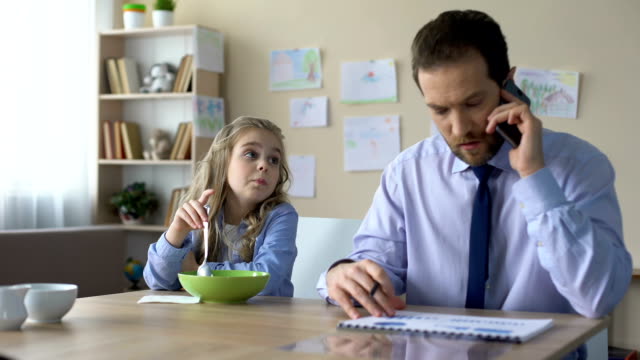
The Problem with Today’s Parents

We play GOD when we give birth. With great power comes great responsibility…

There is a child in my daughter’s preschool that everyone dislikes. She hits, pushes, slaps, and throws a fit every time she doesn’t get her way. All the teachers at the preschool dread having this wild child in their class. Her mom has been notified multiple times in regards to her child’s poor behavior.

Speculation from parents and teachers alike ranged from ADHD to genetic disorders. I’ve often imagined the parents to be self-centered workaholics who had children as a matter of course, and then abandoned them to expensive daycare to manage their child rearing. This is somewhat typical in the area in which we live.

I met the mom recently at a class party and she shattered all my preconceived notions. We talked for quite some time and she was thoughtful and articulate. She worked only part time and mostly late at night so she could be there for her two kids. Her older daughter was in second grade and in her second year of GATE classes for gifted children. She spoke openly about the problems with her youngest, even seemed mystified, as her older daughter had always been easygoing and cooperative.

At my daughter’s fourth birthday party it became clear why her youngest daughter was so ‘challenging.’ We supplied crafts, a magic show, and a yard complete with a bouncy house, as well as a full-size playhouse with kitchen. But all this wasn’t enough for the problem child. Bored by the offerings, she went upstairs to my daughter’s room and proceeded to try on her clothes. Her mother and I became aware of this when my daughter came to me crying.

I immediately asked that the child take off my daughter’s favorite princess dress and return it to the closet. “NO! I don’t want to!” she screamed. Her mother stood beside me and sighed heavily but said nothing. Nothing. I repeated my request and the girl continued screaming that she wanted to play dress-up, that she wasn’t going to take the dress off, and I couldn’t make her. Her mother looked at me, sighed again and shook her head. In a nice, pleasant tone she suggested to her daughter that perhaps she could take the dress off and maybe play dress-up after the party was over. Still, the girl refused.

I couldn’t believe it. If it was my daughter, I would have instantly given her a time out, then demanded she apologize for speaking disrespectfully, and for using things that didn’t belong to her without permission. If she didn’t cooperate within one second, she would have lost privileges like watching TV. And every subsequent second that passed that she didn’t comply she would lose more privileges for longer periods of time.

I felt awkward disciplining the child with the mother standing right there but I didn’t know what else to do since the mother wasn’t doing anything. In a very low, gravelly voice, I informed the child if she didn’t take the dress off I would do it for her. By my tone the girl knew I was serious, and she acquiesced. She literally threw the dress at me and ran off to play with the other kids. And her mom let her. She didn’t chide the child for her poor behavior. She looked at me and shrugged as if to say, ‘See what I have to deal with?’ But instead, she said she was sorry. SHE was sorry. She didn’t have her daughter apologize.

It is no wonder her child is a raving lunatic brat.

I see this again and again — parents who do not consistently discipline their children and then wonder why their kids are out of control. They take parenting classes that are taught by psychologist who tell them with authority to be supportive and encouraging. And while this may work with easy kids who above all seek approval, it is not the solution to most children whose greater interest is pleasing themselves.

We are all born solipsists. We have to learn to consider the world outside ourselves, to cooperate, but this must be taught and constantly reinforced. It has been said that it takes a village to raise children. But I don’t want to be part of a village in which the parents are clueless, or more accurately — couldn’t care less.

I held a Cub Scout meeting at my home a few days ago. One of the mom’s came an hour late and her child missed the rocket craft. Her son was so angered by this he went up to his mom and slugged her, hard, in her shoulder. And SHE APOLOGIZED TO HIM for being late, and then turned to me and justified his rage with some lame excuse about how hard it was for him to transition. It took all my will not to step in, demand he apologize and then put the kid on time out.

I did not restrain myself last night at a Pack meeting with fifty other children, when the same boy became disruptive. Several parents stood in a tight circle scowling and complaining about the boy’s poor behavior. The child’s parents were too busy talking to other parents to notice. I got so annoyed at the boy’s constant goading of the kids around him that I took him by the hand and pulled him aside and told him to knock it off. The mom came over moments later and challenged ME for being overly strict. All the other parents looked away.

Offing your kids to daycare so you can pursue your muse/career or accepting solipsism from their child because the parent is too tired or too lazy to fight the necessary battles to raise conscientious adults, will not help our children learn create a thriving society. Twenty five yrs after the original writing of this essay, more parents than ever are raising self-absorbed brats, not only keeping humanity from reaching our amazing, creative potential, but reversing our progress! War. Poverty. Famine. Strife. These are curable if we raise the next gen, and the next, to CARE ABOUT EACH OTHER WAY BEYOND SELF. In other words, GROW THE FUCK UP — out of solipsism, (as all of us are born into), through the narcissism of our teens, and into adulthood. Adulting means expanding our awareness outside of self.

We play GOD when we give birthWith great power comes great responsibility. Parenting offers many rewards, but one of the least appealing aspects is constantly iterating the seemingly endless list of rules. And as hard as this is, it is mandatory. Social standards apply to all of us — if not, we have a society in chaos, and eventually no society at all.

Parental ADHD

My husband’s sister has two children. Her oldest, 15, was diagnosed with ADD when he was 9, and has been on Ritalin since. He’s failing out of the private high school he attends in Manhattan. He lies, cheats, and steals when it suits him. He is volatile (way beyond normal teenage angst), and often violent with his mom and sister.

Her daughter, 11, also has trouble in her private school. According to her mother, she too has learning disabilities. She has very few friends, and is often cutting and cruel. She also lies constantly to get what she wants, and does whatever she wants regardless of opposition from authority.

The three of them live on the 10th floor of a posh apartment complex, in a huge flat overlooking the Hudson River in Battery Park. The Statue of Liberty, holding the torch of truth stands boldly in the bay and can be seen from almost every room of their home. My sister-in-law and her ex-husband are very successful in their careers. She broke the glass ceiling only a few years out of graduate school and is now a top executive at the New York Stock Exchange. He is an architect. His style is distinct, and sought after, and can be seen all around Manhattan. Since both claim to be busy professionals, the maid of the month raises their kids during the long work week.

Every time we get together they virtually drop off their kids to my care. Dad, before and after the divorce, has always been a marginal part of the scene, off to work, or squash, or rollerblading along the waterfront. Mom stays with us, but she’s not really with us. She’s on her phone texting her secretary, or chatting it up with some high powered executive about market trends, or on her laptop writing reports. She goes out for a two hour run, or off to the store for diet soda. The entire time we’re together she has little to no contact with her children.

My sister also has kids, a boy and a girl, a couple of years apart. During their formative years she was a stay-at-home mom…sort of. Her husband, a successful real estate broker who used his limited free time for cycling, skiing, rock climbing, provided his family a McMansion with all the trimmings in a desirable suburb north of L.A. He hired a live-in maid to clean house and handle the mundane aspects of child care so my sister could pursue her many muses. And pursue them she did. She played tennis several hours a day. She went out with friends; shopped, and shopped; redecorated her house every year. She took classes in cooking, massage, religion, exercise, went to music camps back east for the summers, and left the kids with grandparents, or the revolving housekeepers. She was one of those soccer moms who sat in the stands and gossiped, or read People or Jane, or was on her phone every other minute, attending the game but not really there.

Unable to manage her son’s disruptive behavior, my sister took him for counseling when he was 10. He was diagnosed with ADHD. He took Ritalin from 12 until he was 20. Now 27, he smokes pot every day, pays his rent and bills with poker winnings and a small stipend from an inheritance trust fund, has not gone to college and has little prospects for the future. Her daughter, 24, is still only a junior after six years in college. She’s had few friends over the years, even fewer dates, and only recently her first [very] short term relationship. She lives on the money her parents provide without a clue how to make it on her own.

These two sets of kids struggle in life because their parents consistently catered to their own needs over those of their children. In doing so, they abandoned their kids to their own device, and left them to strangers, relatives, and society at large to raise them. Restrictions on behavior came from teachers, religious leaders and caretakers as commands—discipline imposed without love. Their parents didn’t bother to invest the staggering amount of time and thought required to help their kids decipher feelings, or examine abstractions like morality or values, or why they are important, or impart to them the seemingly endless list of rules we all must follow to get along.

The other day I was at the neighborhood pool watching my kids swim and play. All went well until a well-known rowdy kid arrived with his mom. She stood with her back to the pool and chatted on about her job, the upcoming hundred mile extreme run she was training 20 miles a day for, and the third Bruce Springsteen concert she and her husband had been to that week. She did not notice her nine year old son shoving kids into the pool, holding them underwater, pouncing, splashing and causing general havoc. Most everyone agrees her son, and six year old daughter, have severe ‘discipline’ problems. Though their mom labeled them ‘passionate,’ she admitted she was seriously considering her colleague’s suggestion to have her kids examined for ADHD.

Even Wikipedia can not state without dispute what ADHD actually is, though a wide cross section of sources seem to agree it’s a ‘behavioral disorder.’ Symptoms include Hyperactivity—like working all day, everyday, never putting your cell phone or laptop away; Inattention, the lack of ability to focus for an extended period of time—like creating multiple distractions such as tennis, classes and vacations for your entertainment instead of following through with any one thing. Impulsiveness is also an indicator, like going to see Bruce multiple nights in a row instead of doing the responsible thing and being at home with your kids.

Though they possess all the symptoms, these parents have never been diagnosed or even suspected of having ADHD, even though most have had at least some experience with therapy. Their kids did not inherit their lack of focus. The Attention Deficit Disorder they ostensibly suffer from by and large comes from parental neglect, adults who haven’t figured out that once they produce children, most of their own priorities must become secondary to the needs of their kids.

Rich or not, working—having to, or not—parenting is about paying attention, being attentive and present, being there when you’re with your kids. Certainly, rules need to be continually taught and enforced, but also discussed at length, not handed down as edicts from on high. Kids need detailed explanations, reasons to partake in our code of ethics, and out of desire, not disdain. Society is not sustainable filled with resentful children who grow into parents that never mature beyond self-interest. Children can not raise themselves above solipsism without example from those who have.

PAY ATTENTION!

Regardless that these are babies, child or adults feel connected, safe, when the people in our lives SHOW they care about us, what we want, how we feel, and why. Shutting down, shutting those we ostensibly care about out, to self-protect, is destructive in the extreme.

From the clip:

“When she’s grounded, is comfortable in her world, she can explore, meet other people, try new things, as she’s got that safe base she can rely on.”

In other words, communication builds trust, and trust is the foundation of love.