

Way before writing novels, I was a storyteller. Before I could write, I used to come to breakfast and recount tales of elaborate adventures I’d had during the night with my stuffed dog, Checkers. The purpose was to garner my mother’s attention, a precious commodity given mainly to my manic-depressive brother and egocentric sister. The stories I chose to relay often had a point, a message I was trying to communicate. I was saved from evil kidnappers by a kind stranger because my parents weren’t there to help me. I climbed the Matterhorn ride at Disneyland and rescued the children stuck at the top, illuminating my prowess, and kindness.
Like most professional writers, I’ve written since learning to write, at first in diaries, then personal journals. I now publish essays, short stories, and novels. I love the process of writing, even editing, again and again—honing my words to transmit to the reader the scenes unfolding in my head, and the essence of those in the narrative.
Similar to storytelling as a little kid, each work I pen to publish has a point. I write fairy tales that challenge social norms. I write personal essays against the grain of the status quo that often inflame readers. But beyond writing to publish, I still am and will always be a storyteller. I use stories as parables, to teach with, to convey ideas, thoughts, and feelings, to my kids, my husband, my students, my peers, basically most anyone I interact with. The stories I share are things that happened—sometimes to me, though often just things I’ve heard along the way—to communicate, or to fit the lesson. More precisely, I elaborate on things that happened. I fabricate truths to add drama, or context to the tale, or to drive a point home. Admit it, or not, we all do.
Long time ago, I was told the best way to pull off a lie is to keep it as close to the truth as possible, just “tweak the truth.” It’s easy to pull off a realistic tale this way, since most people aren’t paying that close attention anyway. We take what is said (or what we read) at face value, only questioning its validity if it’s too far out there. I find I need to tweak the unvarnished truth more often than not to be heard, or believed, as truth is either too boring, or too bizarre—truly stranger than fiction so much of the time.
Fiction may be truth, tweaked, but so are blogs, memoirs, non-fiction, even ‘news’ articles—they are all simply the point of view of the writer/storyteller trying to communicate a feeling or message. FOX Media is the Republican point of view, and will give you a completely different take on the ‘news’ than CNN, or PBS. But truth tweaked goes far beyond the news media. Even the most far out fiction like Twilight or Harry Potter resonates with us because they communicate real, true feelings that are familiar to us all. They exploit the truth of our hopes for a better world, a more just society.
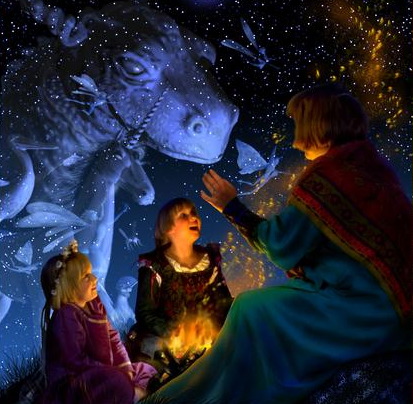
Storytelling is the foundation of human communication. Before written languages, sharing stories was how we passed on our history, learned from our experiences, instilled morality into our communities, and advanced our race. We all elaborate on our stories, writing them down, or simply recounting an event in our day. We all tweak the truth to serve us, to present an image, teach our children, or convey our fears, desires, and dreams.
For as long as I can remember, most every time I tell anyone I’m a writer, they respond with, ‘Oh, I write, too,’ (because they keep a diary), or, ‘I’m going to write my story soon.’ Used to bug me. I felt dissed by their self-proclaimed association, while they invested little to no effort in my chosen, but absurdly challenging profession. And though most will never actualize their writing ambitions, the fact is, they too are telling a tale to communicate an image to me, and to themselves—that their stories are valuable, their life meaningful, tweaking the truth to serve their agenda. We are all storytellers indeed.

 jcafesin.com