R.I.P. Information Hwy

I’m watching The Politician on Netflix while working out. Deep into the second season, the scene unfolds on a teen and mom in their kitchen, arguing about which state senator to vote for in the upcoming New York election.

Teen is a first-time voter, just 18, and wants to vote for the 24 yr old male candidate running on the Green ticket, vs. the mid-aged female 20 yr incumbent, virtually unchallenged in every election till now.

Boomer,” the child mocks her mother who is listing the contributions of the older incumbent against the sole climate platform the 24 yr old is running on. “The world is gonna end in 10 yrs, Mom.”

“I am barely a boomer, okay?” the mom defends. “So don’t throw that shit at me,” she says. “And the world is not going to end in 10 yrs, Jayne!” She goes on and lists all she does for her daughter, the vegan cooking, the composting, and even the hyper-vigilant recycling her child insists on. “And still, I am the problem, according to you.”

“Not YOU, Mom. People your age.”

Right about now I feel my body tense as I run on the machine. I AM her mother’s age.

“Let me tell ya something, Jayne. People YOUR age think you know everything and you are fucking naive. When I was your age, I thought I knew everything too.”

“We’re not naive, Mom. We’re INFORMED. You had, what, like two newspapers, three networks. I’ve got a SUPER COMPUTER in my pocket.”

She is, of course, referring to her cellphone, and, in fact, showing the viewer how naive this child really is.

Unfortunately, Mom didn’t come back at Jayne. Mom doesn’t know (nor the writers of the show apparently) that the SUPER COMPUTER in both their pockets, well, isn’t informing them of anything but what they already believe. So, in effect, it is MANIPULATING this ignorant, yet rather arrogant child, and anyone else who believes they have a SUPER COMPUTER in their cellphone.

The cellphone you all carry around, (as I don’t have a smartphone, so really, it is all of you), is a RECOMMENDATION ENGINE. It isn’t INFORMING you, it is RECOMMENDING you read, watch, buy, and even think about what Google, Facebook, Instagram…etc., wants you to. Every social platform you are on, every YouTube vid you watch, every document you SEARCH for, shows you what they think you will be RECEPTIVE to. Marketing pros know that it’s off-putting to get information opposed to what we already believe, regardless of the truth in the information. And they want to endear themselves to customers, not piss us off.

Today’s internet is NOT unlimited access to unfettered information like the world wide web once was. You’ll be hard-pressed to find anything through SEARCH that isn’t already somewhere in your belief system. Searching for anything now, you will only get back what Google thinks you should see, to manipulate you to buy the offerings, or into the messaging of their affiliate marketers. A crystal-clear example of this can be seen in the Netflix film The Great Hack. Russia paid Google and Facebook fortunes in ad campaigns pushing the conservative Republican agenda to get Trump elected.

Now, the internet is a MARKETING ENGINE to make these social media platforms money. Every time you log onto Instagram, Facebook, YouTube, or Google, they ‘scrape’ your posts, simultaneously putting ‘cookies’ on your mobile and laptop to follow you wherever you go on the net, and in real life. Your mobile has an accelerometer in them, which says how fast you are moving, and GPS to inform Google and their like where you are on the planet, revealing when and where you shop, what you buy, how much you spend, what you read, watch, glance at, or frequently visit.

Machine Learning, Natural Language Process, Deep Learning, AI, are all software processes that analyze all that data from trillions of posts, texts, IMs, and searches, and then CORRELATE that data for patterns of behavior through COLLABORATIVE FILTERING.

COLLABORATIVE FILTERS [à la] Wikipedia:

Collaborative filtering is a method of making automatic predictions (filtering) about the interests of a user by collecting preferences or taste information from many users (collaborating).

In other words, gathering and filtering your data from the net tells Google and Facebook what you (and those like you) will likely buy, or what rhetoric you’ll likely believe in the future. Then these social platforms slam you with marketing targeted AT You, not “For You,” as they claim.

They tell you it’s to HELP YOU find things you’ll like quicker. But this is a flat-out lie. They want to SELL YOU offerings and ideas supported by their affiliate marketers (like Russia).

Google SEARCH is the only way to find anything now, locally or globally, since phone books don’t exist anymore. But Google is ONLY returning the businesses buying the most ad space and spending the most money on their platforms. I used to get pages and pages of returns on any given subject 10 yrs ago. Now I only get a few pages before Google says, “We have omitted some entries very similar to those already displayed.” And while they do indicate you can search the omissions, this too is a joke. Google simply will not give you information that they feel you don’t need (and won’t serve their agenda), based on your internet and cellphone usage history.

My 19 yr old daughter, and most of her friends, are on the same page as Jayne in The Politician. They are simply ignorant of what it is they are addicted to, and how their phones are manipulating them to THINK, FEEL and ACT the way these social platforms and their affiliate marketers want them to. She is SURE that “no one is manipulating ME, Mom!” She “knows” when she’s being hit with ads, and she “just ignores them.”

BULLSHIT.

My daughter, you, me, can’t ignore them when we don’t even know they are happening while we IM through Facebook on our mobile.

Example:

Mary is IMing a good friend on Facebook, whining about her marriage “in crisis.”

Facebook’s algorithms are scraping her and her friend’s IM for SENTIMENT ANALYSIS to find out where Mary might be vulnerable to purchase something…anything really, as FB has advertisers that sell just about everything.

The next ad Mary sees on her mobile is for a singles dating site. The ad is targeted at divorcees, showing an older woman having fun with a stunning man, and the copy says, “Your second chance at true love.” In a few short sentences, the copy describes the relationship you’ll find on their site like a Cinderella story, the evil stepmom played by the partner’s spouse.

A while later, Mary goes on to YouTube, and the next series of ads she sees vacillate from singles dating sites to divorce lawyers. The ads appear on the side of her emails, and in her Instagram feed, and most anywhere she goes online.

Mary never mentioned divorcing her husband when IMing her friend. She’d not even thought of it, really. In fact, she’s frequently sounded off about her relationship to friends through IM, as many do. And it isn’t the first time Mary has gotten these dating and lawyer ads. It’s been going on a long time now, one ad after the other every time she even posts a back-handed joke about marriage in general, regardless if through her phone or laptop. And after this last fight with her husband, well, like the ads keep saying, Mary deserves more! Like the ads say, she can find someone better than her husband. And like the ads say, a divorce will, “Open her life to the possible!”

These ads appear whenever Mary is feeling vulnerable about her marriage. (Marketing is an iterative process.) And instead of looking to make it work with her husband, after a while all Mary wants to do is divorce and open her life up to new possibilities.

To Google, Facebook, Mary’s divorce is a WIN! Their algorithms and the engineers who code them don’t know they’ve torn apart a family, for their profit. The software did its job and rewarded their advertisers. Some lawyer who advertises on their site just got themselves a client. Some dating app that spends millions annually in affiliate marketing on their platform just got a new subscriber. Multiply that with the hundreds of thousands of businesses doing affiliate marketing on the net, and you have, well, today’s internet.

NOT a SUPER COMPUTER. And no longer, “The Information Highway.”

But simply a RECOMMENDATION ENGINE, a marketing tool in which YOU are a PRODUCT of the platforms you frequent.

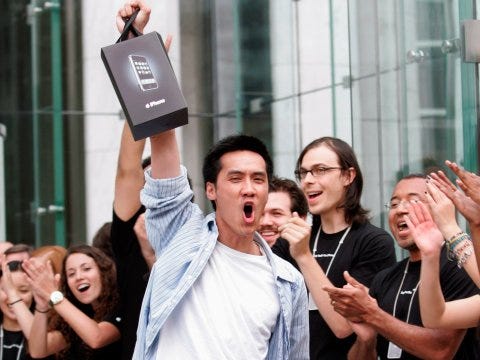
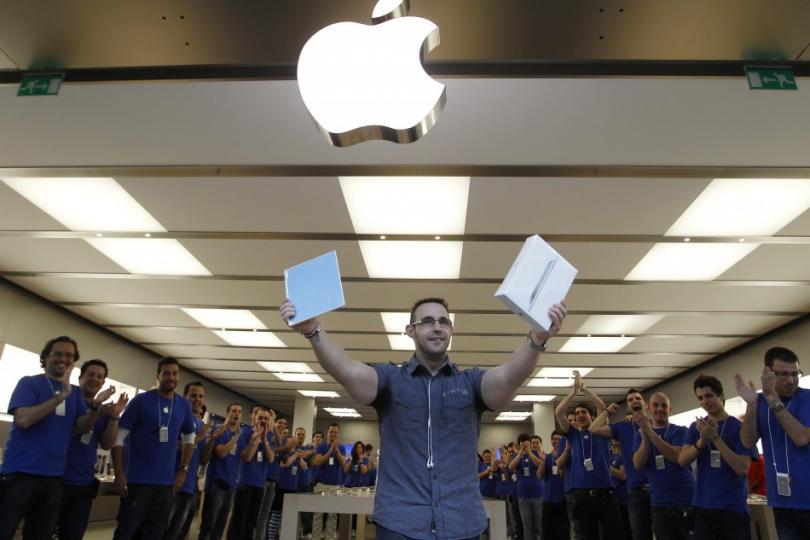
APPLE IS EVIL

“Apple is evil,” I told the man tapping his iPad to retrieve my son’s information at middle school registration.

His bushy eyebrows furrowed. “No they’re not. They’re great! They practically gave the district iPads for every grade, student, and even all the admins. And next year we’ll be going digital with most textbooks,” he said enthusiastically.

“You think Apple is giving away iPads because they support education?” I inquire while filling out my check to the public school to which we already pay ever increasing taxes.

Again his brow furrowed and a frown was perceptible between his heavy peppered beard and thick mustache. “I know the kids come home and ask their parents to buy Apple. But they should. It’s a great product!”

And a lot more expensive than most comparable phones, PC’s, and tablets out there. If Apple is supporting education, why are they charging parents, and everyone else they’re not giving their computers to, 30-50% more than any other computer manufactureur? I’m now in the position of having to buy both my kids Macbooks or iPads so they can do their homework. And the topper— Apple will saddle us with yet another monthly connection bill.

The ignorant admin sat behind a long folding table, between two women, one of three men in the auditorium of 50 volunteer parents. His arms were folded across his protruding belly, his expression—an indulgent grin, the kind where it’s obvious he’d tuned me out. He’s a diehard Apple fan, one of Steve Job’s faithful followers, a blind believer. And faith is BLIND. He’s a devote of Apple, thinks the computer makes him more creative, because that is Apple’s brilliant marketing—making the ignorant believe they’ll be more creative on a Mac than any other computer.

I used to be a diehard Apple fan. My father gave me my first computer, a desktop PC (whose brand I don’t recall) back in the late 70’s. Monitor and PC were one unit, matte gray screen supported only a text interface with bright green type, in one size only. It was hard to use, kept losing my files, freezing up, shutting down. Then along came the Mac. I started with the llc and fell in love with the UI’s ease of use; the stability of the OS; the selection of exclusive programs for graphic and marketing pros. In fact, Mac’s marriage with Adobe virtually invented today’s desktop publishing with software such as PageMaker, Illustrator and Photoshop, originally only for Macs until the 1990s.

I was a Mac fanatic all the way through the G4s, until I could no longer afford to get ripped off. The advent of the Adobe suite working seamlessly on Macs made it easy for businesses to take their marketing efforts in-house. By the mid 90s, freelance gigs were harder to come by, and clients expected consultants to have the latest technology (like their in-house departments boasted). Maintaining my Mac systems—the high priced software combined with the continual investment in extended memory needed to run, it was costing me practically as much as I was making. Even after Adobe opened their platform, and offered their software to PC users at a third of the price for Macs, I was loyal to Apple.

Moved from graphics to mostly creative direction and content writing at the turn of the millennium. Needed a laptop for quick communication with clients and couldn’t afford what I needed to even run Photoshop on a Macbook. Got a Toshiba, with more memory, faster clock speed, great graphics card…etc. Photoshop was $355 less than for the Mac. By the early 2000s I’d replaced most all the software I had on my Mac with their PC versions that worked seamlessly on most any computer we had, and I’ve had no need to buy Mac products since. And we’ve saved a hell of a lot of money!

Business knows when they sell to children, they have a customer for life. This is particularly true with electronic tools. Kid learns at school how to create reports on a Macbook with iMovie. iMovie is Apple’s proprietary software, and can only be used on Mac platforms. I have a choice of many video editing products for Windows/Linux/Firefox that are more powerful than iMovie, starting at just $49. We have no need of iMovie, yet for the kids to function in school they must have both formats, or at least Mac available at home to work on projects outside the classroom.

To date, the new Macbook base model is priced at $4000 for 4TB of hard drive space, and a 14-core CPU, and 20-core GPU. Compare that to the $2200 Dell XPS 16 laptop featuring the same processor, same storage space, and a separate graphics card. We have three laptops, and four PCs in the house. We don’t need, and I don’t want to get back in bed with Apple. Their ‘discounts’ to our schools, accepted by education admin without a clue, once again, leaves parents paying the bill.

On Fitting In

Ever been with a group of people, you may, or may not know, and everyone is talking amicably, (or on their cellphones), and you’re sitting there watching and listening, and you feel like an alien? Not a foreign national among a group of natives. More like you’re from another planet. Or they are.

I’ve known I was different for most of my life, always on the outside looking in at the world I live in, but don’t understand. But beyond theology like my atheism, there are actual, real differences that separate me from most.

  1. I don’t drink alcohol. Can’t stand the taste of the stuff. Wine. Beer. Hard liquor. BLA! Even rum wrecks some would-be-great desserts, like tiramisu. Virtually the first thing that happens at any gathering is the ritual serving of the drinks. I always refuse, which immediately raises suspicions that I’m either a friend of Bill W, or on some fad diet, or a hippy-vegan. The first brick in the wall between me and the group.
  2. I have no internet connection on my cellphone. I don’t carry my phone with me most of the time and often forget where I leave it. I do not look at my phone except to make a call or send a text, which I do rarely, especially when I’m with other people. I follow no one on social media intentionally (as X automatically follows back anyone who follows you). I don’t read most posts, and I don’t know what is trending online.
  3. I don’t watch TV. Too much of a time kill. I average three movies in the theater a year. I don’t watch, or follow sports. Any. Ever. I don’t know the latest shows, any of the actors, or what rock star is hot on YouTube. I must have some mental disorder because people who play no active role in my life just don’t register with me.
  4. As a woman, with other women, I feel particularly off-planet. I have no interest in discussing my kids for the most part. I’m with my kids a LOT. I don’t want it all about them when I’m not. I don’t care about sales or shoes. I dress for comfort, prefer my old, soft, often ripped clothes to new. I never wear makeup. I don’t even carry a purse. The diamond studs in my ears have been there for 30 yrs. I wear no other jewelry. I don’t have a lot, and I don’t want a lot, of things.
  5. I am an atheist, in faith-based (mostly Christian) America. I don’t belong to the neighborhood church, or celebrate any religious holidays, or get how seemingly reasonable people can believe in myths and fairytales at this stage in human development.
  6. I want to discuss the issues of the day, without being politically correct, or woke, and with virtually nothing held sacred — an open forum of communication and healthy debate. But it seems every time I bring up global, national, or even local news, I create a void in the group’s dialog, this vortex of weighted silence. Either no one seems to have heard of what I’m talking about, or they have no opinion, or they’re too afraid to state it.

The bitch is, I want to fit in, be a part of, integrate as I see others do. Sort of. I just don’t want to DO what most seem to. I don’t wish to remain ignorant about global and local issues so not to disrupt my personal bliss. I couldn’t care less about celebs and influencers. And while I like playing racquetball, I’ve no interest in watching someone else play sports. Pro athletes work towards excellence 24/7, yet somehow fans take on team victories as their own while they sit on the couch downing beer. I just don’t get it. The ‘little bit of color’ my mother insisted was mandatory to put on my lips and cheeks, make most women who wear makeup look like clowns, or manikins to me. And it’s a rather ironic twist that the media convinces women they need cosmetics to be attractive, especially since it’s a proven cause of cancer, and cancer isn’t pretty.

Clearly, I am damning myself to the outside looking in. And since it’s unlikely I’ll develop a taste for alcohol anytime soon, or become addicted to my cellphone, I’m unclear how to move forward, to integrate, fit in with the group at the table now on their second or third drink. They’re getting sloppy, and rather loud, and all I want to do is leave.

So I do. I get in my spaceship (my car) and venture home to my sleeping kids and working husband. He’ll ask me how the Mompreneur’s Meetup went and I’ll say fine, and later I’ll be standing in the shower feeling small and valueless. Friendless.

The road is empty and dark. Houses are lit inside and look warm and welcoming. Mine will be too, a safe harbor where people ‘get’ me, but I know I isolate there too much. I want friends, to be a part of the world beyond my fam, I just don’t know how to step inside where most seem to live. But truth be told, it’s rather lonely out here.

On Being Cool

Had a meltdown on my tween son when he asked, yet again, for an iPad at breakfast this morning.

Before the iPad he wanted a laptop. He’d insisted he needed my old HP the moment I purchased my Toshiba, though he could give no reason why he had to have it, since he had a powerful PC with an enhanced graphics card for gaming in his room. After weeks of needling me, I finally gave him my old laptop to share after backing up [mostly] everything. He loaded the same games he had on his PC, and played them in bed on the laptop for about a week, until he inadvertently downloaded a virus which destroyed every program, every file on the machine—all seven years of my work. (Between ‘mostly’ and ‘everything’ I’d backed up turned out to be the Grand F**king Canyon.)

Prior to the laptop, he needed an iPhone. He’s had a cellphone since the 5th grade, when he started walking the quarter mile home from school. In the two years he’s had it, he forgets it at home most of the time unless I remind him to bring it with him. More often than not the phone has no charge because he doesn’t remember to charge it. Though all his friends have cellphones, he’s exchanged numbers with no one, and, upon inquiry, this seems fairly typical among his contemporaries.

Before the iPhone he had to have a video camera, which he got for his birthday. He used it a few times to tape episodes of Sponge Bob off the TV so he could view them later through the camera’s viewfinder. That lasted about a month, until he tired of it and he hasn’t touched the camera since.

An iPod was before the video camera. I use his iPod when I’m recharging mine, since in the four years he’s owned it, he’s used it maybe 10 times collectively.

He sat at the kitchen table this morning eating his cereal telling me how badly he needed an iPad. They are so cool, he insisted, giving me his puppy face, and good for school, he assured me, though was unable to define how, since a home PC with internet access was all his middle school required. He kept at it throughout breakfast, bargaining away all other gifts for his upcoming birthday in exchange for just one iPad.

And I blew a gasket.

He wanted too damn much! He asked for too much with no purpose. What the hell was the point of all these things when he didn’t even use them?

To be cool, mom, he said through tears.

His palpable shame was a knife through my heart. At 11 years old, crying had ceased to be acceptable, except in tragic situations, and me yelling at him wasn’t tragic. I sat down at the table adjacent to him and stared at my son, fighting tears from overwhelming me as well.

Being cool isn’t about what you have, I reminded him gently. Cool is about what you are, who you are, what you do that makes you special, separates you from the crowd. He was a straight A student, in advanced at math, played electric guitar, but every accomplishment I pointed out just made him cry harder.

None of that matters, he insisted. No one cares about that stuff. And being a nerd might pay off later, but right now no one his age knew or cared who Bill Gates was, he said, throwing my refrain back at me.

Your dad would ask why cool matters, was the lame response I came up with. I knew cool mattered, even to me, but especially for a kid becoming a teen.

It just does, my son assured me. And I’m not, he added shakily, unable to stop the new round of tears.

My heart in my throat, and struggling to swallow back my own tears stopped me from lecturing, but I again reminded my son that iPads and iPhones and video cameras are tools, nothing more, and possessing them doesn’t make one cool.

Yes, mom, he patronized me. But an iPhone is still cool, and so are iPads.

They are cool, undeniably, I told him. And that makes the engineers who invent Apple’s products cool, but not so much the people who use them. I needed to be sure he understood what “cool” really is, and perhaps remind myself as well.

Michael has an iPhone and an iPad and he’s totally popular, my son insisted. Everyone likes him. He has tons of friends and no one picks on him, ever.

Cool means Popular when you’re 11, and I suppose even for adults. Most of us want to be liked, admired, feel special, unique, seen as cool. But I knew Michael wasn’t popular because of his iPad and went about trying to enlighten my son without losing his attention. I pointed out Michael’s rather jovial demeanor, and reminded my son that this popular kid was also an avid sportsman, into soccer, basketball, baseball…etc, the ultimate key to cool for boys in school.

Perhaps Michael’s popularity had nothing to do with his iPad, I suggested. And to further my reasoning I asked, If Evan had an iPhone or iPad do you think he’d be more popular?

Evan is a jerk, my son proclaimed. He’s mean and rowdy, and he has an iPhone, mom. His eyes seem to sparkle with awareness of his own words. Then he smiled. He got it, and I smiled, too, for about a second, until his expression darkened again. But I’ll never be like Micheal, do what he does. I suck at sports and don’t really care about ’em. And I’m not exactly what you’d call upbeat.

And I’ll never write like Stephen King, or Ray Bradbury, or John Fowles,” I said.

Who are they? he asked.

Famous authors you’ve obviously never heard of. Forget it. Tell me, who else is cool, dude? Name five, other than your classmate, Michael. Anyone. Doesn’t even have to be one of your contemporaries.

Greenday, he looked to me for approval.

Okay. Who else?

Death Cab [for Cutie] (another rock band). Thomas Edison. Einstein. And Jason, at school. All the girls really like him.

I laughed. Why?

I don’t know. He’s short, but kind of buff already, I guess. He’s on the track team, and the basketball team, and he tells everyone he lifts his dad’s weights. He’s really into working out.

And what do all five you just named have in common?

He fiddled with the remainder of the Crispex in his bowl as he pondered my question.

They’re all good at something.

And how do you get good at anything? yet another of my canonical refrains.

Practice.

You bet. Find something you love, that turns you on, and work at it, my beautiful son. Practice your guitar more, and become a great musician. Invent a new video game instead of playing someone else’s creation. Learn how to program and develop apps, show us you need an iPad as a tool to create with.

He brightened, smiled at me. I had his full attention again, my reason for slipping in the iPad comment.

Owning an iPad is easy, my baby, and meaningless, just one of many who do, and more who will. Creating with one is cool. Cool is as cool does, kid. Pursue a passion and you’ll be engaged, entertained, and so enraptured in the process you won’t notice or care if you’re popular. And how cool is that! ; – )