It’s almost Valentine’s Day. And A MARRIAGE FABLE is a 5-star FANTASY ROMANCE novella, “A poignant exploration of love that captivates from start to finish.”
My son’s guitar teacher was freaking out the other day over the impending arrival of his first child. Beyond a healthy birth, he was consumed with anxiety over the care and feeding of an infant, all the way up through guiding his child through their teen years. As a parent of two tweens, I shared with him the secret of parenting, what makes the sacrifice not only tolerable but wildly enjoyable, and he calmed, and smiled, allowed his excitement to peek through.
It’s never talked about—that intense, profoundly magnificent feeling a parent gets to embrace the moment their child is born, and forever forward. It’s expected we love our kids, and therefore taken for granted, which is a shame, because the intensity of that feeling is so spectacular and unique.
I’d listen to my contemporaries talk about their children before I had kids. They spoke of the long nights with crying, colic infants, “the terrible two’s,” “the f***ing four’s,” surviving the teen years. Sometimes, they’d comment their Kylie had made Honor role, or that Jordan had just got first chair for his violin, and their entire countenance would light up. But those moments were rare compared to the complaints.
Like most women, I simply assumed I’d have children. I planned to have two kids in my early to mid-30s after I’d established my career and proven my own greatness. But it wasn’t until I was almost 40 that I became pregnant with my son, my first baby to survive after six miscarriages.
Nine and a half months of pregnancy, connected to the infant growing inside, and everyday was fraught with wonder, and fear. Five days of labor, and the moment I held my son for the first time, minutes after delivery, his tiny warm body on mine, a tsunami of humbling awe so overwhelmingly powerful swept through me it literally took my breath away. And as I kissed his downy head, his hands, each finger, I realized the joyful contentment, the sense of energized completeness, that electric connection I felt to him, for him— was love.
Never in my wildest dreams did I imagine the intensity of love that could be attained until having children. I’ve been lucky and had loving parents, a few dear friends, the love I now feel for my husband, passionate and true. But it doesn’t touch the intensity of the love I feel for my kids. Virtually every time I am with my children, snuggle with them, kiss them goodnight, or just see them across a room, I feel that all encompassing love fill me up and consume me with tenderness, compassion and humility. Now 9 and 12, and they still take my breath away. Every day.
People who never have children, or don’t devote their life to raising them— as with adoption— will never know this level of love. In their lifetime, they will never understand the feeling that we call ‘love’ can be this intense. I’ve heard many of my contemporaries say with conviction that they’ve never wanted, and will never have kids, with rationalizations like “I’m just selfish, I guess.” But the truth is they’re only robbing themselves.
Life’s greatest gift is our ability to feel. We all experience pain and sorrow, happiness and joy to varying degrees. The unspoken gift of parenting is getting to feel the fulfillment and richness of that intense love integrated into every aspect of our lives, motivating us to be positive examples, and challenging us to consider others, and the future beyond ourselves.
The price of living with this intensity of love is the amorphic fear of losing it, which is why parents worry so much. Through the tantrums and the tears, the joy and the fears in sharing life with kids, the ultimate reward in parenting is the privilege of loving our children.
My husband’s sister has two children. Her oldest, 15, was diagnosed with ADD when he was 9, and has been on Ritalin since. He’s failing out of the private high school he attends in Manhattan. He lies, cheats, and steals when it suits him. He is volatile (way beyond normal teenage angst), and often violent with his mom and sister.
Her daughter, 11, also has trouble in her private school. According to her mother, she too has learning disabilities. She has very few friends, and is often cutting and cruel. She also lies constantly to get what she wants, and does whatever she wants regardless of opposition from authority.
The three of them live on the 10th floor of a posh apartment complex, in a huge flat overlooking the Hudson River in Battery Park. The Statue of Liberty, holding the torch of truth stands boldly in the bay and can be seen from almost every room of their home. My sister-in-law and her ex-husband are very successful in their careers. She broke the glass ceiling only a few years out of graduate school and is now a top executive at the New York Stock Exchange. He is an architect. His style is distinct, and sought after, and can be seen all around Manhattan. Since both claim to be busy professionals, the maid of the month raises their kids during the long work week.
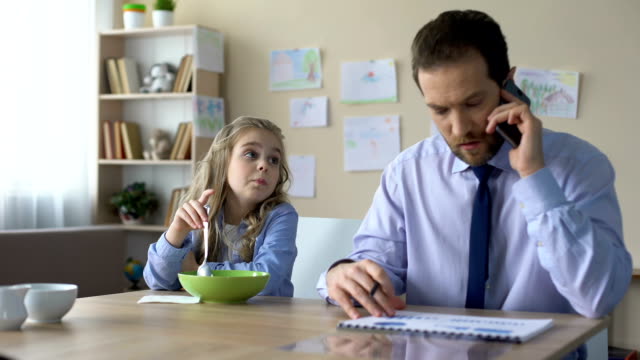
Every time we get together they virtually drop off their kids to my care. Dad, before and after the divorce, has always been a marginal part of the scene, off to work, or squash, or rollerblading along the waterfront. Mom stays with us, but she’s not really with us. She’s on her phone texting her secretary, or chatting it up with some high powered executive about market trends, or on her laptop writing reports. She goes out for a two hour run, or off to the store for diet soda. The entire time we’re together she has little to no contact with her children.
My sister also has kids, a boy and a girl, a couple of years apart. During their formative years she was a stay-at-home mom…sort of. Her husband, a successful real estate broker who used his limited free time for cycling, skiing, rock climbing, provided his family a McMansion with all the trimmings in a desirable suburb north of L.A. He hired a live-in maid to clean house and handle the mundane aspects of child care so my sister could pursue her many muses. And pursue them she did. She played tennis several hours a day. She went out with friends; shopped, and shopped; redecorated her house every year. She took classes in cooking, massage, religion, exercise, went to music camps back east for the summers, and left the kids with grandparents, or the revolving housekeepers. She was one of those soccer moms who sat in the stands and gossiped, or read People or Jane, or was on her phone every other minute, attending the game but not really there.
Unable to manage her son’s disruptive behavior, my sister took him for counseling when he was 10. He was diagnosed with ADHD. He took Ritalin from 12 until he was 20. Now 27, he smokes pot every day, pays his rent and bills with poker winnings and a small stipend from an inheritance trust fund, has not gone to college and has little prospects for the future. Her daughter, 24, is still only a junior after six years in college. She’s had few friends over the years, even fewer dates, and only recently her first [very] short term relationship. She lives on the money her parents provide without a clue how to make it on her own.
These two sets of kids struggle in life because their parents consistently catered to their own needs over those of their children. In doing so, they abandoned their kids to their own device, and left them to strangers, relatives, and society at large to raise them. Restrictions on behavior came from teachers, religious leaders and caretakers as commands—discipline imposed without love. Their parents didn’t bother to invest the staggering amount of time and thought required to help their kids decipher feelings, or examine abstractions like morality or values, or why they are important, or impart to them the seemingly endless list of rules we all must follow to get along.
The other day I was at the neighborhood pool watching my kids swim and play. All went well until a well-known rowdy kid arrived with his mom. She stood with her back to the pool and chatted on about her job, the upcoming hundred mile extreme run she was training 20 miles a day for, and the third Bruce Springsteen concert she and her husband had been to that week. She did not notice her nine year old son shoving kids into the pool, holding them underwater, pouncing, splashing and causing general havoc. Most everyone agrees her son, and six year old daughter, have severe ‘discipline’ problems. Though their mom labeled them ‘passionate,’ she admitted she was seriously considering her colleague’s suggestion to have her kids examined for ADHD.
Even Wikipedia can not state without dispute what ADHD actually is, though a wide cross section of sources seem to agree it’s a ‘behavioral disorder.’ Symptoms include Hyperactivity—like working all day, everyday, never putting your cell phone or laptop away; Inattention, the lack of ability to focus for an extended period of time—like creating multiple distractions such as tennis, classes and vacations for your entertainment instead of following through with any one thing. Impulsiveness is also an indicator, like going to see Bruce multiple nights in a row instead of doing the responsible thing and being at home with your kids.
Though they possess all the symptoms, these parents have never been diagnosed or even suspected of having ADHD, even though most have had at least some experience with therapy. Their kids did not inherit their lack of focus. The Attention Deficit Disorder they ostensibly suffer from by and large comes from parental neglect, adults who haven’t figured out that once they produce children, most of their own priorities must become secondary to the needs of their kids.
Rich or not, working—having to, or not—parenting is about paying attention, being attentive and present, being there when you’re with your kids. Certainly, rules need to be continually taught and enforced, but also discussed at length, not handed down as edicts from on high. Kids need detailed explanations, reasons to partake in our code of ethics, and out of desire, not disdain. Society is not sustainable filled with resentful children who grow into parents that never mature beyond self-interest. Children can not raise themselves above solipsism without example from those who have.
I’m a guy’s girl, meaning I’ve spent most of my life hanging out with men instead of women. Like the freight train comin at ya, I prefer men’s straightforward nature, their directness, their unwavering, solution-oriented trajectory. Men are simpler than women. Not less intelligent, just not round-about, underneath, from behind.
Women, by contrast, are the poison in your food. Eons of subjugation have forced us to become puppet-masters to get what we want. Not a judgment call, simply a fact that until very recently might was right, and men assumed they controlled the household with superior strength—at first to kill the mastodon and be the provider of food, and in the modern world, until recently, be the supplier of money. Back as late as the 1990s, women were still, and believe it or not still are, the primary homemakers, caring for the kids, shopping for and preparing the meals…etc. In fact, 99% of all household product commercials still show the women cleaning up, even when the men create the mess.
Notice I said, “men assumedthey controlled the household.” Well, you know what happens when you ass (of) u (and) me…; -}
Seriously though, probably pretty early on, like cavemen times, women figured out how to get men to do what we want using our wiles—wits. Genetic transfer of memory over thousands of generations of women passing on how to be manipulative eventually became woven into our DNA and imprinted on our XX chromosomes.
Regardless of why women became…complex, the fact that we are scares me about us. Women don’t only manipulate men. Quite often our children, sometimes even our friends. I’d much rather face a freight train because if I’m paying attention I can get off the tracks before getting slammed. This also plays to why I’m a guy’s girl, why most of my friends have been men.
I knew I wanted kids for as long as I can remember. Two boys, I’d told any possible stakeholders, because boys are easier to raise. I now have two kids—a boy, 19, and a 16 year old girl, both of whom I’m madly in love with. Beyond proud, I’m humbled to know them. True to their ‘nature,’ my son is very direct with his feelings, practically the instant he feels something. He rarely lies, probably because he sucks at it, his facial expressions to the pause in his delivery clear indicators he’s not telling the truth or copping to. He’s a consummate whiner, but he respects the family rules and parental restrictions. My son is trustable, for which I’m eternally grateful.
My daughter, on the other hand, listens carefully, expresses just the right amount of contrition and understanding with every lecture, then does whatever she wants, whenever she wants, if she can get away with it. Went to kiss her goodnight a few nights ago and she was underneath her blanket watching Manga videos on her cellphone. She’d been viewing nightly since we took away her Kindle two weeks ago for watching videos on it instead of reading. Reading is all she’s allowed to do on the tablet, per our agreement when she got it for her birthday. (Is it too much to expect a 16½ year old to honor such an agreement when she gets plenty of electronics time on the weekends?)
While my son barely notices his reflection, my daughter spends hours in front of the mirror, preening. For eons a huge part of a woman’s value was/is defined by our physicality, so it’s natural, part of our nature now that our looks are important to us, or at the very least, more important to us than most men. My son likes violent movies. My daughter does not. She is deeply affected when families split up, or a parent or child dies in films, and even in books. Maternal instincts—reproducing and then caring for our offspring—is genetically encoded in our DNA. In fact, her reaction is not uncommon for most women.
Violent movies and video games are targeted at men because they are by far the predominant audience to engage with them.
Times truly are changing, though. Want part of a mastodon, a small ice-age relic? Buy one on Amazon. Most educated women who pursue a career path can pay their own way through life now, even if we still typically make less than men. Most of us don’t need a man’s support to survive, or even thrive. Technology, from the Pill to the personal computer has made it possible for women to control our own destinies, and function equally along side men in today’s business environments.
Sociological shifts in behavior are glacial, and true sexual equality is probably still a few generations in coming. Perhaps our great-grandchildren will share equal incomes, and split the household tasks of rearing the children to doing the dishes equitably as well.
From the dawn of man to present day the divide in humanity is not our race, religious orientation, education or income level. Our greatest division has been between men and women. I’m humbled to bear witness to a quantum shift in our evolution, that, for first time in our history, technology is providing us the ability to become an egalitarian race, and close this great divide.









 jcafesin.com