Ever felt like you are nothing?
Valueless. Transparent, like no one can see you. And you’re screaming truth, cited facts, pouring your heart out, jumping through hoops to be noticed, heard, but you’re still ignored, marginalized. Worthless.
Ever feel invisible to everyone, even your reflection? Like, ‘who are you?’ when your eyes connect in the mirror.
Sometimes, when people say my name, I don’t know who they’re talking to, as if Jeri isn’t me.
I get most people reading this won’t understand what I mean—how it feels to feel like nothing—unless you are an artist, a depressive, or a realist. I’m all three, sadly. I’m also an idealist—profoundly awestruck by our creativity and ingenuity—and consistently disappointed by how often I, we, fall short of our amazing potential.
When I go black, my daughter and a few dear friends try to pull me back into the light by listing my accomplishments. Never works. The life I’ve lived—most of what I’ve done, from raising kind kids to navigating a 30 yr marriage to an autistic man, to a career in entrepreneurship and education, to fine writing novels and short works—seems so…small. Insignificant, touching so few. Like my mama, somehow I wanted to matter to more than just my kids.
Where do you get your value? Most people likely don’t dwell on this question. Sleep. Eat. Work. Play. Pay bills…etc., most don’t philosophize much after college when real life takes over. Beyond the overworked and the apathests who don’t ponder, as an artist and an idealist I’ve often wondered why some seem to be born with an inner confidence [I sorely lack], or a delusional self-image [I do not wish to attain].
During my dating years, most of the men I met ‘were at a great place in their life,’ and touted they ‘liked themselves,’ (with or without a partner). Ok…sure, but why? In my 20s, many were beer-bellied, broke, and living in a shared flat or still with their folks. By my mid-30s, most were middle to high earners, but were pudgy, balding, divorced and blamed it all on ‘that bitch,’ instead of seeing their fault in the marriage.
Met up with a new friend last week. Over chips and tacos he told me how he ‘only dates beautiful women.’ And they better have ‘chemistry’ when kissing, and be willing to get laid pretty quick into the relationship or he was out. He had to be kidding. He’s 72 yrs old, balding, in creaky shape with new hips and other health issues, divorced twice, in education all his life so not well off, living in a sketch part of town. For some reason it eluded him why the women he met didn’t want to come to his place.
Does Elon Musk think he’s great because he’s the richest guy on the planet? Or is he delusional that he’s an inventor when he hasn’t invented literally anything except the Cybertruck, and that ugly, hulking metallic piece of shit is an abject failure in the auto industry with plunging sales since its 2023 launch.
Does being rich, or a CEO or high-paid exec of some oil company, bank, or venture capital firm make you valuable? A Silicon Valley colleague and friend seems to think so. He recently held a conference matching founders to VC and was very impressed with the caliber of the executive panelists. Extensive research plays that from Elon to the head of Chevron, most who’ve risen to the top of the corporate ladder are psychopaths.
Psychopathy, according to Psychology Today, involves being impulsive, not troubled by anxiety, nor by feelings for others. It includes being aggressive, ready to assign blame to anyone but oneself, yet also able to manipulate and influence others. Does this not sound like Peter Darbee, CEO of PG&E? He defended millions in executive bonuses rather than investing utility profits into repairing the frayed pipeline that exploded in San Bruno destroying 38 homes and burning eight people to death. And I’ll bet you Peter still thinks himself valuable—intelligent, accomplished, savvy—even beyond his $35M exit package six months after the fire he let happen.
Had parathyroid surgery recently. The surgeon assured me in effusive detail that he was ‘absolutely sure’ only one of my parathyroids had a tumor and the surgeon at UW Medical was wrong in her diagnosis of hyperplasia. Turned out, UW was right. When I woke from surgery, the surgeon had removed two and a half of my four parathyroids. What made him so sure he was right, especially with evidence from multiple tests done at UW showing more than one tumor? Why was he so sure of his assessment over UW’s? What on earth made this man such an arrogant prick? Not once in post op, or in the follow-up a month later did he apologize for his diagnostic mistake. And I’ll bet you that doc never, ever questions his value.
I’ve been slamming myself as long as I can remember—suffocated by the weight of self-doubt and self-recrimination. Started with my family constantly putting me down—my mother insisting looking ‘put together’ would win me friends and later dates. My father assured me women were meant to be seen, not heard, and I’d better act demure with men or I’d be single the rest of my life. I could blame my lack of self-image on my parentage, but really? I could call out my husband of 30 yrs for ignoring or forgetting 80+% of what I say with what he didn’t want to hear, blaming me or colleagues instead of taking responsibility for his fuck-ups, but that’s autism.
My lack of self-esteem didn’t come outta nowhere. Failing to be a trad woman by my parents’ reckoning, and feeling invisible in my marriage certainly hasn’t helped my self-image any. Nor has my limited success as an author. Fine writing—fiction, short works, biz books—for over 20 years and I have just over 12,000 followers on my socials collectively. And no, for folks who don’t know, that is not good.
“Did I make a difference?” my mother wept on her deathbed. “Did I even matter?”
She meant beyond her kids, her husband and a few dear friends. She wanted to make a difference to the world outside her limited sphere, and she did as a marine science educator of So. Central elementary kids. But I get how she felt. I, too, want to be so much more than I am, and have been—be kinder, more patient, nurturing, less anxious and afraid. I want to reach more readers—encourage thinking and questioning, invite engagement and authentic communication.
Winston Churchill explicitly told his private secretary, Anthony Browne: “I have worked very hard all my life, and I have achieved a great deal—in the end to achieve nothing.”
In the days leading up to his suicide in 1890, Vincent Van Gogh told his brother, Theo, “he had failed, as a man and as an artist.” He sold only three paintings his entire career. (Kind of like an author today having only 12,000 followers after writing to be read for over 20 yrs, says the voice in my head).
“You’re your own worst enemy,” my husband tells me. And ofc, he’s right. For our first decade together, he, too, thought his shit didn’t smell—literally, he used to tell me he couldn’t smell the stink he created in the bathroom. Until recently, he was sure of his own rightness, certain his thoughts and opinions were based in reason, which is why he didn’t listen to mine. He assumed he understood his feelings and the actions (or lack thereof) they motivated. Thirty years of marriage and nine therapist later (some for years), he’s just beginning to acknowledge the black box of his mind that allowed him to live in delusion.
I have a hard time with delusion, which is likely why I see me as I am at times—nothing. Those moments I’m so wrapped up in my dark pity party I can’t see that essentially, we all are. Regardless of our contributions in life—an Insta influencer with 10M followers or Einstein—all of us make very little difference beyond our small sphere. We will be missed by few upon death, and only for a short time, then forgotten.
Reminding myself that it simply doesn’t matter if I matter beyond the lives I touch directly, and that life is a collection of moments and to make them as pleasurable as possible brings color into black. Present with those I care about who care for me, or immersed in the process of writing, engaged with my creative muse conjuring worlds and the people in them, I forget about feeling like nothing.
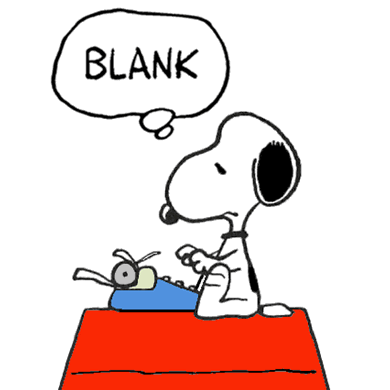
Then the voice of doubt that I’m writing crap and no one will read me anyway creeps in while I’m staring at the blinking cursor and the blank space after it…