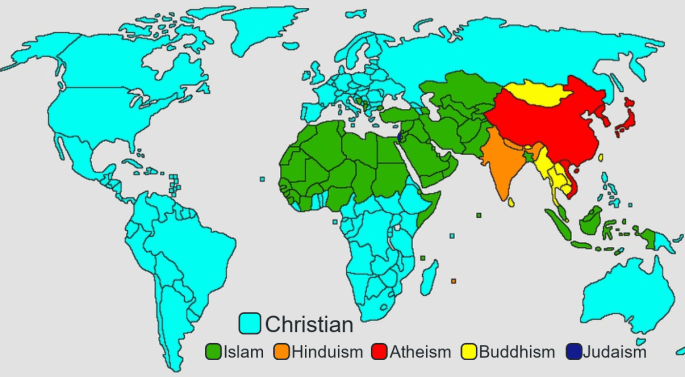
What Religion Are You?

When I say I’m an atheist, the very next question most people ask is: “Well, what were you raised? What were your parents?”

Human beings.

Somehow that answer isn’t good enough. They’re looking to place me in a spiritual box and lock me into a religion and all the stereotypes that go along with it.

All my life I’ve been told I’m a Jew — by my parents, by my relatives, by society at large, simply because my parents professed to be Jews. But if I don’t believe in god, or any supreme being, or even higher power; if entropy is what rules my universe, then am I still Jewish?

Jew’s believe in one god.

I believe in none.

Some would argue I am culturally Jewish, a product of my parentage. But it’s ludicrous I’m considered Jewish solely because my parents were (and technically just my mother need be, according to Jewish law). Let’s get one thing straight. Judaism is NOT a race. It is practiced globally, from members of our Supreme Court to jungle tribes in Africa that pray to one God with ancient Hebrew texts. The thread that holds them together is not racial, or even cultural, but spiritual — a belief system. There are no cultural similarities between the African tribes and our former or current Chief Justices. Take away the religious string and there’s really nothing left of their Judaism.

I adhere to no religion, don’t celebrate any religious holidays, and believe passing down to our children fantastical mythologies that promote intellectual laziness is dangerous at best. Growing up, my family celebrated the major Jewish holidays, though I never cared for the antiquated rituals and sexist roles we all played. Jewish parables were too often warped tales filled with praising their solipsistic god instead of people for their hard-earned achievements. I don’t like brisket, noodle koogle, or most deli foods. And as holidays go, the Fourth of July and Thanksgiving always meant the most to me culturally, and the food is far better.

If I’m culturally anything, it’s white, middle-class, American. Like most of us, I grew up with people of my socioeconomic status. I was raised in a relatively safe, suburban neighborhood — religiously, even racially diverse, but everyone made around the same amount of money. More fine grain, I’m culturally a native Californian. We have a whole other way of thinking out here than the rest of the world. Level of intelligence would be my third greatest cultural influence. I find I gravitate to thinkers — those who explore and question.

So how does this make me a Jew?

Liking bagels, or preferring salmon to ham, doesn’t define one culturally. Nor does espousing the virtues of education, or denouncing violence, or promoting empathy. These ideologies are widely held by most of our modern age. I’m not a Taoist because I believe in living a balanced life. And I’m not a Christian because I think Christ, or likely his myth, had a lot of charitable ideas.

What does it mean to say you are Jewish, or Christian, or Mormon, if you don’t embrace their belief system? If you were raised Christian and you didn’t believe in God, or Christ, would you still be considered a Christian? Hell, if you believed in God, but NOT Christ, could you still be a Christian?

What religion are you?

Most would respond with whatever religion we were raised. We practice the rituals our parents bestowed upon us. But the more important question is: What do you believe?

Think about it.

Have you let your parents define your spirituality? Beyond what you’ve been raised, have you considered what religious ideologies you actually believe in, if any? ‘Be kind. Work hard. Love your family and neighbors.’ These cultural beliefs began 200,000 years ago when we were still living in caves, and aren’t exclusive to any particular religion. They may have been adopted as Christian, or Jewish morality, but the truth is ‘Be kind’ stemmed from our need to be social. Humans are social creatures, and greedy, ungrateful, thoughtless behavior does not win friends, or attract lovers.

Omitting how you were raised, what do YOU actually believe in?

If you don’t believe the bible stories, Old or New Testament, are real — a recounting of historic events — then it’s likely you understand these books were written by literate MEN — the highest echelon of society at the time — to control the masses of illiterate layman with parables that instilled fear. You also likely know that these powerful men imposed rules and roles to maintain the social structure they created, and assigned the administration of this order to an almighty [jealous and vengeful (Nahum 1:2–8)] God whose authority could not (as an ethereal being), and must not be questioned. If you do not believe in this God, or that his adventures in these bibles are real, then you are likely an agnostic or an atheist.

ag·nos·tic (a la Google); noun

  1. a person who believes that nothing is known or can be known of the existence or nature of God or of anything beyond material phenomena; a person who claims neither faith nor disbelief in God.

a·the·ist (a la Google); noun

  1. a person who disbelieves or lacks belief in the existence of God or gods.

You don’t have to subscribe to a religion to be spiritual. You can feel connected to this earth and all that’s here without being a Buddhist. You can believe in charity without being a Christian. You can encourage education without being Jewish. You don’t have to pass on horrific tales to frighten children into adhering to rules handed down from men on high thousands of years ago. You can practice and teach values — choose to live a moral life: be kind, generous, honest, empathetic, loving, compassionate, without religion. Why would you choose to do so without a vengeful God threatening Hell if you’re ‘bad?’ You are advanced enough to understand each of us must continually contribute to humanity, and this planet we inhabit, for our race to survive, and thrive.
Boy Scouts of Faith-Based America

On the short ride home from his Boy Scout meeting, my 11 yr old son was quiet and sullen. I asked him what was up. Had anything happened at the meeting that he wanted to talk about? I saw him looking at me from my rear view mirror, gauging how to tell me disappointing news.

“I found out tonight that I can’t become an Eagle Scout.”

He’d never been all that enamored with Boy Scouts. He didn’t much care for camping, or the tough kid role so many of his contemporaries played out with the survival skills and competitive war games his scout leaders chose. He’d decided to ‘bridge’ from ‘Webelo’ Cub Scout to a full-fledge Boy Scout to become an Eagle Scout for the prestige sold to him by his troop leaders. “Presidents, senators, and successful icons like Bill Gates, Steven Spielberg, Neil Armstrong were Eagle Scouts.”

“College admissions officers recognize the award and consider it in their decisions. Eagle Scouts are eligible for many scholarships. Many employment recruiters look for “Eagle Scout” on a resume.” These are just a few of the perks on an Eagle Scout information page for the Boy Scouts of America (BSA), and one of the reasons we agreed when our son said he wanted to stay in their program.

I assumed he wanted to quit Boy Scouts, as he was the outlier in his troop, and had complained of being bullied at meetings and on camping trips more than a few times. I was down with him quitting, as I too felt Scouts wasn’t the right fit for him, but it was the context of what he’d said that stuck in my head, so I sought clarity. “What do you mean you can’t become an Eagle Scout?”

Again we made eye contact in the rear view mirror, and I got that my son wasn’t sad, but bemused, bordering on angry. “Mr. Baker told me tonight that even if I get all my merit badges, and fulfilled all the other Boy Scout requirements through middle school and high school, I’m not qualified to become an Eagle Scout.”

I felt my heart start pounding. “Why?”

“The new scout master said in order to achieve Eagle Scouts, or any other rank, Boy Scouts must live the Scout Oath, which means we have to believe in God.”

My husband and I introduced our son to scouting when he was 5 yrs old. Fourteen Christians and one Jew, and our kid was the only member of his Webelo troop being raised without religion. Most of our neighbors, and our kids classmates attended the local church. My husband and I are Atheists. Our kids are not privy to the benefits of participating in this tight-knit religious network. Scouting seemed like a positive way for our son to meet other boys his age in our area.

We didn’t consider the Boy Scouts an exclusively religious organization. We’d heard stories, of course, and knew of the pending lawsuit in the supreme court filed by a father for discrimination against his son who claimed to be an atheist. It motivated me to ask the women at the Cub Scout table during school registration if their troop was religious, and if so, how. Both women assured me their Den had several different faiths among its members, and their policy was to keep religion at home, not practice it in scouting.

They were true to their word during the first five years our son belonged to their Den, participating in most events from hikes, to community drives for food banks, and even popcorn sales. He earned quite a few merit badges along the way. Religion, even prayer, was never practiced or promoted in any way. He bridged from Cub Scout at the end of fifth grade, and at 11 yrs old became a full Boy Scout with the aim of eventually becoming an Eagle Scout in high school.

Picking him up from his first official Boy Scout meeting a few months back, my son informed me the troop he’d bridged to said prayers at the end of their meetings. I asked him how he felt about that. He confessed he’d already branded himself a non-believer. The scout master asked him to lead the prayer at the end of that first meeting. He’d refused, stating he wasn’t sure there was a God, and he thought praying was a waste of time because he was certain there wasn’t anyone listening. Though he’d been publicly labeled “misinformed” by the scout master at that meeting, and endured jeers and taunts from several of the boys, every Webelo he’d been with the last five years had bridged to this new troop. Our son didn’t want to look for a new non-religious troop, with a bunch of kids he didn’t know. He just wouldn’t recite what he didn’t believe, he’d told me.

That wasn’t good enough for advancement, according to his new scout master, who asked him again last Friday night to say a closing prayer. No matter how lax about religion our son’s lower division den, rank of Boy Scouts and higher stuck to the rules of the BSA, he told our son. A religious association, and faith in God is required for rank advancement. Commitment to community service, practicing Scouting’s core values of “honesty, compassion,” as well as continually exhibiting “diligence as a contributing team member,” were irrelevant. Belief in a god was more important than social service. Atheism is a sin, the scout master assured our son at the end of last Friday’s meeting.

“I could lie that I believe,” my son suggested, “If I have to…”

“Think that’s a good idea?” I asked, glad to be driving, which made it easier to keep emotional distance and sound casual.

“Maybe. I just don’t get why I have to pretend I believe in God. The Boy Scout handbook says we’re supposed to ‘respect and defend the rights of others to practice their own beliefs.’ But they’re not.”

Ah, from the mouths of babes…

He’s right, of course. Click on the ‘Litigation’ link on the official BSA website, and bring up the “Duty to God” page. Part of the Scout Oath proclaims the scout will ‘do his duty to God [and country].’ Every level of advancement requires a promise or show of faith in God. Boy Scouts are instructed to respect the beliefs of others, but this respect should only be awarded to those that believe in the Christian/Judaeo God. Turns out, prejudice, hate, racism are systemic to the Boy Scouts of America, and a large part of what they promote.

Nowhere in the BSA literature we received and perused before or after our son joined the Boy Scouts did they say they were a faith-based organization that required their members to be believers to receive equal rights and privileges as those granted to religious members. Had they disclosed this with all transparency, as do churches and other religious organizations pushing their beliefs, I doubt my husband and I would have channeled our son to participate.

We impose no religion on our kids. We discuss it often— the concept of one god verses many; various cultures and their belief systems from ancient to modern man, using everything from the Tao to biblical references. Our kids get additional religious education through their friends, and faith-based celebrations with extended family. My husband and I hope to expose our children to many possibilities, and let them discover their own spirituality.

Parents who provide religious training for their kids early on, and, it would appear, register them in Boy Scouts, are looking to validate their beliefs by indoctrinating their kids with the religion in which they were raised. And most of these parents have never stopped to consider whether the rhetoric their parents sold them is truth. They are blind believers, and turn their children into the same.

“The Boy Scouts of America (BSA) takes a strong position, excluding atheists and agnostics,” according to Wikipedia. In 2014 the BSA finally voted to allow gay kids. They still ban atheists.

Perhaps the BSA is a front for the church, and works to convert unsuspecting non-believers working to advance in their organization. Hook the kids without religiosity when they’re young, in Cub Scouts. Get them to work hard for advancement, then deny them further advancement unless they convert to Christianity. Whatever BSAs agenda, and our son now sees they clearly have one, the meeting with his troop leader last Friday night soured him to continuing in scouting. It’s a shame, really, because the Boy Scouts have so many positives to offer. Weirdly enough, they tout much of the same morality I preach to my kids, like being courteous, and honest, loving and compassionate. The only difference between us is I don’t believe a god gave us this wisdom. I give credit to humanity, over eons, watching what works to build thriving societies.

There is no god that’ll save us from hate, prejudice, nationalism, and exclusionary religious sects like the BSA who lure kids in, like the Pied Piper, under the guise of community involvement, then change the rules mid-play. Regardless of our differences, religiously, culturally, politically, PEOPLE, me and you, must use our collective wisdom to unite as one race—the Human race—for our continued existence.

Marketing and Religion

Do you believe in God?

Why?

Likely because your mother taught you to—marketing to you throughout your formative years the benefits of belief:

  • Community
  • Solace
  • Salvation

Your beliefs were marketed to you through holiday celebrations, and maybe Sunday school and prayer. Even if mom, and/or your dad, didn’t directly push their beliefs onto you, they likely sold your religion to you via example: crossing themselves when hopeful; saying (and believing) “thank god,” instead of giving the credit to the person or people who brought about whatever they were thankful for.

Religion is a PRODUCT. Always has been—a way for the few in power to control the masses. Christians, Jews, Muslims, all major religions have become successful, thriving businesses through MARKETING…

Read more:
https://lnkd.in/d8ZKxE77