Marketing to Believers

Do you believe in God and Jesus?

Why?

Likely because your mother taught you to — marketing to you throughout your formative years the benefits of belief:

  • Community
  • Solace
  • Salvation

Your beliefs were marketed to you through holiday celebrations, and maybe Sunday school and prayer. Even if mom, and/or your dad, didn’t directly push their beliefs onto you, they likely sold your religion to you via example: crossing themselves when hopeful; saying (and believing) “thank god,” instead of giving the credit to the person or people who brought about whatever they were thankful for.

Religion is a PRODUCT. Always has been — a way for the few in power to control the masses. Christians, Jews, Muslims, and all major religions have become successful, thriving businesses through MARKETING.

For most, your entire belief system is based on what has been advertised, marketed, and sold to you through your family first, then media, and likely your social circle — Christians hang out with other Christ believers, Jews with Jews, Muslims…etc., associate with their own “kind.”

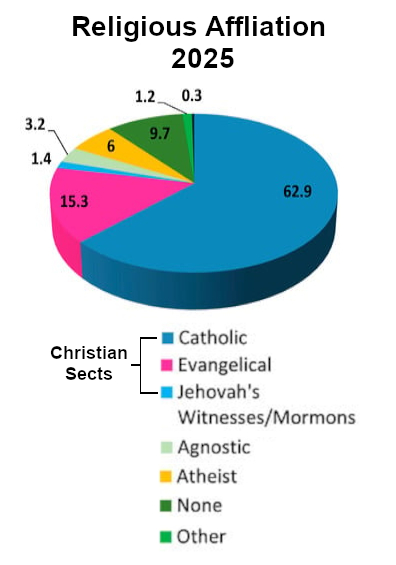
Christianity is by far the largest held religious construct with 2.5 BILLION believers, almost a third of the global population.

By far, Christianity produces more marketing than any other religion. Like fake news, Christianity not only sells you on believing in the ethereal but also sells you on what to believe. They sell you on who and what to vote for, what you buy, and often who you shop from.

It is impossible to find real numbers on how much Christianity spends on advertising. Christian marketing pros make sure it’s a black box because they don’t want you to know they are spending trillions annually to sell you on believing, or concertizing your existing faith by selling you politicians, books, and businesses that megaphone Christianity. Christian books, too many to begin to count, Christian Superstores and Mega-Churches, TV and online evangelist, and movies like The Passion of the Christ, Noah, Heaven Is for Real, all are subtle (and not so subtle) marketing campaigns to convince you to become a Christian, or buy the products and services of Christian organizations if you are already a believer.

In fact, Christianity’s foundation is not God or morality. It is MARKETING. By Christian law, it is every Christian’s obligation to market — PROSELYTIZE Christianity to the world.

Most of you believe as you do because your belief system was manufactured and marketed to you continually throughout your life.

Faith-based marketing (FBM), generally Christian, is a strategy that recognizes the importance of religion to consumers. FBM attempts to tie an organization or specific product to a religion. Chick-fil-A, Hobby Lobby, Tyson Foods, Jet Blue, and the list goes on, associate themselves as Christian organizations to better market their products to the over $5.1 trillion a year spent by Christian buyers. Most of these companies use Christianity as a convenient cover story, but they do not practice Christian values. The struggling clothing retailer, and Christianity advocate, Forever 21, demoted most full-time workers to part-time status to avoid paying them medical benefits. This is typical for companies espousing Christianity. They market to your beliefs, quote the Bible to manipulate you into thinking they have any morality at all, to maximize your Christian dollars.

Passengers on Alaska Airlines received pocket-sized prayer cards along with their refreshments (until the backlash by customers threatened to hurt their income). Businesses that are not affiliated with any religion, like Coca-Cola, Pepsi, Bank of America, Dairy Queen, McDonald’s, Clorox, Delta Airlines all sponsor MegaChurch events. 20th Century Fox has a division called FoxFaith that produces religious-oriented films, often sponsored by the companies vying for your Christian dollars, and the Republican Party (GOP Marketing).

Christianity has been marketing to Republicans since the mid-1950s. President Dwight D. Eisenhower spearheaded the phrase “under God,” be added to the Pledge of Allegiance, and the 1955 law requiring “In God We Trust” to be printed on all U.S. currency. Dwight was not religious, but saw the Republican base swung strongly Christian, so he converted to Presbyterian, was publicly baptized, and won reelection a year later by a landslide.

In the early 1980s, a coordinated effort by the executive director of the College Republicans for Ronald Reagan, Ralph Reed, Pat Roberson (700 club televangelist), and Jerry Falwell (Young Warriors for Christ) campaigned to Christians to turn them into “America’s most powerful Republican voting bloc.” He sent direct mail marketing to church mailing lists across the U.S. to convince them that ‘liberals,’ and non-believers were destroying America, and reminding the church members about their obligation to vote for candidates that espoused Christianity. And it’s worked!

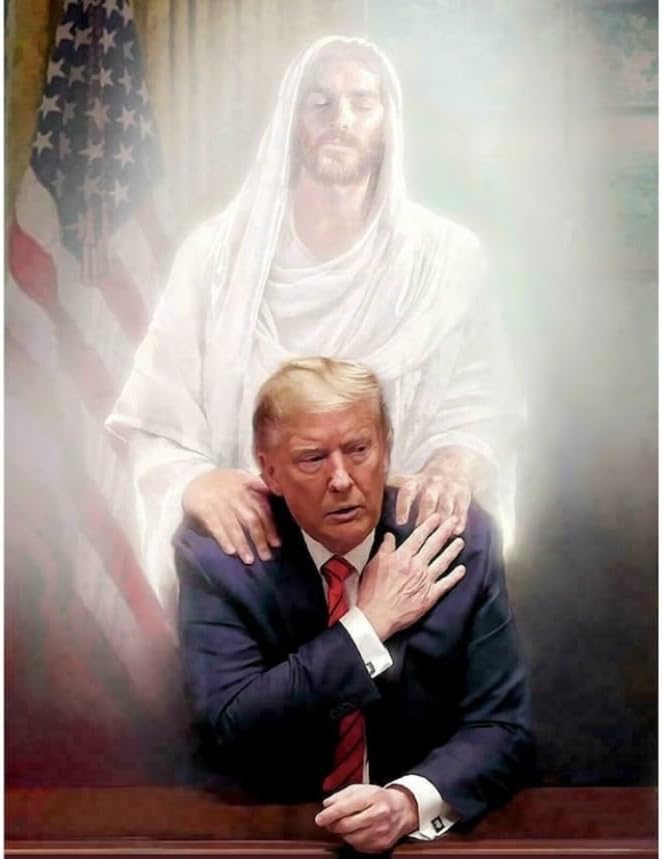
Republicans are now THE party of Christians. During the Capital Riots, Christian signage was everywhere: “Jesus Saves!” and “God, guns & guts made America, let’s keep all three!” Most of the Capital Rioters were/are Christian ‘believers.’ Crowds chanted, “Shout if you love Jesus!” And the crowd cheered back, “Shout if you love Trump!”

Target-marketing to Christians, especially low — mid-income Christians, has exceptionally high conversion rates — gets these people to buy, try, and subscribe with each campaign.

Why?

Conservative Christians are way more likely to buy into marketing than any other target demographic.

But why?

It is pretty simple, really. People who choose to believe in fairy tales (like a virgin birth of a married woman, resurrection, and eternal afterlife with a judge at the gates), without THINKING— just believing, taking it on faith that their mother and society must be ‘right’ — are exponentially easier to convince to believe in anything, no matter how absurd. So, when Fox News and other conservative media flood the internet and TV with marketing claiming the ‘2020 Election is a fraud, and Trump won, not Biden,” Christians tend to believe it.

Looking for high engagement with your marketing? Target and SELL your products, services, and ideas (real or fake) to true Christian believers.

What Religion Are You?

When I say I’m an atheist, the very next question most people ask is: “Well, what were you raised? What were your parents?”

Human beings.

Somehow that answer isn’t good enough. They’re looking to place me in a spiritual box and lock me into a religion and all the stereotypes that go along with it.

All my life I’ve been told I’m a Jew — by my parents, by my relatives, by society at large, simply because my parents professed to be Jews. But if I don’t believe in god, or any supreme being, or even higher power; if entropy is what rules my universe, then am I still Jewish?

Jews believe in one god.

I believe in none.

Some would argue I am culturally Jewish, a product of my parentage. But it’s ludicrous I’m considered Jewish solely because my parents were (and technically just my mother need be, according to Jewish law). Let’s get one thing straight. Judaism is NOT a race. It is practiced globally, from members of our Supreme Court to jungle tribes in Africa that pray to one God with ancient Hebrew texts. The thread that holds them together is not racial, or even cultural, but spiritual — a belief system. There are no cultural similarities between the African tribes and our former or current Chief Justices. Take away the religious string and there’s really nothing left of their cultural Judaism.

I adhere to no religion, don’t celebrate any religious holidays, and believe passing down to our children fantastical mythologies that promote intellectual laziness is dangerous at best. Growing up, my family celebrated the major Jewish holidays, though I never cared for the antiquated rituals and sexist roles we all played. Jewish parables were too often warped tales filled with praising their solipsistic god instead of people for their hard-earned achievements. I don’t like brisket, noodle koogle, or most deli foods. And as holidays go, the New Year’s Eve and Thanksgiving always meant the most to me culturally, and the food is far better.

If I’m culturally anything, it’s white, middle-class, American. Like most of us, I grew up with people of my socioeconomic status. I was raised in a relatively safe, suburban neighborhood — religiously, even racially diverse, but everyone made around the same amount of money. More fine grain, I’m culturally a native Californian. We have a whole other way of thinking out here than the rest of the world. Level of intelligence would be my third greatest cultural influence. I find I gravitate to thinkers — those who explore and question.

So how does this make me a Jew?

Liking bagels, or preferring salmon to ham, doesn’t define one culturally. Nor does espousing the virtues of education, or denouncing violence, or promoting empathy. These ideologies are widely held by most of our modern age. I’m not a Taoist because I believe in living a balanced life. And I’m not a Christian because I think Christ, or likely his myth, had a lot of charitable ideas.

What does it mean to say you are Jewish, or Christian, or Mormon, if you don’t embrace their belief system? If you were raised Christian and you didn’t believe in God, or Christ, would you still be considered a Christian? Hell, if you believed in God, but NOT Christ, could you still be a Christian?

What religion are you?

Most would respond with whatever religion we were raised. We practice the rituals our parents bestowed upon us. But the more important question is: What do you believe?

Think about it.

Have you let your parents define your spirituality? Beyond what you’ve been raised, have you considered what religious ideologies you actually believe in, if any? ‘Be kind. Work hard. Love your family and neighbors.’ These cultural beliefs began 200,000 years ago when we were still living in caves and aren’t exclusive to any particular religion. They may have been adopted as Christian, or Jewish morality, but the truth is ‘Be Kind’ stemmed from our need to be social. Humans are social creatures, and greedy, ungrateful, thoughtless behavior does not win friends or attract lovers.

Omitting how you were raised, what do YOU actually believe in?

If you don’t believe the fantastical bible stories, Old or New Testament, are a recounting of historic events, then it’s likely you understand these books were written by literate MEN — the highest echelon of society at the time — to control the masses of illiterate layman with parables that instilled fear. You also likely know that these powerful men imposed rules and roles to maintain the social structure they created, and assigned the administration of this order to an almighty [jealous and vengeful (Nahum 1:2–8)] God whose authority could not (as an ethereal being), and must not be questioned. If you do not believe in this God, or that his adventures in these bibles are real, then you are likely an agnostic or an atheist.

ag·nos·tic (a la Google); noun

  1. a person who believes that nothing is known or can be known of the existence or nature of God or of anything beyond material phenomena; a person who claims neither faith nor disbelief in God.

a·the·ist (a la Google); noun

  1. a person who disbelieves or lacks belief in the existence of God or gods.

You don’t have to subscribe to a religion to be spiritual. You can feel connected to this earth and all that’s here without being a Buddhist. You can believe in charity without being a Christian. You can encourage education without being Jewish. You don’t have to pass on bizarre, horrific tales to frighten children into adhering to rules handed down from men on high thousands of years ago. You can practice and teach values — choose to live a moral life: be kind, generous, honest, empathetic, loving, compassionate, without religion.

Why would you choose to be kind without a vengeful God threatening Hell if you aren’t? You’ve advanced enough in human development to understand each of us must continually contribute to humanity, and this planet we inhabit, for our race to survive, and thrive.

Atheist in Christian America

Atheists are worse than terrorists in USA…

I was finishing the morning dishes when I saw the strobe of police lights out my kitchen window as several cop cars pulled up to a house across the street from ours. I picked up my 19-month-old son out of the highchair, held him against my ballooning belly, and hauled my 7-month pregnant self out the front door to check out the happening.

A warm, sunny morning, I went down to the end of the cul-de-sac and met up with a few of my neighbors gathered there to witness the commotion. We had chosen our home in an East Bay suburb of San Francisco because it promised good public schools, and gave the impression of a safe, friendly neighborhood in which to raise our kids. We’d moved in a month earlier and no residents had come over to welcome us. I joined the group of three, introduced myself and my son, and then asked what was going on as I watched cops move in and out and around the house across the street like black ants.

“Robbery,” a small, plump woman with a bad blond dye job in her mid-40s said. “Shelly said they got their laptops, the Xbox, some jewelry, and all the guns, but that was it.”

“Bet they were going after the guns,” another woman, taller, but also with a bad blond dye job added. “Bill loved showing off his gun collection.” She pursed her lips and looked back at four kids all under 10 in front of the house at the end of the block, presumably one or more being hers.

There was a moment of awkward silence, then the remaining woman, with what looked like naturally auburn hair, asked me to repeat my last name.

When I told her again, she said, “Oh, you’re the Jewish couple then? I heard there was a Jewish family that moved in recently.” She smiled cordially and practically giggled as she stared at me in wonderment.

Now all the women were staring at me. They each wore a tight-lipped grin. It was clear that they were tickled by the idea of living near Jews. Unlike L.A. or New York, the Bay area’s Jewish population is comparatively small. Though our last name was often mistaken for Jewish, its derivation is German and isn’t always a Jewish moniker. The woman’s assumption was ignorant, but typical, especially in areas where Jews are a novelty.

“Actually, we’re Atheists. We don’t practice any religion.” I tried to sound casual in my reveal, as so often my lack of religious orientation is met with disdain.

Blank stares. Total silence. It was like I had just said that we were registered child molesters. My words hung like lead in the dead air until the auburn-haired woman broke the silence.

“You know,” she tried to sound casual. “I read this article in Cosmo the other day about Atheists. They’re actually supposed to be non-violent people. The writer pointed out that we never hear about Atheists killing or kidnapping innocents, bombing buildings, or hijacking planes.”

The vacuum that followed her comment made it clear that the new neighbors would have preferred we were practicing Jews, or Mormons, or Buddhists, or even Muslims at that point.

“You mean you don’t participate in the holidays?” the small blond woman asked, mortified. “Not even Christmas?” she said in a babyish voice to my son in my arms who stared at her like she was an off-world alien, then reached out and tried to grab hold of her straw-like hair.

“No. Not even Christmas.” I assured her and grabbed hold of my son’s tiny hand and kissed it.

“Well, Christmas isn’t a religious holiday,” she said with certainty. As absurd as her comment was, I hear it all the time. I refrained from reminding her that Christmas celebrates the birth of Christ, the very foundation of Christianity.

“We have five nights of winter presents which compensates quite nicely,” I explained. “And we celebrate birthdays, special occasions, Fourth of July, Thanksgiving, and so forth.”

She bobbed her head up and down, but I could tell I’d already lost her. She looked towards the kids with pursed lips of concern. And I got that she was afraid of me. I was the anti-Christ, the infidel, the soulless. Though her fear was unwarranted, there isn’t a religious, or even self-proclaimed “spiritual” person I can recall that I don’t get the same bounce from when I reveal I’m an Atheist. No God? No values. It’s common [religious] wisdom (rhetoric), right?

I didn’t set out to set myself apart. My brief stint in Sunday school was forced upon me at 6 yrs old until I was 13, when my parents had to acquiesce to my unshakable conviction that there is no God. My mother spent the rest of her life convinced that I would come back to religion when I ‘grew up,’ got married and had kids. But the certainty of a godless universe, one ruled by entropy, not empathy, has resonated with me as far back as I can remember, and has not altered since I declared my independence from religion at 5 when I assured my grandmother she was insisting I say nightly prayers to no one.

My husband and I have chosen to raise our kids without religion. Instead of the indoctrination we had to endure, we have given our children the opportunity to discover their own spirituality.

The cop cars left, one right after the other, my son now fidgeting in my arms, pulling at my hair and trying to grab the thin, 1” long gold bar dangling from the small gold loop through my pierced ear. I managed to evade his tiny hand, but the weight of him on my swollen belly was exaggerating the pressure of my daughter kicking me from inside.

“Well, I guess the show’s over,” the taller, athletic blond woman said, decked in dark gray leggings and a tight bright pink sleeveless T.

We exchanged departure pleasantries, and I took my son home. The next day I was gardening in the front yard and two kids, a boy and girl, maybe 7 and 9, came riding by on their bikes. My son ran to the curb, waving wildly to greet them. They pulled up close to where he stood, and then the boy kicked my son in the belly and screamed “Satan lover!” My son fell on his butt and sat on the sidewalk crying hysterically.

I was horrified. “Oh my god, are you crazy,” I yelled as I went to attend to my son. I saw them ride down the block towards the cul-de-sac and disappear into a garage next to the house that had been robbed.

I spoke to my husband about the event later that evening. At dinner, he suggested I go talk to the parents of the two kids on bikes since he didn’t see the interaction, and someone had to stay home with our son. I suggested he go since I was afraid I’d say something offensive in my outrage at their children’s behavior. Before either of us could leave, there was a knock on our front door.

The small straw-haired blond woman and her short, pudgy husband stood on our porch with pursed lips. “I hear you had an interaction with my kids today,” she said to me, her anger so visceral it felt like her eyes were shooting bullets into mine. “You cussed at them and called them ‘crazy,’” she said, now practically spitting as she spoke.

I was floored, literally drop-jawed unable to respond.

My husband invited them in to talk and calmly closed the door behind them, all of us now gathered in our small entryway. He invited them into the kitchen, led them in, and offered them something to drink but both of them refused. I followed, focusing on breathing and slowing my rapid heart rate.

“It is my understanding that your son kicked our son when he was riding by on his bike this afternoon, which is what likely provoked my wife’s response,” my husband said.

“My son would never do that,” the little woman insisted. “We are good Christians, and my kids are good kids, raised with sense yours sorely lacks when he goes running after them on their bikes.”

“Our son is a year and a half old,” I practically screamed at her over our dinner table that we were all standing around. “He’s not running after anyone. He was waving at your kids to say hello! And I never cussed at your kids. Your children’s behavior was disgusting, and you shouldn’t be here defending them. You should be at home disciplining them and teaching them wrong from right!”

“Don’t you dare tell me how to raise moral children,” the woman practically spat, “Like you would know,” she said and narrowed her eyes at me then stomped out of our kitchen, down the hallway, yanked open our front door, and left.

Her husband, silent until right then said, “I’m sorry,” to both my husband and I and followed his wife out.

A couple of years into living at our suburban home, we discovered most every household in our neighborhood attended the same church, as did the families at our kids’ elementary school. Both children and adult basketball, tennis, and baseball teams, and most neighborhood gatherings, from potlucks to local politics, were sponsored by this church. Over the years we’ve found their priests often influence the election of city officials by throwing their support behind their preferred candidate. They’ve ‘guided’ the decisions made by our mayor and city council members regarding the welfare of all 85,000 residents, Christian, and not. Proposed housing developments, to strip malls to the stores allowed in them are all monitored by this church, rejecting cannabis dispensaries but welcoming tobacco smoking lounges, sporting goods selling guns, and bars. Public school policies, from the books our kids get to read, to the subjects they study are influenced by this conservative church and its members. While these same churchgoers will loudly defend their 2nd Amendment right to ‘bear arms,’ none of them support or even acknowledge our 1st Amendment right to keep the church out of state and local affairs.

Every December several neighbors adorn their front lawns with scenes of Mother Mary birthing Baby Jesus. Christmas lights and displays go up in late November and stay up well into the new year on most homes. Santa on his sled pulled by five reindeer is attached to the roof of the small blond mom’s home. A speaker blaring, “Ho ho ho” fills the cul-de-sac from sunset until after 9:00 every night.

Since that first encounter over a decade ago, most of our neighbors have ignored me when dropping our kids off or picking them up from school. The moms and dads are curt with me when they see me volunteering at school events. They do not acknowledge me or my husband at the store or in local restaurants. They do not include our family in their neighborhood parties. Their children ignore our kids in passing and have excluded and bullied our kids in and out of school.

When we moved here, I didn’t stop to consider the religious leanings of the community. As an atheist, in a monotheistic society, wherever I live I’m on the fringe. I am deeply saddened that my children are being ostracized because of our lack of religious identity. In allowing them to define their own spirituality, I fear I have inadvertently set them up for rejection, and condemned them to the fringes, which is a very lonely place to live. But I do not foresee bringing religion into our home. My husband and I will not teach our children what we do not believe, and both find fundamentally corrupt, corrosive, and detrimental to humanity’s survival.

This upcoming holiday season, in a brief lapse of reason, I thought of throwing a Hanukkah party and inviting the neighborhood. If they needed us to be something, we could pretend to be Jewish. But the thing is, I am proud of who we are, and how we live — the moral compass that guides us. And I’m equally proud that we are raising our children with the freedom to practice any religion they choose, or none at all.

Boy Scouts of Faith-Based America

On the short ride home from his Boy Scout meeting, my 11 yr old son was quiet and sullen. I asked him what was up. Had anything happened at the meeting that he wanted to talk about? I saw him looking at me from my rear view mirror, gauging how to tell me disappointing news.

“I found out tonight that I can’t become an Eagle Scout.”

He’d never been all that enamored with Boy Scouts. He didn’t much care for camping, or the tough kid role so many of his contemporaries played out with the survival skills and competitive war games his scout leaders chose. He’d decided to ‘bridge’ from ‘Webelo’ Cub Scout to a full-fledge Boy Scout to become an Eagle Scout for the prestige sold to him by his troop leaders. “Presidents, senators, and successful icons like Bill Gates, Steven Spielberg, Neil Armstrong were Eagle Scouts.”

“College admissions officers recognize the award and consider it in their decisions. Eagle Scouts are eligible for many scholarships. Many employment recruiters look for “Eagle Scout” on a resume.” These are just a few of the perks on an Eagle Scout information page for the Boy Scouts of America (BSA), and one of the reasons we agreed when our son said he wanted to stay in their program.

I assumed he wanted to quit Boy Scouts, as he was the outlier in his troop, and had complained of being bullied at meetings and on camping trips more than a few times. I was down with him quitting, as I too felt Scouts wasn’t the right fit for him, but it was the context of what he’d said that stuck in my head, so I sought clarity. “What do you mean you can’t become an Eagle Scout?”

Again we made eye contact in the rear view mirror, and I got that my son wasn’t sad, but bemused, bordering on angry. “Mr. Baker told me tonight that even if I get all my merit badges, and fulfilled all the other Boy Scout requirements through middle school and high school, I’m not qualified to become an Eagle Scout.”

I felt my heart start pounding. “Why?”

“The new scout master said in order to achieve Eagle Scouts, or any other rank, Boy Scouts must live the Scout Oath, which means we have to believe in God.”

My husband and I introduced our son to scouting when he was 5 yrs old. Fourteen Christians and one Jew, and our kid was the only member of his Webelo troop being raised without religion. Most of our neighbors, and our kids classmates attended the local church. My husband and I are Atheists. Our kids are not privy to the benefits of participating in this tight-knit religious network. Scouting seemed like a positive way for our son to meet other boys his age in our area.

We didn’t consider the Boy Scouts an exclusively religious organization. We’d heard stories, of course, and knew of the pending lawsuit in the supreme court filed by a father for discrimination against his son who claimed to be an atheist. It motivated me to ask the women at the Cub Scout table during school registration if their troop was religious, and if so, how. Both women assured me their Den had several different faiths among its members, and their policy was to keep religion at home, not practice it in scouting.

They were true to their word during the first five years our son belonged to their Den, participating in most events from hikes, to community drives for food banks, and even popcorn sales. He earned quite a few merit badges along the way. Religion, even prayer, was never practiced or promoted in any way. He bridged from Cub Scout at the end of fifth grade, and at 11 yrs old became a full Boy Scout with the aim of eventually becoming an Eagle Scout in high school.

Picking him up from his first official Boy Scout meeting a few months back, my son informed me the troop he’d bridged to said prayers at the end of their meetings. I asked him how he felt about that. He confessed he’d already branded himself a non-believer. The scout master asked him to lead the prayer at the end of that first meeting. He’d refused, stating he wasn’t sure there was a God, and he thought praying was a waste of time because he was certain there wasn’t anyone listening. Though he’d been publicly labeled “misinformed” by the scout master at that meeting, and endured jeers and taunts from several of the boys, every Webelo he’d been with the last five years had bridged to this new troop. Our son didn’t want to look for a new non-religious troop, with a bunch of kids he didn’t know. He just wouldn’t recite what he didn’t believe, he’d told me.

That wasn’t good enough for advancement, according to his new scout master, who asked him again last Friday night to say a closing prayer. No matter how lax about religion our son’s lower division den, rank of Boy Scouts and higher stuck to the rules of the BSA, he told our son. A religious association, and faith in God is required for rank advancement. Commitment to community service, practicing Scouting’s core values of “honesty, compassion,” as well as continually exhibiting “diligence as a contributing team member,” were irrelevant. Belief in a god was more important than social service. Atheism is a sin, the scout master assured our son at the end of last Friday’s meeting.

“I could lie that I believe,” my son suggested, “If I have to…”

“Think that’s a good idea?” I asked, glad to be driving, which made it easier to keep emotional distance and sound casual.

“Maybe. I just don’t get why I have to pretend I believe in God. The Boy Scout handbook says we’re supposed to ‘respect and defend the rights of others to practice their own beliefs.’ But they’re not.”

Ah, from the mouths of babes…

He’s right, of course. Click on the ‘Litigation’ link on the official BSA website, and bring up the “Duty to God” page. Part of the Scout Oath proclaims the scout will ‘do his duty to God [and country].’ Every level of advancement requires a promise or show of faith in God. Boy Scouts are instructed to respect the beliefs of others, but this respect should only be awarded to those that believe in the Christian/Judaeo God. Turns out, prejudice, hate, racism are systemic to the Boy Scouts of America, and a large part of what they promote.

Nowhere in the BSA literature we received and perused before or after our son joined the Boy Scouts did they say they were a faith-based organization that required their members to be believers to receive equal rights and privileges as those granted to religious members. Had they disclosed this with all transparency, as do churches and other religious organizations pushing their beliefs, I doubt my husband and I would have channeled our son to participate.

We impose no religion on our kids. We discuss it often— the concept of one god verses many; various cultures and their belief systems from ancient to modern man, using everything from the Tao to biblical references. Our kids get additional religious education through their friends, and faith-based celebrations with extended family. My husband and I hope to expose our children to many possibilities, and let them discover their own spirituality.

Parents who provide religious training for their kids early on, and, it would appear, register them in Boy Scouts, are looking to validate their beliefs by indoctrinating their kids with the religion in which they were raised. And most of these parents have never stopped to consider whether the rhetoric their parents sold them is truth. They are blind believers, and turn their children into the same.

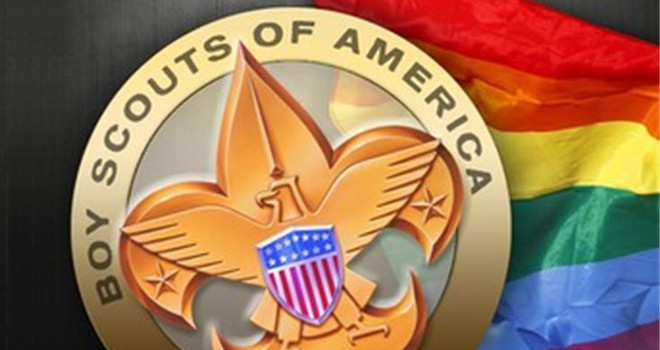
“The Boy Scouts of America (BSA) takes a strong position, excluding atheists and agnostics,” according to Wikipedia. In 2014 the BSA finally voted to allow gay kids. They still ban atheists.

Perhaps the BSA is a front for the church, and works to convert unsuspecting non-believers working to advance in their organization. Hook the kids without religiosity when they’re young, in Cub Scouts. Get them to work hard for advancement, then deny them further advancement unless they convert to Christianity. Whatever BSAs agenda, and our son now sees they clearly have one, the meeting with his troop leader last Friday night soured him to continuing in scouting. It’s a shame, really, because the Boy Scouts have so many positives to offer. Weirdly enough, they tout much of the same morality I preach to my kids, like being courteous, and honest, loving and compassionate. The only difference between us is I don’t believe a god gave us this wisdom. I give credit to humanity, over eons, watching what works to build thriving societies.

There is no god that’ll save us from hate, prejudice, nationalism, and exclusionary religious sects like the BSA who lure kids in, like the Pied Piper, under the guise of community involvement, then change the rules mid-play. Regardless of our differences, religiously, culturally, politically, PEOPLE, me and you, must use our collective wisdom to unite as one race—the Human race—for our continued existence.