I’ve been on the outside looking in since I was a little kid. Failing to assimilate, I worked at cultivating unique and different. After achieving this coveted perception, I no longer wish to possess it.
Unique often translates into strange. And as the mother of a 10 and an 8 year old, I do not want to be perceived as strange or different. I want to blend like homogenized milk and give my kids the platform to fit in, be a part of. What I don’t want is for either of my children to be “that kid with the weird mom,” though I fear I may already be there.
My kids still hold my hand, and not just in parking lots or crossing the street. They both still love to snuggle. I am their first choice to talk to, confide in, way beyond their dad, which makes me feel valued, respected and deeply humbled all at the same time. I realize this level of intimacy probably won’t [and perhaps shouldn’t] last as they grow and find their own path, but I don’t want my kids to ever be ashamed of me. I want to be proud of them. I want them to be proud of me.
I try to fit in. I go to the soccer games and the ballet classes and I wait around with the other parents and try to blend. But I don’t. And I get that they notice I don’t. I look different. I’m one of the oldest among them, by a good margin. My kids came late, after six pregnancy losses. I dress for comfort so most everything I have is rather loose. I don’t wear make-up. My hair is long and fine and all over the place. It refuses to stay pulled back in the scrunchy. I never quite look ‘put together.’
But looks aren’t the only thing that separates me.
Through the years I’ve come to realize that I don’t think like most people. The glass wall between me and most of humanity is not just me being paranoid. There is a casualness the parents seem to have with one another as they discuss their kids, or some celebrity or popular new show. I stand there and nod my head when it seems appropriate, but I don’t watch much TV, and really don’t care that Tyler is playing basketball now which conflicts with his sister’s dance schedule.
I’ve tried engaging more personally, ask about jobs, interests outside of family, broached news and current events, but taking a position and endeavoring to discuss it has mostly been met with polite blank stares. Everyone is careful with their words—politically correct and upbeat. I’m neither, and over the years I’ve learned to shut up to avoid discord. The conversations usually segue back to their kids and related activities around family, school, church, which as atheists we don’t attend. I invariably check out of the exchange and focus on the event at hand and cheering on my children.
The game or recital ends but everyone stays and continues talking. I’m on the outside again, feels like I’m lurking while I linger to give my kids time to play. I stand there watching them all integrate, proud of my children for choosing to, and of myself for giving them the opportunity when I’d rather just leave. I watch the parents gaily chat and wish I fit in like that. The folly of unique and different is it’s really quite lonely out here.
Had a meltdown on my tween son when he asked, yet again, for an iPad at breakfast this morning.
Before the iPad he wanted a laptop. He’d insisted he needed my old HP the moment I purchased my Toshiba, though he could give no reason why he had to have it, since he had a powerful PC with an enhanced graphics card for gaming in his room. After weeks of needling me, I finally gave him my old laptop to share after backing up [mostly] everything. He loaded the same games he had on his PC, and played them in bed on the laptop for about a week, until he inadvertently downloaded a virus which destroyed every program, every file on the machine—all seven years of my work. (Between ‘mostly’ and ‘everything’ I’d backed up turned out to be the Grand F**king Canyon.)
Prior to the laptop, he needed an iPhone. He’s had a cellphone since the 5th grade, when he started walking the quarter mile home from school. In the two years he’s had it, he forgets it at home most of the time unless I remind him to bring it with him. More often than not the phone has no charge because he doesn’t remember to charge it. Though all his friends have cellphones, he’s exchanged numbers with no one, and, upon inquiry, this seems fairly typical among his contemporaries.
Before the iPhone he had to have a video camera, which he got for his birthday. He used it a few times to tape episodes of Sponge Bob off the TV so he could view them later through the camera’s viewfinder. That lasted about a month, until he tired of it and he hasn’t touched the camera since.
An iPod was before the video camera. I use his iPod when I’m recharging mine, since in the four years he’s owned it, he’s used it maybe 10 times collectively.
He sat at the kitchen table this morning eating his cereal telling me how badly he needed an iPad. They are so cool, he insisted, giving me his puppy face, and good for school, he assured me, though was unable to define how, since a home PC with internet access was all his middle school required. He kept at it throughout breakfast, bargaining away all other gifts for his upcoming birthday in exchange for just one iPad.
And I blew a gasket.
He wanted too damn much! He asked for too much with no purpose. What the hell was the point of all these things when he didn’t even use them?
To be cool, mom, he said through tears.
His palpable shame was a knife through my heart. At 11 years old, crying had ceased to be acceptable, except in tragic situations, and me yelling at him wasn’t tragic. I sat down at the table adjacent to him and stared at my son, fighting tears from overwhelming me as well.
Being cool isn’t about what you have, I reminded him gently. Cool is about what you are, who you are, what you do that makes you special, separates you from the crowd. He was a straight A student, in advanced at math, played electric guitar, but every accomplishment I pointed out just made him cry harder.
None of that matters, he insisted. No one cares about that stuff. And being a nerd might pay off later, but right now no one his age knew or cared who Bill Gates was, he said, throwing my refrain back at me.
Your dad would ask why cool matters, was the lame response I came up with. I knew cool mattered, even to me, but especially for a kid becoming a teen.
It just does, my son assured me. And I’m not, he added shakily, unable to stop the new round of tears.
My heart in my throat, and struggling to swallow back my own tears stopped me from lecturing, but I again reminded my son that iPads and iPhones and video cameras are tools, nothing more, and possessing them doesn’t make one cool.
Yes, mom, he patronized me. But an iPhone is still cool, and so are iPads.
They are cool, undeniably, I told him. And that makes the engineers who invent Apple’s products cool, but not so much the people who use them. I needed to be sure he understood what “cool” really is, and perhaps remind myself as well.
Michael has an iPhone and an iPad and he’s totally popular, my son insisted. Everyone likes him. He has tons of friends and no one picks on him, ever.
Cool means Popular when you’re 11, and I suppose even for adults. Most of us want to be liked, admired, feel special, unique, seen as cool. But I knew Michael wasn’t popular because of his iPad and went about trying to enlighten my son without losing his attention. I pointed out Michael’s rather jovial demeanor, and reminded my son that this popular kid was also an avid sportsman, into soccer, basketball, baseball…etc, the ultimate key to cool for boys in school.
Perhaps Michael’s popularity had nothing to do with his iPad, I suggested. And to further my reasoning I asked, If Evan had an iPhone or iPad do you think he’d be more popular?
Evan is a jerk, my son proclaimed. He’s mean and rowdy, and he has an iPhone, mom. His eyes seem to sparkle with awareness of his own words. Then he smiled. He got it, and I smiled, too, for about a second, until his expression darkened again. But I’ll never be like Micheal, do what he does. I suck at sports and don’t really care about ’em. And I’m not exactly what you’d call upbeat.
And I’ll never write like Stephen King, or Ray Bradbury, or John Fowles,” I said.
Who are they? he asked.
Famous authors you’ve obviously never heard of. Forget it. Tell me, who else is cool, dude? Name five, other than your classmate, Michael. Anyone. Doesn’t even have to be one of your contemporaries.
Greenday, he looked to me for approval.
Okay. Who else?
Death Cab [for Cutie] (another rock band). Thomas Edison. Einstein. And Jason, at school. All the girls really like him.
I laughed. Why?
I don’t know. He’s short, but kind of buff already, I guess. He’s on the track team, and the basketball team, and he tells everyone he lifts his dad’s weights. He’s really into working out.
And what do all five you just named have in common?
He fiddled with the remainder of the Crispex in his bowl as he pondered my question.
They’re all good at something.
And how do you get good at anything? yet another of my canonical refrains.
Practice.
You bet. Find something you love, that turns you on, and work at it, my beautiful son. Practice your guitar more, and become a great musician. Invent a new video game instead of playing someone else’s creation. Learn how to program and develop apps, show us you need an iPad as a tool to create with.
He brightened, smiled at me. I had his full attention again, my reason for slipping in the iPad comment.
Owning an iPad is easy, my baby, and meaningless, just one of many who do, and more who will. Creating with one is cool. Cool is as cool does, kid. Pursue a passion and you’ll be engaged, entertained, and so enraptured in the process you won’t notice or care if you’re popular. And how cool is that! ; – )
I’m a guy’s girl, meaning I’ve spent most of my life hanging out with men instead of women. Like the freight train comin at ya, I prefer men’s straightforward nature, their directness, their unwavering, solution-oriented trajectory. Men are simpler than women. Not less intelligent, just not round-about, underneath, from behind.
Women, by contrast, are the poison in your food. Eons of subjugation have forced us to become puppet-masters to get what we want. Not a judgment call, simply a fact that until very recently might was right, and men assumed they controlled the household with superior strength—at first to kill the mastodon and be the provider of food, and in the modern world, until recently, be the supplier of money. Back as late as the 1990s, women were still, and believe it or not still are, the primary homemakers, caring for the kids, shopping for and preparing the meals…etc. In fact, 99% of all household product commercials still show the women cleaning up, even when the men create the mess.
Notice I said, “men assumedthey controlled the household.” Well, you know what happens when you ass (of) u (and) me…; -}
Seriously though, probably pretty early on, like cavemen times, women figured out how to get men to do what we want using our wiles—wits. Genetic transfer of memory over thousands of generations of women passing on how to be manipulative eventually became woven into our DNA and imprinted on our XX chromosomes.
Regardless of why women became…complex, the fact that we are scares me about us. Women don’t only manipulate men. Quite often our children, sometimes even our friends. I’d much rather face a freight train because if I’m paying attention I can get off the tracks before getting slammed. This also plays to why I’m a guy’s girl, why most of my friends have been men.
I knew I wanted kids for as long as I can remember. Two boys, I’d told any possible stakeholders, because boys are easier to raise. I now have two kids—a boy, 19, and a 16 year old girl, both of whom I’m madly in love with. Beyond proud, I’m humbled to know them. True to their ‘nature,’ my son is very direct with his feelings, practically the instant he feels something. He rarely lies, probably because he sucks at it, his facial expressions to the pause in his delivery clear indicators he’s not telling the truth or copping to. He’s a consummate whiner, but he respects the family rules and parental restrictions. My son is trustable, for which I’m eternally grateful.
My daughter, on the other hand, listens carefully, expresses just the right amount of contrition and understanding with every lecture, then does whatever she wants, whenever she wants, if she can get away with it. Went to kiss her goodnight a few nights ago and she was underneath her blanket watching Manga videos on her cellphone. She’d been viewing nightly since we took away her Kindle two weeks ago for watching videos on it instead of reading. Reading is all she’s allowed to do on the tablet, per our agreement when she got it for her birthday. (Is it too much to expect a 16½ year old to honor such an agreement when she gets plenty of electronics time on the weekends?)
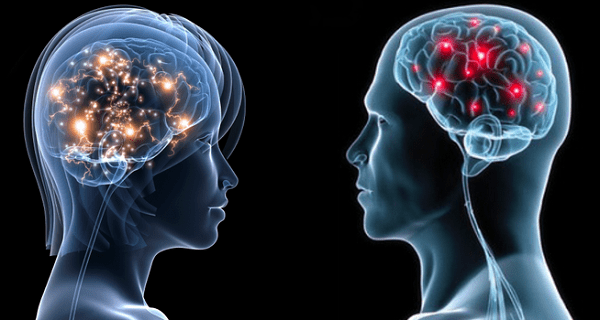
While my son barely notices his reflection, my daughter spends hours in front of the mirror, preening. For eons a huge part of a woman’s value was/is defined by our physicality, so it’s natural, part of our nature now that our looks are important to us, or at the very least, more important to us than most men. My son likes violent movies. My daughter does not. She is deeply affected when families split up, or a parent or child dies in films, and even in books. Maternal instincts—reproducing and then caring for our offspring—is genetically encoded in our DNA. In fact, her reaction is not uncommon for most women.
Violent movies and video games are targeted at men because they are by far the predominant audience to engage with them.
Times truly are changing, though. Want part of a mastodon, a small ice-age relic? Buy one on Amazon. Most educated women who pursue a career path can pay their own way through life now, even if we still typically make less than men. Most of us don’t need a man’s support to survive, or even thrive. Technology, from the Pill to the personal computer has made it possible for women to control our own destinies, and function equally along side men in today’s business environments.
Sociological shifts in behavior are glacial, and true sexual equality is probably still a few generations in coming. Perhaps our great-grandchildren will share equal incomes, and split the household tasks of rearing the children to doing the dishes equitably as well.
From the dawn of man to present day the divide in humanity is not our race, religious orientation, education or income level. Our greatest division has been between men and women. I’m humbled to bear witness to a quantum shift in our evolution, that, for first time in our history, technology is providing us the ability to become an egalitarian race, and close this great divide.









 jcafesin.com