
Spent my life looking in at the world I live, but never ‘fitting in’…
Ever been with a group of people, and everyone is talking amicably, (or on their cellphones), and you’re sitting there watching and listening, and you feel like an alien? Not a foreign national among a group of natives. More like you’re from another planet. Or they are.
I’ve known I was different for most of my life, always on the outside looking in at the world I live in. I’ve never been popular, never had a large group of friends to hang with like in sitcoms. Beyond theology like my atheism, there are actual, real differences that separate me from most.
I don’t drink alcohol. Can’t stand the taste of the stuff. Wine. Beer. Hard liquor. BLA! Even rum wrecks some would-be-great desserts, like tiramisu. Virtually the first thing that happens at any gathering is the ritual serving of the drinks. I always refuse, which immediately raises suspicions that I’m either a friend of Bill W, or on some fad diet, or a hippy-vegan. The first brick in the wall between me and the group.
I have no internet connection on my cellphone. I don’t carry my phone with me most of the time, don’t look at it except to make a call or send a text, which I do rarely, especially when I’m with other people. Use a scheduler for posts, so I’m not on any social media platforms. I follow no one intentionally (as X automatically follows back anyone who follows you). I don’t know what is trending online which puts me outside most lite banter about the latest cat video or influencer’s recent divorce. Another brick in the wall.
I don’t watch TV much. I average three movies in the theater a year, and rarely go to plays. I don’t watch or follow sports. Any. Ever. I don’t know the latest shows, any of the actors, or what rock star is hot on YouTube. I must have some mental disorder because people who play no active role in my life just don’t register with me. Not remembering names or faces is yet another brick because I cannot engage in dialog about celebrities or their latest movies.
As a woman, with other women, I feel particularly off-planet. I have no interest in discussing my kids for the most part. I’m with my kids a LOT. I don’t want it all about them when I’m not. I don’t care about sales or shoes. I dress for comfort, prefer my old, soft, often ripped clothes to new. I never wear makeup, much to my mother’s chagrin. Don’t even carry a purse. The diamond studs in my ears have been there for 30 yrs. I wear no other jewelry. Had no grandparents to babysit (or cash) to travel beyond summer vacations once we had kids, so I feel awkward when everyone’s talking about their romantic getaways with their DH to the Big Island, or Caribbean while grandma watched the kids.
I want to talk intimately about issues that matter to all of us, without being politically correct, or woke, and with virtually nothing held sacred — an open forum of communication and healthy debate. But it seems every time I bring up feelings of frustration globally, nationally, locally, or even personally, I create a void in the group’s dialog, this vortex of weighted silence. Either no one wants to share their real feelings, or they don’t know what I’m talking about, or they have no opinion, or they’re too afraid to state it.
The bitch is, I want to fit in, be a part of, integrate as I see others do.
Sort of. I just don’t want to DO what most seem to.
I don’t wish to remain ignorant about global and local issues so not to disrupt my personal bliss. My husband is the son of a holocaust survivor. I grew up on horror stories of the camps told by family, some who lost everyone they loved. We all need to be vigilant it never happens again.
I couldn’t care less about celebs and influencers. Studio City born and raised — where the film studios originally set up, hense the name — at the north base of the Hollywood Hills. Most of the kids’ parents I went to school with were actors or musicians or writers. By high school, half of my contemporaries were artists themselves. The ones who ‘made it,’ were regular people to me, who worked, and networked (partied) obscene hours. Intoxicated crowds overwhelm me. Not my jam.
While I enjoy playing racquetball and pickleball, I’ve little interest in watching someone else play sports. Pro athletes work towards excellence 24/7, yet somehow fans take on team victories as their own while they sit on the couch downing beer. I just don’t get it.
The ‘little bit of color’ my mother insisted was mandatory to put on my lips and cheeks to attract a mate, makes most women who wear makeup look like clowns, or mannequins to me. And it’s a rather ironic twist that the media convinces women they need cosmetics to be attractive, especially since it’s a proven cause of cancer, and cancer isn’t pretty.
Clearly, I am damning myself to the outside looking in. As an atheist, in faith-based (mostly Christian) America, I don’t belong to the neighborhood church, or celebrate any religious holidays, or get how seemingly reasonable people can believe in myths and fairytales at this stage in human development. And since it’s unlikely I’ll develop a taste for alcohol anytime soon, or become addicted to my cellphone, I’m unclear how to move forward, to integrate, fit in with the group at the table now on their second or third drink. They’re getting sloppy, and rather loud, and all I want to do is leave.
So I do. I get in my spaceship (my Prius among the SUVs) and venture home to my sleeping kids and working husband. He’ll ask me how the Mompreneurs’ Meetup went and I’ll say fine, and later I’ll be standing in the shower feeling invisible, valueless.
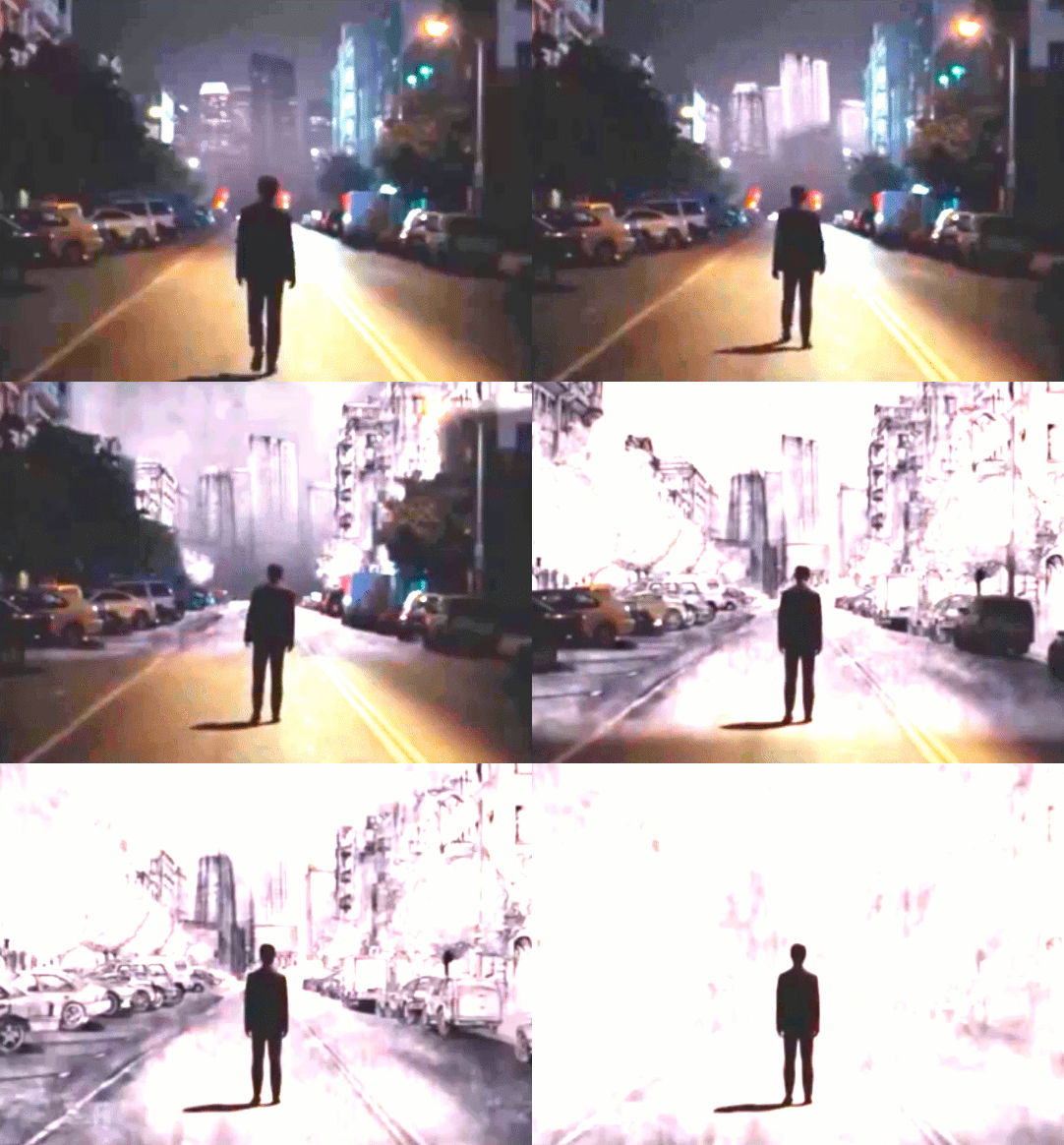
The road is empty and dark. Houses are lit inside and look warm and welcoming. Mine will be too, a safe harbor where people ‘get me,’ but I know I isolate there too much. I want friends, to be a part of the world beyond my fam, I just don’t know how to step inside where most seem to live. But truth be told, it’s rather lonely out here.
 jcafesin.com