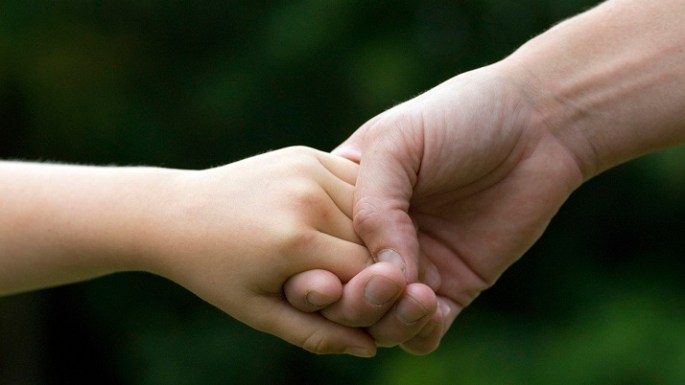
The Power of Love

My son’s guitar teacher was freaking out the other day over the impending arrival of his first child. Beyond a healthy birth, he was consumed with anxiety over the care and feeding of an infant, all the way up through guiding his child through their teen years. As a parent of two tweens, I shared with him the secret of parenting, what makes the sacrifice not only tolerable but wildly enjoyable, and he calmed, and smiled, allowed his excitement to peek through.

It’s never talked about—that intense, profoundly magnificent feeling a parent gets to embrace the moment their child is born, and forever forward. It’s expected we love our kids, and therefore taken for granted, which is a shame, because the intensity of that feeling is so spectacular and unique.

I’d listen to my contemporaries talk about their children before I had kids. They spoke of the long nights with crying, colic infants, “the terrible two’s,” “the f***ing four’s,” surviving the teen years. Sometimes, they’d comment their Kylie had made Honor role, or that Jordan had just got first chair for his violin, and their entire countenance would light up. But those moments were rare compared to the complaints.

Like most women, I simply assumed I’d have children. I planned to have two kids in my early to mid-30s after I’d established my career and proven my own greatness. But it wasn’t until I was almost 40 that I became pregnant with my son, my first baby to survive after six miscarriages.

Nine and a half months of pregnancy, connected to the infant growing inside, and everyday was fraught with wonder, and fear. Five days of labor, and the moment I held my son for the first time, minutes after delivery, his tiny warm body on mine, a tsunami of humbling awe so overwhelmingly powerful swept through me it literally took my breath away. And as I kissed his downy head, his hands, each finger, I realized the joyful contentment, the sense of energized completeness, that electric connection I felt to him, for him— was love.

Never in my wildest dreams did I imagine the intensity of love that could be attained until having children. I’ve been lucky and had loving parents, a few dear friends, the love I now feel for my husband, passionate and true. But it doesn’t touch the intensity of the love I feel for my kids. Virtually every time I am with my children, snuggle with them, kiss them goodnight, or just see them across a room, I feel that all encompassing love fill me up and consume me with tenderness, compassion and humility. Now 9 and 12, and they still take my breath away. Every day.

People who never have children, or don’t devote their life to raising them— as with adoption— will never know this level of love. In their lifetime, they will never understand the feeling that we call ‘love’ can be this intense. I’ve heard many of my contemporaries say with conviction that they’ve never wanted, and will never have kids, with rationalizations like “I’m just selfish, I guess.” But the truth is they’re only robbing themselves.

Life’s greatest gift is our ability to feel. We all experience pain and sorrow, happiness and joy to varying degrees. The unspoken gift of parenting is getting to feel the fulfillment and richness of that intense love integrated into every aspect of our lives, motivating us to be positive examples, and challenging us to consider others, and the future beyond ourselves.

The price of living with this intensity of love is the amorphic fear of losing it, which is why parents worry so much. Through the tantrums and the tears, the joy and the fears in sharing life with kids, the ultimate reward in parenting is the privilege of loving our children.

Letting Go of Our Kids

Our son went on a camping trip with his 5th grade class last week. He was gone four days, spent three nights bunking with eight of his classmates and a high school chaperon. They shared a cabin (with heated floors and a private bathroom), one of many scattered around Camp Arroyo, nestled in the eastern foothills of the San Francisco Bay.

High drama days before he left. Lots of spontaneous hugs. He’d grab me on the stairs, or in the kitchen while I stood cooking at the stove, wrap his arms around my waist, bury his face in me and say, “I’m going to miss you, mom.” And, of course I returned the sentiment, which seemed to sate him, and me momentarily. I put on a brave front, but as his day of departure drew nearer, I dreaded how much I’d surely miss him.

My son’s first overnight experience without mom or dad was a weekend on his first Boy Scout camp-out. He didn’t seem all that enamored with camping. Dirty and tired when he got back (after less than 24 hours away), he endlessly repeated, “It’s so great to be home.”

My son was not the only kid feeling nervous about the 5th grade camp-out. Two of his friends admitted feeling scared. Several parents laughingly confessed to feeling anxious about missing their kids over the four days they’d be gone. Many had yet to be away from their children for more than a weekend, during sleepovers at the grandparents.

I, too, felt apprehensive. My child wouldn’t be safe at home where I could watch out for him, be there for him if he needed me. A long time ago, when I was in my late teens, my mother told me she never fell asleep all the way until me and my sister were safely ensconced in our beds at night. Only then would she be able to rest. At the time, I figured she was trying to guilt me out for coming home late a lot. But as I helped my son pack for camp the night before his departure, I anticipated three restless nights without him.

Dropped him off at school the next day like any other morning, except for the sleeping bag and pillow he put down on the curb so he could hug me goodbye. He held me hard, and long, which was weird right in front of his school and classmates. I hugged him back, tried to transfer my love without too much drama and left. Heavy sigh as I drove away, watching him in my rear view mirror struggle with his gear and then disappear into the school.

And quite unexpectedly, I burst out crying.

My son was growing up. He needed me less and less. As he moved into his teen years we’d naturally separate, until he’d no longer be completely immersed in my life. We’d been bonded for 11 plus years and I could feel it coming to an end. And sadness consumed me on my way back home, but only for the first block from the school.

As suddenly as I started crying, I stopped. The next four days I didn’t have to stop working at 2:30 p.m. (and 1:00 p.m. every Wednesday) when he came home from school. I didn’t have to be the constant nag, reminding him every other minute to study, practice guitar, do his homework or his chores. The dinner menu didn’t need to be altered to my son’s particular tastes. Sushi was a distinct possibility since our daughter was generally open to trying different foods. And best of all, I didn’t have to play ref or break up their petty sibling rivalries.

The four days my son was away with his 5th grade class passed in the blink of an eye. I published two new articles, finished the second chapter of the final, final, final…etc. draft of my second novel. I finished the French screens I was building, found and set my daughter up with a great new 2nd grade math program, and shared with her some of the best Japanese food ever—turning her on to a brand new cuisine. There were no sleepless nights while my son was gone.

He hugged me when I picked him up from school after his trip last Friday. His embrace was warm, and tender as usual, but over quickly. He pulled away, looked around to see if anyone saw him, and then picked up his stuff. I carried his pillow to stop him dragging it along the ground as we walked home. He told me about his time away, but I had to prompt him a lot, and though he insisted he was just tired, I felt a contextual difference between us, a distance imposed by him, or me, or both.

We were quiet for quite a bit of the walk, but it didn’t feel awkward. He seemed introspective, more grown up than little kid. His youth, like much of our time together was passing, as it should be, but none the less, there is sadness in this. The upside is as my son moves on, I get to as well. As he embarks on life on his own, I can get back to mine—the life that became secondary when my kids arrived on the scene. From the day they were born they’ve been my first priority, and though perhaps they always will be, their daily demands are getting less as they become more self-sufficient. And as we all grow and mature, I find I no longer fear, but accept, and even sometimes welcome the natural separation occurring between us.

The Difference Between Men and Women

I’m a guy’s girl, meaning I’ve spent most of my life hanging out with men instead of women. Like the freight train comin at ya, I prefer men’s straightforward nature, their directness, their unwavering, solution-oriented trajectory. Men are simpler than women. Not less intelligent, just not round-about, underneath, from behind.

Women, by contrast, are the poison in your food. Eons of subjugation have forced us to become puppet-masters to get what we want. Not a judgment call, simply a fact that until very recently might was right, and men assumed they controlled the household with superior strength—at first to kill the mastodon and be the provider of food, and in the modern world, until recently, be the supplier of money. Back as late as the 1990s, women were still, and believe it or not still are, the primary homemakers, caring for the kids, shopping for and preparing the meals…etc. In fact, 99% of all household product commercials still show the women cleaning up, even when the men create the mess.

Notice I said, “men assumed they controlled the household.” Well, you know what happens when you ass (of) u (and) me…; -}

Seriously though, probably pretty early on, like cavemen times, women figured out how to get men to do what we want using our wiles—wits. Genetic transfer of memory over thousands of generations of women passing on how to be manipulative eventually became woven into our DNA and imprinted on our XX chromosomes.

Regardless of why women became…complex, the fact that we are scares me about us. Women don’t only manipulate men. Quite often our children, sometimes even our friends. I’d much rather face a freight train because if I’m paying attention I can get off the tracks before getting slammed. This also plays to why I’m a guy’s girl, why most of my friends have been men.

I knew I wanted kids for as long as I can remember. Two boys, I’d told any possible stakeholders, because boys are easier to raise. I now have two kids—a boy, 19, and a 16 year old girl, both of whom I’m madly in love with. Beyond proud, I’m humbled to know them. True to their ‘nature,’ my son is very direct with his feelings, practically the instant he feels something. He rarely lies, probably because he sucks at it, his facial expressions to the pause in his delivery clear indicators he’s not telling the truth or copping to. He’s a consummate whiner, but he respects the family rules and parental restrictions. My son is trustable, for which I’m eternally grateful.

My daughter, on the other hand, listens carefully, expresses just the right amount of contrition and understanding with every lecture, then does whatever she wants, whenever she wants, if she can get away with it. Went to kiss her goodnight a few nights ago and she was underneath her blanket watching Manga videos on her cellphone. She’d been viewing nightly since we took away her Kindle two weeks ago for watching videos on it instead of reading. Reading is all she’s allowed to do on the tablet, per our agreement when she got it for her birthday. (Is it too much to expect a 16½ year old to honor such an agreement when she gets plenty of electronics time on the weekends?)

While my son barely notices his reflection, my daughter spends hours in front of the mirror, preening. For eons a huge part of a woman’s value was/is defined by our physicality, so it’s natural, part of our nature now that our looks are important to us, or at the very least, more important to us than most men. My son likes violent movies. My daughter does not. She is deeply affected when families split up, or a parent or child dies in films, and even in books. Maternal instincts—reproducing and then caring for our offspring—is genetically encoded in our DNA. In fact, her reaction is not uncommon for most women.

Violent movies and video games are targeted at men because they are by far the predominant audience to engage with them.

Times truly are changing, though. Want part of a mastodon, a small ice-age relic? Buy one on Amazon. Most educated women who pursue a career path can pay their own way through life now, even if we still typically make less than men. Most of us don’t need a man’s support to survive, or even thrive. Technology, from the Pill to the personal computer has made it possible for women to control our own destinies, and function equally along side men in today’s business environments.

Sociological shifts in behavior are glacial, and true sexual equality is probably still a few generations in coming. Perhaps our great-grandchildren will share equal incomes, and split the household tasks of rearing the children to doing the dishes equitably as well.

From the dawn of man to present day the divide in humanity is not our race, religious orientation, education or income level. Our greatest division has been between men and women. I’m humbled to bear witness to a quantum shift in our evolution, that, for first time in our history, technology is providing us the ability to become an egalitarian race, and close this great divide.


PAY ATTENTION!

Regardless that these are babies, child or adults feel connected, safe, when the people in our lives SHOW they care about us, what we want, how we feel, and why. Shutting down, shutting those we ostensibly care about out, to self-protect, is destructive in the extreme.

From the clip:

“When she’s grounded, is comfortable in her world, she can explore, meet other people, try new things, as she’s got that safe base she can rely on.”

In other words, communication builds trust, and trust is the foundation of love.

On Being Human

Angy-Birds-fo-PCTalked to an old friend yesterday. We hadn’t spoken for almost 2 yrs. No particular reason. Life took over and we lost touch. The last time we spoke he told me his 45 year old wife had quit her job as a restaurant manager and was very happy to be home, fixing up their house, shopping, cooking, doing things she never had time to do when working.

Two years later, she is still at home. The house is now fixed up. There are no children, and she has no other responsibilities. When I asked my friend what his wife does with her days, he told me she enjoys working out, watching TV, and she plays a lot of Angry Birds.

My mother-in-law lost her husband of 53 yrs a couple years back, a year after they closed the small business they ran together for almost as long. With no business to maintain, no kids to care for, and only sparse time with grown grandchildren, I assumed she’d would find her niche in volunteering, perhaps invest time into her community, teach literacy at her local library, or maybe the hospice her husband spent most of his last days in. I don’t like sick people, she told me upon inquiry. And she has no interest in teaching, anyone, anything, she insisted, clearly annoyed at my suggestions. I’ve worked my whole life. It’s my turn to do what I want. What does she do all day? At 78, and in perfect health, she plays Solitaire, or goes to plays and movies with friends and family, when they’re available, which isn’t often. Most retired folks she knows are helping their kids with the grandkids, or volunteering.

On the phone with my old friend, I intimated his wife was wasting her life. A talented professional, she has too much to give to waste time with Angry Birds, I insisted. But my friend disagreed. She enjoys her days now, no longer under constant pressure to preform, he informed me. She’s allowed to relax, after working most of her life. She’s 45 yrs old, I countered. And has been relaxing for almost 4 yrs now. So? He was perturbed by my observation. They don’t need her income. He makes enough to support them both, so no harm, right?

Wrong.

We are ALL born owing humanity for the life we have. Without those who worked hard before us, there would be no humanity at all. My mother-in-law, my friend’s wife, you or I wouldn’t exist without the hard work of those before us. From our laws to the lightbulb, we stand on the shoulders of those who contributed to the human race that provide us with the life we now enjoy.

Our system that seemingly runs itself–doesn’t. We actually have to work at making it work. And playing Solitaire or Angry Birds all day, most every day, does nothing for our society. It’s selfish and lazy. Everyday we are alive we owe each other and those who will follow us. We are ALL responsible to make the world better. Whether fighting for a worthy cause we believe in, or inventing technology to make our lives more productive, or managing a restaurant or small business, we must continually contribute to humanity for our race to survive.

Life did not begin, nor does it end with my friend’s wife, or my mother-in-law, or the tens of thousands out there wasting enormous amounts of every day of their lives playing with themselves. Lazy behavior must be compensated for by those who see beyond their own narcissistic desires, putting the burden of humanities survival on the few, instead of us ALL, which is where it must be for our race to thrive.