LOVE Defined

My sister is dead, I told the bank manager.

She isn’t dead. She lives in Washington with her husband, having recently moved from L.A., where we were both born and raised.

The bank manager expressed his condolences. He accepted the paperwork from our lawyer to remove my sister’s name from our Trust as the potential guardian of our children should my husband and I die before they’re of legal age to care for themselves.

I told him she was dead to delete her from my psyche, distance myself from loving her. Five years ago, she told my husband she didn’t want any contact with him, me, or our kids, her then 7 and 9 yr old niece and nephew, in a response to an email my husband sent her.

Much to my sister’s chagrin, we’ve raised our kids without religion. Cleaning out her Agoura Hills McMansion before moving to her custom built estate in Washington, she sent our kids Hanukkah ‘gifts’ of broken toys that used to belong to her children. She missed acknowledging our daughter’s birthday, again. Three months later, she sent her a present with the one she sent for our son’s birthday, and spelled her name wrong on the card. She’d disappointed our kids time and again, ignoring their birthdays and special events, rarely calling, and talking about her life, not theirs, when she did. Many times after jacking them up that she was coming to visit, on the day she was supposed to arrive, she left it to me to tell our kids she wasn’t coming.

Her sins were many, and mounted with the years without apology. My husband got tired of her hurting our kids, emailed her five sentences politely informing her the correct spelling of our daughter’s name, and requested if she was going to send them birthday cards or gifts to please do so on or around their respective birthdays.

My sister decided he was asking too much and emailed back that “though I am deeply in love with your kids, and it breaks my heart to do so,” she was withdrawing from their lives entirely. She stopped calling every few months. For a couple of years she sent the kids birthday cards when it struck her fancy—weeks late to our daughter, if at all, but managed to get cards to our son within days of his, professing her deep affection and love for him. It took all my will not to shed the cards in a million tiny pieces. Her sentiments to him were totally self-serving, for her ego, her ‘loving’ words meaningless, meant to pump up her self-image alone.

Love is an ACTION, what we do, not some abstract in our heads,” my husband and I teach our kids. “Don’t profess love in words without taking actions to show it,” we preach. “And don’t accept words of love as truth without seeing the actions that actualize their sentiment.”

Over the years my sister had been so disrespectful to our youngest that our daughter never really formed a bond, but her choice to terminate her relationship with our kids deeply hurt our son. She was important to him because the few extended family members we have left, namely my brother and father, didn’t call or acknowledge our children in any way.

My mom died when our daughter was just 2, and our son only 4 yrs old, so she never really got to know our kids. She did love them though. Deeply. Profoundly. And they got that. How did they know?

  • She came to visit often.
  • She called them on the phone every couple of days.
  • She mailed them presents on time, and called to sing Happy Birthday on their special days.
  • She spelled their names right.
  • She stayed abreast of their lives through me, my husband, and through the kids, consistently showed interest in their interests and feelings, and shared her world with them.

My mother often extolled how much she loved our kids, to me, to them, to anyone who’d listen, but she also showed it, so my children knew it was real.

The day my dad called to tell me of my mom’s cancer diagnosis, after I hung up the phone I said to my husband, “Well, that’s the end of my family.” She was the conduit that kept us together, in contact, a feature in each other’s lives. She fervently believed people come and go, but family is forever, the folks with which your love and loyalty should reside. Within a year of my mother’s passing, my sister and father checked out of my life, and the lives of our kids, too busy with their own to bother with me or mine.

My father, like my sister, practices love in the abstract. He never talks to his grandkids, never calls [even me], never asks to talk to them when I call him, and rarely even asks about them. He doesn’t acknowledge their birthdays anymore. I got tired of reminding him with multiple calls and emails weekly the month before their special days, then daily reminders the week before. The rare occasions I call my dad, he always professes how much he loves my kids, how important they are to him, though he does nothing to actually show them this. He never did, I just didn’t notice, as my mother’s effusive love overshadowed his self-love. When I mention his grandkids, he reminds me to tell them that grandpa loves them, and misses them. But I don’t. I tell them, “Popi says hi.” I don’t want our children to ever get the impression it’s acceptable to say you love someone when you take virtually no action to show it.

Her body ravaged by cancer and near death, my mother insisted my father take her to Toys R Us. She bought each of our kids their next birthday gift, and made him swear to mail them on time. She was hoping to establish a tradition (an action) for my father to adopt for his grandchildren after she was gone. He delivered her dying gifts to our kids two years later, on his way to visit my sister in Washington.

In a thousand lifetimes I cannot repay my mom for her precious gift of LOVE I now model to our children. But I cannot buy into her belief [and society’s rhetoric] that family and love are synonymous anymore.

LOVE, like potential, is meaningless unless put into ACTION.

On Being Cool

Had a meltdown on my tween son when he asked, yet again, for an iPad at breakfast this morning.

Before the iPad he wanted a laptop. He’d insisted he needed my old HP the moment I purchased my Toshiba, though he could give no reason why he had to have it, since he had a powerful PC with an enhanced graphics card for gaming in his room. After weeks of needling me, I finally gave him my old laptop to share after backing up [mostly] everything. He loaded the same games he had on his PC, and played them in bed on the laptop for about a week, until he inadvertently downloaded a virus which destroyed every program, every file on the machine—all seven years of my work. (Between ‘mostly’ and ‘everything’ I’d backed up turned out to be the Grand F**king Canyon.)

Prior to the laptop, he needed an iPhone. He’s had a cellphone since the 5th grade, when he started walking the quarter mile home from school. In the two years he’s had it, he forgets it at home most of the time unless I remind him to bring it with him. More often than not the phone has no charge because he doesn’t remember to charge it. Though all his friends have cellphones, he’s exchanged numbers with no one, and, upon inquiry, this seems fairly typical among his contemporaries.

Before the iPhone he had to have a video camera, which he got for his birthday. He used it a few times to tape episodes of Sponge Bob off the TV so he could view them later through the camera’s viewfinder. That lasted about a month, until he tired of it and he hasn’t touched the camera since.

An iPod was before the video camera. I use his iPod when I’m recharging mine, since in the four years he’s owned it, he’s used it maybe 10 times collectively.

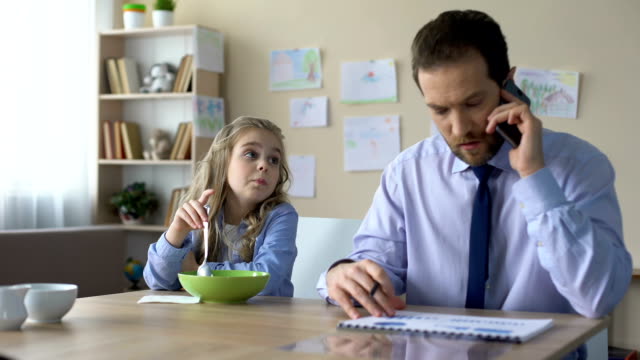
He sat at the kitchen table this morning eating his cereal telling me how badly he needed an iPad. They are so cool, he insisted, giving me his puppy face, and good for school, he assured me, though was unable to define how, since a home PC with internet access was all his middle school required. He kept at it throughout breakfast, bargaining away all other gifts for his upcoming birthday in exchange for just one iPad.

And I blew a gasket.

He wanted too damn much! He asked for too much with no purpose. What the hell was the point of all these things when he didn’t even use them?

To be cool, mom, he said through tears.

His palpable shame was a knife through my heart. At 11 years old, crying had ceased to be acceptable, except in tragic situations, and me yelling at him wasn’t tragic. I sat down at the table adjacent to him and stared at my son, fighting tears from overwhelming me as well.

Being cool isn’t about what you have, I reminded him gently. Cool is about what you are, who you are, what you do that makes you special, separates you from the crowd. He was a straight A student, in advanced at math, played electric guitar, but every accomplishment I pointed out just made him cry harder.

None of that matters, he insisted. No one cares about that stuff. And being a nerd might pay off later, but right now no one his age knew or cared who Bill Gates was, he said, throwing my refrain back at me.

Your dad would ask why cool matters, was the lame response I came up with. I knew cool mattered, even to me, but especially for a kid becoming a teen.

It just does, my son assured me. And I’m not, he added shakily, unable to stop the new round of tears.

My heart in my throat, and struggling to swallow back my own tears stopped me from lecturing, but I again reminded my son that iPads and iPhones and video cameras are tools, nothing more, and possessing them doesn’t make one cool.

Yes, mom, he patronized me. But an iPhone is still cool, and so are iPads.

They are cool, undeniably, I told him. And that makes the engineers who invent Apple’s products cool, but not so much the people who use them. I needed to be sure he understood what “cool” really is, and perhaps remind myself as well.

Michael has an iPhone and an iPad and he’s totally popular, my son insisted. Everyone likes him. He has tons of friends and no one picks on him, ever.

Cool means Popular when you’re 11, and I suppose even for adults. Most of us want to be liked, admired, feel special, unique, seen as cool. But I knew Michael wasn’t popular because of his iPad and went about trying to enlighten my son without losing his attention. I pointed out Michael’s rather jovial demeanor, and reminded my son that this popular kid was also an avid sportsman, into soccer, basketball, baseball…etc, the ultimate key to cool for boys in school.

Perhaps Michael’s popularity had nothing to do with his iPad, I suggested. And to further my reasoning I asked, If Evan had an iPhone or iPad do you think he’d be more popular?

Evan is a jerk, my son proclaimed. He’s mean and rowdy, and he has an iPhone, mom. His eyes seem to sparkle with awareness of his own words. Then he smiled. He got it, and I smiled, too, for about a second, until his expression darkened again. But I’ll never be like Micheal, do what he does. I suck at sports and don’t really care about ’em. And I’m not exactly what you’d call upbeat.

And I’ll never write like Stephen King, or Ray Bradbury, or John Fowles,” I said.

Who are they? he asked.

Famous authors you’ve obviously never heard of. Forget it. Tell me, who else is cool, dude? Name five, other than your classmate, Michael. Anyone. Doesn’t even have to be one of your contemporaries.

Greenday, he looked to me for approval.

Okay. Who else?

Death Cab [for Cutie] (another rock band). Thomas Edison. Einstein. And Jason, at school. All the girls really like him.

I laughed. Why?

I don’t know. He’s short, but kind of buff already, I guess. He’s on the track team, and the basketball team, and he tells everyone he lifts his dad’s weights. He’s really into working out.

And what do all five you just named have in common?

He fiddled with the remainder of the Crispex in his bowl as he pondered my question.

They’re all good at something.

And how do you get good at anything? yet another of my canonical refrains.

Practice.

You bet. Find something you love, that turns you on, and work at it, my beautiful son. Practice your guitar more, and become a great musician. Invent a new video game instead of playing someone else’s creation. Learn how to program and develop apps, show us you need an iPad as a tool to create with.

He brightened, smiled at me. I had his full attention again, my reason for slipping in the iPad comment.

Owning an iPad is easy, my baby, and meaningless, just one of many who do, and more who will. Creating with one is cool. Cool is as cool does, kid. Pursue a passion and you’ll be engaged, entertained, and so enraptured in the process you won’t notice or care if you’re popular. And how cool is that! ; – )

Parental ADHD

My husband’s sister has two children. Her oldest, 15, was diagnosed with ADD when he was 9, and has been on Ritalin since. He’s failing out of the private high school he attends in Manhattan. He lies, cheats, and steals when it suits him. He is volatile (way beyond normal teenage angst), and often violent with his mom and sister.

Her daughter, 11, also has trouble in her private school. According to her mother, she too has learning disabilities. She has very few friends, and is often cutting and cruel. She also lies constantly to get what she wants, and does whatever she wants regardless of opposition from authority.

The three of them live on the 10th floor of a posh apartment complex, in a huge flat overlooking the Hudson River in Battery Park. The Statue of Liberty, holding the torch of truth stands boldly in the bay and can be seen from almost every room of their home. My sister-in-law and her ex-husband are very successful in their careers. She broke the glass ceiling only a few years out of graduate school and is now a top executive at the New York Stock Exchange. He is an architect. His style is distinct, and sought after, and can be seen all around Manhattan. Since both claim to be busy professionals, the maid of the month raises their kids during the long work week.

Every time we get together they virtually drop off their kids to my care. Dad, before and after the divorce, has always been a marginal part of the scene, off to work, or squash, or rollerblading along the waterfront. Mom stays with us, but she’s not really with us. She’s on her phone texting her secretary, or chatting it up with some high powered executive about market trends, or on her laptop writing reports. She goes out for a two hour run, or off to the store for diet soda. The entire time we’re together she has little to no contact with her children.

My sister also has kids, a boy and a girl, a couple of years apart. During their formative years she was a stay-at-home mom…sort of. Her husband, a successful real estate broker who used his limited free time for cycling, skiing, rock climbing, provided his family a McMansion with all the trimmings in a desirable suburb north of L.A. He hired a live-in maid to clean house and handle the mundane aspects of child care so my sister could pursue her many muses. And pursue them she did. She played tennis several hours a day. She went out with friends; shopped, and shopped; redecorated her house every year. She took classes in cooking, massage, religion, exercise, went to music camps back east for the summers, and left the kids with grandparents, or the revolving housekeepers. She was one of those soccer moms who sat in the stands and gossiped, or read People or Jane, or was on her phone every other minute, attending the game but not really there.

Unable to manage her son’s disruptive behavior, my sister took him for counseling when he was 10. He was diagnosed with ADHD. He took Ritalin from 12 until he was 20. Now 27, he smokes pot every day, pays his rent and bills with poker winnings and a small stipend from an inheritance trust fund, has not gone to college and has little prospects for the future. Her daughter, 24, is still only a junior after six years in college. She’s had few friends over the years, even fewer dates, and only recently her first [very] short term relationship. She lives on the money her parents provide without a clue how to make it on her own.

These two sets of kids struggle in life because their parents consistently catered to their own needs over those of their children. In doing so, they abandoned their kids to their own device, and left them to strangers, relatives, and society at large to raise them. Restrictions on behavior came from teachers, religious leaders and caretakers as commands—discipline imposed without love. Their parents didn’t bother to invest the staggering amount of time and thought required to help their kids decipher feelings, or examine abstractions like morality or values, or why they are important, or impart to them the seemingly endless list of rules we all must follow to get along.

The other day I was at the neighborhood pool watching my kids swim and play. All went well until a well-known rowdy kid arrived with his mom. She stood with her back to the pool and chatted on about her job, the upcoming hundred mile extreme run she was training 20 miles a day for, and the third Bruce Springsteen concert she and her husband had been to that week. She did not notice her nine year old son shoving kids into the pool, holding them underwater, pouncing, splashing and causing general havoc. Most everyone agrees her son, and six year old daughter, have severe ‘discipline’ problems. Though their mom labeled them ‘passionate,’ she admitted she was seriously considering her colleague’s suggestion to have her kids examined for ADHD.

Even Wikipedia can not state without dispute what ADHD actually is, though a wide cross section of sources seem to agree it’s a ‘behavioral disorder.’ Symptoms include Hyperactivity—like working all day, everyday, never putting your cell phone or laptop away; Inattention, the lack of ability to focus for an extended period of time—like creating multiple distractions such as tennis, classes and vacations for your entertainment instead of following through with any one thing. Impulsiveness is also an indicator, like going to see Bruce multiple nights in a row instead of doing the responsible thing and being at home with your kids.

Though they possess all the symptoms, these parents have never been diagnosed or even suspected of having ADHD, even though most have had at least some experience with therapy. Their kids did not inherit their lack of focus. The Attention Deficit Disorder they ostensibly suffer from by and large comes from parental neglect, adults who haven’t figured out that once they produce children, most of their own priorities must become secondary to the needs of their kids.

Rich or not, working—having to, or not—parenting is about paying attention, being attentive and present, being there when you’re with your kids. Certainly, rules need to be continually taught and enforced, but also discussed at length, not handed down as edicts from on high. Kids need detailed explanations, reasons to partake in our code of ethics, and out of desire, not disdain. Society is not sustainable filled with resentful children who grow into parents that never mature beyond self-interest. Children can not raise themselves above solipsism without example from those who have.

Letting Go of Our Kids

Our son went on a camping trip with his 5th grade class last week. He was gone four days, spent three nights bunking with eight of his classmates and a high school chaperon. They shared a cabin (with heated floors and a private bathroom), one of many scattered around Camp Arroyo, nestled in the eastern foothills of the San Francisco Bay.

High drama days before he left. Lots of spontaneous hugs. He’d grab me on the stairs, or in the kitchen while I stood cooking at the stove, wrap his arms around my waist, bury his face in me and say, “I’m going to miss you, mom.” And, of course I returned the sentiment, which seemed to sate him, and me momentarily. I put on a brave front, but as his day of departure drew nearer, I dreaded how much I’d surely miss him.

My son’s first overnight experience without mom or dad was a weekend on his first Boy Scout camp-out. He didn’t seem all that enamored with camping. Dirty and tired when he got back (after less than 24 hours away), he endlessly repeated, “It’s so great to be home.”

My son was not the only kid feeling nervous about the 5th grade camp-out. Two of his friends admitted feeling scared. Several parents laughingly confessed to feeling anxious about missing their kids over the four days they’d be gone. Many had yet to be away from their children for more than a weekend, during sleepovers at the grandparents.

I, too, felt apprehensive. My child wouldn’t be safe at home where I could watch out for him, be there for him if he needed me. A long time ago, when I was in my late teens, my mother told me she never fell asleep all the way until me and my sister were safely ensconced in our beds at night. Only then would she be able to rest. At the time, I figured she was trying to guilt me out for coming home late a lot. But as I helped my son pack for camp the night before his departure, I anticipated three restless nights without him.

Dropped him off at school the next day like any other morning, except for the sleeping bag and pillow he put down on the curb so he could hug me goodbye. He held me hard, and long, which was weird right in front of his school and classmates. I hugged him back, tried to transfer my love without too much drama and left. Heavy sigh as I drove away, watching him in my rear view mirror struggle with his gear and then disappear into the school.

And quite unexpectedly, I burst out crying.

My son was growing up. He needed me less and less. As he moved into his teen years we’d naturally separate, until he’d no longer be completely immersed in my life. We’d been bonded for 11 plus years and I could feel it coming to an end. And sadness consumed me on my way back home, but only for the first block from the school.

As suddenly as I started crying, I stopped. The next four days I didn’t have to stop working at 2:30 p.m. (and 1:00 p.m. every Wednesday) when he came home from school. I didn’t have to be the constant nag, reminding him every other minute to study, practice guitar, do his homework or his chores. The dinner menu didn’t need to be altered to my son’s particular tastes. Sushi was a distinct possibility since our daughter was generally open to trying different foods. And best of all, I didn’t have to play ref or break up their petty sibling rivalries.

The four days my son was away with his 5th grade class passed in the blink of an eye. I published two new articles, finished the second chapter of the final, final, final…etc. draft of my second novel. I finished the French screens I was building, found and set my daughter up with a great new 2nd grade math program, and shared with her some of the best Japanese food ever—turning her on to a brand new cuisine. There were no sleepless nights while my son was gone.

He hugged me when I picked him up from school after his trip last Friday. His embrace was warm, and tender as usual, but over quickly. He pulled away, looked around to see if anyone saw him, and then picked up his stuff. I carried his pillow to stop him dragging it along the ground as we walked home. He told me about his time away, but I had to prompt him a lot, and though he insisted he was just tired, I felt a contextual difference between us, a distance imposed by him, or me, or both.

We were quiet for quite a bit of the walk, but it didn’t feel awkward. He seemed introspective, more grown up than little kid. His youth, like much of our time together was passing, as it should be, but none the less, there is sadness in this. The upside is as my son moves on, I get to as well. As he embarks on life on his own, I can get back to mine—the life that became secondary when my kids arrived on the scene. From the day they were born they’ve been my first priority, and though perhaps they always will be, their daily demands are getting less as they become more self-sufficient. And as we all grow and mature, I find I no longer fear, but accept, and even sometimes welcome the natural separation occurring between us.