Aging Well

I’m a ‘sit on the couch and eat ice cream’ type of person. I don’t live that way. I workout 5 days a week, 5 miles or more a day, watch little TV and rarely stream ’cept when I’m working out and weekend movies. If I had no desire to live an active life, I would have continued to sit on the couch in front of the TV and eat a lot more than just ice cream as I did throughout much of my childhood.

Thing is, no matter how healthy I live, I’m still going to die. And while we all know this fact, generally by the time we are 5 yrs old, we don’t think about it much unless there is a life-threatening scare or we’re facing old age, like when we turn 60 or so. Then, regardless of what older folks tell you, and how we distract ourselves with work or hobbies or relationships, we think about death a LOT.

Am I living right? Getting the most out of this short life? Have I experienced enough? Have I loved enough? Have I had enough fun? What can I do to get the most out of the few years I have left?

What to do with aging…

The idea of heaven is vulgar. I think The Good Place played that hand well. At the end of the series, they were all up in heaven and got so bored after doing everything they could conceive they elected to become nothing, or ‘one with everything’ depending on how you view the afterlife. And ‘getting to see’ people you’ve loved in the hereafter is equally vulgar. Sure, you’ve loved them, but I bet you’ve fought with them too. Can you imagine spending eternity — forever — with your mom and dad and siblings and spouses? No thank you!

I am a devout Atheist, meaning I don’t believe in god, or even the possibility of one. I don’t believe in an afterlife, or spirituality, whatever that means. Hitler (Trump) and I end up the same. Dead is dead. End of game. Life is over and there is no ME anymore. I did not exist before my birth and I cease to exist after I die.

It’s easier to believe in the Christian version of death. Less scary thinking your existence is eternal. That’s why, to date, 31+% of this planet identifies as Christian. Muslims, the second largest religion on Earth, also offers an afterlife in paradise or hell. Islam, Hinduism, and Buddhism also preach forms of life after death, so it’s no wonder that 84% of humanity identifies with a religion.
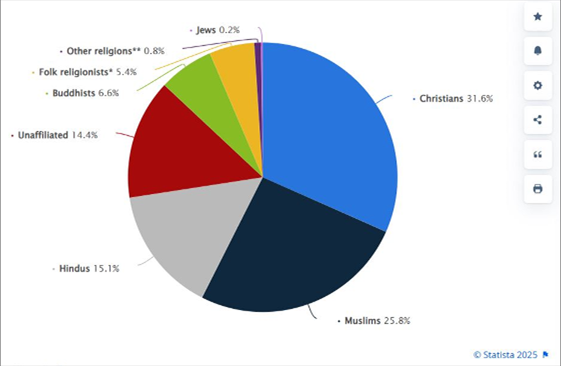
The roughly 14+% of the rest of us living day-to-day knowing that we all become nothing after death is core scary at best.

We all want to feel our lives have significance. Substance. Meaning. That we matter! It is why social media exists — it plays on our desire to be seen. Every time we get a Like on our instastory, or see a high view or engagement count we all get a hit of dopamine straight into our brains. We may be shy, or awkward in groups or crowds, but no one wants to be invisible through life. We revel in being seen.

Now, facing old age, and likely 20 to 30 yrs on the outside before ceasing to exist, I’m at war with myself daily on how to spend the limited time I have to live, to BE ALIVE. To matter.

What does it really mean to MATTER? Three generation drops from now and most won’t remember today’s trending influencers, to our current or past pop/rockstars, to our great grandfathers. I know this intellectually, but emotionally I too want to be remembered by more than just my remaining family, and when they go, so does my memory, my significance. It’s hard, if not impossible to imagine not existing, though at 4:00am I lay in bed too often now panicked by the notion.

Kick back, honey, I tell myself as I stare at the glowing stars I stuck on the bedroom ceiling during the series Heroes when it got too bloody to watch throughout. I should just do what I feel like doing when I get up in the morning and quit pressuring myself to be someone. I already am to my kids, and a few friends. The problem, the war in my head that loops till twilight: ‘Why isn’t that enough for me?’

Close to 30 yrs ago a friend asked me to describe my perfect day a decade forward. From waking up till falling asleep that night, describe in detail what that day looked like to me. Let’s just say I didn’t get close. [Expectations. They’ll screw you every time.] I was supposed to be a known author long ago. I was supposed to have a house in Marin to leave to my well-adjusted, accomplished children. Married to the love of my life. My work read by tens of thousands, my words helping my readers become more personally and socially aware, live better lives.

Did I want too much? I lay in bed wondering why it matters to me that I’ll leave no real imprint on history. Who does, really. Albert Einstein comes to mind. Hitler does too, but oh so very few. And even those names will fade with time, buried under layers of more history.

I want to fall asleep and stay asleep through the night like I used to. I don’t want to be getting up 4 times a night to pee! I’d like to tell you that impending death looming doesn’t feel like the proverbial ax over my head since no one knows when they’ll die, or that age is ‘just a number’ and ‘it only matters how young you feel,’ but that’s all bullshit. You can skydive on your 90th but that doesn’t keep you from being old, and likely rather reckless with fragile bones.

I sigh heavily, then throw the blanket back and roll on my side trying to cool down with my third hot flash of the night. The weight of aging gets harder to bear with each passing year, month, day. Hate to tell ya, there ain’t much upside to getting old. We likely have more life experience, but we aren’t any wiser, most of us stuck in patterns of behavior we adopted in childhood, and the reason history keeps repeating itself.

Look at my phone on the nightstand next to my bed. It’s only 5:10am. I can get up and spend much of the day SMM my latest work to get read and try to ignore the fact that I viscerally hate marketing. Or I can laze the day away writing whatever moves me, reading, baking, building, get a massage, stream Netflix if I feel like it because why the hell not enjoy BEING ALIVE with the limited time I have left…
Do You Matter?

Typically on Sunday mornings my husband and I share articles from the New York Times. He’ll often read me pieces while I prepare breakfast or vice versa, and we’ll discuss the ones that pique our interest. The year-end edition of the Sunday Magazine runs detailed obituaries on a handful of famous and infamous people who died that year. Though many are well-known — actors, x-presidents, and the like, some are more obscure, but they all share one thing in common. They all had [at least] 15 minutes of fame.

I began to feel increasingly irritated as my husband read the list of obits this morning. My mom, who died earlier this year, will never be in The Times. Where was the balance with the everyday hero — the dad who worked his life to support his family, or the career woman who slated her ambitions to be a mom? The nurse who stayed through the worst of Covid? The teacher that ignited your passion for your chosen career? The rideshare driver that played therapist to his passengers? Their stories are equally important as some one-hit wonder or marginal actor.

Even the most common among us had lives that mattered, that touched many, and their stories deserve to be told.

On my mother’s death bed she asked me “Did I make a difference?” She stared at me with sunken eyes, her skeletal face practically begging me for an affirmative answer. And I gave her one. And, of course, it was true. She was my mom. She made a difference to me.

She turned me on to love, color, beauty, nature, music, art. She would often point out a vibrant flower, stop everything to view a sunset, and be truly awestruck by its magnificence. My mom was childlike in many ways, always curious, and loved learning. She genuinely liked people. She was open to most all ideas as long as they weren’t filled with hate, or born of ignorance.

My mother was a humanitarian, and without prejudice, and she taught me to respect all things equally.

She was a wife for nearly 50 years. My father used to call her his ‘sunshine.’ Laughter and joy came easily to her. They danced beautifully together. He’d glide her across any dance floor in perfect sync, though he was 6’3″ and 230 pds, and she a mere 5′ and slight. She sang all the time and had a beautiful voice, often carrying the harmony that blended perfectly with my father’s melody.

My mom was a passionate and devoted teacher. She created an ocean science program through the Cabrillo Marine Museum she taught to underprivileged kids that is still active today. I’ve had the privilege of meeting several of her students while with my mom in the market or mall. They’d stop her in the aisle and tout her praises, often claimed they became oceanographers and biologists because of her influence. She loved kids. They were uncomplicated — what she pretended to be, even wanted to be, but wasn’t.

I sat cross-legged next to her lying on her death bed trying to exude the love I felt for this woman, my mother. But as I ran through her list of accomplishments, her expression became darker and sadder, and my “turn that frown upside down” mom started to cry. She wanted to give so much more. She had so much more to give, but she realized, lying helpless in bed and gasping for every breath, her time had run out.

Two weeks later I stood over her grave and refused the dirt-filled shovel the Rabbi handed to me. I knelt and scooped a handful of moist, sweet earth from the freshly dug ground, smelled its musty richness, and then let it fall off my hand and run through my fingers as I released it onto her casket. And then I silently thanked her for teaching me to recognize natural beauty and engage with it at every opportunity.

My mom died of cancer at 73. Over 100 people attended her funeral. Another hundred or more have contacted our family since her death to give their condolences — lives she touched, who will touch the lives of others, and so on.

Andy Warhol was wrong. Most of us live and die in obscurity.

But we make a difference.

Please, feel free to share a story of someone who has passed that mattered to YOU, in Comments below…

The Upside of Dementia

She walked to the bank on the last Friday of every month to deposit her social security check. She’d been doing it on her own for a long time, since her husband of 49 years died of a brain tumor ten years back. She folded the check in half then put it in her wallet, in the zippered part, then clicked her wallet shut and put it in her pocketbook. After securing the purse strap on her shoulder, Grandma put her navy peacoat on, over her handbag to hide it, and left her one-bedroom apartment on Hobart Street in the heart of L.A.

Every so often if I was in town, I’d join Grandma on her monthly walk. We were never particularly close. She’d always been contentious, but she once had a quick wit and delivered it with sharp humor, both of which left her years ago, as did the radiant beauty she once possessed. Conversations were now limited to her endless list of complaints — physical, familial, and social. Visiting was always a chore, but she was all the extended family either of us had. And family is family.

Her bank was on the corner of Wilshire and Vermont, a particularly noisy, crowded intersection of two major thoroughfares, but Grandma was used to the hustle and bustle. She was a city girl — from Manhattan first, lived above a candy/soda fountain shop she ran with her husband. She and my granddad followed their daughter to California and rented the flat on Hobart Street, locally known as the Miracle Mile District. She’d lived there for the last 45 years, took no vacations, and never traveled beyond the L.A. area since arriving.

We walked down her quiet street of whitewashed art deco apartments at a hurried pace with purpose. And she was fast, especially for an 87-year-old woman who stood a mere 4 feet 9 inches tall. It was generally difficult to keep up with her. But on this particular Friday when we turned off her quiet corner onto Wilshire Blvd., Grandma startled, and stopped, clearly confused.

I practically ran into her. My intrusion into her space brought her back to the present. She scolded me for not paying attention and we were on our way again. Her pace was slower now, more cautious, and I knew something was wrong but couldn’t figure out what. I suggested we go back to her place to get my car and I’d drive her to the bank. By the tone of her refusal, it was clear she didn’t care for my implication she was unable to manage on her own.

She picked up her pace so I hurried alongside her in silence the rest of the way to the bank. Grandma opened the glass door, took a few steps inside and stopped dead. I stood panting beside her as she stared around the large, brightly lit space — at the tellers behind the long counter, and the desks of the managers and sales reps across the way. She took on this horrified expression, brought her hand to her mouth as if to stifle a scream, and her eyes filled with tears that slid down her face when she blinked.

I was taken aback. I’d never seen my grandmother cry, not even at her husband’s funeral. She was a hard woman.

“I have no idea where I am, or why I’m here,” she whispered, clearly shamed. “I know I’m losing my mind. I can feel it but I can’t stop it.” Then she looked away, out the wall of windows at the crowded intersection beyond.

My mom/her daughter had been telling me for months that Grandma was losing it. Her normally sharp tongue was telling tales of things that never happened, my mom warned. She was hospitalized twice for taking too much medication because she’d forgotten she’d taken it earlier. Lacking the space and knowledge to care for her mother through end-of-life, my mom still struggled with the notion of putting her mother in an elder care facility.

Grandma stood in the middle of the bank crying, and I stood there gaping without a clue what to do. People started staring so I took her by the arm and led her to a chair by an empty desk. I knelt in front of her, held her hands in mine, and told her to look at me. She did. Her gray eyes focused on me, and I saw the fear of old age in them. I spoke softly — told her where we were and why, and that we’d walked to the bank together.

Recognition filled her face, but her gloom remained. She retrieved a Kleenex from the small travel pack she kept in her purse, dabbed her face, and wiped her nose. She needed a minute before going to a teller window and depositing her check. For the life of her, she couldn’t remember how to do the math required for the cashback she needed.

“I’m going crazy. I just know it.” She looked at me, and I felt her begging me for salvation.

I gave her my pocket calculator, and while I taught her how to work it, I reassured her she no longer needed simple math skills. We filled out her deposit slip together and then checked the math with the machine at the teller window. Grandma slipped her $50 into the zippered part of her wallet then put it in her pocketbook and we were on our way.

Though I wanted to, I thought better of suggesting she stay at the bank and I go get my car. She seemed back to her old self, hustling along Wilshire Blvd. I paced her in silence back to her flat. Inside her own environment, she seemed at ease. We watched her favorite soap opera and then she made us scrambled eggs with onions for a late lunch. I helped her with the dishes and left, making light of her dementia with senior moment jokes of how we all forget stuff, and feeling confident Grandma was going to be just fine.

I did not accompany her to the bank on the Friday a month later. When she got to the teller window and realized she’d lost the calculator I gave her, she panicked and became disoriented again. The teller was kind enough to call my mom, who came from the Valley to pick her up and drive her the half mile home. That afternoon, an hour or two after my mom left her, Grandma took three doses of Valium in less than an hour and ended up in the hospital getting her stomach pumped from the overdose.

Not too long after that my mother got a court order for legal custody of her mother. At first, when my grandmother was still lucid, she resented the hell out of her daughter’s authority, and the Home she was forced to reside in. When I’d pick her up for family functions, she’d spend the entire ride slamming my mom. But within a few months, her anger gave way to wonder as dementia took hold. Memories of her limited life experience were replaced by complex fantasies of exotic places she’d traveled, gala events she never attended, and interactions with famous people she’d never met.

Less than a year after the second bank incident my grandmother did not recognize her family, did not know me, or her own daughter, and claimed she’d never had a child. Though my mother continued to visit her weekly for the next two years, Grandma never acknowledged she had a daughter. Pretending to be a visiting friend instead of her child took its toll on my mom, but my grandmother was none the wiser. She enjoyed the visits. Over just a few months she seemed lighter, brighter than she’d ever been. She seemed happier since crossing the line of reality all the way. Her flat gray eyes filled with excitement when she told of her fantastical adventures on Safari in the jungles of Africa, or the time she did the Atlantic crossing on the Queen Mary.

Her fantasies shielded her from harsh realities present and looming. At 89, her body and mind were shutting down, her time running out. She was on the fringe of life now, and almost invisible. Surely she felt it too. Perhaps so many old people lose their mind because the reality of their marginal existence is just too heavy to bear. Dementia was her reprieve. Insanity served her. But getting there — watching herself lose her own mind must have been hellish.

A few years after grandma passed, my mom died of cancer. She never lost her mind, was sentient to the bitter end. But my father is 84, and his sharp mind is clearly going. He repeats the same sentence several times. He slurs words, jumbles them, can’t find the right ones. He is on scores of medications for his heart, blood pressure, liver, and other vital organs shutting down with age. Once an articulate pontificator, my dad talks mostly of his many ailments now. He tries to assure me he’s ‘accepted his lot,’ living in a private apartment in Building One of the retirement Home he recently moved to in Washington, far from the California sunshine he loved, but nice, and affordable.

On the phone with him last Saturday, I heard the fear, the raw terror in his voice as he spoke of the terminal patients in Building Three of the Home. I sought words of wisdom to lighten his load but could think of none. My heart ached for him, missing him while he is still here. I wanted to save him, but know I can not. As I hung up the phone, as harsh as it seems, even to me, I wished for my father a speedy journey into a pleasant dementia.

The Good Life

To escape the bickering, and whining, and catering to the needs and desires of everyone’s demands, I took our dog, Annie, for a walk on a quiet fire trail near our house. Bright and beautiful out, a sweet sea breeze came over the Oakland Hills with the afternoon sun. The mile and a half dirt path along the base of the foothills was mostly vacant, rarely used by even residents of the neighborhood, so I did not leash my dog for the walk.

I saw someone from where I stood on the ridge while I waited for Annie to finish marking her territory in an open field. A woman was coming towards us on the trail below, and I tensed as I scanned for the dog she was most likely walking, but saw none. Still, I called my 70-pound Shepherd-mix to me. My beautiful pound-hound was a bit unpredictable with other dogs. Play. Fight. Run. I never knew which, or why. She passionately loved people, though most didn’t appreciate her bounding up to greet them.

Annie came to me, and I held her collar as we stood on the ridge and watched the woman trudge up the hill. Her white hair looked almost like a silver helmet in the sunlight. She walked slowly, and carefully, and hunched. I made her out to be in her mid-70s. My dog started whining the moment she noticed the woman approaching, then practically yanked my arm off trying to pull away from me and go meet her potential new friend.

The woman was 30 feet away when she noticed us, looked up and stopped. I loudly assured her my dog was very friendly and loved everybody, and that I held her securely, asserting there was no need to worry. The old woman looked at my dog wagging her tail wildly and whining incessantly, and she smiled. She confidently told me she loved dogs, then called mine to her with a pat on her legs and words of welcome. I let go of Annie’s collar. She lopped over to the woman, ears back, but tail up and swishing, and sidled up to her, leaning her downy-soft, muscular frame into the woman’s legs. I joined them on the path where the woman stood stroking my pound-hound.

The old woman gently ran her hand along the length of Annie’s back again and again while extolling the animal’s Sphinx-like appearance and friendly nature. Annie was mesmerized with her touch, as my dog was with just about anyone’s, but the woman seemed to really enjoy the contact as well, her expression set in a soft, contented smile. She explained she’d had several dogs during the years she and her husband raised their three kids. The dogs had passed on, the kids had moved on, now with families of their own. Her husband died two years back and for the first time in her life she was alone.

Her kids, even her grandkids kept telling her to get a dog. I chimed in with words of encouragement, told her about getting my dog at eight weeks old from a kill shelter in Manteca, and ranted about some great local shelters where she could find a great companion.

My graceful hound took off after a squirrel, startling us both. The woman began brushing the dog hair off her pants, but a lot of short hairs were woven into the navy polyester and clung to her pant legs where the dog had leaned against her. “I’ve spent the last 50 years of my life attending to others needs—cooking, cleaning, and more cleaning, and taking care of everyone else. I told myself I deserved a break after my husband lost his three-year battle with brain cancer. I would travel, get out to the movies and play canasta, live the good life.”

Annie came bouncing back, long tongue dangling from her panting (grinning?) mouth. She came to me first to get my pat, then went back to the old woman for more strokes, which the woman gave willingly. “I’ve been on three cruises in the last two years. I play canasta twice a month, and see all the new movies I want.” Again she seemed…pacified, by patting my dog. “Turns out, the good life was when I was needed. Being counted on made me feel vital, and valued. Now, no matter what I do, I mostly just feel lonely.” She straightened and brushed her pant legs off again as my dog swaggered over to the tall grass and lay in it. “I think you all may be right. It’s time I got a dog.” She gave me a pleasant smile. “It’s been a pleasure chatting. Good day to you.” And she went on her way.

I stood there watching her walk along the path, her words echoing in my head. My kids were 12 and 14, and beyond their bickering, and continual demands of my time and energy, parenting them was simply the richest, most rewarding experience of my life. They made me feel vital. Valued. And with my life so integrated into theirs, and my husband by my side joining me in this grand adventure, I virtually never felt lonely anymore, like I had so often before them.

Annie lay in the grass sunning herself. I gave a quick whistle, and she popped up and joined me on our walk home. I stroked my dog as she walked by my side, glad to have her with me, counting on me, as my kids and my husband did, and probably would for many years to come. I imagined the old woman’s empty house and anticipated the tumult in mine.

And suddenly, I felt very lucky indeed to be living the good life.

About Face—A Dog Story

I got her at the pound on my 26th birthday, a fluff-ball Shepherd mix with big brown eyes, floppy ears, and a perfect black diamond dead in the center of her tan forehead. She was just seven weeks old, not yet ready for adoption. I lied to get her out. They found her in the San Fernando hills and thought she was feral, but I told them she was mine and I’d lost her on a hike up near Mt. Wilson.

I named her Killer Dog Face. Killer as in cool. Dog because she was one. And Face after a term of endearment my mother used to call me. I figured she deserved three names like most everyone else had, but I called her by her last name almost all the time.

My beautiful Face.

Over two feet tall and 70 pounds by her first birthday, her paws and ears remained adorably exaggerated against her slender but muscular frame, and for almost ten years everyone thought she was still a puppy. An impressive athlete, she could pace me on my bike at 25 miles an hour, and clear a five-foot wall or a six-foot wide river in one fluid motion.

I worked from home, so we were together practically 24/7. Tail would be swishing and she’d have her happy smile on when she’d periodically lope in throughout the day from sunbathing or chasing squirrels and crows in the backyard. She’d smooch her muzzle into my thigh, then rub her body along my legs rather cat-like, soliciting for strokes. I loved her company, felt sated when she was with me. Face was easy to be with, required little and listened well. And she always made me feel important, and valued.

I taught her to Stay. Drop. Leave it! And that was about it. Stupid dog tricks were degrading. She accompanied me everywhere, muzzle out the window, jowls flapping in the wind while she took it all in, reminding me to get out of my head and absorb the moments at hand. She greeted most everyone with a tail wag and her happy grin. Face was a gentle lass and she genuinely liked pretty much everybody. I gave her a home, and the attention she required for her security. She made me feel wanted, appreciated, safer, and not so alone. Forever forward, our relationship will remain one of the most stable, even exchanges of love and respect I will ever know.

I found out about the slip disks in her spine a few months after her 10th birthday. We had gone hiking in the coastal mountains of Marin and she took off after something pacing us along a grove of redwoods. When I called for her, she was way down in a gulch, and I could tell she was struggling to make it back up the hill to me. The vet said she’d probably messed up her back, and that even though it was treatable with vitamin supplements, eventually she would get arthritis from the bad disks pinching her nerves. And though it took another five years, the vet turned out to be right.

I never expected to be faced with having to put her down. I assumed she’d go off a cliff chasing a squirrel or miss when jumping over a river and I wouldn’t be around to save her. Everyone kept telling me it was time. At 16 she had hip problems, and walking problems, and was becoming incontinent. I felt sad for her a lot, watching her struggle to get up or stay up while excreting. And then I had my son. And Face wasn’t the baby anymore. And she was sad a lot too. Her health problems went from bad to worse and picking up her poop all over the house where an infant crawled was more than just disgusting. It was a health hazard.

I’ve always thought that if I ever got a terminal disease, I would choose to end my life before I was unable to do so. Before I lost all my faculties I’d go in the garage and turn on the car or find the right drugs to take me over the edge. It never dawned on me to think differently until I was faced with the responsibility of having to make that choice for a loved one.

I sat on the floor next to my dog in her newly confined space in the tile entry wishing she could tell me what to do. She lay in her bed with her head in my lap as I scratched her muzzle, then behind her ears. She rolled onto her side for me to scratch her belly. Her pained expression turned to momentary bliss as I gently stroked her, recalling some of our time together. Yellowstone; Breckenridge; Yosemite; the Grand Canyon; watching her tear after birds on the countless shorelines we’d strolled. We’d shared some grand adventures, but mostly quiet exchanges of affection, like the one we were sharing right then. Perhaps these moments — the times I stroked her or rubbed her belly made living in pain worth it. Who was I to facilitate her death? I was suddenly torn by the choice I had to make.

I had her put down eight months after her 16th birthday. She couldn’t walk. Her hind legs kept giving out. She wasn’t eating, or even drinking much anymore. I made the call on a Saturday morning. A certified veterinarian came to my house with a truck, complete with a metal table and loaded with medical equipment. I carried Face to the truck and placed her on the table, then stood there stroking her and crying. The doctor softly informed me that he would be giving my dog a tranquilizer, then taking her to his office where he would administer the fatal cocktail that would kill her. He assured me she would drift into blackness forever without waking. I didn’t ask what they’d do with her body. I didn’t want to know.

I held my dog’s head in my hands while the vet administered the tranquilizer. “Thank you for sharing your life with me, for being my friend,” I whispered to her as the doctor removed the needle from her hindquarters. “I love you. I will think of you often. I’ll miss you terribly, my beauty. Goodbye, sweet Face.”

She lay on the cold metal table and stared at me until her eyes closed. I stroked her head one last time, lay my hand on the black diamond marking on her head and kissed her between the eyes.

As I left the truck the doctor assured me I’d made the right decision, the “humane choice.” I stood at the curb until the truck pulled away, held my arms clasped on top of my head to hold in my brain, and contain my emotions. My quiet street was deserted again, and I looked around for my dog to come inside with me when it hit me, my Killer Dog Face was gone. My arms came down and with it any facade of composure. I sank to the sidewalk sobbing. I must have sat there for 20 minutes crying, until I got up and started walking, then running.

I ran as fast and hard as I could, for as long as I could, trying to outrun reality, trying to outrun my grief. My beautiful Face was dead, the first loss of a loved one I’d ever experienced, and the idea of her gone from my life was so profoundly empty, black, lonely, that it made me physically ill by the time I got to the bridge. I stopped in the center and threw up over the side into the L.A. wash.

When I finished vomiting I stood gripping the cool metal railing of the bridge and staring down at the thin stream of water below. “I HATE YOU!” I screamed. It was dusk by then. No one was around. Not a whole lot of people even knew about that bridge. At one end was an upscale residential neighborhood, on the other were exclusive condos. “You killed her and I HATE YOU!” I yelled at the top of my lungs, knowing I wasn’t speaking to anyone, nothing was hearing me.

“May I help you, Miss?” He asked softly, but it startled me anyway. I hadn’t seen him approach. He had come across [the bridge] from the condo side. He was Indian, from India, middle-aged, with soft brown eyes and dark, close cropped hair. I think he thought I was going to jump off the bridge.

“My dog died,” I told him. I started crying hard again hearing that reality aloud. I don’t know why I told him. So often when people ask we’re supposed to pretend we’re fine because they really don’t want to know anyway. “I really loved her.”

He nodded, let a few moments pass in silence then said, “My aunt died last week. I’m still very sad. I miss her very much.” He stood a few feet from me, his head slightly cocked to one side. He let his eyes rest on mine.

“I’m sorry about your aunt,” was all I could think of to say. The man had put his aunt on par with my dog, and I was humbled, and grateful.

“I’m sorry about your dog,” he said. “I hope your sadness will temper in time with good memories.” He gave a slight bow and moved across the bridge.

I watched him until he disappeared into the neighborhood beyond, and left the bridge soon after him. On my way home I let my mind wander over my time with my Killer Dog Face. I cried. I even smiled once or twice through the tears.

My sadness has tempered over the years. Most times when I think of my beautiful Face the memories are sweet. But to this day, 20 years later, the pain of her loss still fills me with unmitigated terror, a now ever-present awareness of the enormous cost of love.

On Self-Doubt

I had a meltdown about writing—the process of—this morning. Simultaneously, my son, a recent computer science graduate, did too—about job hunting.

He emailed me while I’m melting down:

I’m applying for jobs and contacting these people but when absolutely no one contacts me back I feel like I’m sinking. I just feel like a fucking failure.

I emailed him back:

The only thing I know that works for me to shed feelings of doubt is WRITING them down. I’m doing that now. Literally. I had a meltdown this morning so I’m journaling. I will for a page or so, then get on with watching Twitch streamers to educate myself before I continue writing the Power Trip—which is what I melted down about this morning.

From my journal:

‘The absolute hardest part about writing fiction is shutting out the voices in my head that tell me I am not good enough to write this:

  • I’ll never get this right.
  • It’s too complex.
  • It’ll take too much research.
  • I’m too fragmented.
  • The subject won’t be topical if it takes too long to write.
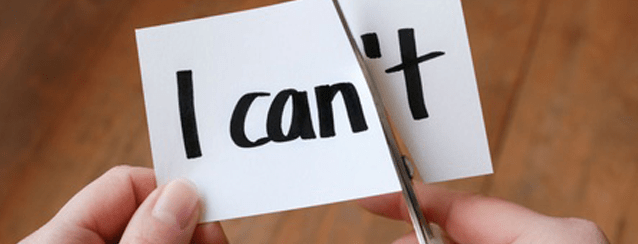
  • I can’t DO this.
  • I keep losing the string.
  • I get too wrapped up in superfluous details.
  • I don’t get to the point quick enough.
  • I’m too heady.
  • Too technical.
  • Too too too…
  • Give it up. Too much work you’ll never finish anyway.
  • This is stupid to pursue.
  • You are wasting your time, not living your best life.
  • You’ve been working at this too long and are still nowhere…’

His email back:

This is exactly what I freak out about as well. Just replace writing with coding.

Me:

Thing is, you have to combat the bullshit voices in your head. They are half-truths. Not lies, cuz there IS truth in our fears, but only HALF truths. I can counter every one of the voices I just wrote in my journal.

Him:

But there’s always these looming feelings that I’ve accomplished nothing, done nothing. Am nothing.

Me:

That’s fear—like you are a failure—because you’re scared you will be. And while the fear is valid, real, true, because there is a vague possibility you won’t find a job you want, the WHOLE TRUTH is you are virtually 100% guaranteed to find a job if you keep looking for one, and likely a coding job you’ll like.

Another truth is you’ve proven you can code as a straight-A graduate with a CS degree, which was your primary goal the last 4 years. And you did it. Well done!”

Him:

I seem to be unable to compartmentalize my feelings.


Me:

This is LEARNING, E.M., applying for your first real job that isn’t a part-time, low-level gig. You’re launching your career, and that’s a big deal. Let yourself feel scared, and frustrated, and excited and every other feeling that arises through this process. And you WILL get a job. Guaranteed, IF you keep working at it!! Just like I’ll get the Power Trip written. See, I’ve already proven I can write with 7 books out, with mostly good reviews… And the voices of doubt gather like locusts as I write the last two lines above:

  • Yeah, you’ve written 7, but they’re all crap. 
  • And the good reviews, well, they were just being nice. 
  • The bad reviews are the truth about your writing. 
  • So GIVE IT UP BITCH. You will always fail at this. 
  • and so on…

But again, I can COUNTER all of these doubts with another POV:

  • Yeah, you’ve written 7, but they’re all crap. BULLSHIT. I’ve gotten mostly good reviews.
  • And the good reviews, well, they were just being nice. BULLSHIT. Just bullshit cuz this is such a stupid thought.
  • Bad reviews are the truth about your writing. NOPE. They are HALF THE TRUTH, or a percentage, and in most cases the greater percentage of my reviews are positive.
  • So give it up bitch. You will always fail at this. FUCK OFF, BITCH OF DOUBT.

Now GET TO WORK, honey, cuz writing is the only way you’re going to become a better writer.

His response:

Emoji smile. Clapping hands. Thank you hands.

Letting Go of Our Kids

Our son went on a camping trip with his 5th grade class last week. He was gone four days, spent three nights bunking with eight of his classmates and a high school chaperon. They shared a cabin (with heated floors and a private bathroom), one of many scattered around Camp Arroyo, nestled in the eastern foothills of the San Francisco Bay.

High drama days before he left. Lots of spontaneous hugs. He’d grab me on the stairs, or in the kitchen while I stood cooking at the stove, wrap his arms around my waist, bury his face in me and say, “I’m going to miss you, mom.” And, of course I returned the sentiment, which seemed to sate him, and me momentarily. I put on a brave front, but as his day of departure drew nearer, I dreaded how much I’d surely miss him.

My son’s first overnight experience without mom or dad was a weekend on his first Boy Scout camp-out. He didn’t seem all that enamored with camping. Dirty and tired when he got back (after less than 24 hours away), he endlessly repeated, “It’s so great to be home.”

My son was not the only kid feeling nervous about the 5th grade camp-out. Two of his friends admitted feeling scared. Several parents laughingly confessed to feeling anxious about missing their kids over the four days they’d be gone. Many had yet to be away from their children for more than a weekend, during sleepovers at the grandparents.

I, too, felt apprehensive. My child wouldn’t be safe at home where I could watch out for him, be there for him if he needed me. A long time ago, when I was in my late teens, my mother told me she never fell asleep all the way until me and my sister were safely ensconced in our beds at night. Only then would she be able to rest. At the time, I figured she was trying to guilt me out for coming home late a lot. But as I helped my son pack for camp the night before his departure, I anticipated three restless nights without him.

Dropped him off at school the next day like any other morning, except for the sleeping bag and pillow he put down on the curb so he could hug me goodbye. He held me hard, and long, which was weird right in front of his school and classmates. I hugged him back, tried to transfer my love without too much drama and left. Heavy sigh as I drove away, watching him in my rear view mirror struggle with his gear and then disappear into the school.

And quite unexpectedly, I burst out crying.

My son was growing up. He needed me less and less. As he moved into his teen years we’d naturally separate, until he’d no longer be completely immersed in my life. We’d been bonded for 11 plus years and I could feel it coming to an end. And sadness consumed me on my way back home, but only for the first block from the school.

As suddenly as I started crying, I stopped. The next four days I didn’t have to stop working at 2:30 p.m. (and 1:00 p.m. every Wednesday) when he came home from school. I didn’t have to be the constant nag, reminding him every other minute to study, practice guitar, do his homework or his chores. The dinner menu didn’t need to be altered to my son’s particular tastes. Sushi was a distinct possibility since our daughter was generally open to trying different foods. And best of all, I didn’t have to play ref or break up their petty sibling rivalries.

The four days my son was away with his 5th grade class passed in the blink of an eye. I published two new articles, finished the second chapter of the final, final, final…etc. draft of my second novel. I finished the French screens I was building, found and set my daughter up with a great new 2nd grade math program, and shared with her some of the best Japanese food ever—turning her on to a brand new cuisine. There were no sleepless nights while my son was gone.

He hugged me when I picked him up from school after his trip last Friday. His embrace was warm, and tender as usual, but over quickly. He pulled away, looked around to see if anyone saw him, and then picked up his stuff. I carried his pillow to stop him dragging it along the ground as we walked home. He told me about his time away, but I had to prompt him a lot, and though he insisted he was just tired, I felt a contextual difference between us, a distance imposed by him, or me, or both.

We were quiet for quite a bit of the walk, but it didn’t feel awkward. He seemed introspective, more grown up than little kid. His youth, like much of our time together was passing, as it should be, but none the less, there is sadness in this. The upside is as my son moves on, I get to as well. As he embarks on life on his own, I can get back to mine—the life that became secondary when my kids arrived on the scene. From the day they were born they’ve been my first priority, and though perhaps they always will be, their daily demands are getting less as they become more self-sufficient. And as we all grow and mature, I find I no longer fear, but accept, and even sometimes welcome the natural separation occurring between us.