Don’t Press Send

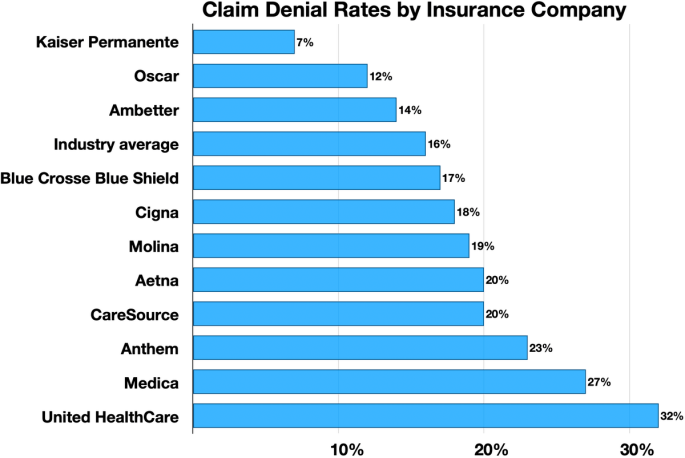
I called my medical insurer to dispute some doctor bills I’d received that they denied. The recorded voice of a lovely woman led me through the maze of prompts telling me what to press on my phone to ‘better serve me.’ After getting through the first number sequence that vaguely applied to my needs, my 16-digit account number was requested. I managed to key it in right the third time and the charming voice directed me to their website for service, along with a sales pitch while I waited on the line for another 10 minutes.

I wanted to hang up, but didn’t. I had several questions, and it would take me too long to describe my issues clearly in writing, so I had to talk with them to resolve the problem. But left waiting on hold it occurred to me that they don’t want problems. And questions answered directly are a liability. And issues? Well, we all have issues, honey.

I let fifteen more minutes pass before hanging up.

Two days later I called again, with the exact same results. I hung up twenty minutes into the call. I didn’t have the time to wait on the line while getting two kids ready for school before going to work that morning.

A few days later I called again. After running the gauntlet a third time I waited on the line to connect with a Customer Service Rep and found myself getting more and more agitated with each passing moment. They were blowing my time and I knew they didn’t care. I guess to them, cutting staff for the minimal cost savings, and enacting the insurance industry’s creed of “delay, deny, defend” was worth part of my sanity.

I waited on hold for 15 minutes when the operator finally came on the line. The first thing she asked for was my account number, the same one I punched into the phone earlier. After a series of ‘security questions,’ twenty minutes into the call we at last got around to my issue, which I explained in great detail. The CSR put me on hold for 10 more minutes before she came back on the line and informed me her records only went back 90 days, which did not address the bills in question. Her managers had access to my full records, but they were in meetings all day and I’d have to call back, or I could go to their website and file a dispute.

A half hour into the call and my blood was boiling. With a curt ‘Thank you,’ I hung up and logged onto their website knowing it would yield no results.

In ten seconds I was on a webpage with a blank field for writing to Customer Care. It took me a good hour to construct a document that explained my problem clearly, and I sent it to them. The next day I got an email back from a service rep that told me he could not release my records without ‘security information’ that he advised me not to give online, and then gave me an 800 number—the same one I had been calling for days—to contact a manager to assist me.

I went back to their website. Anger poured off my fingers and into my words as I typed. I cursed them for making it as time consuming and difficult as possible to communicate. I indicted them for the billions they make annually from all the erroneous bills paid by customers who don’t have the time or the will to run their maze to correct discrepancies. I threatened to choose a different insurer, knowing it was futile since pretty much all corporations rip us off these days. I let my hate for the Insurance industry pour off my fingers, a pyramid scheme from its onset, stealing from clients daily, denying legitimate claims and no one is stopping them. (They are the third largest lobbyists in this country. They get what they want from our govt.) I pointed out social media’s response to the shooting of the United Healthcare CEO, and even confessed to siding with the guy. I purged because I could, because there was no one real on the other end. In fact, I knew anyone who read my email would not care they were stealing from me to keep their job.

It took me less than 10 minutes to exorcise my rant and I was still on rails when I dismissed the idea of deleting it. I pressed send.

That was a mistake. Within an hour I got a call from my husband. He’d been called by the head of HR at the multi-national corporation he worked for to inform him his wife had threatened to shoot the employees of their insurance carrier. My passionate denial and explanation of events leading to my email outburst saved me from prosecution. But in an ironic twist, I did finally get to talk to a customer service manager, who researched my claims, and in the end the insurance company paid the doctor bills in dispute.

Dec 2024

Murdering CEOs is Trending

Will shooting them all stop these corps stealing from the 99%?

I’m writing a dystopian novel called The Power Trip about 4 Stanford undergrads that build a MMORPS game where PLAYERS manipulate other players — MARKS — to do what they ‘suggest.’

In one scene, the fictional CEO of fictional HealthNet is shot to death on a street in San Francisco by a social activist who lost his parents in the Nipah outbreak of ’36 due to poor care at Stanford Hospital. I wrote this scene a decade ago, enraged by our healthcare system in the U.S.A., and was reviewing it as it played out in real life last Wednesday on a street in New York City with the murder of the CEO of UnitedHealthcare.

And I’d like to tell you that I feel bad for his family that he was gunned down on a public street in broad daylight, but…

I really am conflicted on this one. Brian Thompson, the real life (though now dead) UnitedHealthcare CEO was not a benefit to society. He headed up an insurance company that kills people every day by limiting doctor care, drug pushing for big pharma, and denying claims with no foundation other than pure greed, destroying lives daily. He was a father, which makes him particularly dangerous because more like him in this country, on this planet will not help humanity thrive, but hurts our survival.

American’s have a SHORTER LIFE SPAN than China, Greece, United Arab Emirates, and 51 other nations on this planet. We are 55th in life expectancy because of the poor quality of our FOR PROFIT ‘healthcare’ system.

Was there another way to stop this CEO from hurting people than murdering him?

Not that I know of. And while I’m not an advocate of murder, unless you run a Power Trip on him to commit suicide, Brian Thompson wasn’t going to change his marauding ways.

Can’t sue him. Sue any major corp, and their stable of lawyers will tie you up in court until you or your organization can no longer afford representation for your case.

Can’t talk to him, convince him to do right by the patients who pay for his family, his lifestyle, and the politicians UnitedHealthcare supports. He exhibited his relentless greed, and clearly didn’t care about anyone outside his personal sphere.

In 2014, the U.S. Supreme Court decided that corporations are people too. In doing so, they expanded corporate rights to donate as much money, resources (lawyers), and lobbyists to whatever cause, and political agenda they wanted. Corporations control the politicians of this country. We are NOT “by the people, for the people.” The U.S. was started by oligarchs who convinced the rabble to fight their battle to avoid paying taxes to Britain.

The U.S.A. is now and likely has always been a totalitarian society ruled by oligarchs and the super wealthy who will do anything to get rich and stay rich. Brian Thompson’s estimated net worth at death was close to $50 million, which he made saving money for UnitedHealthcare by killing off patients. That $50M is public facing, not how much he likely had hidden in offshore accounts to avoid paying taxes.

So, do we kill all the oligarchs wrecking this country?

  • We can’t get rid of them legally. Our govt protects corporations and the executives who work for them, not the 99% of the rest of us in this country.
  • We can’t convince them to become moral people who care about someone beyond themselves.
  • We can’t elect politicians that will be ‘by the people, for the people’ when the oligarchs and wealthy corps are paying our representatives to create laws that divests them of all culpability to keep them rich and in power.

What to do with the greedy oligarchs like Donald Trump, Elon Musk, Jeff Bezos, Bill Gates, Mark Zuckerberg, Charles Koch, Harold Hamm, Larry Ellison, Sergey Brin, Larry Page, Warren Buffet, and CEO’s like Dave Brown (CEO Xfinity), Gail Boudreaux (CEO of Anthem/Blue Cross), Patti Poppe (CEO of PG&E), Sarah Chavarria (CEO of Delta Dental), Michael L. Tipsord (CEO of State Farm Insurance), Thomas J. Wilson (CEO of Allstate Insurance), Gregory Adams (CEO Kaiser Permanente), David Cordani (CEO Cigna Health), Jason Hollar (CEO Cardinal Health), Mike Slubowski (CEO Trinity Health)…etc?

Would shooting them all stop these corporations from stealing from the 99% of the rest of us?

If it would lead to a more equitable system of government — ‘by the [majority of] people, for the [majority of] people,’ — is it then the ‘right thing to do’ to murder these people to change a corrupt system controlled by the greedy 1%?

The Butterfly Effect

Monica Lewinsky sucked Pres. Clinton’s cock, getting George W. Bush elected, which led to the 2008 financial meltdown with the Republican’s anti-regulation policies. The real estate recession of 2009 left not only millions of people without any retirement, but my father without enough money to care for himself, compelling us to use our little savings to help him. This investment into my father’s care comes out of our kids’ college funds and will most likely affect them down the line.

My husband was freaking out when he called me from his job at a well-known Silicon Valley startup a couple months ago. He’d entered the stairwell and saw the married CEO of his company sucking face with an employee. He had a right to be upset. The CEO is putting the company, its pre-IPO stock value, and its almost 300 employees at risk by displaying his extra-marital affair publicly. His sloppy behavior can not only get him fired, but eventually, lead to the demise of the company with scandalous press chasing away customers and business associations alike. And, of course, there are his two kids and a wife at home who will suffer, possibly lifetime scars from his selfish indiscretions.

When a butterfly flaps its wings in Central Park, it does NOT cause a typhoon in India. But the Butterfly Effect is very real, and very personal, for all of us.

The CEO sucking face with his employee saw my husband in the stairwell. He called my DH into his office later that day and made excuses that he was “just comforting” his graphic designer who [ostensibly] was grieving the death of her dog. Originally hired by the CEO, my husband had never had any issues working with the man until that day in the stairwell. After that day, the CEO was his new micro-manager, and my husband, tired of the bullshit, left the company a month later.

We all engage in the Butterfly Effect in one way or another. When my DH and I fight, I’m more apt to yell at our kids, causing them to snipe at each other. Continual fighting over time may result in fierce sibling rivalry. Instead of becoming balanced, socially aware people, they grow up defensive and afraid, and become CEOs and Presidents who seek physical contact over emotional intimacy to combat their gnawing loneliness.

The Butterfly Effect is an unalterable phenomenon of the human condition, but that doesn’t mean we must be doomed by it. Our ability to perceive the future, and then adapt our behavior in response is also uniquely human, and dramatically separates us from every other life form on this planet, and one of our greatest strengths.

Had President Clinton been thinking with his brain instead of his little head, or Ms. Lewinsky had stopped to consider the possible ramifications of Bill Clinton’s solicitation, perhaps either would have made a better choice. (Why do I sight Monica? Those who cheat are culpable for their actions, but those who are party to cheating are equally culpable.)

Like a gun sitting on a table, the Butterfly Effect is neutral, but it can generate productive outcomes by simply starting from a positive position. Awareness that no man, or woman, is an island is the key to directing the Butterfly Effect to consistently positive outcomes. Every day we touch the lives of many others, whether we’re at home, on the internet, at work, or shopping at Target. Holding a door open, giving a compliment, or showing appreciation for service rendered can make someone’s day a bit better. We affect those around us, our environment locally, even globally with our consumption of resources. Choosing a Prius over an SUV, and picking the appropriate sexual partners; helping someone in need, not just during the holidays but any day improves all our lives collectively.

Be acutely aware of your connection to others, and the cascading Butterfly Effect, and it may just be the lives you touch in your hometown today will indeed lead to the cure for cancer from someone on the other side of the world tomorrow.