Believing is NOT Thinking

My father is a fervent Republican. My mother was a Democrat. I once saw him put his fist through the maple cabinet an inch from my mother’s head because her vote was going to cancel his in the second Reagan election. Though he never hit her, connected anyway, he often shouted, slammed things, threw things, even at me, when he encountered resistance (reason) when espousing his conservative views.

My father doesn’t believe Global Warming is real or caused by us in any way (absolving himself of conserving resources).

My father believes all non-believers — atheists and agnostics — are dangerous fools to be converted.

My father distrusts all Muslims.

My father believes in trickle-down economics, though it’s been proven again and again it makes the rich richer while wiping out the middle class.

My father doesn’t believe in gun control. “If they come for me, I’ll stop them at the door.” He quotes the NRA with fervor! “Take away what kind of guns we get to own, and you chip away at the foundation of the 2nd Amendment,” he preaches.

I remind him he can’t stop a tank with an AK-47. I implore him to examine history, and context, that the right to bear arms our forefathers were talking about were pistols and shotguns that took three minutes to load and didn’t fire straight or would blow up in your face. Automatic assault weapons were neither considered, nor anticipated when the 2nd Amendment was written.

He scoffs. As his daughter, and a woman, I am clueless.

As a mother of two amazing, spectacular children, I am horrified, not only by mass shootings on school campuses, but everywhere else, every time an assault weapon is used against our own because the NRA wants to stay rich. And our government officials, Republican senators in particular, ostensibly “by the people, for the people,” are paid off by gun lobbyists to let them.

I grew up in L.A., on the Valley side of the Hollywood Hills. I went to school with writers, producers, directors’ kids, all fairly to extremely liberal. My father was the outlier in our neighborhood and among my parents’ colleagues and friends. The Great Divide between the Republicans and Democrats, fueled by Reagan pushing religion, conservatism, then ignited by Bush Jr’s Christian administration, and then concertized in lies, ignorance, and hate by Trump, didn’t exist yet. My parents lived together in relative peace, except around election times.

We have become a polarized nation, and this serves no one here. On the personal level, it has divided me from my family. My siblings, like my father, are fervent Republicans. My sister, disgusted we’re raising our kids without religion, decided she’d had enough of my liberal leanings and checked out of our lives entirely, leaving our kids deeply hurt their aunt had abandoned them. My brother used to forward me emails from his Born-Again community that Obama was a Jew-hating Muslim who believed it’s okay to kill babies. During Trump’s reign, he spoke of the evil liberals who supported abortion and insisted the rights of a fetus eclipsed those of the mother. My brother’s ignorance is only eclipsed by his blind faith in his Christian leaders’ conservative rhetoric.

The chasm in our morality and our philosophies is so diametrically opposed at this point that the rare times I talk with my father our dialog quickly sours, then invariably turns contentious. I’ve told him time and again I won’t discuss politics with him, but he insists on little digs, like, “Do you care about your kids?” He has not spoken with our children, his grandkids, in 7 years, or acknowledged them in any way, not birthdays, no calls, ever, and virtually never inquirers about them when I call him, which I always do because he doesn’t call me.

Truth is, it’s getting harder and harder to call him. Almost two decades after my mom’s death, my father is undaunted by age or illness in his quest to spread conservative lies. He’s a true believer (as are most hard-core Republicans) because believing is easier than thinking. Being told what is right and wrong, good or bad, is simpler than considering the complexities of our behavior, and our obligations to each other and the world we inhabit.

My remaining family believes women should not have the right of choice with our own bodies.

My father and siblings believe gays should not have the legal, nor moral right to marry. They believe homosexuality is a mental illness.

My family espouses they believe in “less government” — preaching the Republican’s canonical tagline — but want to govern (restrict) women’s choice and limit our birth control resources; control who gets to marry; limit medical treatment to those who can afford care; allow corporations to buy politicians that allow the mass murder of our children and citizens for corporate profit. They’d prefer to believe the GOP rhetoric that Global Warming isn’t happening and support the ‘rights’ of Big Oil to drill and frack our planet to death, instead of investing in renewable energy for our kids, and the welfare of Earth forward.

I’ve been wondering when it’s time to say goodbye to family, even before they die. I’ve been grieving my sister’s departure from our lives since her exit 15 yrs ago. The little connection I retain with my brother and father seems… over. My kids have no relationship with either. We have virtually no common ground and share little time that doesn’t quickly turn combative. So really, what’s the point of trying to stay in touch? Harsh? You bet. Ugly? Yeah. I’m profoundly saddened that we’ve come to this impasse. Hurts. A lot, knowing almost half our nation feels as my family does. And I am mystified, disgusted, and shamed by their gullibility in choosing blind faith over thought and reason.

We are again on the precipice of our survival as one nation, but this time the war isn’t with rifles that blow up in our faces when shot at the ‘enemy.’ Now, we must recognize the enemy is ourselves — choosing ignorance over reason because it’s easier to binge-watch Netflix, peruse Instagram, or stream gameplay on Twitch than it is to think.

My daughter, a recent college grad, told me most of her friends off and online — this new round of young voters — will not be voting this election. They’re taking a stand, showing how they feel about our government, they claim, neglecting to understand without voting they are essentially voting in Trump. They say they’re disheartened by their choice between a great-grandfather and a misogynist (who they don’t say is just 3 yrs younger than Biden.) They focus on our current president’s age because their feeds on Insta, Facebook, Reddit [and their like] tell them to — flooded with GOP marketing to sway young voters Biden is too old for another term. They get their information from social media and blindly believe their feeds, not knowing, or even caring that what they are scrolling through is personally targeted at them, and designed to manipulate them to buy, try, subscribe, and believe in snake oil.

The chasm between us will continue to grow with more believers buying into the derisive rhetoric of their religious leaders, politicians, Google’s search results, and ‘personalized’ marketing on social platforms and apps. More families are finding themselves on opposite sides of an ideological divide that will likely tear them apart, like mine, unless we STOP believing and start thinking what is right, not only for ourselves and our family, but broader, more complex considerations that include finding and creating ways to help our neighbors, community, this country, and our planet thrive.

The Fallacy of Palestinian Protests

My daughter, a college senior, told me yesterday that she joined the Palestinian protest on campus.

“I believe that genocide is wrong, Mom. So, I stood up for what I believe.”

I think she expected me to be proud of her, but her words made my skin crawl. My daughter knows nothing of the history of either country. She has no idea why there is a war between Israel and Palestine now, how the war even started, or why Israel is bombing the Gaza Strip. In fact, she has no idea where the Gaza Strip is, or why it is there, or who their govt is.

I raised my kids to stand up and speak out when they encounter racism, sexism, ignorance, hate. I did not teach them to blithely go along with the crowd. That’s how Nazis came about.

Do you know that Hamas, the government of Gaza, launched an unprovoked attack on Israel, killed over 1,200 people, and kidnapped 253 in October of last year?

No.

And did you know Hamas was raping 12–48 yr old girls and women they kidnapped, then posting it online to terrorize victim’s loved ones?

I haven’t heard that. All I heard was Israel was bombing civilians in Palestine and killing mostly women and children.

Do you know that the government the Palestinian people voted in are using their women and children as cover for their terrorist shit, and that is why they were getting killed in Israeli bombings?

No. But it doesn’t make it right that Israel is killing kids.

No. It doesn’t. I didn’t say Israel is right. There is no right here, baby. Both sides are wrong. I’m not pro-Israel. They know that Hamas is sacrificing Palestinian children, yet instead of targeted strikes against Hamas, they are wielding an iron fist. Badly. Ugly. For sure. 100%.

So, what’s wrong with me joining the protest then, when even you don’t believe Israel is right? she asked me, exasperated.

My beautiful daughter, siding with one side or the other is divisive in the extreme. It perpetuates the problems there, and creates more here, between us. Call out bad behavior, like Israel knowingly killing civilians regardless of their reasons. Or Palestinians voting in a fanatical religious government with an agenda to kill all Israelis. Neither is right. Call out bad behavior, not an entire nation. Do not get on the PC train because your friends are and you wanta fit in. Do the research before taking a stand. Blind faith means turning off your brain. And that is never OK.

So you think I shouldn’t have joined the protest?

Do you know professional agitators are targeting campuses like yours to get all you kids riled up? And that most of these protests wouldn’t even be happening if not for the pro-agitators who are paid big bucks to get online and throw a protest.

I thought they were all student here. Who would pay someone to do that?

I don’t know. But right now I’m betting on the Republican party. They want to destabilize our nation because the more chaotic the better Trump’s chances of winning the election.

Seriously? she asked, aghast, as she feels like I do about our misogynist x-pres.

I don’t know, honey. What I do know is ninety-nine point nine nine nine…etc. percent of these college protesters have no clue about what is going on over there, just like you don’t. They catch news bites online, and the bloodier the bites the more eyeballs they get. The news just loves a great car crash!

Standing up for ONE SIDE when you don’t know the history, the region, the people, the conflicts that have been there since the UN decided Israel’s borders, the wars, how they started, or why they started is, well, ignorant. So you were out there with a bunch of ignorant students who are creating more conflict, more hate, more antisemitism with their protest. And it won’t change a thing because the universities will not cut all ties with Israel. Ever. Israel is a collaborative partner in research and development of medicine to tech, the primary function of any university. With all this in mind, do YOU think you should have been out there protesting?

The energy was so electric with all those people, Mom. It sure felt like we were doing something meaningful.

Promoting ignorance and hate is never meaningful, baby. Don’t just go along with the crowd and create more conflict like these protests do. Making a real difference takes work, honey. Lots of work, over a long time. Think, research, a LOT, since so much of the internet is lies. Then form your own opinion, and act to be part of the solution.

A Day in Nahariya, Israel

My mother was a born-again Jew — her response to my brother’s conversion to Christianity, and my unwavering commitment to Atheism. In her continual effort to have me marry a Jewish man, towards the end of my vagabond years in the late 1980s, she suggested I go see Israel. She said it was the most beautiful place on earth, an oasis Jews had turned from desert wasteland into paradise. She had taken the guided Hilton Tour. My mother never really saw Israel.

The moment I got off the plane I knew it wasn’t the place my mother had claimed it to be. Bullet holes riddled the walls of Ben Yehuda airport, which had plaques commemorating this or that war or terrorist attack. I had traveled much of the developed world by then but had never seen anything like this. Military men and women, some no older than teens were armed with Uzi’s; grenades hung off breast belts lined with bullets. The public bus was packed with soldiers on the ride to Tel Aviv. The French girl sitting next to me leaned over and whispered, “Are those guns real?” Clearly, even she thought it odd.

I rented a flat in the heart of the city for a couple of months and used it as a base to travel from. Using public transport and walking, I spent hours on buses and in cafes watching, listening, and talking to locals. A lone female traveler, I was often invited to join diners, and occasionally even into people’s homes to partake in authentic meals and enlightening conversations. Most everyone spoke English, and after a while I began to glean a hazy understanding of the conflict between the Israelis, Palestinians, and the surrounding Arab nations. However, it wasn’t until my last full day exploring Israel and Egypt that a strange encounter with an Arab man brought into sharp focus the plight of the Middle East.

Two months in Israel, and the day before flying home, I took a bus north to visit the beach town of Nahariya. I felt him staring at me from where he sat a few rows back. He was likely in his 20’s with striking green eyes, swarthy, handsome. He was dressed in jeans and a Hard Rock Café t-shirt, but wore a keffiyeh, the traditional Arab headdress with a double black cord headband crowning the white cloth over his head and cascading over his broad shoulders and down his back. The intensity of his gaze unnerved me. I assumed he was on his way to Lebanon, the West Bank, or maybe Jordan, but when the bus finally got to Nahariya, he got off right after I did. And I got scared.

I tried to convince myself he wasn’t following me. I window-shopped and then got some lunch in a very public café. I saw him meandering around town, often stopping to chat with small groups of men, most dressed in mid-calf robes and head garbs, but almost every time I caught sight of him he looked over at me. Eventually, he went into a shop and I ran across the street and tried to disappear into some woods.

The low pine forest was only a few hundred meters thick. The blue/green Mediterranean glimmered beyond the trees. When I finally sat down on a log at the edge of the forest I was sure I’d lost him. I dug my toes into the warm sand and looked out at the dazzling sea. The deserted beach was silent. Then I heard twigs breaking underfoot behind me.

I stood and spun back towards the forest as the Arab man came out of the woods a few yards from me. I’m screwed, I thought, pretty sure I was about to get raped on that empty, isolated beach. The thought of running seemed absurd. He could have caught me in a flat second. I tried to make myself as tall as possible. Then I looked him straight in the eye and said in my harshest tone, “What the fuck do you want?” Cussing, speaking before spoken to, and looking a man in the eyes are things I’d been told Islamic women do not do.

He stared at me, startled, but didn’t respond. He probably didn’t speak English. And I didn’t speak anything but.

“Leave! Or I will.” I pointed back through the forest. He didn’t move so I started to walk away. I was scared out of my mind.

“Please don’t go.” He spoke softly, his voice deep and throaty. “You’re an American, right? I just want to talk to you.”

“About what?”

“I’ve just come back from the States.” His accent was English, but richer, more sultry. “I was two years in Boston, at university there for my MBA. I’ve been back here three weeks now, and I am missing the hell out of good conversation.” He smiled then, his thick ruby lips curved into a gentle smile.

I don’t know if it was his tone, his easy manner, or his striking green eyes that made me stay. He kept distance between us, and slowly sat cross-legged on the sand in the spot where he’d been standing. Curiosity overrode every other feeling. I’d never spoken at length with an Arab. An opportunity to speak freely without the prying eyes of others could be educational, to say the least.

“I live here in Israel now,” he said. “I’m originally from Jordan, but in my heart, I’m a traveler, an explorer of places and people. What about you? Where are you from?”

“Los Angeles. Hollywood,” I clarified since many outside of the States had no clue where L.A. was, but everyone knew Hollywood.

A huge white smile spread across his chiseled face. “Ah. Movie stars and Disneyland.” He pushed back his keffiyeh and locks of thick, dark wavy hair peeked out from under the white cloth. “I’m Hashim.” He brought his hand to his chest and bowed his head slightly then smiled that great smile again.

I introduced myself, shared why I’d come, and that I’d be going home in the morning.

He asked me about places I’d visited on my trip, and what I thought of them.

I told him I’d traveled most of Israel, and explored Cairo and Alexandria in Egypt. I did not give him an assessment of my impressions along the way, instead turning the tables, I asked him some questions. The conversation spun from there, unraveling like a well-worn sweater, venturing down the road of trust, slowly revealing ourselves.

He’d recently graduated from Harvard, not just for the prestigious degree, and the connections to society’s elite, but also to study Western culture. He’d returned home to take his place beside his father, a wealthy statesman of some note.

“My father insists it’s business as usual — finance the current regime and whoever replaces it. But I cannot support tyrannical militant extremists and sleep at night.” It was going to be his job to advise on how best to “work with infidels,” meaning anyone who isn’t Muslim, according to Dad, and the rhetoric of many of their religious leaders.

A strange mix of anger and fear welled inside me. “I’ve never considered myself an infidel as an American citizen. I thought that title was meant for Israelis, or Jews in general.”

He flashed a smile, but not like he thought it was funny. “My father means a non-believer. We have the word Kaffir to describe the sinister kind of infidel, like political authorities controlled by the wealthy.”

“Just like we have. We call them lobbyists. Big business runs the politics of the U.S.” I said and frowned at him.

“The mean, the masses, societies in general always seem to devolve to the power-hungry — the few who wish to control the many.” He frowned back, and shook his head. “Islam had a Golden Age once, way back in the 8th Century, for almost 500 years, where advances in science, mathematics, the arts, all flourished.”

“So, what happened?”

“Some scholars claim that a thriving society breeds complacency, but I think that’s bullshit.” He grinned at me, like he cussed with the purpose of ‘speaking my language.’

“What do you think?”

“That a power-hungry ruling class implemented strict laws that made the masses angry, which created enough instability for the Mongols to invade and take over.”

“Kind of like what’s happening with the Palestinians and Israel right now?” I wasn’t trying to be confrontational. It was in the middle of the First Intifada then, when Palestinians protested peacefully and violently to end Israeli rule in the West Bank and Gaza. I was to find out later, it was also when Shaikh Ahmed Yassin created Hamas.

He eyed me critically, like he was trying to read me, or teach me. “Yes. In 1947 the new United Nations gave Jews coastlines, seaports and agricultural lands around major cities where the majority of the populations were Palestinian Arabs. The Partition Plan, the UN called it, took over half of Palestine to create Israel. The Palestinians, controlled by the British at the time, rejected the Plan. It happened anyway, forcing Palestinians to the West Bank and Gaza. Until 1967, and the Six-Day War, when Israel began occupying the remainder of Palestine.”

“Sounds like what we did to the Native Americans.”

“It’s similar. Yes.” He frowned again. “Now, over 20 years of Israeli rule restricting trade and emigration has increased material and production costs, and in turn has decimated their economy. Unemployment, poverty, disparity of wealth generated political infighting. The continued growth of Jewish settlements is taking the little land and vital natural resources they have left.”

“Then you support the Palestinian protests, regardless of the loss of lives?” It was on par with asking him, ‘Have you stopped beating your wife yet?’ but I felt angry that he called out Israel alone. The party line in my family and the States had always been supportive of Israel. I’d heard countless stories of the continual barrage of terrorist attacks from Palestinian and Arab fanatics going back to the formation of the State of Israel in 1948. I knew of the Six-Day War over the Suez Canal which led to the Israeli occupation of the West Bank and Gaza.

“No. I do not support religious zealots or terrorists becoming the face of the Muslim faith.” His crystalline-green eyes filled with certainty. “But like our forefathers during the Golden Age, restrictive laws lead to economic stagnation and disparity, which fuels unrest and anger.”

“So does terrorism, or even supporting terrorists. Israel may respond aggressively when they’re attacked, but you hurt me, or someone I care about, and I want to hurt you back. It’s human nature.”

“Yes. It is. And acts of violence breeds more violence. Unquestionably. But retribution and reprisal as a response to zealots and terrorists only exacerbates anger, and instead of learning to cooperate — invent, create together — the cycle of hate and violence continues.”

The sun set as we spoke, and murky twilight cooled the day’s heat. Profound sadness filled the space between us.

Again, he shook his head. He’d become a humanist in the States, he told me, an agnostic once he’d escaped the fundamentalist environment he was raised. “How do I stay here and marry into an alliance and faith I no longer believe in? How do I raise my kids to rise above the ignorance and religious rhetoric that surrounds them here? Reason, sanity, our humanity is abandoned when fanatics will sacrifice our children, or raise them to hate, and the killing never ends.” He sighed heavily, his despair visceral.

I sat in the sand, against the log, not three feet from him, tears streaming down my face. I had no idea what to say. I was there because of my fanatical mother. She blindly believed Jews had eminent domain to Israel, had single-handedly turned a desert into a flourishing country, and chose to see only the beauty there.

“When we are on the precipice of disaster, people can and do change,” I said to him softly. “If the only sustainable path forward for our continued existence is cooperation and integration, we will get there.” I shut up then. Platitudes at best. I sounded like my Pollyanna mother. I had no idea if change was possible with political divisions and religious talons buried so deeply into the psyche of so many.

We left the beach a short while later, as it was getting dark. We both had buses to catch to take us home. He told me to leave first, walk back without him, as it wasn’t safe to be seen together. “An Arab prince alone with a White Western woman in public isn’t proper. Yet,” he said with a wink.

I knew I’d never see him or talk to him again, and I was surprised by the stab of regret as I stood to leave the beach. Only a few hours in his company, and I felt certain I could love this man. Without embracing or even a parting cheek-to-cheek kiss we said goodbye, and I ventured into the small pine forest towards town.

Unfamiliar with infatuation, I had the painfully empty sensation of missing him on the bus ride back to Tel Aviv, and still the next day on the plane home. He’d given me a view into the plight of the Palestinians, and a deeper understanding of their struggle with Israel, and ultimately the world against fundamentalist who seek to control instead of cooperate. I thought of him often in the years that followed, the memory of our interaction always evoking a profound sense of hope, knowing he was out there, personifying the best of us, the embodiment of a step forward towards our continued evolution.

What Religion Are You?

When I say I’m an atheist, the very next question most people ask is: “Well, what were you raised? What were your parents?”

Human beings.

Somehow that answer isn’t good enough. They’re looking to place me in a spiritual box and lock me into a religion and all the stereotypes that go along with it.

All my life I’ve been told I’m a Jew — by my parents, by my relatives, by society at large, simply because my parents professed to be Jews. But if I don’t believe in god, or any supreme being, or even higher power; if entropy is what rules my universe, then am I still Jewish?

Jew’s believe in one god.

I believe in none.

Some would argue I am culturally Jewish, a product of my parentage. But it’s ludicrous I’m considered Jewish solely because my parents were (and technically just my mother need be, according to Jewish law). Let’s get one thing straight. Judaism is NOT a race. It is practiced globally, from members of our Supreme Court to jungle tribes in Africa that pray to one God with ancient Hebrew texts. The thread that holds them together is not racial, or even cultural, but spiritual — a belief system. There are no cultural similarities between the African tribes and our former or current Chief Justices. Take away the religious string and there’s really nothing left of their Judaism.

I adhere to no religion, don’t celebrate any religious holidays, and believe passing down to our children fantastical mythologies that promote intellectual laziness is dangerous at best. Growing up, my family celebrated the major Jewish holidays, though I never cared for the antiquated rituals and sexist roles we all played. Jewish parables were too often warped tales filled with praising their solipsistic god instead of people for their hard-earned achievements. I don’t like brisket, noodle koogle, or most deli foods. And as holidays go, the Fourth of July and Thanksgiving always meant the most to me culturally, and the food is far better.

If I’m culturally anything, it’s white, middle-class, American. Like most of us, I grew up with people of my socioeconomic status. I was raised in a relatively safe, suburban neighborhood — religiously, even racially diverse, but everyone made around the same amount of money. More fine grain, I’m culturally a native Californian. We have a whole other way of thinking out here than the rest of the world. Level of intelligence would be my third greatest cultural influence. I find I gravitate to thinkers — those who explore and question.

So how does this make me a Jew?

Liking bagels, or preferring salmon to ham, doesn’t define one culturally. Nor does espousing the virtues of education, or denouncing violence, or promoting empathy. These ideologies are widely held by most of our modern age. I’m not a Taoist because I believe in living a balanced life. And I’m not a Christian because I think Christ, or likely his myth, had a lot of charitable ideas.

What does it mean to say you are Jewish, or Christian, or Mormon, if you don’t embrace their belief system? If you were raised Christian and you didn’t believe in God, or Christ, would you still be considered a Christian? Hell, if you believed in God, but NOT Christ, could you still be a Christian?

What religion are you?

Most would respond with whatever religion we were raised. We practice the rituals our parents bestowed upon us. But the more important question is: What do you believe?

Think about it.

Have you let your parents define your spirituality? Beyond what you’ve been raised, have you considered what religious ideologies you actually believe in, if any? ‘Be kind. Work hard. Love your family and neighbors.’ These cultural beliefs began 200,000 years ago when we were still living in caves, and aren’t exclusive to any particular religion. They may have been adopted as Christian, or Jewish morality, but the truth is ‘Be kind’ stemmed from our need to be social. Humans are social creatures, and greedy, ungrateful, thoughtless behavior does not win friends, or attract lovers.

Omitting how you were raised, what do YOU actually believe in?

If you don’t believe the bible stories, Old or New Testament, are real — a recounting of historic events — then it’s likely you understand these books were written by literate MEN — the highest echelon of society at the time — to control the masses of illiterate layman with parables that instilled fear. You also likely know that these powerful men imposed rules and roles to maintain the social structure they created, and assigned the administration of this order to an almighty [jealous and vengeful (Nahum 1:2–8)] God whose authority could not (as an ethereal being), and must not be questioned. If you do not believe in this God, or that his adventures in these bibles are real, then you are likely an agnostic or an atheist.

ag·nos·tic (a la Google); noun

  1. a person who believes that nothing is known or can be known of the existence or nature of God or of anything beyond material phenomena; a person who claims neither faith nor disbelief in God.

a·the·ist (a la Google); noun

  1. a person who disbelieves or lacks belief in the existence of God or gods.

You don’t have to subscribe to a religion to be spiritual. You can feel connected to this earth and all that’s here without being a Buddhist. You can believe in charity without being a Christian. You can encourage education without being Jewish. You don’t have to pass on horrific tales to frighten children into adhering to rules handed down from men on high thousands of years ago. You can practice and teach values — choose to live a moral life: be kind, generous, honest, empathetic, loving, compassionate, without religion. Why would you choose to do so without a vengeful God threatening Hell if you’re ‘bad?’ You are advanced enough to understand each of us must continually contribute to humanity, and this planet we inhabit, for our race to survive, and thrive.

Atheism and Morality

An Atheist on Morality…

Einstein did not believe in God, as many [mistakenly] claim.

Albert Einstein said, “My position concerning God is that of an agnostic.” He clarified, “The word God is, for me, nothing more than the expression and product of human weaknesses, the Bible a collection of honorable, but still primitive legends. No interpretation no matter how subtle can (for me) change this.”

Atheists don’t believe in God either. Not any god/s. Ever. Unlike Agnostics, open to the possibility of a ‘higher power,’ or ‘collective, sentient being,’ Einstein believed in neither. Agnostic is politically correct, less threatening than Atheist, especially during Albert’s time, born a Jew, and existing on federal and university funding.

I am an Atheist. I do not recognize the Old or New Testament, and related works illuminating the adventures of a divine being as anything more than fiction — parables by some wise, some ignorant, but guaranteed partisan male scribes with an agenda to dominate and control others.

So, when I need money, [as an Atheist] why don’t I go rob someone? Or shoplift?

When I’m attracted to my neighbor’s husband, why don’t I hit on him, get intimate if he’s into it? 

When I get pissed off at the driver on their cellphone that just cut me off, why don’t I just shoot her?

Snatch & Run, illicit affairs, even murder these days, and the odds of getting caught for these crimes are somewhat nominal if done discreetly. Fear of being busted is not the main motivation that prevents me from committing these, and ‘lesser’ crimes, like lying, cheating, and behaviors that most would agree, religious or not, are moral infractions.

If I believe I answer to no higher power, where do I get my morality?

Einstein said, “We have to content ourselves with our imperfect knowledge and understanding and treat values and moral obligations as a purely human problem — the most important of all human problems.”

Without a priest, rabbi, or holy man telling me what to think and how to vote, and with no guidance from an omniscient god, or unbiased media outlet, I must consider my moral obligations

Why should I bother, and how do I know ‘right from wrong’ without a ‘divine doctrine’ to guide me?

If my parents had not gifted me life, and their parents before them…etc., I would not be here now, emersed in this experience of living. I am born owing Humanity and everything on this planet that supports our life here. We all are. All of us have a moral obligation to do our part to ensure the human race survives, and gift those to be the experience of being human.

Humans are social beings. It is mandatory we work together to survive and even thrive. We require a social structure — laws, and rules of conduct with mutually agreed-upon baselines we all must practice to partner. Breaking these rules annihilates our trust in each other, corrupting the very foundation on which relationships are built.

As an Atheist, why don’t I steal?

Do Not Steal is [generally] a mutually agreed-upon baseline. Contrary to religious rhetoric, it is not a biblical notion by some partisan scribe. Way before the written word, it proved to be a sensible rule to build trust.

I used to shoplift. My older sister showed me how when I was 7, and I stole from the local art supply store a few times until I got busted for pocketing Prismacolor pencils. The shop clerk called my mother instead of the cops. Riding home with my mom that afternoon, she explained to me that I was robbing her, my dad, and most everyone else, including myself because the store passed on the lost income from shoplifting by increasing the cost of their products. 

I created a rift with my mom, who was disappointed in me for stealing when she ‘taught me better than that.’ I created a rift with the art supply shop clerk who I saw often as a frequent customer of the store. And with my mom’s information, I understood I was serving no one shoplifting, perhaps especially myself.

Trust is the foundation of all relationships. It encourages communication, connection, and intimacy. Intimacy incentivizes reproduction. Having children ensures the human race continues to exist. (Most of us have heard the derisive term “Breeders,” referring to parents, but the absurdity of this view is lost on the idiots who use this word, as they could not utter it if they’d never been born.)

As an Atheist, why don’t I screw my neighbor’s husband?

I’ve been married for 27 years, and I have not and will never have an affair. Why? Thou shalt not commit adultery (Exodus 20:14) is not strictly biblical either. Ancient scribes adopted this notion as law from observing 200,000 years of human history.

If I have an affair with my neighbor’s husband (or wife), I am participating in creating a rift in their marriage. Even if our affair goes undiscovered, it changes the dynamic between the married couple with an intimate third now part of their once exclusive, mutually agreed-upon partnership. The rift generates a ripple effect of discord that touches the lives of many, even the adulterers, dividing households, destroying friendships, business relationships, and sometimes lead to war

Humans must work together to survive and thrive. War in our house or our nation is divisive and counterproductive to our continued evolution.

As an Atheist, why don’t I shoot the driver on her cell?

I fantasize about it sometimes, don’t you? Vaporizing at the idiot driver in front of you going 45 miles an hr in the fast lane while she’s texting. Seriously, I want her off the road, gone from harming anyone with her sheer arrogance in acting as if she is the One who can manage driving when statistically she is the cause of most accidents today. The cross dangling from her neck neglected to instill the value system Jesus preached: “Love your neighbor as yourself,” (Mark 12:31).

It is our moral obligation to watch out for each other. Caring for others beyond ourselves is part of what makes our social structure work. If that bitch behind the wheel on her cell hurts me, or my kids, or anyone I care about, I’m going to want to hurt her. It’s human nature to want to hurt those who have hurt us. Hurting each other, whether by thoughtlessness or intent threatens our survival and our ability to thrive.

Religion did not invent morality.

Our collective value system, the laws and rules of engagement most of us live by, religious or not, may have been written by biblical scribes, but not invented by them. The history of humanity has shown us what works and what doesn’t to preserve and encourage our evolution.

“…treat values and moral obligations as a purely human problem,” Einstein said. In other words, morality is determined by humans, not handed down from on-high by some obscure being requiring blind obedience invented by partisan men looking to control the masses.

Praying for less extreme weather [from global warming], or lunatics with AR-15s to stop mass killings, or for equitable socioeconomics won’t change anything. Even if you don’t text or scroll while driving, or participate in sexual affairs, or steal, we all have a moral obligation to ensure life continues here long after we’re dead. We owe those that follow us the complex and spectacular journey of being human that we have been gifted.

Atheist or religious, we all must recognize and actualize our moral obligations to each other and this planet for humanity to survive, and thrive.

— 

Cited Notable Facts:

Murder rates are lower in more secular nations and higher in more religious countries where belief in God is deep and widespread. (Jensen 2006; Paul 2005; Fajnzylber et al. 2002; Fox and Levin 2000)

Within U.S., the states with the highest murder rates tend to be highly religious, such as Louisiana and Alabama, but the states with the lowest murder rates tend to be among the least religious in the country, such as Vermont and Oregon. (Ellison et al. 2003; Death Penalty Information Center, 2008)

Rates of most violent crimes tend to be lower in the less religious states and higher in the most religious states. (United States Census Bureau, 2006)

The top 50 safest cities in the world, nearly all are in relatively non-religious countries, and of the eight cities within the United States that make the safest-city list, nearly all are located in the least religious regions of the country. (Mercer Survey, 2008)

Domestic terrorists of the American far right are driven by zeal for heretical distortions of Christian theology. (Paul de Armond, DOJ, 1999) Christian nationalism [is] a serious and growing threat to our democracy. (Robert P. Jones, TIME Magazine, 2022)

Marketing Religion blog post with additional cited notable facts.

Image by Stefan Keller from Pixabay

Raising Kids Without Religion

My husband and I raised our children without religion. We gave them no religious identity (as in claiming to be Christian or Jewish because of our parentage). We are both devout atheists, and I use the term devout with purpose. We don’t believe in a higher power, or any gods, or even the possibility of one. We are not agnostic. We believe awareness begins by the sixth month of gestation, and ends at death. Upon birth, our combination of chemistry defines individual uniqueness, so often mislabeled as a ‘soul.’ No heaven, or hell. No rebirth awaits us after death. Reincarnation is a myth. There are no second chances to get living ‘right,’ and we never ‘ascend to a higher plain of existence.’

You, me, Hitler, all end up the same. We cease to exist upon death. Only our contributions throughout our lifetime remain when we die.

Frightening and harsh though this may seem to believers, the fantastical bible stories and the ‘jealous’ malicious god, (Exodus 20:4-5), described in them never resonated with us. Much to our parent’s chagrin, we grew further from all religious ideology with their spiritual indoctrination. Ancient dogma conjured by men to control the masses by creating an outside deity that could not, and by its own commandments, must not be questioned, religious leaders were telling us not to think. They required blind faith, and neither my husband nor I were willing to buy into thoughtless beliefs.

We agreed before having kids that we’d raise them without religion. We could not teach them what we do not believe, and what we both feel is fundamentally destructive at this point in human development. The value system we hoped to impart is based on a keen awareness of self, and others, our planet, and the immense responsibility each of us have to preserve all life here.

Picture a bull’s-eye, we told our kids, like the Target logo. You are the center dot, obviously, as you can only perceive and participate in life while living. The first ring out from you is your immediate family; the second is your extended family and friends. The next ring is your community, then your country and then the world. And all rings must be considered when making choices and/or taking an action.

The Target philosophy is a model for a thriving society. Consciously considering the radiating effects of our actions forces us to think before we act. Our ability to think conceptually, project into the future, then alter our behavior to achieve that projected outcome is what separates the human race from all other life forms here.

There was no need to sell our kids on religious dogma such as promises of heaven, or threats of hell. We taught our kids not only to be considerate and responsible to family and friends, but to humanity as a whole, and all things on this Earth. We expect them to honor their debt to those before them by striving to deliver a better world to those here, and those yet to be.

As atheists, we are considered by many to be heathens– uncultured, uncivilized people. Our parents are constantly trying to convert us, under the delusion that we are what they were raised to believe, whether we admit it or not. They vehemently express their disgust in our ‘denial,’ and barrage us with threats that our children will be lost without a religious upbringing. My brother, a born again Christian, assures us that Christ died for our sins. He promises my children will be ‘saved’ after death from all wrongdoing if they just accept Him as their savior. He never stops to consider the catastrophic lack of responsibility this ideology instills in his, and every other blind believer’s behavior. My brother, and his brethren real estate brokers lie, cheat, and rob unsuspecting clients of their life savings without ever considering the destructive effects of his actions, believing in his own righteousness, having ‘faith’ in the forgiveness promised him.

By everyone’s reckoning who’ve met, or know our children, from family and friends, to teachers, to restaurant servers, my kids are liked and well respected. They are courteous and conscientious, more considerate than most adults, and 90% of their so called ‘god-fearing’ peers. They are team players in sports, strive for excellence in their studies, both straight-A students from grade school forward. They share what they have, and compromise to ensure fair play. And they do all this, not by threats of eternal damnation, but because they understand their role in, and responsibility to humanity, and this planet we inhabit. My children are not lost. They experience no spiritual void. They find beauty and wonder in many things, like nature, and sometimes even in the nature of man.

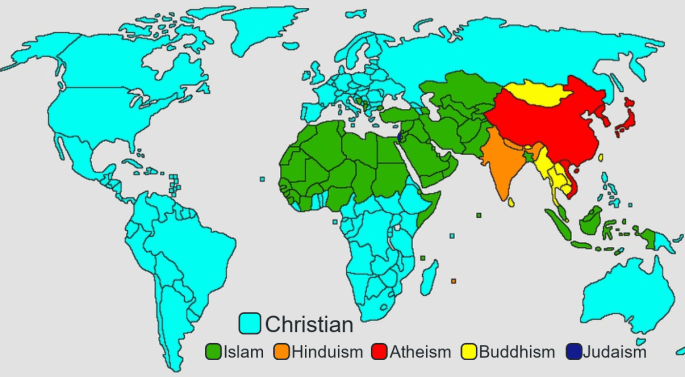
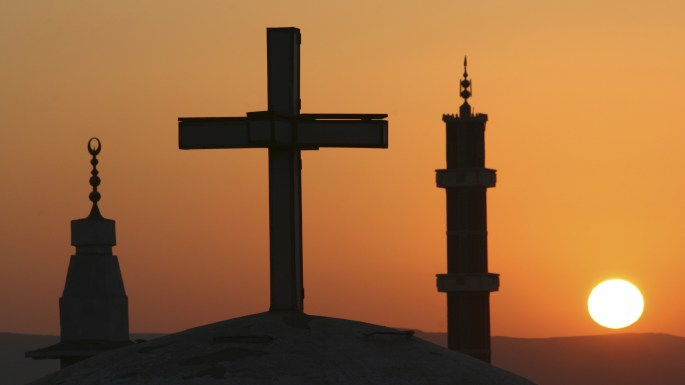
With the advent of technology and advanced weaponry, our world has become so very small and fragile. We must stop pretending we are powerless, under the will of various deities, or follow the divisive rhetoric of religious leaders who preach if Christ exists than Judaism is wrong. If Allah rules than Christianity is a lie. Religion has become the problem, giving excuses, or worse, forgiveness for whatever crimes we commit. Christ will not save us from global annihilation. We are all responsible to save us from ourselves.

At the dinner table recently, my husband asked our now teen kids a simple question: “What are you?” Both answered: “Human.” Touché! Religion, skin color, and/or economic status, my children see no division between themselves and other people. This position is mandatory for the survival of humanity. We teach our children to recognize their radiating effects on all they touch, and not only acknowledge their mighty power, but embrace the responsibility that comes with it. Humanity’s future depends on each of us taking individual responsibility for the actions we take in life, not for rewards in an afterlife, but to enrich the lives we touch here and now, and to make it possible for those yet to be—the generations to come—to experience the unfathomable wonder in being alive.

Boy Scouts of Faith-Based America

On the short ride home from his Boy Scout meeting, my 11 yr old son was quiet and sullen. I asked him what was up. Had anything happened at the meeting that he wanted to talk about? I saw him looking at me from my rear view mirror, gauging how to tell me disappointing news.

“I found out tonight that I can’t become an Eagle Scout.”

He’d never been all that enamored with Boy Scouts. He didn’t much care for camping, or the tough kid role so many of his contemporaries played out with the survival skills and competitive war games his scout leaders chose. He’d decided to ‘bridge’ from ‘Webelo’ Cub Scout to a full-fledge Boy Scout to become an Eagle Scout for the prestige sold to him by his troop leaders. “Presidents, senators, and successful icons like Bill Gates, Steven Spielberg, Neil Armstrong were Eagle Scouts.”

“College admissions officers recognize the award and consider it in their decisions. Eagle Scouts are eligible for many scholarships. Many employment recruiters look for “Eagle Scout” on a resume.” These are just a few of the perks on an Eagle Scout information page for the Boy Scouts of America (BSA), and one of the reasons we agreed when our son said he wanted to stay in their program.

I assumed he wanted to quit Boy Scouts, as he was the outlier in his troop, and had complained of being bullied at meetings and on camping trips more than a few times. I was down with him quitting, as I too felt Scouts wasn’t the right fit for him, but it was the context of what he’d said that stuck in my head, so I sought clarity. “What do you mean you can’t become an Eagle Scout?”

Again we made eye contact in the rear view mirror, and I got that my son wasn’t sad, but bemused, bordering on angry. “Mr. Baker told me tonight that even if I get all my merit badges, and fulfilled all the other Boy Scout requirements through middle school and high school, I’m not qualified to become an Eagle Scout.”

I felt my heart start pounding. “Why?”

“The new scout master said in order to achieve Eagle Scouts, or any other rank, Boy Scouts must live the Scout Oath, which means we have to believe in God.”

My husband and I introduced our son to scouting when he was 5 yrs old. Fourteen Christians and one Jew, and our kid was the only member of his Webelo troop being raised without religion. Most of our neighbors, and our kids classmates attended the local church. My husband and I are Atheists. Our kids are not privy to the benefits of participating in this tight-knit religious network. Scouting seemed like a positive way for our son to meet other boys his age in our area.

We didn’t consider the Boy Scouts an exclusively religious organization. We’d heard stories, of course, and knew of the pending lawsuit in the supreme court filed by a father for discrimination against his son who claimed to be an atheist. It motivated me to ask the women at the Cub Scout table during school registration if their troop was religious, and if so, how. Both women assured me their Den had several different faiths among its members, and their policy was to keep religion at home, not practice it in scouting.

They were true to their word during the first five years our son belonged to their Den, participating in most events from hikes, to community drives for food banks, and even popcorn sales. He earned quite a few merit badges along the way. Religion, even prayer, was never practiced or promoted in any way. He bridged from Cub Scout at the end of fifth grade, and at 11 yrs old became a full Boy Scout with the aim of eventually becoming an Eagle Scout in high school.

Picking him up from his first official Boy Scout meeting a few months back, my son informed me the troop he’d bridged to said prayers at the end of their meetings. I asked him how he felt about that. He confessed he’d already branded himself a non-believer. The scout master asked him to lead the prayer at the end of that first meeting. He’d refused, stating he wasn’t sure there was a God, and he thought praying was a waste of time because he was certain there wasn’t anyone listening. Though he’d been publicly labeled “misinformed” by the scout master at that meeting, and endured jeers and taunts from several of the boys, every Webelo he’d been with the last five years had bridged to this new troop. Our son didn’t want to look for a new non-religious troop, with a bunch of kids he didn’t know. He just wouldn’t recite what he didn’t believe, he’d told me.

That wasn’t good enough for advancement, according to his new scout master, who asked him again last Friday night to say a closing prayer. No matter how lax about religion our son’s lower division den, rank of Boy Scouts and higher stuck to the rules of the BSA, he told our son. A religious association, and faith in God is required for rank advancement. Commitment to community service, practicing Scouting’s core values of “honesty, compassion,” as well as continually exhibiting “diligence as a contributing team member,” were irrelevant. Belief in a god was more important than social service. Atheism is a sin, the scout master assured our son at the end of last Friday’s meeting.

“I could lie that I believe,” my son suggested, “If I have to…”

“Think that’s a good idea?” I asked, glad to be driving, which made it easier to keep emotional distance and sound casual.

“Maybe. I just don’t get why I have to pretend I believe in God. The Boy Scout handbook says we’re supposed to ‘respect and defend the rights of others to practice their own beliefs.’ But they’re not.”

Ah, from the mouths of babes…

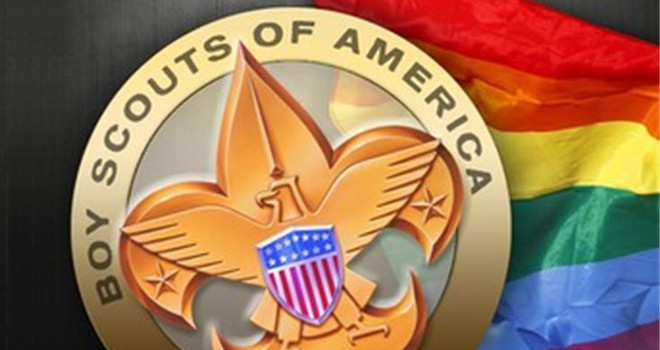
He’s right, of course. Click on the ‘Litigation’ link on the official BSA website, and bring up the “Duty to God” page. Part of the Scout Oath proclaims the scout will ‘do his duty to God [and country].’ Every level of advancement requires a promise or show of faith in God. Boy Scouts are instructed to respect the beliefs of others, but this respect should only be awarded to those that believe in the Christian/Judaeo God. Turns out, prejudice, hate, racism are systemic to the Boy Scouts of America, and a large part of what they promote.

Nowhere in the BSA literature we received and perused before or after our son joined the Boy Scouts did they say they were a faith-based organization that required their members to be believers to receive equal rights and privileges as those granted to religious members. Had they disclosed this with all transparency, as do churches and other religious organizations pushing their beliefs, I doubt my husband and I would have channeled our son to participate.

We impose no religion on our kids. We discuss it often— the concept of one god verses many; various cultures and their belief systems from ancient to modern man, using everything from the Tao to biblical references. Our kids get additional religious education through their friends, and faith-based celebrations with extended family. My husband and I hope to expose our children to many possibilities, and let them discover their own spirituality.

Parents who provide religious training for their kids early on, and, it would appear, register them in Boy Scouts, are looking to validate their beliefs by indoctrinating their kids with the religion in which they were raised. And most of these parents have never stopped to consider whether the rhetoric their parents sold them is truth. They are blind believers, and turn their children into the same.

“The Boy Scouts of America (BSA) takes a strong position, excluding atheists and agnostics,” according to Wikipedia. In 2014 the BSA finally voted to allow gay kids. They still ban atheists.

Perhaps the BSA is a front for the church, and works to convert unsuspecting non-believers working to advance in their organization. Hook the kids without religiosity when they’re young, in Cub Scouts. Get them to work hard for advancement, then deny them further advancement unless they convert to Christianity. Whatever BSAs agenda, and our son now sees they clearly have one, the meeting with his troop leader last Friday night soured him to continuing in scouting. It’s a shame, really, because the Boy Scouts have so many positives to offer. Weirdly enough, they tout much of the same morality I preach to my kids, like being courteous, and honest, loving and compassionate. The only difference between us is I don’t believe a god gave us this wisdom. I give credit to humanity, over eons, watching what works to build thriving societies.

There is no god that’ll save us from hate, prejudice, nationalism, and exclusionary religious sects like the BSA who lure kids in, like the Pied Piper, under the guise of community involvement, then change the rules mid-play. Regardless of our differences, religiously, culturally, politically, PEOPLE, me and you, must use our collective wisdom to unite as one race—the Human race—for our continued existence.

With Great Power Comes Great Responsibility

(An Atheists View of Religion)

Religion is one of the few remaining barriers to humanity’s advancement at this time. Perhaps it had a purpose once, when we were all closer to apes in mental development, but we’re not anymore. We are living the Reign of Man. We’re effectively Gods here now.

Relying on mysticism to define our world is dangerous at best. It blinds us from the reality at hand—that there is nothing to save us from ourselves but ourselves. We are all individually responsible for our world and everyone and everything on it. Where in the past the world was large, and to survive people banded together, today our world is so very small. And we have the power to destroy it.

Structured belief systems divide us instead of unite us. Religions preach commonality only with their followers. They promote the differences to set theirs apart from the myriad of others. We can no longer maintain divided clusters running around thinking their way is the only truth, or the only way. We are a global world now. Integrating. Blended. We must not only understand, but act on the fact that we are intricately connected with each other and everything else here.

Cultural assimilation isn’t a bad thing. Interracial marriage is an absolute necessity for our survival, and doesn’t have to rob us of our traditions. Ethnicity— a rich representation of our history—can and should be passed on, just without the divisive labels of the past. You can celebrate Christmas without calling yourself Christian. You don’t have to be Jewish to eat bagels and lox. Derisive ideologies must be eliminated. Not all Catholics are against abortion. Jews don’t have a corner on being neurotic, nor Muslims on being fanatics.

At this time in humanity’s development, it is imperative we become thinkers, innovators, not continue to be followers of a mythological narrative most adopted from their parents without much consideration or independent spiritual investigation. Indoctrinating our young with religion leaves them little chance to think outside the box we’ve guided them to join us in. While we all must acknowledge we stand on the shoulders of giants, and never lose site of history, assimilation is integral for our evolution. Without coming together as one race, and very soon at that, we will most likely divide and conquer each other. War with a bang, or disease with a whisper, if we don’t work together to face the issues of this planet, the human race will not survive the fallout of our factioning.

Promoting or proselytizing religion at this point in our history hinders our development, and just may hasten our imminent demise. Sending your kids to religious school, or raising them with a religious identity may seem innocuous, even righteous, but propagating ideological foundations that fundamentally promotes division must be discarded if we hope to continue humanity’s evolution forward.

Marketing and Religion

Do you believe in God?

Why?

Likely because your mother taught you to—marketing to you throughout your formative years the benefits of belief:

  • Community
  • Solace
  • Salvation

Your beliefs were marketed to you through holiday celebrations, and maybe Sunday school and prayer. Even if mom, and/or your dad, didn’t directly push their beliefs onto you, they likely sold your religion to you via example: crossing themselves when hopeful; saying (and believing) “thank god,” instead of giving the credit to the person or people who brought about whatever they were thankful for.

Religion is a PRODUCT. Always has been—a way for the few in power to control the masses. Christians, Jews, Muslims, all major religions have become successful, thriving businesses through MARKETING…

Read more:
https://lnkd.in/d8ZKxE77