The Fallacy of Palestinian Protests

My daughter, a college senior, told me yesterday that she joined the Palestinian protest on campus.

“I believe that genocide is wrong, Mom. So, I stood up for what I believe.”

I think she expected me to be proud of her, but her words made my skin crawl. My daughter knows nothing of the history of either country. She has no idea why there is a war between Israel and Palestine now, how the war even started, or why Israel is bombing the Gaza Strip. In fact, she has no idea where the Gaza Strip is, or why it is there, or who their govt is.

I raised my kids to stand up and speak out when they encounter racism, sexism, ignorance, hate. I did not teach them to blithely go along with the crowd. That’s how Nazis came about.

Do you know that Hamas, the government of Gaza, launched an unprovoked attack on Israel, killed over 1,200 people, and kidnapped 253 in October of last year?

No.

And did you know Hamas was raping 12–48 yr old girls and women they kidnapped, then posting it online to terrorize victim’s loved ones?

I haven’t heard that. All I heard was Israel was bombing civilians in Palestine and killing mostly women and children.

Do you know that the government the Palestinian people voted in are using their women and children as cover for their terrorist shit, and that is why they were getting killed in Israeli bombings?

No. But it doesn’t make it right that Israel is killing kids.

No. It doesn’t. I didn’t say Israel is right. There is no right here, baby. Both sides are wrong. I’m not pro-Israel. They know that Hamas is sacrificing Palestinian children, yet instead of targeted strikes against Hamas, they are wielding an iron fist. Badly. Ugly. For sure. 100%.

So, what’s wrong with me joining the protest then, when even you don’t believe Israel is right? she asked me, exasperated.

My beautiful daughter, siding with one side or the other is divisive in the extreme. It perpetuates the problems there, and creates more here, between us. Call out bad behavior, like Israel knowingly killing civilians regardless of their reasons. Or Palestinians voting in a fanatical religious government with an agenda to kill all Israelis. Neither is right. Call out bad behavior, not an entire nation. Do not get on the PC train because your friends are and you wanta fit in. Do the research before taking a stand. Blind faith means turning off your brain. And that is never OK.

So you think I shouldn’t have joined the protest?

Do you know professional agitators are targeting campuses like yours to get all you kids riled up? And that most of these protests wouldn’t even be happening if not for the pro-agitators who are paid big bucks to get online and throw a protest.

I thought they were all student here. Who would pay someone to do that?

I don’t know. But right now I’m betting on the Republican party. They want to destabilize our nation because the more chaotic the better Trump’s chances of winning the election.

Seriously? she asked, aghast, as she feels like I do about our misogynist x-pres.

I don’t know, honey. What I do know is ninety-nine point nine nine nine…etc. percent of these college protesters have no clue about what is going on over there, just like you don’t. They catch news bites online, and the bloodier the bites the more eyeballs they get. The news just loves a great car crash!

Standing up for ONE SIDE when you don’t know the history, the region, the people, the conflicts that have been there since the UN decided Israel’s borders, the wars, how they started, or why they started is, well, ignorant. So you were out there with a bunch of ignorant students who are creating more conflict, more hate, more antisemitism with their protest. And it won’t change a thing because the universities will not cut all ties with Israel. Ever. Israel is a collaborative partner in research and development of medicine to tech, the primary function of any university. With all this in mind, do YOU think you should have been out there protesting?

The energy was so electric with all those people, Mom. It sure felt like we were doing something meaningful.

Promoting ignorance and hate is never meaningful, baby. Don’t just go along with the crowd and create more conflict like these protests do. Making a real difference takes work, honey. Lots of work, over a long time. Think, research, a LOT, since so much of the internet is lies. Then form your own opinion, and act to be part of the solution.

A Valentine’s Day Romance

Fantasy Romance

#FantasyRomance #love #marriage #married #couples #marriagetheory #MFCC #match #tinder #onlinedating #bumble #NFL #lovestory #boyfriend #girlfriend #parenting #momlife

What Religion Are You?

When I say I’m an atheist, the very next question most people ask is: “Well, what were you raised? What were your parents?”

Human beings.

Somehow that answer isn’t good enough. They’re looking to place me in a spiritual box and lock me into a religion and all the stereotypes that go along with it.

All my life I’ve been told I’m a Jew — by my parents, by my relatives, by society at large, simply because my parents professed to be Jews. But if I don’t believe in god, or any supreme being, or even higher power; if entropy is what rules my universe, then am I still Jewish?

Jew’s believe in one god.

I believe in none.

Some would argue I am culturally Jewish, a product of my parentage. But it’s ludicrous I’m considered Jewish solely because my parents were (and technically just my mother need be, according to Jewish law). Let’s get one thing straight. Judaism is NOT a race. It is practiced globally, from members of our Supreme Court to jungle tribes in Africa that pray to one God with ancient Hebrew texts. The thread that holds them together is not racial, or even cultural, but spiritual — a belief system. There are no cultural similarities between the African tribes and our former or current Chief Justices. Take away the religious string and there’s really nothing left of their Judaism.

I adhere to no religion, don’t celebrate any religious holidays, and believe passing down to our children fantastical mythologies that promote intellectual laziness is dangerous at best. Growing up, my family celebrated the major Jewish holidays, though I never cared for the antiquated rituals and sexist roles we all played. Jewish parables were too often warped tales filled with praising their solipsistic god instead of people for their hard-earned achievements. I don’t like brisket, noodle koogle, or most deli foods. And as holidays go, the Fourth of July and Thanksgiving always meant the most to me culturally, and the food is far better.

If I’m culturally anything, it’s white, middle-class, American. Like most of us, I grew up with people of my socioeconomic status. I was raised in a relatively safe, suburban neighborhood — religiously, even racially diverse, but everyone made around the same amount of money. More fine grain, I’m culturally a native Californian. We have a whole other way of thinking out here than the rest of the world. Level of intelligence would be my third greatest cultural influence. I find I gravitate to thinkers — those who explore and question.

So how does this make me a Jew?

Liking bagels, or preferring salmon to ham, doesn’t define one culturally. Nor does espousing the virtues of education, or denouncing violence, or promoting empathy. These ideologies are widely held by most of our modern age. I’m not a Taoist because I believe in living a balanced life. And I’m not a Christian because I think Christ, or likely his myth, had a lot of charitable ideas.

What does it mean to say you are Jewish, or Christian, or Mormon, if you don’t embrace their belief system? If you were raised Christian and you didn’t believe in God, or Christ, would you still be considered a Christian? Hell, if you believed in God, but NOT Christ, could you still be a Christian?

What religion are you?

Most would respond with whatever religion we were raised. We practice the rituals our parents bestowed upon us. But the more important question is: What do you believe?

Think about it.

Have you let your parents define your spirituality? Beyond what you’ve been raised, have you considered what religious ideologies you actually believe in, if any? ‘Be kind. Work hard. Love your family and neighbors.’ These cultural beliefs began 200,000 years ago when we were still living in caves, and aren’t exclusive to any particular religion. They may have been adopted as Christian, or Jewish morality, but the truth is ‘Be kind’ stemmed from our need to be social. Humans are social creatures, and greedy, ungrateful, thoughtless behavior does not win friends, or attract lovers.

Omitting how you were raised, what do YOU actually believe in?

If you don’t believe the bible stories, Old or New Testament, are real — a recounting of historic events — then it’s likely you understand these books were written by literate MEN — the highest echelon of society at the time — to control the masses of illiterate layman with parables that instilled fear. You also likely know that these powerful men imposed rules and roles to maintain the social structure they created, and assigned the administration of this order to an almighty [jealous and vengeful (Nahum 1:2–8)] God whose authority could not (as an ethereal being), and must not be questioned. If you do not believe in this God, or that his adventures in these bibles are real, then you are likely an agnostic or an atheist.

ag·nos·tic (a la Google); noun

  1. a person who believes that nothing is known or can be known of the existence or nature of God or of anything beyond material phenomena; a person who claims neither faith nor disbelief in God.

a·the·ist (a la Google); noun

  1. a person who disbelieves or lacks belief in the existence of God or gods.

You don’t have to subscribe to a religion to be spiritual. You can feel connected to this earth and all that’s here without being a Buddhist. You can believe in charity without being a Christian. You can encourage education without being Jewish. You don’t have to pass on horrific tales to frighten children into adhering to rules handed down from men on high thousands of years ago. You can practice and teach values — choose to live a moral life: be kind, generous, honest, empathetic, loving, compassionate, without religion. Why would you choose to do so without a vengeful God threatening Hell if you’re ‘bad?’ You are advanced enough to understand each of us must continually contribute to humanity, and this planet we inhabit, for our race to survive, and thrive.

Married? Wish He Was…Better?

A modern twist on a Christmas Carol, A MARRIAGE FABLE is a novella, another tall tale of the powerful genie, Finnegus Boggs, and his lessons on love that inspires Andrew Wyman, a typical modern-day husband nearing his 25th wedding anniversary, to become a better man.

New #Review:

Journey Toward Enlightenment

If you’re a fan of magical realism like I am, you will enjoy reading this mystical story. A quick read with plenty of drama kept me engaged. It’s a story filled with equal parts regret and redemption. It always feels good when a narcissist jerk gets a taste of his own medicine, and feels even better when this self-absorbed deplorable gets a chance to be a better man. Will he accept this new choice? I’ll never tell. Ask the genie. Do yourself a favor and read this well-written story and find out if there is hope for “this day and every day forward.”

–Ingrid Hart

“A Marriage Fable does for Valentine’s Day what A Christmas Carol did for Christmas Day. A Must Read romantic fantasy!”
– BJ Fera—Goodreads

The Folly of Perception

I’ve been on the outside looking in since I was a little kid. Failing to assimilate, I worked at cultivating unique and different. After achieving this coveted perception, I no longer wish to possess it.

Unique often translates into strange. And as the mother of a 10 and an 8 year old, I do not want to be perceived as strange or different. I want to blend like homogenized milk and give my kids the platform to fit in, be a part of. What I don’t want is for either of my children to be “that kid with the weird mom,” though I fear I may already be there.

My kids still hold my hand, and not just in parking lots or crossing the street. They both still love to snuggle. I am their first choice to talk to, confide in, way beyond their dad, which makes me feel valued, respected and deeply humbled all at the same time. I realize this level of intimacy probably won’t [and perhaps shouldn’t] last as they grow and find their own path, but I don’t want my kids to ever be ashamed of me. I want to be proud of them. I want them to be proud of me.

I try to fit in. I go to the soccer games and the ballet classes and I wait around with the other parents and try to blend. But I don’t. And I get that they notice I don’t. I look different. I’m one of the oldest among them, by a good margin. My kids came late, after six pregnancy losses. I dress for comfort so most everything I have is rather loose. I don’t wear make-up. My hair is long and fine and all over the place. It refuses to stay pulled back in the scrunchy. I never quite look ‘put together.’

But looks aren’t the only thing that separates me.

Through the years I’ve come to realize that I don’t think like most people. The glass wall between me and most of humanity is not just me being paranoid. There is a casualness the parents seem to have with one another as they discuss their kids, or some celebrity or popular new show. I stand there and nod my head when it seems appropriate, but I don’t watch much TV, and really don’t care that Tyler is playing basketball now which conflicts with his sister’s dance schedule.

I’ve tried engaging more personally, ask about jobs, interests outside of family, broached news and current events, but taking a position and endeavoring to discuss it has mostly been met with polite blank stares. Everyone is careful with their words—politically correct and upbeat. I’m neither, and over the years I’ve learned to shut up to avoid discord. The conversations usually segue back to their kids and related activities around family, school, church, which as atheists we don’t attend. I invariably check out of the exchange and focus on the event at hand and cheering on my children.

The game or recital ends but everyone stays and continues talking. I’m on the outside again, feels like I’m lurking while I linger to give my kids time to play. I stand there watching them all integrate, proud of my children for choosing to, and of myself for giving them the opportunity when I’d rather just leave. I watch the parents gaily chat and wish I fit in like that. The folly of unique and different is it’s really quite lonely out here.

Learning How to Learn

My daughter is studying for her SAT—her college admissions test. I never took the SAT because I got a D in algebra, twice. To advance to geometry, I took the same class again, from the same teacher that didn’t explain anything the first time. I didn’t get the concepts behind the equations, or Mr Mulvaney’s assertion that “it’s just the way it is.” Even algebra has a reason for why it works the way it does.

I didn’t take the SAT because I was afraid I’d fail it with no math background. In fact, every time I even thought of math, I felt anxious. I was a failure, stupid that I didn’t get quadratic equations, as most of my classmates seemed to. I couldn’t apply to a California university, or any four year college worth attending without taking the SAT. Instead, I attended Jr College for two years before transferring to UCLA. I studiously avoided math classes, as they were not required for a degree in Design.

Fast forward 5 years, and I wanted to apply to graduate school to study Education. Not only did I have to take the GRE, which had advanced math, but before registering for the test, I had to have teaching experience, in a real classroom, which required I pass the CBEST, which also had algebra and geometry. Panic. How was I supposed to pass any standardized test when I never passed algebra, and never learned the higher levels of math that was sure to be on these tests?

Enter my friend, Bert. “Don’t worry about it. I’ll teach you algebra, and geometry, and any other basic math you need. You’ll pass the tests.”

He had to be kidding. “I failed algebra twice! I’ll never be able to learn all the math I need to pass these tests.”

“Don’t be absurd. You are one of the smartest people I know. Of course you can learn algebra.”

The familiar terror was choking. Did he not hear me? “I FAILED IT TWICE, and never advanced to geometry. I suck at math!”

“Not likely,” he said with confidence. “More likely, you got turned off of it by some careless teacher, and the gates in your brain shut down. All you need to do is get out of your own way. Open your brain back up, so you can learn what you need to know.”

“I’m an artist, a qualitative person, not quantitative. I’m just not into math.” I was trying not to kill his delusion that I was smart.

“But you need to know it to pass these tests to get into a graduate program. So suck it up, let go of your fear, and get it done.” Bert was already in graduate school, studying for his doctorate in Psychology. “You have some worthy goals. Make them happen. I’ll help you.”

I didn’t want his help. I didn’t want to learn math, or, more likely not learn math, prove to him, and myself, how stupid I really was. He was being so kind it was impossible to keep defending myself. But I still did not believe him. “Maybe I’m just not smart enough for advanced math.”

“Hmm,” he said, staring at me intently. “Remember the show Get Smart?”

Ok…“Yeah.”

“Remember the opening? Max enters that hallway with the thick metal doors that slide open one by one as he approaches them. And each slams shut behind him as he walks down the hall?”

“Yeah.”

“Well, that’s what your brain is doing when you think of math. The doors, or gates to learning are shutting down in your head. You are so freaked out because some lazy teacher made you feel stupid, and you bought it, hook, line and sinker. Stop it! You’ll make a great teacher, or professor, or whatever you want to do with education. Learn math, and move forward.”

“You make it sound so simple.”

“But it is. You just have to open the gates in your brain that make it possible to learn, well, anything.” He smiled. I did too, couldn’t help it. With his words, he’d just introduced hope.

We were having this dialog at Jerry’s Deli, in L.A. Bert took the pen the waiter left to sign for our bill, and on an unused napkin wrote out a quadratic equation. I frowned, felt anxious. Here we go. Now he’ll see how stupid I really am.

“I can see by your face, you’re already freaking out.” He laughed. I scoffed. “This is good!” He was clearly excited. I felt pissed off, embarrassed. “Let’s explore that feeling. Talk to me about it, what does it feel like?”

“I feel scared, and stupid.”

“That’s your first two gates. Big, thick, metal doors shutting you out of learning. So, let’s start with feeling stupid, because that’s likely why you’re feeling scared, that I’ll see you, or you’ll see yourself, as stupid.”

“OK…”

“Do you think you’re stupid?”

“With math!”

“Our brains don’t work that way. You can’t just be stupid in one area. Either you have a functioning brain, or you don’t. Most of us have functioning brains. Are you telling me you don’t believe you do?”

I thought about that. Of course I have a functioning brain. I graduated college. I got good grades, even in high school, except for math. “I have an OK brain, I guess.”

He laughed. “So, there goes your first gate. Poof! It’s gone. It was bullshit anyway. Good riddance.”

I smiled, but fear and doubt still lingered.

“Here’s the deal,” he continued. “Every time you think of math, or we work on equations, notice how you feel. Pay attention to how your brain is operating. Examine the messaging it’s feeding you, and the bullshit it’s telling you. Qualitatively break it down to check if it’s right. Every time your brain says, ‘I can’t do this. I’m not smart enough,’ call BULLSHIT. Counter the voices of doubt. YES, I AM SMART ENOUGH! Then go back to the problem and work at figuring it out.” He took a sip of his tea. “Work at it long enough, and hard enough, and you will.”

‘The gates in my brain’… I could literally feel them all of a sudden. Bert was right. Every time I even thought of math the gates in my brain shut. And not only with math. Every single time I found it hard to learn something, anything, I now could see it was me, getting in my own way, allowing my brain to convince me of bullshit. All I had to do was examine my own feelings more carefully, embrace the ones that supported my success, and reject those that didn’t.

I studied algebra and geometry in a three week refresher course offered through the CBEST testing program. I passed the test, and subsequently my GRE, and though I never followed through with my graduate degree in Education, as having kids and writing became my priority, I teach at some of the top universities on the planet.

The best bit, I now know how to prevent the gates in my brain from shutting. As long as I identify my fear, face it, dispel it with reason, I can keep my brain receptive to learning. And with enough hard work, I can learn, well, just about anything.

Between What is Said and What is Heard

On our drive from school the other day my tweenage son told me a classmate had offered him a joint. I’d been preparing for this moment, staging it in my head for years, ready with my bag full of allegorical stories of my reckless youth before easing into the “Why drugs are bad for you” speech. But as I drove home searching for how to begin, I remembered back when I was a teen, walking in on my sister’s confession, and my twisted interpretation of her troubling story…

I was fourteen, finishing 8th grade. Another sunny day in L.A., and I came into my house sweating from my twenty minute walk home from middle school. I heard my sister talking in our parent’s bedroom, which was usually off limits to anyone but them. When I got to their doorway I saw my sister and mom sitting next to each other on the end of our parent’s bed. They stared at me standing in the threshold, looking more like siblings the way their short, thick dark hair framed their tear-streaked faces.

I migrated into the room looking back and forth between them and asked what was going on. They shared a non-verbal exchange as I sat across from them on the little cushioned chair in front of the mirrored vanity. After some time trying to gain her composure, mom finally launched into the reveal. She wiped away her tears, then told me that my sister had been ill. This was not hard for me to fathom, since in the last year she’d dropped a lot of weight, and more recently, her skin was turning orange. We were not close siblings. She was two years older and had worn her weight loss like a badge of honor, but with my mom’s assertion I felt the ground falling away thinking of cancer or some other horrible life-threatening illness. My mother continued to explain that my sister had been starving herself for the last few years to lose weight, and had started vomiting most of what she did eat this past year to stay thin. She became so overwhelmed with grief in the telling that fresh tears slid down her cheeks. She covered her mouth and sobbed.

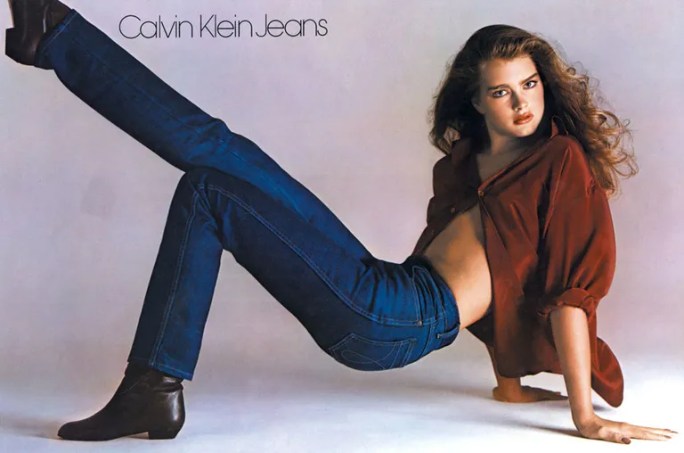
My sister took over, delivering her words vacillating between shame and pride. She sat perched on the edge of the bed and confessed to years of fasting and purging because skinny was in, and she didn’t want to be left out. She touched on her orange skin from eating lettuce and carrots exclusively for days. She talked about losing her period, her reason for confessing to our mother, afraid she’d become sterile. Then she changed tracks, and clearly delighted, she spoke of shopping with friends, and finally fitting into the skin-tight Calvin Klein jeans that the actress Brook Shields famously posed in. She’d become part of the in-crowd and reveled in being desired by the popular boys in school. Like most of her high-school girlfriends, she’d finally achieved what I thought impossible for our well-endowed family lineage. She was unarguably thin.

My mother had regained her composure, and sat next to my sister silently ringing her hands. I sat on the little cushioned stool staring at my skinny sister, consumed with jealousy. I wanted to be her.

I, too, wanted to be rail thin, heroin chic, a cover-girl stunner like my big sister. To me, she was beautiful— sleek, tight, hip, slick and trendy. She was what I too aspired to be, what every magazine, TV show and movie showed attractive, desired women should be. Thin.

And she’d just told me how to get there.

What I heard her say that afternoon was starving and vomiting worked to lose weight. I failed to acknowledge her detailed account of the toll the eating disorder took on her body and mind. I stopped listening right after she told me how she’d gotten skinny. Everything that followed was white noise.

From that day forward, and for the next five years I threw up frequently after eating to purge my body of the calories. I starved myself for days, sometimes going for weeks eating just vegetables. I tried to ignore that I was tired all the time, and chronically cranky, and falling into a black kind of depression. The desire to be thin superseded all reason. If my sister could do it, I could, and would, and did, regardless of the health risks.

Several years in therapy with a nutritionist gave my sister the fortitude to eat healthy, combat social pressures and become more accepting of her body. I learned to control my weight with exercise. Racquetball and running eventually replaced retching, but every time I over-indulge I consider throwing up to rid my body of the unwanted calories. To this day my sister’s words still echo in my head and taunt me— not all of what she said, only what I heard.

I pulled my Prius into the garage this afternoon and I looked at my beautiful son in the rear view mirror awaiting my lecture. My stomach hurt from the pasta salad I’d eaten for lunch earlier. My heart hurt— lost for words of wisdom for my kid. I wanted to purge my body of the heaviness, then shook my head in disgust at the notion, hoping my son didn’t catch it. Thirty years later, I’m still fighting the voices inside my head that rationalized my sister’s eating disorder as a workable solution to weight loss.

I led my son into the house for a snack and a chat. And I lied. I made up a tale of ‘a friend’s’ reckless behavior that led to disaster. I told story after story of kids I went to high school with who were users and grew up to be losers (though I knew none). I assured him popularity did not come with using. I left no space for him to surmise drugs were simple fun, or required to be ‘in.’ I chose my words carefully, considered them from many angles for possible distortion before speaking, even asked him to summarize what I’d said often to make sure we were on the same page. And though he parroted my sentiments in detail, in recalling my experience with my sister, I am left with lingering concern he didn’t really hear me.

Sometimes, between what is said and what is heard is the Grand f***ing Canyon.

Abortion and Choice

I was 16 weeks pregnant, with my first baby, when the results of an amnio told me that the wanted child I was carrying was not healthy. I have always been pro-choice, and never considered it a moral dilemma to terminate a fetus with severe Down’s Syndrome, or other life threatening, or debilitating abnormalities. Although I was aware that my advanced age of 39 increased my risk of potential problems, I was totally unprepared for the results from this technology, and the choice I would have to make.

We received the news on a gray Thursday afternoon in late December that the baby girl inside of me had an extra X chromosome, also known as Trisomy 47XXX. While waiting for clarification from a genetic counselor on the following Monday, I spent the next three days searching for information. I sat in the old, stone library in Concord, Massachusetts, crying uncontrollably with each line I read from a Psychology Today article on XXX. “Severe learning disabilities.” “Severe emotional disabilities.” “Slow motor development.” “Shy.” “Withdrawn.” I rubbed my swollen belly, trying to feel my daughter inside of me, fear welling up and gathering momentum. My stoic husband sat next to me, silently reading along. On the way home we talked, we cried, we argued about what to do next. We decided to wait to make any decisions until we could get more information, except there was little out there, and everyone we spoke with had some kind of agenda.

The genetic counselor insisted that the information we had gathered over the weekend was outdated and biased. A few minutes later she called in a staff OB/GYN who showed us a picture of a beautiful 8-month old XXX baby, swinging in her electric swing on a whitewashed, sun-drenched porch, smiling happily for the camera. The doctor then asked us if we would be willing to participate in her study if we decided to “keep our daughter.” During the following week, we spoke with doctors from around the world with any knowledge of XXX, who gave us a positive or negative spin depending on their personal views on abortion. We spoke with a social worker that dealt with the parents of handicapped children, who was subtly but clearly for termination.

I solicited advice from my parents. My father (who never changed a diaper in his life) told me to keep her. My mother said not to. We spoke with parents of XXX children. All of the children had suffered learning disabilities, delayed motor skills, were withdrawn, and had required special education. They told us how exhausting it was, how expensive raising a handicapped child. They spoke about mortgaging their home, and going into debt to afford the special care they needed for their XXX child. They spoke of the constant heartache watching their child suffer with depression, anger, loneliness, growing up both physically and academically challenged. But all the parents claimed they loved their daughters.

A decision had to be made quickly, before I felt her moving inside me. I knew if I felt her I could never give her up. At just 4 months, an insentient collection of cells inside me, she was still an abstraction, even though on ultrasound I had seen her entire body, the emerging vertebrae of her backbone, the two hemispheres of her brain, the protrusions of tiny feet and hands. “The ghost in the machine,” my husband had called her. I held my belly and begged my daughter to tell me what she wanted me to do, knowing the decision would be mine, feeling the weight of that decision ripping apart the fabric of my tightly woven self-image.

What kind of person was I that I would kill my daughter because she wasn’t perfect? Faced with the probability of a slow child, spending the rest of my life watching her struggle to fit in, feel accepted beyond our family, focusing every day on the care of a handicapped child, seemed overwhelming. The cost of raising kids without illness would require both my husband and I to work till we died. And while I’d always pictured having two children, gifting them a sibling, a confident for each other, we’d have to forego having another child to afford the continual care required for our XXX daughter.

It occurred to me that most of us go through life thinking we are generally good, honest, caring people because this view is rarely challenged, as most of our actions aren’t based on critical, pivotal, character-defining decisions. From the moment I got the amnio results, I knew my life would never be the same again. Technology had given me insight, and now forced me to make a choice.

This was undoubtedly the hardest decision my husband and I would ever have to make, but it was ours to decide, granted to us alone in a state where abortion is still legal. Only we, the parents of the pregnancy, could decide what we felt capable of providing our child. If we lived in Texas, the state could force us to give birth to an ill baby, spend everything we made on drugs, specialize schools and care, and damn us to the unbearable torture of watching her struggle daily, likely for the rest of our lives.

A week later we arrived at a Planned Parenthood clinic in Waltham, and were assaulted by protesters. They held signs that read, “Save Unborns,” and “Choose Life.” They crowded around my husband and I shouting, “Baby Killers!” and “Murderers!,” preventing us from getting into the building until a cop came out and pushed them back. They were amped on self-righteous indignation, full of religious fervor. They’d go home to their Christian conservative families feeling proud of themselves for making our passage into the clinic even more a nightmare than it already was. Most were young, more men than women, in their teens and early 20s, and likely had no children at all. They had no conception of what it took to raise healthy kids, yet alone devote their lives caring for a physically and emotionally afflicted child.

Doubting our own abilities to provide for a sick child pushed us into the decision that to this day, 20 yrs later, I still find shame in. But I honestly don’t know how the other decision would have played out. One of the mothers of an emotionally and physically disabled XXX 8 year old told me that if she had known that her daughter had the anomaly before she gave birth, she doubts she would have chosen to keep her. I guess when we make a decision with no good choices, the decision we make will never be okay. While I am grateful that the choice was ours to make, the trick is, finding a way to live with that choice.

A year later, and two on that, I was graced with two healthy children, now grown and on their own. But I think of Sierra often, who she would have been, how she would have been, and the lives we would have led with her. And I still ache for her. Through all the heartache that comes with raising a handicapped child, I know I would have loved her, passionately, wholly, felt that awe-inspiring humility, that magnificent intensity of love for her that I get to feel for my kids every day. And to this day, I still question my choice not to have her.

The Truth About Mark Zuckerberg

IMAGINE working your ass off all through high school, studying instead of partying, volunteering with school and community groups so you can into a good college. You send out your applications, to Stanford, Harvard, Princeton, as you have the 4.8 GPA, and all the right clubs on your resume. Your mom kisses each envelope before mailing, “for luck,” then hugs you, with her silent prayer that you’ll be accepted everywhere, that the world will see her beautiful daughter the way she does.

Pins and needles until the letters start coming in, or maybe they won’t, and no college will want you, keeps playing in your head, until February rolls around and letters DO come. Cal Berkeley wants you! UC Davis wants you! Stanford wait-listed you. And Harvard ACCEPTED YOU!! You’re dancing in the kitchen with your mom, dad, and little brother, laughing, hugging, celebrating your achievement of hard work and tenacity. For the moment, you let yourself bask in the glow of your family’s pride.

August comes round, and you are settling into your dorm room at Harvard. Your roommate is nice enough, though she’s hardly there. Unlike you, she’s very social. She got into Harvard on her daddy’s dime. He went there. She had a 3.6 GPA, but got a free pass into the school, as did ex-president George Bush Jr (with a 2.35 GPA). If nothing else, Harvard is incestuous. Many of Harvard students are related to past students, with money.

You love your classes. Your professors. A few months into your Harvard experience you are doing well academically, even if you haven’t made any real friends. You assure your mom you’re fine, though you don’t tell her you’re feeling more than a bit lonely. The popular girls, like your roommate, came in with money, and come from money. They dress trendy, buy expensive, look sharp, act confident. Make it in Harvard, or not, they have no worries after school. The rich rarely have to worry like the rest of us.

You come back to your empty dorm room one afternoon, turn on your computer, and are about to get started on the paper you have to write for Expository, but the image on the screen stops you dead. Your face stares back at you, next to some other young woman. Under her picture it says, “HOT!” Under YOUR PICTURE voters say you are not.

This is the beginning of Facemash, which eventually became Facebook. This is MARK ZUCKERBERG’S idea of fun—making women feel like shit for his entertainment. IMAGINE what that girl must have felt when she saw NOT under her Harvard profile picture. IMAGINE if it was YOUR CHILD. OR YOU.

And here’s what ZUCKERBERG said the first night he released Facemash: “I almost want to put some of these faces next to pictures of some farm animals and have people vote on which is more attractive.

This is MARK ZUCKERBERG then, and THIS IS MARK ZUCKERBERG NOW! He is still the same ugly, petty, small man/child, pulling the same ugly crap, indifferent to anyone but himself, ignoring the pain he is causing across the globe now. Zuckerberg was already a second year student at Harvard. He was not a child. If ZUCKERBERG was a decent man, a man of goodness, not cruelty, he never would have COPIED HOT OR NOT, an app that was already out there. Zucky just ripped it off! To debase Harvard WOMEN. Shame on you ZUCKY, and your MAMA and PAPA, for not teaching you how to treat others with respect and kindness!

ZUCKERBERG is still indifferent to anyone but his own needs, even TODAY. His Facebook recommendation engine helped get TRUMPY ELECTED! And he’ll likely do it again. How? His recommendation engine only shows you what ZUCKY WANTS YOU TO SEE. You do NOT see all your connection’s posts. ZUCKY WON’T LET YOU. He shows you only posts that REFLECT YOU. It helps his advertisers sell you more, to show you only what you’ve shown interest in, or people like you have clicked on. We are all merely seeing posts that reflect our own opinions now.

ZUCKY only sees his own reflection too. It’s what allowed him to debase women at Harvard. It is allowing him to keep his screwed up recommendation engine on and running, as you are more likely to BUY from people reflecting your position. Russians, Republicans spreading lies, ZUCKY doesn’t care. He cares about getting and keeping advertisers. His “fake news” AI department is a joke. I know someone working there, and they tell me he really isn’t trying to stop it at all. It doesn’t serve him to do so. He wants advertisers, and you don’t get them, and keep them, limiting ad sales.

He got lucky debasing women from an app he RIPPED OFF. Now he’s god, to so many. Sadly, they are so blinded by his “success” and they can not see the ugly little man/child he was @Harvard, and still is. Humans get our moral fiber between 0 – 8, maybe up to 10 years old. He clearly didn’t get much moral guidance from his parents. And amoral people rarely change. They need a brick to the head, to ‘hit bottom,’ and ZUCKY ain’t fallin any time soon. Now, he’s guiding the world to disaster, to make money from advertisers, to keep FACEBOOK and INSTAGRAM going. (And this is what Millennials, and MBAs deem “success.”)

Now he’s on to #THREADS, to collect MORE DATA on you to SCREW YOU, this country, the world. Don’t let him! Don’t get on THREADS!

My hope, MARK ZUCKERBERG, is that you learn to THINK beyond yourself, and to ACT with kindness and empathy, instead of what you were obviously raised to be— mean, thoughtless, sexist, totally and completely self-interested. Your power was wielded by the wealth of your parentage, mere chance you were born into money—dumb luck, literally. Imagine how you and your wife, #PriscillaChan, would feel if YOUR DAUGHTERS, #Maxima and #August, were voted NOT HOT, deemed UGLY their first year at Harvard, as no doubt they’ll go there with the money you have made on the trillions of wasted hours all of us have spent on FACEBOOK and INSTAGRAM , and coming soon THREADS.

#DeleteFacebook

#DeleteInstagram

How to Raise a Genius

Went to the Jelly Belly Factory on a field trip with my daughter’s 2nd grade class. The young man assigned to escort us on the tour misquoted a brilliant saying by one of my favorite icons.

The guide delivered his canned speech, spoke of how long and complex the process to make even one single jelly bean, but that nothing great ever came easily, “as the inventor, Thomas Edison said: ‘Genius is 10% inspiration and 90% perspiration.’”

But that is NOT what Tom said. He said, “Genius is 1% inspiration and 99% perspiration.”

So what is my issue with the mere 9% our tour guide misquoted?

Mr. Thomas Alva Edison was trying to tell us that to get good (‘genius’) at ANYTHING takes HARD WORK (‘perspiration’), and a lot of it. He should know. It took him, and an educated team of men many years and over 5,000 exploded glass bulbs to invent the light bulb.

Still, you say, it’s only 9%. The 8 year old’s the tour guide was talking to didn’t even know what “percent” meant. And while this may be true, there were 15 adults with the pack of 40 kids the guide was leading. And the parents understood. Most had probably never heard the quote before. It is somewhat obscure, which is a shame because it is an astounding insight. What the tour guide misquoted did not communicate the gravity of Mr. Edison’s meaning.

In the beginning of the 4th grade our son failed several math tests in a row, and upon inquire we found he didn’t understand the material. When asked why he hadn’t asked for help from either his teacher or us, he confessed he felt afraid he’d look dumb. Having always done fairly well in math, when he got lost, he felt too stupid to ask for help. He was supposed to be smart, but maybe he wasn’t, he cried, clearly shamed.

I hugged him, held him, and reminded him of old Tom’s saying for the hundredth time. Then my husband and I got to work, played tag team, alternating afternoons, evenings and weekends to teach our son what he needed to know. Within three months of daily math lessons he not only grasped the material presented but excelled to the top of Math Swap in his grade level and remained there through elementary school.

Our son now loves math. It’s his favorite subject. He works hard at it and that hard work just placed him in the most advanced math class at his new middle-school. Failing those math tests in the 4th grade turned into a great education for all of us. We got to see directly how hard work pays off. And though our son may not always tow the line of excellence, he now knows that ‘smart’ is not given, but earned.

The New York Times Magazine had an article a while back on ‘genius.’ It sited Anders Ericsson’s research on The Making of an Expert, which concluded ‘genius’ wasn’t born, as previously thought, but made.

“Outstanding performance is the product of years of deliberate practice, not any innate talent or skill,” according to K. Anders Ericsson, Michael J. Prietula, and Edward T. Cokely.

Most everyone starts out with the 1% inspiration. It comes with being human, and our ability to think abstractly.

Few of us have the tenacity, or the determination to endure failure after failure and continue through that last 5-10% it takes to achieve excellence. Most of us settle on gawking at greatness instead of pursuing it.

So, the question is not, ‘What is genius,’ or even excellence, but what motivates persistence?

Achieving good grades, or becoming a killer guitar player, or great at soccer, or even parenting, takes “deliberate practice.” We need to impart Tom’s wisdom to our children, teach them by example, with unwavering diligence, that reaching their potential can not be achieved blowing most of the day binge watching Netflix, or YouTube, or gaming. To actualize ‘greatness’ means devoting the 99% perspiration— the time, energy and effort necessary to create anything of lasting value. Whether it be a school report, a science project or a math test, genius is not only doable for most every child, but for all of us with hard work and persistence.