Missing My Period

My period is six days late. I check throughout the day, hoping, but my old friend isn’t coming. There was a time when I would have been ecstatic it was late, gotten a pregnancy test and peed on the stick anticipating the plus sign. And there were times I would have been horrified I may be pregnant, too afraid to take the test while anxiously waiting for my period to start. But today there is a quiet sorrow, like mourning a loss. It’s possible I’ll never see my period again. Menopause has taken my friend and is robbing me of my youth.

Never in my life have I had the affection for my period I do now that it’s going away. Like most girls, I couldn’t wait for it to start. Menstruating turned a girl into woman, our mothers assured us. What my mother didn’t fill me in on were the cramps, the bloating, the wild mood swings, and the total hassle of bleeding for five days every single month. Once I became sexually active there was the constant concern of getting pregnant, regardless of using birth control. Everyone knows stories of women who claimed to be on the pill, or said they were using a condom but got pregnant anyway.

My period was more than a minor inconvenience; it was a major disruption to my life. I was one of the few women unable to take the Pill. Regardless of the dosage, it made me ill. I felt the full force of menstruation monthly. The gross mess and disgusting smell of the physical bleeding, on top of the intense cramping from passing clumps of bloody tissue were nothing compared to the mental ride every three weeks or so. Like clockwork after ovulation I’d get ravenously hungry, overwhelmingly tired, anxious, bitchy, with sudden bursts of manic energy. The closer I got to my period the more intense my feelings, all feelings would get. Right before I began bleeding, I often experienced bouts of deep sadness, wept with little provocation. But literally the moment my period began my darkness would lift as if it never existed.

Thirty seven years of this and I thought I’d be thrilled when menopause came along. It surprised me to feel so differently while waiting for my period to come and thinking it may not. Despite that I was one of those unlucky women with severe PMS, or PMDD, or whatever they’re calling it these days, my period gave me my kids. Having a period gave me the capacity to produce life. And though my two extraordinary children are all I’ll ever want, when my period goes I’ll lose the ability to have any ever again. What kind of woman will I be without the exclusive, inherently female capability to reproduce?

Menopause steals more than our ability to have children. According to Wikipedia, as women age our ovaries gradually produce lower levels of the natural sex hormones estrogen, progesterone, and testosterone until they diminish almost entirely. These are the hormones of youth. They keep our immune system and other vital body functions healthy so we are physiologically able to carry and bear a child, fulfill our biological imperative.

Estrogen accelerates metabolism (to burn fat faster). It increases bone density, and vaginal lubrication for better sex. Estrogen promotes healthy cholesterol levels. It helps regulate fluid balance which controls water retention. It aids lung function and reduces the risk of several kinds of cancers.

Progesterone acts as an anti-inflammatory and regulates the immune response. It normalizes blood clotting and cell oxygen levels, and use of fat stores for energy. It decreases risk of gingivitis and tooth decay. It appears to affect synaptic functioning, improve memory and cognitive ability. And progesterone also seems to reduce the risk of several deadly cancers.

And everyone knows testosterone is the premiere sex hormone — that sweet, dense scent that leeches through the pours right before orgasm. It also controls libido and clitoral engorgement. It increases muscle strength and mass, mental and physical energy. Maintaining testosterone levels has been shown to reduce the risk of cardiovascular disease, decrease fat and increase lean body mass.

The payoff to enduring my menstrual cycle was clearly much more than producing kids. In losing my period, I am not only grieving the loss of childbearing but the hormones that provided me privileges and protections. The end of menstruation feels harder, darker than the onset. Girls speculate in wonder waiting for their periods to begin. In menopause, women must undergo drenching sweats, memory loss, weight gain, and phantom pain. Get through all that and the light at the end of this ordeal turns out to be a death bullet. Perimenopause begins in our early 50’s and full menopause last upwards of 10 years or more. Surviving menopause means then confronting the perils of old age, and coming to terms with my eminently closer demise.

Dye my hair, work out daily, dress casual but chic, and still, losing my period means unequivocally, undeniably I am no longer young. I miss my old friend right now and wonder if like my youth it is gone forever.

APPLE IS EVIL

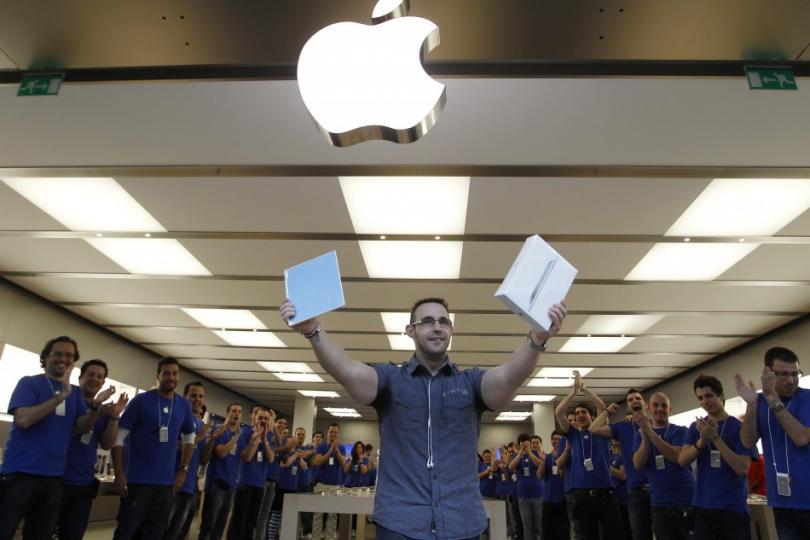
“Apple is evil,” I told the man tapping his iPad to retrieve my son’s information at middle school registration.

His bushy eyebrows furrowed. “No they’re not. They’re great! They practically gave the district iPads for every grade, student, and even all the admins. And next year we’ll be going digital with most textbooks,” he said enthusiastically.

“You think Apple is giving away iPads because they support education?” I inquire while filling out my check to the public school to which we already pay ever increasing taxes.

Again his brow furrowed and a frown was perceptible between his heavy peppered beard and thick mustache. “I know the kids come home and ask their parents to buy Apple. But they should. It’s a great product!”

And a lot more expensive than most comparable phones, PC’s, and tablets out there. If Apple is supporting education, why are they charging parents, and everyone else they’re not giving their computers to, 30-50% more than any other computer manufactureur? I’m now in the position of having to buy both my kids Macbooks or iPads so they can do their homework. And the topper— Apple will saddle us with yet another monthly connection bill.

The ignorant admin sat behind a long folding table, between two women, one of three men in the auditorium of 50 volunteer parents. His arms were folded across his protruding belly, his expression—an indulgent grin, the kind where it’s obvious he’d tuned me out. He’s a diehard Apple fan, one of Steve Job’s faithful followers, a blind believer. And faith is BLIND. He’s a devote of Apple, thinks the computer makes him more creative, because that is Apple’s brilliant marketing—making the ignorant believe they’ll be more creative on a Mac than any other computer.

I used to be a diehard Apple fan. My father gave me my first computer, a desktop PC (whose brand I don’t recall) back in the late 70’s. Monitor and PC were one unit, matte gray screen supported only a text interface with bright green type, in one size only. It was hard to use, kept losing my files, freezing up, shutting down. Then along came the Mac. I started with the llc and fell in love with the UI’s ease of use; the stability of the OS; the selection of exclusive programs for graphic and marketing pros. In fact, Mac’s marriage with Adobe virtually invented today’s desktop publishing with software such as PageMaker, Illustrator and Photoshop, originally only for Macs until the 1990s.

I was a Mac fanatic all the way through the G4s, until I could no longer afford to get ripped off. The advent of the Adobe suite working seamlessly on Macs made it easy for businesses to take their marketing efforts in-house. By the mid 90s, freelance gigs were harder to come by, and clients expected consultants to have the latest technology (like their in-house departments boasted). Maintaining my Mac systems—the high priced software combined with the continual investment in extended memory needed to run, it was costing me practically as much as I was making. Even after Adobe opened their platform, and offered their software to PC users at a third of the price for Macs, I was loyal to Apple.

Moved from graphics to mostly creative direction and content writing at the turn of the millennium. Needed a laptop for quick communication with clients and couldn’t afford what I needed to even run Photoshop on a Macbook. Got a Toshiba, with more memory, faster clock speed, great graphics card…etc. Photoshop was $355 less than for the Mac. By the early 2000s I’d replaced most all the software I had on my Mac with their PC versions that worked seamlessly on most any computer we had, and I’ve had no need to buy Mac products since. And we’ve saved a hell of a lot of money!

Business knows when they sell to children, they have a customer for life. This is particularly true with electronic tools. Kid learns at school how to create reports on a Macbook with iMovie. iMovie is Apple’s proprietary software, and can only be used on Mac platforms. I have a choice of many video editing products for Windows/Linux/Firefox that are more powerful than iMovie, starting at just $49. We have no need of iMovie, yet for the kids to function in school they must have both formats, or at least Mac available at home to work on projects outside the classroom.

To date, the new Macbook base model is priced at $4000 for 4TB of hard drive space, and a 14-core CPU, and 20-core GPU. Compare that to the $2200 Dell XPS 16 laptop featuring the same processor, same storage space, and a separate graphics card. We have three laptops, and four PCs in the house. We don’t need, and I don’t want to get back in bed with Apple. Their ‘discounts’ to our schools, accepted by education admin without a clue, once again, leaves parents paying the bill.

Finnegus Boggs, Lessons from a Marid Djinn (genie)

Finnegus Boggs is a Marid Djinn (genie) who grants 2 Oakland punks a chance to rewrite their destiny. This short read has a “Great Message!” that’ll stick for life:
https://amazon.com/Fractured-Fairy-Tales-T…

Fractured Fairy Tales of the Twilight Zone #2

“Brilliant! Powerful! Great Reads!”

Fractured Fairy Tales of the Twilight Zone, Vol #1 and #2 are collections of MODERN shorts and novellas–quick, captivating Black Mirror meets the Twilight Zone fables for your busy life:

https://amazon.com/Fractured-Fairy-Tales-Twilight-Zone-ebook/dp/B0D43GX513

#Romance #fantasy #specfiction #dystopian #married #newlywed #divorce #selfhelp #selflove #VR #technothriller #lovestories

Engage in Learning About People

Marketing 101: How to motivate people to DO what you want them to do…

An entrepreneur recently asked me: “What specific skills or knowledge do you believe will be most crucial for aspiring entrepreneurs in 2025 to navigate this complex and dynamic environment?”

My response: “The greater understanding one has of what motivates people, individually and in groups, the greater chance of success in any field. The trick — how to open yourself up beyond just yourself to become aware of those around you.”

Most of us live inside our own heads, thinking about whatever, but rarely watching others closely. Time to step outside your own head, and think differently. To become proficient at marketing, you must watch what people DO to understand what attracts our attention and motivates us to ACT — buy; try; subscribe; give.

All of us engage in marketing every day of our lives. We market to ourselves to exercise, eat right, take care of business when we really would rather be binging Netflix. We market to our kids to get good grades, clean their rooms, make friends IRL, not just on their devices. We market to our partners to be fair and equitable. We market to potential bosses for a job, or actual bosses or clients to sell them on our efforts.

I teach Lean Startup Marketing @Stanford. I also mentor startup teams and individual entrepreneurs with an idea they want to license or build into a sustainable business. Below is one of the first Challenges I give my students to help them become proficient at marketing — i.e. motivating people to do what we want them to do.

CHALLENGE #3

1. For ONE WEEK, seven full days, observe and journal about the people you see (at work, at home, at Starbucks). Watch what we actually do, (not what we say we will), and write down what you observe, into your laptop, onto your phone, or actual pieces of paper.

• Keep each observations under 100 words (preferably less). Observe and journal only scenes to which you play no part. You must be an impartial observer of what you choose to describe.

• Create separate documents per day with [at least] five observations of any individual’s behavior, or of two or more people interacting. Observations can be people at school, work, or someone at a cafe, but you must not have any interaction within the scenes you observe and document.

• OBSERVE CAREFULLY, and write down only what you see and hear. Do NOT add or embellish anything you see when documenting your observations. Do NOT judge, or give your opinion on what you see. Simply transcribe each event as they unfold.

Choose to document scenes of interest. Do NOT describe someone passing you on the sidewalk staring at their cellphone like everyone else you pass by. NOTICE the subtleties, if they exist. What are they doing on their phone (if you can see)? Three out of the five cellphone screens that I could see at Back-to-School night at my kids high school, the people — mostly women, mid 30s to late 50s, White and Asian, upper-income — were checking their email, or Facebook feed, or playing some inane online game like Candy Crush.

Pay close attention to your subject’s mannerisms, how they talk — expressive, with a lot of hand gestures? Low key, quietly leaning in to whomever they are speaking? You may see an extreme expression like a frown, or a broad smile or outright laughter, but try NOT to interpret an expression as “they looked bored,” or “happy,” or any other judgment call. Do NOT give any interpretation of what you see. Write only what you observe and hear watching any individual, couple, or group of people.

2. Log Demographic, Geographic, Psychological, and Behavioral data:

• Title each entry with the DATE, TIME and LOCATION of each observation.

• Start your observation with gender, age (approx.), race, and other obvious demographic data, like someone wearing a religious symbol, we can assume they follow that particular religion.

• Note mannerisms and behavior. Does your subject look away when someone looks at them? Do they boldly stare back? Solicit conversation with someone close by, or are so absorbed in their cellphone they hold up the line at your cafe?

• Note purchases at shops in the mall, or at the grocery store when you’re waiting in the checkout line. What is being purchased, in what sizes (small or large), in what quantity, by whom?

Example: I’m in Nordstrom’s, watching a 20-something, slender Black woman in a tan blouse tucked into a straight, knee-length navy blue skirt, try on six pairs of shoes. She finally purchases a pair that look just like the black pumps she wore into the store.

You likely have not gone a day in your life without marketing to yourself or someone else. Even screaming during infancy is essentially marketing to a parent or guardian to take care of your needs.

At the foundation of marketing — figuring out what really motivates ourselves and others — is Psychology. And the human psyche is massively complex. We lie. ALL of us lie — to ourselves and everyone else — to look smart, capable. To feel good about our choices and behavior regardless how counter-productive, or flat our destructive it may be.

Potential and intent are worthless constructs, marketing we tell ourselves and tout about others. (He is so smart!). To understand what really motivates people, you must observe our behavior and actions.

Want to get that job, get your husband to do the dishes, convince your kids to study? Sell your baked goods or software service (SaaS)? Take CHALLENGE #3 to learn how to get this person (even yourself), or that group to DO what you want them to do.

Murdering CEOs is Trending

Will shooting them all stop these corps stealing from the 99%?

I’m writing a dystopian novel called The Power Trip about 4 Stanford undergrads that build a MMORPS game where PLAYERS manipulate other players — MARKS — to do what they ‘suggest.’

In one scene, the fictional CEO of fictional HealthNet is shot to death on a street in San Francisco by a social activist who lost his parents in the Nipah outbreak of ’36 due to poor care at Stanford Hospital. I wrote this scene a decade ago, enraged by our healthcare system in the U.S.A., and was reviewing it as it played out in real life last Wednesday on a street in New York City with the murder of the CEO of UnitedHealthcare.

And I’d like to tell you that I feel bad for his family that he was gunned down on a public street in broad daylight, but…

I really am conflicted on this one. Brian Thompson, the real life (though now dead) UnitedHealthcare CEO was not a benefit to society. He headed up an insurance company that kills people every day by limiting doctor care, drug pushing for big pharma, and denying claims with no foundation other than pure greed, destroying lives daily. He was a father, which makes him particularly dangerous because more like him in this country, on this planet will not help humanity thrive, but hurts our survival.

American’s have a SHORTER LIFE SPAN than China, Greece, United Arab Emirates, and 51 other nations on this planet. We are 55th in life expectancy because of the poor quality of our FOR PROFIT ‘healthcare’ system.

Was there another way to stop this CEO from hurting people than murdering him?

Not that I know of. And while I’m not an advocate of murder, unless you run a Power Trip on him to commit suicide, Brian Thompson wasn’t going to change his marauding ways.

Can’t sue him. Sue any major corp, and their stable of lawyers will tie you up in court until you or your organization can no longer afford representation for your case.

Can’t talk to him, convince him to do right by the patients who pay for his family, his lifestyle, and the politicians UnitedHealthcare supports. He exhibited his relentless greed, and clearly didn’t care about anyone outside his personal sphere.

In 2014, the U.S. Supreme Court decided that corporations are people too. In doing so, they expanded corporate rights to donate as much money, resources (lawyers), and lobbyists to whatever cause, and political agenda they wanted. Corporations control the politicians of this country. We are NOT “by the people, for the people.” The U.S. was started by oligarchs who convinced the rabble to fight their battle to avoid paying taxes to Britain.

The U.S.A. is now and likely has always been a totalitarian society ruled by oligarchs and the super wealthy who will do anything to get rich and stay rich. Brian Thompson’s estimated net worth at death was close to $50 million, which he made saving money for UnitedHealthcare by killing off patients. That $50M is public facing, not how much he likely had hidden in offshore accounts to avoid paying taxes.

So, do we kill all the oligarchs wrecking this country?

  • We can’t get rid of them legally. Our govt protects corporations and the executives who work for them, not the 99% of the rest of us in this country.
  • We can’t convince them to become moral people who care about someone beyond themselves.
  • We can’t elect politicians that will be ‘by the people, for the people’ when the oligarchs and wealthy corps are paying our representatives to create laws that divests them of all culpability to keep them rich and in power.

What to do with the greedy oligarchs like Donald Trump, Elon Musk, Jeff Bezos, Bill Gates, Mark Zuckerberg, Charles Koch, Harold Hamm, Larry Ellison, Sergey Brin, Larry Page, Warren Buffet, and CEO’s like Dave Brown (CEO Xfinity), Gail Boudreaux (CEO of Anthem/Blue Cross), Patti Poppe (CEO of PG&E), Sarah Chavarria (CEO of Delta Dental), Michael L. Tipsord (CEO of State Farm Insurance), Thomas J. Wilson (CEO of Allstate Insurance), Gregory Adams (CEO Kaiser Permanente), David Cordani (CEO Cigna Health), Jason Hollar (CEO Cardinal Health), Mike Slubowski (CEO Trinity Health)…etc?

Would shooting them all stop these corporations from stealing from the 99% of the rest of us?

If it would lead to a more equitable system of government — ‘by the [majority of] people, for the [majority of] people,’ — is it then the ‘right thing to do’ to murder these people to change a corrupt system controlled by the greedy 1%?

What Makes a Great Man

Men are the freight train comin’ at ya.
Women are the poison in your food…

I’m a guy’s girl, meaning I’ve spent most of my life hanging out with men instead of women. The freight train comin’ at ya, I prefer men’s straightforward nature, their directness, their unwavering, solution-oriented trajectory. Men are simpler than women. Not less intelligent, just not so round-about, from behind, underneath.

Women, by contrast, are the poison in our food. Eons of subjugation have forced us to become puppet-masters to get what we want/need for ourselves and our children. Not a judgment call, simply a fact that until very recently might was necessary for our species survival, putting men firmly on top of the human hierarchy. Greater muscle mass to kill mastodons gave men the ability to take what they wanted, including sex. From our beginnings, men have assumed they controlled the household with superior strength.

Notice I said, “men assumed they controlled the household.” Well, you know what happens when you ass(of)u(and)me…;-}

Seriously though, probably pretty early on, like cavemen times, women figured out how to get men to do what we want using our wit and wiles. Genetic transfer of memory over thousands of generations of women passing on how to be manipulative eventually became woven into the DNA and imprinted on our XX chromosomes.

Regardless of why women became… complex, the fact that we are scares me about us. Women don’t only manipulate men. Quite often our children, sometimes even our friends, and all too often ourselves. I’d much rather face a freight train because if I’m paying attention, I can get off the tracks before getting slammed. Hence, why I’m a guy’s girl.

Men have historically subjugated women simply because they could. A mere six generations ago, women were not allowed to own their own property or keep their own wages. The only way to keep her family fed and a roof over their heads was to placate to a man. Until as recently as the 1970s, women could not get a mortgage loan without a co-signature from a man. And even today, stats from Dept. of Labor for 2023 show women still make 83% of a man for the exact same job.

Times truly are changing, though. Want a mastodon? Buy one on Amazon. Men’s physical prowess is unnecessary in today’s world. Upwards of 60% more women graduate college then men today. Most educated women pursue a career path and can pay their own way through life now, even if we still typically make less then men. Most of us don’t need a man’s financial support to survive or even thrive. Technology — from the Pill to the PC — has made it possible for women to control our own destinies, and function equally alongside men in most of today’s business environments. The few jobs still requiring brute strength are being replaced by robots.

Men are losing their position atop the social order with every advance of technology, and every law enforcing equal rights. And falling off the tip top position of authority hurts. I get that. It’s why more men voted for Trump than women, by a lot. The new pres elect promised to MAKE MEN GREAT AGAIN, but this is a lie, like most everything else out of the man/child’s mouth.

  • Great men don’t need to subjugate anyone. They value input and recognize insights from their spouses and colleagues to their children.
  • Great men don’t need to be ‘right’ all the time. They respect other’s POV, often learn from them and alter their position.
  • Great men think with their brains, not their ‘little heads.’
  • Great men are humble, remorseful when they screw up. They don’t blame the people they’ve hurt when made aware. They apologize and try not to repeat the hurtful behavior.
  • Great men know how to listen. Hear. Remember and learn from what is said and discussed.
  • Great men can disagree without rancor or hateful rhetoric. They’ve no need to put down their wives, their colleagues, or their children’s behavior or POV.
  • Great men don’t make their career/job, watching sports, doing hobbies, or fulfilling personal desires more important than anything else in their life.
  • Great men are connected outside themselves. They consider the lives they touch and care about the radiating effects of their actions before taking any.
  • Great men do not need to be served but take pleasure in serving others.
  • Great men are aware of their own emotions. They understand what they are feeling in real time and express their feelings instead of brooding with silent contempt.
  • Great men are not afraid of looking vulnerable or asking for help.
  • Great men truly care about the world around them. Not just in words but deeds — volunteering, teaching, giving, sharing, investing their time in not just personal pursuits but helpful and kind actions.
  • Great men are empathetic. Compassionate. Kindness is the foundation of what motivates most of their behavior towards others.

All of the bullet points above (and many more not listed) are also what makes a Great Human Being.

I’ve been privileged to know a few great men in my life. I am free to express my thoughts and feelings to them without worrying they’re going to dismiss what I say, put me down, stonewall me, or try to silence me by derailing the dialog when they’re losing their position with my reasoning. Our relationships are of mutual respect. I never need or desire to play puppet master with them.

Playing the role of puppet-master is exhausting. Figuring out and then implementing the primers and triggers to motivate the behavior I want takes more energy than I care to invest. I prefer just TALKING and honestly expressing what I need, which is why I generally suck at puppeteering. And quite frankly, with so few great men, or women who aren’t honest with themselves or those they try and manipulate, it’s been a lonely life, always on the outside looking in on communication games I don’t care to play.

Gaming honest communication to get your way, get what you want, or ‘win’ a dispute is destructive in the extreme. Successful relationships — where both parties feel heard, respected, appreciated — from partners to parenting to friendships and colleagues require listening and caring about the other person’s feelings, thoughts, and preferences, and of course, understanding you can’t always get what you want, but both get what they need in equal measure. Only in doing so can each be a safe harbor for the other.

It really is time to eradicate from the human lexicon these ingrained antiquated gender roles and social positions that have been in place since the beginning of our existence.

It’s time for men to realize that to be a Great Man now requires more than brute strength or bringing in an income. Step down from the throne, shed the bravado and learn to build partnerships on a foundation of trust through mutual respect and compromise.

Women must come out from underneath, behind, quietly poisoning the well of honest communication with puppeteering. Instead of continuing to play puppet-master, stop accepting slights to avoid conflict. It only builds resentment. Boldly, honestly express how you feel and what you need. Don’t settle on being ignored, undervalued, invisible, constantly acquiescing to his desires over your own. Don’t manipulate. Communicate. Keep pushing the envelope of awareness, and know evolution takes millennium to change what has been since humanity began. We are all works in progress, and we must learn from one another to thrive together.

Grand Fu*k*ng Cyn

On our drive from school the other day my tweenage son told me a classmate had offered him a joint. I’d been preparing for this moment, staging it in my head for years, ready with my bag full of allegorical stories of my reckless youth before easing into the “Why drugs are bad for you” speech. But as I drove home searching for how to begin, I remembered when I was a teen, walking in on my sister’s confession, and my twisted interpretation of her troubling story…

I was fourteen, finishing 8th grade. Another sunny day in L.A., and I came into my house sweating from my twenty-minute walk home from middle school. I heard my sister talking in our parent’s bedroom, which was usually off-limits to anyone but them. When I got to their doorway, I saw my sister and mom sitting next to each other on the end of our parent’s bed. They stared at me standing in the threshold, looking more like siblings the way their short, thick dark hair framed their tear-streaked faces.

I migrated into the room looking back and forth between them and asked what was going on. They shared a non-verbal exchange as I sat across from them on the little cushioned chair in front of the mirrored vanity. After some time trying to gain her composure, Mom finally launched into the reveal. She wiped away her tears, then told me that my sister had been ill. This was not hard for me to fathom, since in the last year she’d dropped a lot of weight, and more recently, her skin was turning orange.

We were not close siblings. She was two years older and had worn her weight loss like a badge of honor, but with my mom’s assertion I felt the ground falling away thinking of cancer or some other horrible life-threatening illness. My mother continued to explain that my sister had been starving herself for the last few years to lose weight, and had started vomiting most of what she did eat this past year to stay thin. She became so overwhelmed with grief in the telling that fresh tears slid down her cheeks. She covered her mouth and sobbed.

My sister took over, delivering her words vacillating between shame and pride. She sat perched on the edge of the bed and confessed to years of fasting and purging because skinny was in, and she didn’t want to be left out. She touched on her orange skin from eating lettuce and carrots exclusively for days. She talked about losing her period, her reason for confessing to our mother, afraid she’d become sterile. Then she changed tracks, and clearly delighted, she spoke of shopping with friends, and finally fitting into the skin-tight Calvin Klein jeans that the actress Brook Shields famously posed in. My sister had become part of the in-crowd and reveled in being desired by the popular boys in school. Like most of her high-school girlfriends, she’d finally achieved what I thought impossible for our well-endowed family lineage. She was unarguably thin.

My mother had regained her composure and sat next to my sister silently ringing her hands. I sat on the little cushioned stool staring at my skinny sister, consumed with jealousy. I wanted to be her. I, too, wanted to be rail thin, heroin chic, a cover-girl stunner like my big sister. To me, she was beautiful — sleek, tight, hip, slick and trendy. She was what I too aspired to be, what every magazine, TV show, and movie showed attractive, desired women should be. Thin.

And she’d just told me how to get there.

What I heard her say that afternoon was starving and vomiting worked to lose weight. I failed to acknowledge her detailed account of the toll the eating disorder took on her body and mind. I stopped listening right after she told me how she’d gotten skinny. Everything that followed was white noise.

From that day forward, and for the next five years I threw up frequently after eating to purge my body of the calories. I starved myself for days, sometimes going for weeks eating just vegetables. I tried to ignore that I was tired all the time, and chronically cranky, and falling into a black kind of depression. The desire to be thin superseded all reason. If my sister could do it, I could, and would, and did, regardless of the health risks.

Several years in therapy with a nutritionist gave my sister the fortitude to eat healthy, combat social pressures and become more accepting of her body. I learned to control my weight with exercise. Racquetball and running eventually replaced retching, but every time I over-indulge I consider throwing up to rid my body of the unwanted calories. To this day my sister’s words still echo in my head and taunt me — not all of what she said, only what I heard.

I pulled my Prius into the garage this afternoon and I looked at my beautiful son in the rearview mirror awaiting my lecture. My stomach hurt from the pasta salad I’d eaten for lunch earlier. My heart hurt — lost for words of wisdom for my kid. I wanted to purge my body of the heaviness, then shook my head in disgust at the notion, hoping my son didn’t catch it. Thirty years later, I’m still fighting the voices inside my head that rationalized my sister’s eating disorder as a workable solution to weight loss.

I led my son into the house for a snack and a chat. And I lied. I made up a tale of a friend’s reckless behavior that led to disaster. I told story after story of kids I went to high school with who were users and grew up to be losers (though I knew none). I assured him popularity did not come with using. I left no space for him to surmise drugs were simple fun, or required to be ‘in.’ I chose my words carefully, considered them from many angles for possible distortion before speaking, even asked him to summarize what I’d said often to make sure we were on the same page. And though he parroted my sentiments in detail, in recalling my experience with my sister, I am left with lingering concern he didn’t really hear me.

Sometimes, between what is said and what is heard is the Grand f***ing Canyon.

A Thousand Slights

A journal entry to my 7-year-old daughter on the nature of women and men…

I have this lump in my throat as I write this. I want to cry, for the ‘Thousand Slights’ you’ll suffer, my baby. I want to shield you from that pain. But I can’t. And it makes me feel helpless and hopeless and scared for you, and for all women.

I love you, J.

You were in the playroom when I came in last night after shopping. You were building with Magnatiles, this beautiful amphitheater structure. Dad and your brother were playing Stratego on the kitchen table. At first I thought the scene was good and you were happy down there on your own. But as I put the food away, I noticed your face. I saw your sadness, and as I write this I can’t stop my tears.

Daughter of mine, I want to tell you about a billion things here, things I’ve learned along the way. I want to ponder with you the infinite worlds of things I’m still missing. But one thing I know for sure, men are not wired like women. They’re not. They’re not connected outward, outside themselves most of the time. Most men anyway. And that is going to come back and bite you again and again. Their often indifferent, self-focused behavior will hurt you deeply. And I’m sorry. I wish it was different.

The thing is, men are genetically wired inward, their senses connected to their body, and inside their own psyche. Until very recently, women were more chattel than partner before the suffrage movement in the early 1900s. This is not an indictment of men. After loving many over the years, marrying one, and raising another, I’ve come to see that there really are genetic differences between our genders.

Perhaps because women give birth, we are connected outside ourselves. Most women are naturally maternal, hardwired to be caregivers, pay attention to the needs of those around us. Maybe it’s because we’re the ‘weaker sex,’ have been at the mercy of men’s physical prowess that women have evolved to be aware, present in our environments for self-preservation. I’m uncertain why women are wired outside ourselves. I just know most are.

Dad and E were plugged into themselves last night. I’m sorry you were excluded. And I’m sorry I wasn’t there to make them more aware of how that affected you. And I know it doesn’t really count to say they had no intention of hurting you. The truth is, they didn’t even notice they were.

My father used to tell me, “You’re going to have to bring most men to you — make them aware of your needs, even the needs of their kids.” I didn’t believe him. Old school thinking, before women worked alongside men to support the household. I figured men were more evolved somehow by now.

As you discovered last night, they’re generally not. You asked dad to be on his team, but when he said No, you should have told him how that made you feel. Don’t just walk away and feel hurt.

J, you are my ray of sunshine. You’re positively delightful by everyone’s reckoning who has the privilege of knowing you. I fear the ‘Thousand Slights’ will rob you of your lightness. I hope you don’t let them.

Don’t accept slights to avoid conflict. It will only build resentment inside you. Express what you need, how you feel. Don’t settle on being ignored, undervalued, invisible, constantly acquiescing to everyone’s desires but your own. Keep pushing the envelope of awareness, and know evolution takes millennium. We are all works in progress, and we must learn from one another to thrive together.