Fractured Fairy Tales of the Twilight Zone now in PRINT!
https://www.amazon.com/dp/1732543143
Contemporary Fantasy and Modern Romance with lessons for life…


Fractured Fairy Tales of the Twilight Zone now in PRINT!
https://www.amazon.com/dp/1732543143
Contemporary Fantasy and Modern Romance with lessons for life…
We are ALL racists. Every human being on the planet is BORN a racist.
NO! you’re screaming at me. BULLSHIT, you whacked-out bitch. I am not a racist!
Racism is taught, not inherent to our nature is the common wisdom. And while it’s true racism, hate, fear can be taught by parents, community, schools, religious leaders, and conservative media, we are all born, to varying degrees, racists.
Mammals, the genome to which Humans belong, are born with an innate FEAR of THE OTHER — anything outside what is familiar to us. And this fear manifests as RACISM, and SEXISM, and NATIONALISM.
“FEAR of THE OTHER” should be the universal definition of racism. And humans manifest our fear in a variety of ways. Some, their fear is so overwhelming, their ignorance so great, it aligns with HATE, and they are violent against THE OTHER.
But sometimes, when our fear is acknowledged, and then examined, it motivates us to learn about THE OTHER. Only then, do we discover that regardless of color, or even gender, we are not so different. We all FEEL the same feelings.
BULLSHIT, you calling me out again. You don’t know how it FEELS to be Black.
You’re right. I’m White. But I know what it FEELS like to be dissed. I grew up overweight in chic L.A. I was the butt of fat jokes through elementary and middle school. I never got asked out on a date until I dropped the weight in my senior year of high school. And while I am now in “good shape,” I will go to my grave feeling fat. I will never fit in to the world where thin is the only way to be “in.” And I know what it FEELS like living forever on the outside wishing to be in.
So what if you were fat, you say. You lost the weight. Skinny or fat, I can’t stop being Asian, or gay.
And I am a woman. I know what it FEELS like being judged as lesser than because I am not a man. I know how it FEELS to be making two-thirds the salary of the guy next to me doing the exact same job. My first job out of college as an art director for a major jewelry manufacturer, the CEO of the company came into my first big meeting and grabbed my breast instead of my outstretched hand. He squeezed my tit like it was an orange and said, “Nice!” I know how it FEELS to be objectified for my body alone.
Being disrespected makes me FEEL valueless, ashamed, awkward, angry, mystified, enraged, scared, small, sad. And all these negative feelings manifest inside each of us when we are dissed. The fact is, Black, White, Fat or not, we’ve all experienced each of these feelings independently, or simultaneously, regardless if we are consciously aware of them. Each of us may react to our feelings differently, but most all of us are intimate with feeling dissed.
Most of us are also intimate with feeling happy, engaged [in a pleasing activity], safe, content in moments. Our reasons for feeling these things may vary, though not as much as you think. The love of a parent, guardian or friend, the comfort of a home, full bellies from tasty food makes most of us FEEL good. The intensity of our feelings varies wildly from person to person. Some enjoy positive feelings far more often than others born with internal angst, or into external misfortune. But the feelings of HAPPY and SAD, GOOD and BAD, PROUD and ASHAMED, EMPOWERED and DISSED are common to all of us.
Being alive means FEELING. The enormous, complex range of feelings we get to experience, both body and mind, is exclusively Human. The capacity of our brain power is what separates us from every other living creature on this planet. And while we all have different experiences, feeling the same things provides a natural bridge to unite us, a window for empathy, even camaraderie through our shared feelings.
We are all born racists. You, me, all humans are born with an innate fear of THE OTHER. Once again, we are standing on the precipice of change, Racism and Sexism the topics de jour. Perhaps this time, we will get off the politically correct train, admit we are all racists and choose to fight our innate fear of THE OTHER. We’ll acknowledge the benefits of integration and globalization as an opportunity to learn from the best of each other. We’ll not only believe in, but practice equal rights.
Stand up, or take a knee, but SPEAK OUT against hate, and educate the ignorant that there really are no substantive differences between us — not color, not culture, not gender, not religious or sexual preference, because most all humans being FEEL the same things.


My 21-year-old daughter decided to give me an assessment of my parenting of both her and her brother on her visit home from college at the end of summer break. Among my many crimes, I was cheap, though my college senior has never paid a bill in her life, not for her education since we float those bills, not her phone, not her car, which I gave her mine when she needed one, not even car insurance. Every birthday she received piles of presents that she actually wanted, (not clothes, like my mom gave me), usually well over a grand. And let me be clear, we are squarely middle-class, and at times throughout their formative years, we struggled to make the bills.
Spoiled brat? Maybe. But both my husband and I felt our kids should focus on academics and socialization, and use their meager part-time job earnings for fun. Adulting would come after college, along with the pressure of earning enough to pay their bills.
We sat at Caliente’s eating chips and waiting for our meals as she continued to list my failures. I gave unsolicited advice when we spoke, and she just wanted to rant. I tell people when and why I’m disappointed in their behavior, like customer service reps who show no desire to help, but no one cares what you have to say, Mother. I was violent sometimes when I got angry.
Did I ever hit you, or even spank you? Throw anything at you? I asked her, trying to be patient, listen carefully and address her complaints.
No, of course not.
Have you ever been afraid I’ll strike you? Or hurt you physically, ever?
No. I know you’ll never hit me, or throw anything at me, or hurt me like that. But when you yell, or cuss, or throw your napkin down on your plate when you’re angry, it’s really aggressive, so those times you’ve been emotionally violent. My daughter is on the medical track, to become a doctor, with a minor in psychology.
Wow. I’m sorry I made you feel that way. Do you feel like I’m aggressive a lot? She was completely undermining my self-image. One of my best bits is I am non-violent in the extreme. I’ve preached to both my kids that violence is unacceptable other than in self-defense when in imminent danger.
No. Most of the time you’re pretty chill, except when you and Dad are at it, then you trigger quicker.
We went round about over aggressive vs violent, then she finally moved on to the coup de grace.
You raised your son like a girl, she said as the waiter put our meals in front of us, then retreated. You did, Mom. You taught him to share his feelings, and he does. Too much, for a guy. You made sure to point out sexism in social norms, movies, in politics, and business, and how often men think with their ‘little head.’ You raised your son to think like a woman, and it hasn’t helped him any.
I sat there chewing my first [and last] bite of the three Street Tacos on my plate. I chewed until it was basically mush in my mouth to swallow it because my throat had constricted with my daughter’s harsh critique. To her point, our son battles depression and has since his first year in middle school. But until my daughter called me out right then, I hadn’t considered raising him to be empathetic, more aware of his own feelings and how he affects the world around him as a ‘girl’ thing.
I raised you both the same, I told her, fighting the tears now welling in my eyes.
I know, she said with the confidence of a professor. That’s the problem. Beyond logistics, most boys don’t learn to communicate. They’re taught to compete, which is why boys make friends through sports.
We enrolled your brother in baseball, soccer, Boy Scouts, taekwondo—
Yeah. But he liked talking to his teammates more than playing the game. You made his life totally harder because he doesn’t fit into his gender. And he’s not gay. So, you really screwed him up —
I’m done, I said. You’ve spent the entire day beating me up. And I’m done. I threw my napkin on my plate. Oh, shit, that was aggressive, I said to my daughter, then got up, paid the lunch bill, and came back to where she still sat, staring down at her Carne Asada. I could not stop the tears from streaming down my face when I told her to take the car, and that I’d walk to get mine at the shop, but I didn’t want to be with her anymore right then. Then I walked away. I’d never, ever, walked away from either of my children.
I got maybe 100 yards, out of the mainstream and melted down, sank to my knees against a shop wall. It took me a good five minutes to stop hysterically crying before I was able to walk to the repair place and deal with the mechanic. I got my car and drove out to the lake, walked to the end of the pier and sat on the bench, sucking in the wet air to catch my breath, and reasonably, calmly, assess my daughter’s many assertions.
I’m cheap. Hmm, she didn’t use the word ‘cheap.’ She said, you’ve been tight with money. Too tight. A politically correct way to say ‘cheap.’ Since my daughter doesn’t have a clue about the cost of even her current lifestyle, I discounted her assertion I was cheap with her lack of actual knowledge.
I was violent. As I explained to my daughter over our brief lunch, the word ‘violent’ means “using physical force intended to hurt, damage, or kill someone or something,” a la Google, as I asked her to look it up over chips and salsa. I abhor violence. Growing up, my 6’3”, 230-pound dad used to hit me when he encountered my resistance. My father was violent. I’ll cop to being aggressive when I’m angry. Maybe too aggressive, and I will work on backing that off.
I took a deep breath and let it out slowly, a first step towards calm over anger, reason over rage.
I raised my son like a girl because I taught him the same lessons that I taught to my daughter…
I sat on that bench staring out at the lake until almost sunset thinking about her assertion. I realized I was shaking, I assumed from the chilly night approaching, until I got in my car and turned on the heater but didn’t stop. I was trembling with outrage.
I got home half an hour later. My daughter was in her room, very upset, my son assured me, though he didn’t know exactly why. She’d only told him we’d had a fight and I left. I went to her room and asked her to meet me in my office, a private space a quarter acre from the house, so we could talk. She came in a bit after me.
I love you, I began when we were seated. I love you, I repeated, locking my eyes on hers hoping to transfer the intensity of love I feel for her. I want the best for you, and for you to be the best of you.
I love you too, she said. And I’m so sorry for this afternoon. You are my best friend, and I’m sorry I hurt you.
I get it. Me too, for leaving. I’m sorry that hurt you. I needed space to think about all the stuff you said to me. I’m ready to talk to you about that now. And I may get aggressive because I am so hurt by so much of what you said, but I won’t ever be violent. I smiled to ease the tension.
She did too. I know, she conceded. I’m sorry I said that. I know it’s not true.
OK. Thanks. I took a breath but kept my eyes on hers. First, when you start paying for your education, your car, your insurance, your phone, and all your other expenses that we pay for, only then will you have the knowledge to assess if I am cheap.
I didn’t say you were cheap, Mom —
Yeah. Ya did. And I’m not going to sit here playing word games with you. You know what I mean. I felt my heart racing. A typical passive/aggressive play my husband, her father, engages in when we’re in conflict is grammar-nazi, nitpicking every word I use to derail the dialog.
I’m sorry, Mom. I know how hard you’ve worked to make sure we got taken care of through college. I’m really sorry I said that. And she started crying.
And so did I, seeing her hurt, and knowing I still had a hard lesson to teach. My talented, beautiful daughter, I began. I love you, I repeated, to remind myself how much I did amid the outrage I felt towards her right then. You accused me of raising my son like a girl. And out of all the things you said to me today, this cuts the deepest. Have you said this to your brother — that I raised him like a girl?
She looked down, said No, but I didn’t believe her. Then she looked at me and said, I don’t remember saying it to him. I don’t think I did, anyway…
If you’ve told your brother I raised him like a girl, you’ve diminished the best of him. The best of any human — man or woman. He is kind. Truly kind, not just words but actions, volunteering at the food bank, and working in nonprofit. Your brother is compassionate. He really cares about how people feel, knows how to listen, and empathize. He examines his feelings and has the grace, and humility to look for and admit his culpability, and then take responsibility for his screw-ups. And I get your brother may have a harder life being different from most men his age. But I refused to raise my son as most boys are still raised — to reflect their father’s bravado from our caveman days.
I felt my heart race and heard myself getting louder and faster with my delivery. I stopped speaking and took a deep breath. My daughter sat in my high-backed leather office chair, her hands clasped in her lap, looking rather small, way younger than her almost 22 years.
I love you, I repeated, to give her ground.
I love you too, my daughter said, tears streaming down her face.
You’ve admitted I raised both of you the same. And I meant to. I worked hard to treat you equally, and respect you both as individuals. I gave you the same messaging, not as male or female, but as people. I raised you both not to reflect your dad and I, but to be better than us — smarter, more connected inside yourself, and more responsive to the world you touch. Not boy/girl, or sexist norms passed through generations, but to meet our compassionate, creative potential regardless of gender — be the best of what we are. I fixed my eyes on my daughter’s, trying to impart to her what I know to be true.
Children can stop racism, when they are taught to understand instead of hate.
Children can stop sexism, when parents teach their kids that their value lies in their actions, not their gender.
Children can stop the greedy few from controlling the many by implementing laws for an equitable society, and sustainable stewardship of this planet.
Tears now streaming down both our faces, I stared at my daughter.
No pressure there, she said with a half-smile.
I smiled too. Between theory and the need to change the direction of our current reality is the grand fucking canyon. An audible sigh escaped me. Sorry, kid. You were born owing the gen before you to contribute to the living and the lives that follow yours. It comes with the privilege of being Human.
I get it, Mom. And I said things I didn’t mean today. And I’m sorry.
I know. Me too. For all the times I’ve failed you, I’m so sorry. I get you’re mad at me for something, but I’m thinking it ain’t most of what you said today. So, let’s explore what you’re feeling, and drill down on what you’re really upset about…
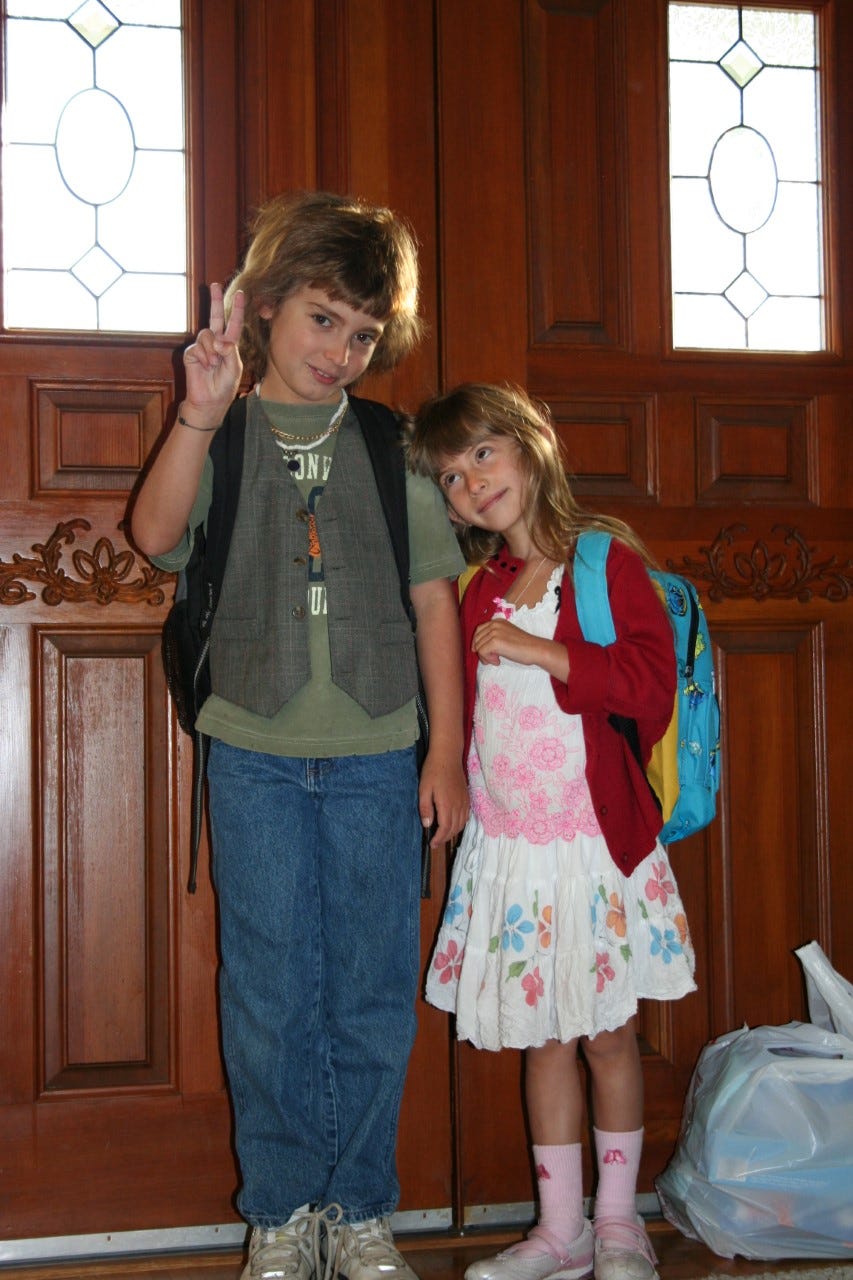

Friday night on the short ride home from his Boy Scout meeting, my 11 yr old son was quiet and sullen. I asked him what was up. Had anything happened at the meeting that he wanted to talk about? I saw him looking at me from my rearview mirror, gauging how to tell me disappointing news.
“I found out tonight that I can’t become an Eagle Scout.”
He’d never been all that enamored with Boy Scouts. He didn’t much care for camping, or the tough kid role so many of his contemporaries played out with the survival skills training and competitive war games. He’d decided to ‘bridge’ from ‘Webelo’ Cub Scout to a full-fledged Boy Scout to become an Eagle Scout for the prestige sold to him by his troop leaders. ‘Presidents, senators, and successful icons like Bill Gates, Steven Spielberg, Neil Armstrong were Eagle Scouts,’ the BSA marketing touts.
“College admissions officers recognize the award and consider it in their decisions. Eagle Scouts are eligible for many scholarships. Many employment recruiters look for “Eagle Scout” on a resume.” These are just a few of the perks on an Eagle Scout information page for the Boy Scouts of America, and one of the reasons we agreed when our son said he wanted to stay in their program.
I stopped at a red light and again we made eye contact in the rearview mirror. By his furrowed brows and slight frown I got that my son wasn’t sad, but bemused, bordering on angry. “What do you mean you can’t become an Eagle Scout?”
“Mr. Baker told me tonight that even if I get all my merit badges, and fulfill all the other Boy Scout requirements through middle and high school, I’m not qualified to become an Eagle Scout.”
I felt my heart pounding, reverberating in my throat. “Why?”
“The new scoutmaster said in order to achieve Eagle Scout, or any other rank, Boy Scouts must live the Scout Oath, which means we have to believe in God.”
My husband and I introduced our son to scouting when he was 5 yrs old. Fourteen Christians and one Jew, and our kid was the only member of his Webelo troop being raised without religion. Most of our neighbors, and our kids’ classmates attended the local church. My husband and I are Atheists. Our kids are not privy to the benefits of participating in this tight-knit religious community. Scouting seemed like a positive way for our son to meet other boys his age in our area.
We didn’t consider the Boy Scouts an exclusively religious organization. We’d heard stories, of course, and knew of the lawsuits for discrimination against gays, transgenders, atheists, virtually anyone who falls outside the Christian racist dogma. It motivated me to ask the women at the Cub Scout table during kindergarten school registration if their troop was religious, and if so, how. Both women assured me their Den had several different faiths among its members, and their policy was to keep religion at home, not practice it in scouting.
They were true to their word during the five years our son belonged to their Den, participating in most events from hikes to community drives for food banks, and even popcorn sales. He earned quite a few merit badges along the way. Religion, even prayer, was never practiced or promoted in any way.
This was not the case after he ‘bridged’ to full Boy Scout.
A few months back, on the drive home from his first official Boy Scout meeting, my son informed me the troop leader held a prayer at the end of their meeting. He had the boys hold hands in a circle and bow their heads while he said stuff like, ‘Lord, bless our troop with your mercy, bla, bla, bla… In Christ’s name, amen,’
I felt my blood start to boil but kept my voice even and calm when I asked him how he felt about that.
He looked at me in the rearview mirror and practically winced. Then he confessed he’d already branded himself a non-believer. The scoutmaster asked him to lead the prayer at the end of that first meeting. He’d refused, stating he wasn’t sure there was a God, and he thought praying was a waste of time because he was certain there wasn’t anyone listening. He was publicly labeled “misinformed” by the scoutmaster at that first Boy Scout meeting, marking my son as ignorant in front of the other boys.
“Do you want to quit the Boy Scouts,” I’d asked him on the ride home from that first meeting months ago.
“I wanta be an Eagle Scout, Mom, to help me get into a good college.”
I assured him good grades, participation in extracurriculars and such would get him into the university of his choice. The Boy Scouts’ branding would be unnecessary. We discussed finding a non-religious troop, if there was such a thing, but my son didn’t want to be with a bunch of kids he didn’t know since most of the Webelos he’d been with the last five years had bridged to this new troop. He just wouldn’t recite what he didn’t believe, he’d told me.
That wasn’t good enough for advancement to Eagle Scout, according to his new scoutmaster. No matter how lax about religion our son’s lower division Den, the rank of Boy Scout and higher stuck to the rules of the BSA, the scout leader told our son at the end of last Friday’s meeting. A religious association and faith in God are required for rank advancement. Commitment to community service, practicing Scouting’s core values of “honesty, compassion,” as well as continually exhibiting “diligence as a contributing team member,” were irrelevant. Belief in a god was more important than social service. Atheism is a sin, the scoutmaster assured our son.
It took all my will not to U-turn right then and go back to the church where the meetings were held, hoping to catch the troop leader before he left. I was so enraged that this man told my kid his belief system was a sin I couldn’t construct anything but a rant to say to him so I didn’t turn around. No sense in destroying what little relationship I had with the man if my son wanted to continue with the troop.
“I could lie that I believe,” my son suggested, “If I have to…”
“Think that’s a good idea?” I asked, glad to be driving, which made it easier to keep emotional distance and sound casual.
“Maybe. I just don’t get why I have to pretend I believe in God. The Boy Scout handbook says we’re supposed to ‘respect and defend the rights of others to practice their own beliefs.’ But they’re not.”
Ah, from the mouths of babes…
He’s right, of course. Click on the official BSA website, and bring up the “Scout Oath and Law” page. The first line in the Scout Oath proclaims the scout will ‘do his duty to God [and country].’ Every level of advancement requires a promise or show of faith in God. Boy Scouts are instructed to respect the beliefs of others, but they are taught this respect should only be awarded to those who believe in the Christian/Judaeo God. Turns out, prejudice, hate, racism are systemic to the Boy Scouts of America, and a large part of what they quietly, and individually through their troop leaders, promote.
The Cub Scout sign-up table was at our public school. The Boy Scouts were allowed to promote their organization even though federal and state laws explicitly state discrimination by sex, race, or religious orientation is illegal in our public education system. Nowhere in the BSA literature we received and perused before or after our son joined the Boy Scouts did they say they were a faith-based organization that required their members to be believers. Had they disclosed this with all transparency, as do churches and other religious organizations pushing their beliefs, my husband and I would not have guided our son to participate.
We impose no religion on our children. We discuss it often— the concept of one god versus many; various cultures and their belief systems from ancient to modern man, using everything from the Tao to biblical references. Our kids get additional religious education through their friends, and faith-based celebrations with extended family. My husband and I try and expose our children to many possibilities, trusting they will discover their own spirituality, a belief system that works for them, with a moral code that positively impacts the lives they touch directly and indirectly.
Parents who provide religious training for their kids early on, and, it would appear, register them in Boy Scouts, are looking to validate their beliefs by indoctrinating their kids with the religion in which they were raised. And most of these parents have never stopped to consider whether the rhetoric their parents sold them is truth. They are blind believers, and turn their children into the same.
“The Boy Scouts of America (BSA) takes a strong position, excluding atheists and agnostics,” according to Wikipedia.
In 2014 the BSA finally voted to allow gay kids. They still ban atheists.
Perhaps the BSA works with the Church to convert unsuspecting children. Hook ‘em when they’re young, a mere 5 yrs old, in Cub Scouts. Get them to work hard for advancement, then deny them further advancement unless they convert to Christianity. Whatever BSAs agenda, and our son now sees they clearly have one, the meeting with his troop leader last Friday night soured him to continuing in scouting. It’s a shame, really, because the Boy Scouts have so many positives to offer. Weirdly enough, they tout much of the same morality I preach to my kids, like being courteous, honest, caring, and compassionate. The only difference between us is I don’t believe a god gave us this wisdom. I give credit to humanity, over eons, watching what works to build thriving societies.
There is no god that’ll save us from hate, prejudice, nationalism, and exclusionary religious sects like the BSA who lure kids in, like the Pied Piper, under the guise of community involvement, then change the rules mid-play. Regardless of our differences, religiously, culturally, politically, PEOPLE, me and you, must use our collective wisdom to unite as one race—the Human race—for our continued existence.

“They’re coming back. Make no mistake about it. Doesn’t matter what you think you are, they are coming back for you. You are a Jew,” my mother often told me.
I’m not. I’m an atheist. At 5, I told her so, thus creating a chasm between us that went unresolved, even with our last goodbye, when she died of lymphoma nearly 20 years ago.
My mother displayed her fears, though always quietly, through the years I was growing up with her continual barrage of warnings. As children, she insisted my sister and I go to Hebrew school, regardless of my protests as an atheist. In my teens, she insisted we join her in watching The Holocaust mini-series. She sat riveted through each episode, hand to mouth to stifle gasping in horror.
Regardless of her indoctrination, I didn’t feel afraid the Nazis would return because in my family then, and my own family now, the Nazis never left.
I will not deny my mother’s fears were warranted. She’d lived through WWII, saw the rise of fascism allow the murders of six million of her family and faith. She was old enough to witness Hitler’s speeches ignite the German underclass to hate, and blame everyone but themselves for their strife. She saw the world forever changed by our ability to destroy it, with the advent of the atomic bomb.
I tried often to dissuade my mother’s fears. I argued, “We’ve learned, Mom. That’s the best thing about us. When we’re standing on the precipice of disaster, we DO change!”
I was so confident in our uniquely human ability to ‘rise above’ our misfortunes, I married the son of a Holocaust survivor. My father-in-law was 13 when his family was forcibly removed from their suburban home in Łódź, Poland, and imprisoned in the ghetto northeast of the city. He was there for eight months when his father, mother, and two younger sisters were murdered in front of him, and he was put on a train to Flossenburg concentration camp in Bavaria, and eventually to Auschwitz. A prisoner for five years, his teens were spent as a slave, laboring in an Audi factory, watching people murdered and committing suicide daily, until Auschwitz was ‘liberated’ by the Russians in 1945.
My father-in-law came to the States as an immigrant several years later. He settled in New Jersey, started his own business, and then married. My husband was born a year later, and his sister — my sister-in-law — 3 years after that.
Growing up, the kids knew vaguely of their father’s plight. They’d awake, frightened by the “horrific screams” of their dad’s nightmares. As my husband described it: “My dad told us he was ‘in camp,’ and I had a problem with that. I’d gone to summer camp, and I knew this wasn’t the same thing, but it wasn’t clear to me why he’d had such a bad time.”
The Holocaust was not discussed in my husband’s household. He didn’t dare ask his dad for any details, though his father’s nightmares woke him often during his formative years. His father’s screaming frightened him as a child, but even more as he grew up and studied the Holocaust in school, and learned, even in the abstract, what may have happened to his dad. His parents had made it clear by their silence — in almost all things of intimate relevance — they were not open to discussing virtually anything beyond the day-to-day logistics of living.
My husband was in his last year of college when his sister gathered the family and recorded their father’s experience before, during, and after WWII for a history assignment. The ‘kids’ were young adults when they discovered the details of their father’s past during this singular interview. No one in the family ever spoke of it again.
My father-in-law learned young that the only way to survive was to avoid conflict at all costs. His wife, my mother-in-law, having experienced her own traumatic youth, had adopted the same position on the emotional safety of stoic silence, likely long before they met and married. My husband’s parents were married 50 years before my father-in-law passed. They did not discuss their life experiences with their children, or even with each other beyond the surface of these painful events. Neither went to counseling, ever. They ran a small business and raised their kids in their loving, yet separate way, never really letting anyone in, too afraid to get intimate.
Understandable, with where they came from. But, oh, so very costly.
Feelings don’t just GO AWAY when we don’t talk about them. More often than not, when buried , feelings of hurt, frustration, sadness, fear will resurface, and manifest as unwarranted aggression, especially towards the people we love, since it’s likely they’ll still love us, regardless of the slights.
These powerful feelings of anger and fear, buried deep in my husband’s parents, prevented them from validating their children’s feelings, forcing their kids to bury their own feelings under the suffocating weight of shame associated with having any. The 27 years I’ve known my sister-in-law, she won’t watch a sad movie, read a sad book, and has never admitted to feeling sad, even through her son’s ADHD hardships, or during her very contentious divorce. She never talks about feelings, hers or anyone’s, and refuses to even acknowledge emotional questions I ask her by ignoring that I’ve spoken to her at all. My husband’s sister has played the role of ‘good girl’ to avoid conflict, well known in the ‘survivor’ community, suppressing all negative feelings, never getting honest, and therefore intimate with anyone, even herself.
My husband has Asperger’s syndrome, commonly understood to be a mild form of Autism. Though never formally diagnosed, we’ve seen enough therapists together and most have identified specific autistic behaviors that fall within the Aspergers spectrum. Higher rates of Aspergers is well documented among Holocaust survivors’ offspring. He ‘floods’ with intense emotion, his or anyone’s directed at him. He shuts down completely, becomes calmly and coolly irrational, contentious and attacking when pushed to engage in dialog in this flooded state. He’s the victim in most of his narratives and refuses to be held accountable for the conflicts he creates when he’s flooding. And with any conflict, flooding can last anywhere from a few hours to months.
When my husband is with me, is present and open and unafraid, he is the love of my life — kind, smart, respectful, responsible, fun. He is my best friend in every measure when he’s all there and we’re connecting, but married 27 years, and I know not to trust this behavior will last. Conflict is a part of life. And whether I say something he doesn’t like, or a boss has, my husband begins the flooding process and cannot hear and does not remember what is said in the exchange. Since I’ve known him, he’s been fired or forced to quit 15+ full-time positions after pissing off his supervisors enough that my brilliant software developer husband held most jobs for less than 2 yrs.
The effects of the Holocaust are still powerful, present, and residing in our house. The hate Hitler ignited still reverberates almost a century — three generations later — embodied in my husband every time he shuts down to avoid conflict, dismisses or ignores his feelings, or mine, or our kids, or his bosses, as his parents taught him to do. The fear the Nazis instilled in so many has been passed through the generations like a genetic disease.
My mother carried this fear with her to her grave. As a matter of course, she made me afraid, of all people — our ability to abandon our humanity and turn our backs on neighbors we once held dear, in response to fear. I got lucky, though. My mom felt passionate about so much, and shamelessly displayed feelings of joy, anger, fear, and sadness at times, gifting me the opportunity to acknowledge and express my own.
My husband understands that he floods, and how destructive this is to establishing and maintaining trust in him, his parenting, and our partnership. During peaceful times free of conflict, he works to connect with me, and our kids, and open up his awareness to the effect he has on the world outside his own head. In moments, when he wins the war with himself, and he can see his own behavior clearly, share his vulnerability and acknowledge his culpability, we touch intimacy. And in those moments, we stop Hitler’s legacy at our doorstep.

To escape the bickering, and whining, and catering to the needs and desires of everyone’s demands, I took our dog, Annie, for a walk on a quiet fire trail near our house. Bright and beautiful out, a sweet sea breeze came over the Oakland Hills with the afternoon sun. The mile and a half dirt path along the base of the foothills was mostly vacant, rarely used by even residents of the neighborhood, so I did not leash my dog for the walk.
I saw someone from where I stood on the ridge while I waited for Annie to finish marking her territory in an open field. A woman was coming towards us on the trail below, and I tensed as I scanned for the dog she was most likely walking, but saw none. Still, I called my 70-pound Shepherd-mix to me. My beautiful pound-hound was a bit unpredictable with other dogs. Play. Fight. Run. I never knew which, or why. She passionately loved people, though most didn’t appreciate her bounding up to greet them.
Annie came to me, and I held her collar as we stood on the ridge and watched the woman trudge up the hill. Her white hair looked almost like a silver helmet in the sunlight. She walked slowly, and carefully, and hunched. I made her out to be in her mid-70s. My dog started whining the moment she noticed the woman approaching, then practically yanked my arm off trying to pull away from me and go meet her potential new friend.
The woman was 30 feet away when she noticed us, looked up and stopped. I loudly assured her my dog was very friendly and loved everybody, and that I held her securely, asserting there was no need to worry. The old woman looked at my dog wagging her tail wildly and whining incessantly, and she smiled. She confidently told me she loved dogs, then called mine to her with a pat on her legs and words of welcome. I let go of Annie’s collar. She lopped over to the woman, ears back, but tail up and swishing, and sidled up to her, leaning her downy-soft, muscular frame into the woman’s legs. I joined them on the path where the woman stood stroking my pound-hound.
The old woman gently ran her hand along the length of Annie’s back again and again while extolling the animal’s Sphinx-like appearance and friendly nature. Annie was mesmerized with her touch, as my dog was with just about anyone’s, but the woman seemed to really enjoy the contact as well, her expression set in a soft, contented smile. She explained she’d had several dogs during the years she and her husband raised their three kids. The dogs had passed on, the kids had moved on, now with families of their own. Her husband died two years back and for the first time in her life she was alone.
Her kids, even her grandkids kept telling her to get a dog. I chimed in with words of encouragement, told her about getting my dog at eight weeks old from a kill shelter in Manteca, and ranted about some great local shelters where she could find a great companion.
My graceful hound took off after a squirrel, startling us both. The woman began brushing the dog hair off her pants, but a lot of short hairs were woven into the navy polyester and clung to her pant legs where the dog had leaned against her. “I’ve spent the last 50 years of my life attending to others needs—cooking, cleaning, and more cleaning, and taking care of everyone else. I told myself I deserved a break after my husband lost his three-year battle with brain cancer. I would travel, get out to the movies and play canasta, live the good life.”
Annie came bouncing back, long tongue dangling from her panting (grinning?) mouth. She came to me first to get my pat, then went back to the old woman for more strokes, which the woman gave willingly. “I’ve been on three cruises in the last two years. I play canasta twice a month, and see all the new movies I want.” Again she seemed…pacified, by patting my dog. “Turns out, the good life was when I was needed. Being counted on made me feel vital, and valued. Now, no matter what I do, I mostly just feel lonely.” She straightened and brushed her pant legs off again as my dog swaggered over to the tall grass and lay in it. “I think you all may be right. It’s time I got a dog.” She gave me a pleasant smile. “It’s been a pleasure chatting. Good day to you.” And she went on her way.
I stood there watching her walk along the path, her words echoing in my head. My kids were 12 and 14, and beyond their bickering, and continual demands of my time and energy, parenting them was simply the richest, most rewarding experience of my life. They made me feel vital. Valued. And with my life so integrated into theirs, and my husband by my side joining me in this grand adventure, I virtually never felt lonely anymore, like I had so often before them.
Annie lay in the grass sunning herself. I gave a quick whistle, and she popped up and joined me on our walk home. I stroked my dog as she walked by my side, glad to have her with me, counting on me, as my kids and my husband did, and probably would for many years to come. I imagined the old woman’s empty house and anticipated the tumult in mine.
And suddenly, I felt very lucky indeed to be living the good life.

Got the call at 7:50 this morning and knew something was wrong. No one calls when I’m getting the kids ready for school unless it’s bad news. And there was no possible way my 14 yr old son could have made it to school on his bike so fast.
Could hardly hear the woman over the sound of traffic digitally amplified through her cell, informing me my son had been in a bike accident. I finally got that he was pretty badly battered, but conscious. He was bleeding, she said, quite a bit, but seemed in tact. The moment she said where they were, and before she finished speaking, I put the phone on the kitchen table, called for my 7 yr old daughter to come with me and we got in my car and went to my son a few blocks away.
He was sitting on the curb when I pulled up behind the car I later found out belonged to the good folks who stopped to help my kid. They were in traffic and saw him on the side of the road crying and bleeding, his bike crumpled in front of him. I managed to get out of my car without faltering, and my son managed to stand so we could hug, feel each other, body to body, soul to soul.
“I don’t know what happened,” my newly taller than me kid cried into my shoulder. “I didn’t see the trash can. They’re usually out tomorrow. I wasn’t expecting them today. I didn’t see it.”
His face was a bloody mess, bleeding across his chin, his upper lip, his shoulder, scrapes on his arm. He couldn’t move his left hand. I didn’t cry. He needed me to be strong. God, if he only knew how fragile and afraid I felt right then. The idea of him leaning on me was on par with absurd in my head. But I didn’t cry. I thanked the woman and the man she was with probably fifty times in the space of five minutes. The man graciously put my son’s bike in my car as I helped my kid in, and we went home.
My son walked away from the bike accident with a fractured wrist, abrasions, a loose front tooth that the dentist thinks will be fine down the line. In fact, in time, he should heal just fine. He will. I won’t.
Went out to my office once my son was squared away and cried my eyes out. If I could have prayed, I would have right then, and did thank dumb luck all day, and even still as I write this, and forever forward, my kid wasn’t killed, or injured beyond repair for life. He was careless, and the laws of physics that say we can’t move through solid objects came into play. I know this law to be true, I believe in this law because I’ve spent a lifetime witnessing it. I’ve never seen anyone walk through walls, or pass a hand through glass, except magicians, which we all know is an illusion, a trick of eye, not physically possible.
There have been many times, like this bike accident with my son, I’ve wished I could believe in something, anything to justify events other than just entropy, but I’ve always been an empiricist—show me, don’t tell me because I won’t believe you. On the outside of our religious world, at times lonely to the extreme, I went searching in my early twenties for an ideology to be a part of, and that’s when I discovered Taoism.
I am not a Taoist. I am an atheist, and do not believe in any ‘supreme ultimate.’ And though I’ve read the Tao Te Ching through, many times, I understand little of the poems of Laozi. It was through Taoism, however, I first heard of the concept of yin/yang. 陰陽
The Taijitu ☯, the commonly known yin/yang symbol from 14th century China, represents a philosophy first seen in the Tao Te Ching in the 4th century BC, though many believe the concept of opposites in harmony define balance existed many millennium before the writings. Black/white, day/night, male/female, dull/bright—in yin/yang ideology, with everything there is an equal opposite occupying the same space, intertwining, even mixing, actualizing each other’s existence, and keeping the natural balance of the whole, that which is all.
Heady, to be sure, but not when you break it down to what we experience daily. We can’t really know happy never having felt sad. Can’t have a bottom without a top. There is no such thing as right with no wrong (or left..; ). These are abstracted, philosophical truths. Just like physics, yin/yang’s empirical proofs play out in every aspect of living, which can never be fully appreciated without death.
While I believe the yin/yang philosophy to be truth, a basic physical and metaphysical law, and understand the balance interconnected opposites provide, I can’t help resent this fundamental aspect of natures structure in times like this morning when my child’s life is put on the line. The cruelest, sickest, most twisted opposites of all is the spectacular, magnificent, breath-taking, electric-connection we get to feel for our kids, and the choking, terrifying, heart-stopping fear of losing them— the yin/yang of love and loss.
The other day I was running my usual route and a woman pulled her car out of a business park driveway and blocked my path. The instant she saw me approaching she pulled her car back, allowing me room to continue running on the sidewalk instead of into the street to get around her. I smiled. Waved thanks as I passed in front of her car. She smiled and waved back. Felt nice, made the rest of my run less jarring, lighter somehow. Simple really, but oh, what a simple little kindness can do…
Most every day someone does something kind; lets us into their lane on the highway; opens a door, holds an elevator; Likes our update or post; simple acts of kindness that personify our potential for goodness. And while this may seem small on the surface, the residual effects of these displays of caring build trust, connecting us to each other, reminding us we are not invisible but valued, and giving us hope in our humanity.
We hear about the bad all the time. We hear about the good, too, but on the large scale, like doctors going to Nepal after the quake, or philanthropic superstars and their latest causes. But it’s really the little acts of kindness that unite us, everyday simple actions that show we care for one another, and the world we inhabit, that build a solid foundation for our race to thrive.
What simple act of caring did you give or receive today?
Please SHARE the act of kindness here in comments, and exchange a little hope…


I’ve been on the outside looking in since I was a little kid. Failing to assimilate, I worked at cultivating unique and different. After achieving this coveted perception, I no longer wish to possess it.
Unique often translates into strange. And as the mother of a 10 and an 8 year old, I do not want to be perceived as strange or different. I want to blend like homogenized milk and give my kids the platform to fit in, be a part of. What I don’t want is for either of my children to be “that kid with the weird mom,” though I fear I may already be there.
My kids still hold my hand, and not just in parking lots or crossing the street. They both still love to snuggle. I am their first choice to talk to, confide in, way beyond their dad, which makes me feel valued, respected and deeply humbled all at the same time. I realize this level of intimacy probably won’t [and perhaps shouldn’t] last as they grow and find their own path, but I don’t want my kids to ever be ashamed of me. I want to be proud of them. I want them to be proud of me.
I try to fit in. I go to the soccer games and the ballet classes and I wait around with the other parents and try to blend. But I don’t. And I get that they notice I don’t. I look different. I’m one of the oldest among them, by a good margin. My kids came late, after six pregnancy losses. I dress for comfort so most everything I have is rather loose. I don’t wear make-up. My hair is long and fine and all over the place. It refuses to stay pulled back in the scrunchy. I never quite look ‘put together.’
But looks aren’t the only thing that separates me.
Through the years I’ve come to realize that I don’t think like most people. The glass wall between me and most of humanity is not just me being paranoid. There is a casualness the parents seem to have with one another as they discuss their kids, or some celebrity or popular new show. I stand there and nod my head when it seems appropriate, but I don’t watch much TV, and really don’t care that Tyler is playing basketball now which conflicts with his sister’s dance schedule.
I’ve tried engaging more personally, ask about jobs, interests outside of family, broached news and current events, but taking a position and endeavoring to discuss it has mostly been met with polite blank stares. Everyone is careful with their words—politically correct and upbeat. I’m neither, and over the years I’ve learned to shut up to avoid discord. The conversations usually segue back to their kids and related activities around family, school, church, which as atheists we don’t attend. I invariably check out of the exchange and focus on the event at hand and cheering on my children.
The game or recital ends but everyone stays and continues talking. I’m on the outside again, feels like I’m lurking while I linger to give my kids time to play. I stand there watching them all integrate, proud of my children for choosing to, and of myself for giving them the opportunity when I’d rather just leave. I watch the parents gaily chat and wish I fit in like that. The folly of unique and different is it’s really quite lonely out here.
I had a meltdown about writing—the process of—this morning. Simultaneously, my son, a recent computer science graduate, did too—about job hunting.
He emailed me while I’m melting down:
I’m applying for jobs and contacting these people but when absolutely no one contacts me back I feel like I’m sinking. I just feel like a fucking failure.
I emailed him back:
The only thing I know that works for me to shed feelings of doubt is WRITING them down. I’m doing that now. Literally. I had a meltdown this morning so I’m journaling. I will for a page or so, then get on with watching Twitch streamers to educate myself before I continue writing the Power Trip—which is what I melted down about this morning.
From my journal:
‘The absolute hardest part about writing fiction is shutting out the voices in my head that tell me I am not good enough to write this:
His email back:
This is exactly what I freak out about as well. Just replace writing with coding.
Me:
Thing is, you have to combat the bullshit voices in your head. They are half-truths. Not lies, cuz there IS truth in our fears, but only HALF truths. I can counter every one of the voices I just wrote in my journal.
Him:
But there’s always these looming feelings that I’ve accomplished nothing, done nothing. Am nothing.
Me:
That’s fear—like you are a failure—because you’re scared you will be. And while the fear is valid, real, true, because there is a vague possibility you won’t find a job you want, the WHOLE TRUTH is you are virtually 100% guaranteed to find a job if you keep looking for one, and likely a coding job you’ll like.
Another truth is you’ve proven you can code as a straight-A graduate with a CS degree, which was your primary goal the last 4 years. And you did it. Well done!”
Him:
I seem to be unable to compartmentalize my feelings.
Me:
This is LEARNING, E.M., applying for your first real job that isn’t a part-time, low-level gig. You’re launching your career, and that’s a big deal. Let yourself feel scared, and frustrated, and excited and every other feeling that arises through this process. And you WILL get a job. Guaranteed, IF you keep working at it!! Just like I’ll get the Power Trip written. See, I’ve already proven I can write with 7 books out, with mostly good reviews… And the voices of doubt gather like locusts as I write the last two lines above:
But again, I can COUNTER all of these doubts with another POV:
Now GET TO WORK, honey, cuz writing is the only way you’re going to become a better writer.
His response:
Emoji smile. Clapping hands. Thank you hands.
 jcafesin.com