LOVE Defined

My sister is dead, I told the bank manager.

She isn’t dead. She lives in Washington with her husband, having recently moved from L.A., where we were both born and raised.

The bank manager expressed his condolences. He accepted the paperwork from our lawyer to remove my sister’s name from our Trust as the potential guardian of our children should my husband and I die before they’re of legal age to care for themselves.

I told him she was dead to delete her from my psyche, distance myself from loving her. Five years ago, she told my husband she didn’t want any contact with him, me, or our kids, her then 7 and 9 yr old niece and nephew, in a response to an email my husband sent her.

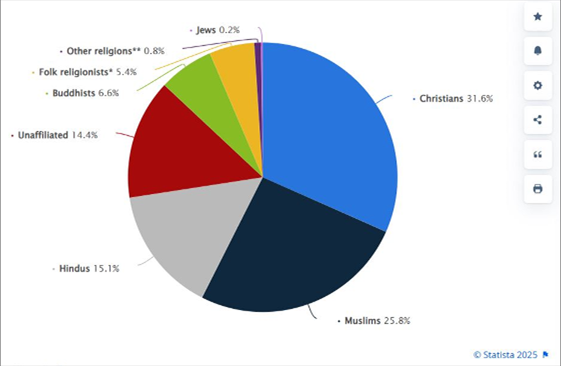
Much to my sister’s chagrin, we’ve raised our kids without religion. Cleaning out her Agoura Hills McMansion before moving to her custom built estate in Washington, she sent our kids Hanukkah ‘gifts’ of broken toys that used to belong to her children. She missed acknowledging our daughter’s birthday, again. Three months later, she sent her a present with the one she sent for our son’s birthday, and spelled her name wrong on the card. She’d disappointed our kids time and again, ignoring their birthdays and special events, rarely calling, and talking about her life, not theirs, when she did. Many times after jacking them up that she was coming to visit, on the day she was supposed to arrive, she left it to me to tell our kids she wasn’t coming.

Her sins were many, and mounted with the years without apology. My husband got tired of her hurting our kids, emailed her five sentences politely informing her the correct spelling of our daughter’s name, and requested if she was going to send them birthday cards or gifts to please do so on or around their respective birthdays.

My sister decided he was asking too much and emailed back that “though I am deeply in love with your kids, and it breaks my heart to do so,” she was withdrawing from their lives entirely. She stopped calling every few months. For a couple of years she sent the kids birthday cards when it struck her fancy—weeks late to our daughter, if at all, but managed to get cards to our son within days of his, professing her deep affection and love for him. It took all my will not to shed the cards in a million tiny pieces. Her sentiments to him were totally self-serving, for her ego, her ‘loving’ words meaningless, meant to pump up her self-image alone.

Love is an ACTION, what we do, not some abstract in our heads,” my husband and I teach our kids. “Don’t profess love in words without taking actions to show it,” we preach. “And don’t accept words of love as truth without seeing the actions that actualize their sentiment.”

Over the years my sister had been so disrespectful to our youngest that our daughter never really formed a bond, but her choice to terminate her relationship with our kids deeply hurt our son. She was important to him because the few extended family members we have left, namely my brother and father, didn’t call or acknowledge our children in any way.

My mom died when our daughter was just 2, and our son only 4 yrs old, so she never really got to know our kids. She did love them though. Deeply. Profoundly. And they got that. How did they know?

  • She came to visit often.
  • She called them on the phone every couple of days.
  • She mailed them presents on time, and called to sing Happy Birthday on their special days.
  • She spelled their names right.
  • She stayed abreast of their lives through me, my husband, and through the kids, consistently showed interest in their interests and feelings, and shared her world with them.

My mother often extolled how much she loved our kids, to me, to them, to anyone who’d listen, but she also showed it, so my children knew it was real.

The day my dad called to tell me of my mom’s cancer diagnosis, after I hung up the phone I said to my husband, “Well, that’s the end of my family.” She was the conduit that kept us together, in contact, a feature in each other’s lives. She fervently believed people come and go, but family is forever, the folks with which your love and loyalty should reside. Within a year of my mother’s passing, my sister and father checked out of my life, and the lives of our kids, too busy with their own to bother with me or mine.

My father, like my sister, practices love in the abstract. He never talks to his grandkids, never calls [even me], never asks to talk to them when I call him, and rarely even asks about them. He doesn’t acknowledge their birthdays anymore. I got tired of reminding him with multiple calls and emails weekly the month before their special days, then daily reminders the week before. The rare occasions I call my dad, he always professes how much he loves my kids, how important they are to him, though he does nothing to actually show them this. He never did, I just didn’t notice, as my mother’s effusive love overshadowed his self-love. When I mention his grandkids, he reminds me to tell them that grandpa loves them, and misses them. But I don’t. I tell them, “Popi says hi.” I don’t want our children to ever get the impression it’s acceptable to say you love someone when you take virtually no action to show it.

Her body ravaged by cancer and near death, my mother insisted my father take her to Toys R Us. She bought each of our kids their next birthday gift, and made him swear to mail them on time. She was hoping to establish a tradition (an action) for my father to adopt for his grandchildren after she was gone. He delivered her dying gifts to our kids two years later, on his way to visit my sister in Washington.

In a thousand lifetimes I cannot repay my mom for her precious gift of LOVE I now model to our children. But I cannot buy into her belief [and society’s rhetoric] that family and love are synonymous anymore.

LOVE, like potential, is meaningless unless put into ACTION.

The Power of Love

My son’s guitar teacher was freaking out the other day over the impending arrival of his first child. Beyond a healthy birth, he was consumed with anxiety over the care and feeding of an infant, all the way up through guiding his child through their teen years. As a parent of two tweens, I shared with him the secret of parenting, what makes the sacrifice not only tolerable but wildly enjoyable, and he calmed, and smiled, allowed his excitement to peek through.

It’s never talked about—that intense, profoundly magnificent feeling a parent gets to embrace the moment their child is born, and forever forward. It’s expected we love our kids, and therefore taken for granted, which is a shame, because the intensity of that feeling is so spectacular and unique.

I’d listen to my contemporaries talk about their children before I had kids. They spoke of the long nights with crying, colic infants, “the terrible two’s,” “the f***ing four’s,” surviving the teen years. Sometimes, they’d comment their Kylie had made Honor role, or that Jordan had just got first chair for his violin, and their entire countenance would light up. But those moments were rare compared to the complaints.

Like most women, I simply assumed I’d have children. I planned to have two kids in my early to mid-30s after I’d established my career and proven my own greatness. But it wasn’t until I was almost 40 that I became pregnant with my son, my first baby to survive after six miscarriages.

Nine and a half months of pregnancy, connected to the infant growing inside, and everyday was fraught with wonder, and fear. Five days of labor, and the moment I held my son for the first time, minutes after delivery, his tiny warm body on mine, a tsunami of humbling awe so overwhelmingly powerful swept through me it literally took my breath away. And as I kissed his downy head, his hands, each finger, I realized the joyful contentment, the sense of energized completeness, that electric connection I felt to him, for him— was love.

Never in my wildest dreams did I imagine the intensity of love that could be attained until having children. I’ve been lucky and had loving parents, a few dear friends, the love I now feel for my husband, passionate and true. But it doesn’t touch the intensity of the love I feel for my kids. Virtually every time I am with my children, snuggle with them, kiss them goodnight, or just see them across a room, I feel that all encompassing love fill me up and consume me with tenderness, compassion and humility. Now 9 and 12, and they still take my breath away. Every day.

People who never have children, or don’t devote their life to raising them— as with adoption— will never know this level of love. In their lifetime, they will never understand the feeling that we call ‘love’ can be this intense. I’ve heard many of my contemporaries say with conviction that they’ve never wanted, and will never have kids, with rationalizations like “I’m just selfish, I guess.” But the truth is they’re only robbing themselves.

Life’s greatest gift is our ability to feel. We all experience pain and sorrow, happiness and joy to varying degrees. The unspoken gift of parenting is getting to feel the fulfillment and richness of that intense love integrated into every aspect of our lives, motivating us to be positive examples, and challenging us to consider others, and the future beyond ourselves.

The price of living with this intensity of love is the amorphic fear of losing it, which is why parents worry so much. Through the tantrums and the tears, the joy and the fears in sharing life with kids, the ultimate reward in parenting is the privilege of loving our children.

On Suicide

I think about suicide constantly. It used to be my out— if life got too…much, I’d leave. Feeling nothing must be better than feeling bad all the time— my rejoinder.

My life hasn’t been very hard, not like the kids in Oakland hard. I grew up in a middle-class suburban neighborhood, when it was still safe to walk to elementary school. Never wanted for food, always had a bed, felt safe in the home of my parents. And, however abstracted, I got that they loved me.

What’s been so damn hard, always in my way, is…me. Born 2, or 200 yrs too early, I don’t seem to fit here. I’ve been on the outside looking in at this world for as long as I can remember. First hit me when I was around 5 yrs old. My mom would often laud accolades of my father in the store or the car on the way home from school—what a good artist he was, or how “smart,” and “passionate.” But at home, I saw him put his fist through the wood cabinet an inch from her face in a heated argument over politics. I’d seen him make her cower multiple times, listened to him demean her time and again with statements proclaiming her ignorance, or jumping down her throat when she dared disagree with him. The cognitive dissonance between what she said and what I saw put a glass wall between us, instilled mistrust. Perhaps I was delusional, or she was, but either way it took away my ground.

My mother came to visit many years after I’m moved from my parents’ home, and told me she wanted to divorce my dad. Though she never followed through, I know she was unhappy with him. After our divorce discussion, she never again professed her admiration of him, though they were together for another 10+ years before her death. She spewed hateful word at me about her husband of 47 years on her deathbed. What I observed at 5, and forward, gave me the real picture of my parents’ relationship, regardless of what my mother said. A glass brick in the wall of my emerging psyche. I’ve plugged into the difference between what people say and what we do ever since, much to my chagrin.

No, it’s not my parents’ fault I’ve spent a lifetime on the outside looking in. They tried to instill in me religion, be a part of the grand delusions the rest of the world apparently slavishly subscribes. But I’ve never been able to believe in a vengeful, rather ugly solipsist telling me what is right and wrong, acceptable and not, whom I’m supposed to believe in without question, or even speculation. Never been any good at blind faith. Suicide is not a sin. But it is all too often the indifferent choice.

It’s true, I still think about suicide often. I hear about Robin Williams, or Aaron Swartz, now Chester Bennington, and cycle on what they felt like right before killing themselves. Black, I imagine. And I practically live there. Have, as long as I can remember. But both Williams and Bennington had kids. And Aaron Swartz had thousand of followers who believed in and supported his fight for net-neutrality, me among them. And I feel mad at them, that they left. Then I imagine how it feels for their kids, how much they must miss their dads, and I’m overwhelmed almost to tears missing my mom. I imagine Aaron’s parents, having to live the rest of their lives with the death of their 26 year old son. And, as a parent of two teens, I stop breathing with the image and feel like I might throw up.

I brought life into physicality to experience living. And the experience of living— is feeling. The full range— happy, sad, mad, glad…whatever. No matter how hard things feel, no matter how black, if I take my own life I will invalidate the very reason I gave life. To feel. Dead, I will be robbing my children my love, the most intense, fantastic, and cherished of all feelings. And as much as I want to check out sometimes, there’s that cognitive dissonance again, followed by anger, and unfathomable loss. With, or even without kids, most people have family and friends who love them.

Feelings are dynamic. They change with time. Black morphs to gray, then violet, then sky blue some sunny days. I wish I could go back in time to the moment of choice for the aforementioned suicides, and the 40,000 annually across the U.S. alone, and remind each of the sunny days that will surely come again, especially when embracing and sharing love.