Missing My Period

My period is six days late. I check throughout the day, hoping, but my old friend isn’t coming. There was a time when I would have been ecstatic it was late, gotten a pregnancy test and peed on the stick anticipating the plus sign. And there were times I would have been horrified I may be pregnant, too afraid to take the test while anxiously waiting for my period to start. But today there is a quiet sorrow, like mourning a loss. It’s possible I’ll never see my period again. Menopause has taken my friend and is robbing me of my youth.

Never in my life have I had the affection for my period I do now that it’s going away. Like most girls, I couldn’t wait for it to start. Menstruating turned a girl into woman, our mothers assured us. What my mother didn’t fill me in on were the cramps, the bloating, the wild mood swings, and the total hassle of bleeding for five days every single month. Once I became sexually active there was the constant concern of getting pregnant, regardless of using birth control. Everyone knows stories of women who claimed to be on the pill, or said they were using a condom but got pregnant anyway.

My period was more than a minor inconvenience; it was a major disruption to my life. I was one of the few women unable to take the Pill. Regardless of the dosage, it made me ill. I felt the full force of menstruation monthly. The gross mess and disgusting smell of the physical bleeding, on top of the intense cramping from passing clumps of bloody tissue were nothing compared to the mental ride every three weeks or so. Like clockwork after ovulation I’d get ravenously hungry, overwhelmingly tired, anxious, bitchy, with sudden bursts of manic energy. The closer I got to my period the more intense my feelings, all feelings would get. Right before I began bleeding, I often experienced bouts of deep sadness, wept with little provocation. But literally the moment my period began my darkness would lift as if it never existed.

Thirty seven years of this and I thought I’d be thrilled when menopause came along. It surprised me to feel so differently while waiting for my period to come and thinking it may not. Despite that I was one of those unlucky women with severe PMS, or PMDD, or whatever they’re calling it these days, my period gave me my kids. Having a period gave me the capacity to produce life. And though my two extraordinary children are all I’ll ever want, when my period goes I’ll lose the ability to have any ever again. What kind of woman will I be without the exclusive, inherently female capability to reproduce?

Menopause steals more than our ability to have children. According to Wikipedia, as women age our ovaries gradually produce lower levels of the natural sex hormones estrogen, progesterone, and testosterone until they diminish almost entirely. These are the hormones of youth. They keep our immune system and other vital body functions healthy so we are physiologically able to carry and bear a child, fulfill our biological imperative.

Estrogen accelerates metabolism (to burn fat faster). It increases bone density, and vaginal lubrication for better sex. Estrogen promotes healthy cholesterol levels. It helps regulate fluid balance which controls water retention. It aids lung function and reduces the risk of several kinds of cancers.

Progesterone acts as an anti-inflammatory and regulates the immune response. It normalizes blood clotting and cell oxygen levels, and use of fat stores for energy. It decreases risk of gingivitis and tooth decay. It appears to affect synaptic functioning, improve memory and cognitive ability. And progesterone also seems to reduce the risk of several deadly cancers.

And everyone knows testosterone is the premiere sex hormone — that sweet, dense scent that leeches through the pours right before orgasm. It also controls libido and clitoral engorgement. It increases muscle strength and mass, mental and physical energy. Maintaining testosterone levels has been shown to reduce the risk of cardiovascular disease, decrease fat and increase lean body mass.

The payoff to enduring my menstrual cycle was clearly much more than producing kids. In losing my period, I am not only grieving the loss of childbearing but the hormones that provided me privileges and protections. The end of menstruation feels harder, darker than the onset. Girls speculate in wonder waiting for their periods to begin. In menopause, women must undergo drenching sweats, memory loss, weight gain, and phantom pain. Get through all that and the light at the end of this ordeal turns out to be a death bullet. Perimenopause begins in our early 50’s and full menopause last upwards of 10 years or more. Surviving menopause means then confronting the perils of old age, and coming to terms with my eminently closer demise.

Dye my hair, work out daily, dress casual but chic, and still, losing my period means unequivocally, undeniably I am no longer young. I miss my old friend right now and wonder if like my youth it is gone forever.

What Makes a Great Man

Men are the freight train comin’ at ya.
Women are the poison in your food…

I’m a guy’s girl, meaning I’ve spent most of my life hanging out with men instead of women. The freight train comin’ at ya, I prefer men’s straightforward nature, their directness, their unwavering, solution-oriented trajectory. Men are simpler than women. Not less intelligent, just not so round-about, from behind, underneath.

Women, by contrast, are the poison in our food. Eons of subjugation have forced us to become puppet-masters to get what we want/need for ourselves and our children. Not a judgment call, simply a fact that until very recently might was necessary for our species survival, putting men firmly on top of the human hierarchy. Greater muscle mass to kill mastodons gave men the ability to take what they wanted, including sex. From our beginnings, men have assumed they controlled the household with superior strength.

Notice I said, “men assumed they controlled the household.” Well, you know what happens when you ass(of)u(and)me…;-}

Seriously though, probably pretty early on, like cavemen times, women figured out how to get men to do what we want using our wit and wiles. Genetic transfer of memory over thousands of generations of women passing on how to be manipulative eventually became woven into the DNA and imprinted on our XX chromosomes.

Regardless of why women became… complex, the fact that we are scares me about us. Women don’t only manipulate men. Quite often our children, sometimes even our friends, and all too often ourselves. I’d much rather face a freight train because if I’m paying attention, I can get off the tracks before getting slammed. Hence, why I’m a guy’s girl.

Men have historically subjugated women simply because they could. A mere six generations ago, women were not allowed to own their own property or keep their own wages. The only way to keep her family fed and a roof over their heads was to placate to a man. Until as recently as the 1970s, women could not get a mortgage loan without a co-signature from a man. And even today, stats from Dept. of Labor for 2023 show women still make 83% of a man for the exact same job.

Times truly are changing, though. Want a mastodon? Buy one on Amazon. Men’s physical prowess is unnecessary in today’s world. Upwards of 60% more women graduate college then men today. Most educated women pursue a career path and can pay their own way through life now, even if we still typically make less then men. Most of us don’t need a man’s financial support to survive or even thrive. Technology — from the Pill to the PC — has made it possible for women to control our own destinies, and function equally alongside men in most of today’s business environments. The few jobs still requiring brute strength are being replaced by robots.

Men are losing their position atop the social order with every advance of technology, and every law enforcing equal rights. And falling off the tip top position of authority hurts. I get that. It’s why more men voted for Trump than women, by a lot. The new pres elect promised to MAKE MEN GREAT AGAIN, but this is a lie, like most everything else out of the man/child’s mouth.

  • Great men don’t need to subjugate anyone. They value input and recognize insights from their spouses and colleagues to their children.
  • Great men don’t need to be ‘right’ all the time. They respect other’s POV, often learn from them and alter their position.
  • Great men think with their brains, not their ‘little heads.’
  • Great men are humble, remorseful when they screw up. They don’t blame the people they’ve hurt when made aware. They apologize and try not to repeat the hurtful behavior.
  • Great men know how to listen. Hear. Remember and learn from what is said and discussed.
  • Great men can disagree without rancor or hateful rhetoric. They’ve no need to put down their wives, their colleagues, or their children’s behavior or POV.
  • Great men don’t make their career/job, watching sports, doing hobbies, or fulfilling personal desires more important than anything else in their life.
  • Great men are connected outside themselves. They consider the lives they touch and care about the radiating effects of their actions before taking any.
  • Great men do not need to be served but take pleasure in serving others.
  • Great men are aware of their own emotions. They understand what they are feeling in real time and express their feelings instead of brooding with silent contempt.
  • Great men are not afraid of looking vulnerable or asking for help.
  • Great men truly care about the world around them. Not just in words but deeds — volunteering, teaching, giving, sharing, investing their time in not just personal pursuits but helpful and kind actions.
  • Great men are empathetic. Compassionate. Kindness is the foundation of what motivates most of their behavior towards others.

All of the bullet points above (and many more not listed) are also what makes a Great Human Being.

I’ve been privileged to know a few great men in my life. I am free to express my thoughts and feelings to them without worrying they’re going to dismiss what I say, put me down, stonewall me, or try to silence me by derailing the dialog when they’re losing their position with my reasoning. Our relationships are of mutual respect. I never need or desire to play puppet master with them.

Playing the role of puppet-master is exhausting. Figuring out and then implementing the primers and triggers to motivate the behavior I want takes more energy than I care to invest. I prefer just TALKING and honestly expressing what I need, which is why I generally suck at puppeteering. And quite frankly, with so few great men, or women who aren’t honest with themselves or those they try and manipulate, it’s been a lonely life, always on the outside looking in on communication games I don’t care to play.

Gaming honest communication to get your way, get what you want, or ‘win’ a dispute is destructive in the extreme. Successful relationships — where both parties feel heard, respected, appreciated — from partners to parenting to friendships and colleagues require listening and caring about the other person’s feelings, thoughts, and preferences, and of course, understanding you can’t always get what you want, but both get what they need in equal measure. Only in doing so can each be a safe harbor for the other.

It really is time to eradicate from the human lexicon these ingrained antiquated gender roles and social positions that have been in place since the beginning of our existence.

It’s time for men to realize that to be a Great Man now requires more than brute strength or bringing in an income. Step down from the throne, shed the bravado and learn to build partnerships on a foundation of trust through mutual respect and compromise.

Women must come out from underneath, behind, quietly poisoning the well of honest communication with puppeteering. Instead of continuing to play puppet-master, stop accepting slights to avoid conflict. It only builds resentment. Boldly, honestly express how you feel and what you need. Don’t settle on being ignored, undervalued, invisible, constantly acquiescing to his desires over your own. Don’t manipulate. Communicate. Keep pushing the envelope of awareness, and know evolution takes millennium to change what has been since humanity began. We are all works in progress, and we must learn from one another to thrive together.

The Fallacy of Palestinian Protests

My daughter, a college senior, told me yesterday that she joined the Palestinian protest on campus.

“I believe that genocide is wrong, Mom. So, I stood up for what I believe.”

I think she expected me to be proud of her, but her words made my skin crawl. My daughter knows nothing of the history of either country. She has no idea why there is a war between Israel and Palestine now, how the war even started, or why Israel is bombing the Gaza Strip. In fact, she has no idea where the Gaza Strip is, or why it is there, or who their govt is.

I raised my kids to stand up and speak out when they encounter racism, sexism, ignorance, hate. I did not teach them to blithely go along with the crowd. That’s how Nazis came about.

Do you know that Hamas, the government of Gaza, launched an unprovoked attack on Israel, killed over 1,200 people, and kidnapped 253 in October of last year?

No.

And did you know Hamas was raping 12–48 yr old girls and women they kidnapped, then posting it online to terrorize victim’s loved ones?

I haven’t heard that. All I heard was Israel was bombing civilians in Palestine and killing mostly women and children.

Do you know that the government the Palestinian people voted in are using their women and children as cover for their terrorist shit, and that is why they were getting killed in Israeli bombings?

No. But it doesn’t make it right that Israel is killing kids.

No. It doesn’t. I didn’t say Israel is right. There is no right here, baby. Both sides are wrong. I’m not pro-Israel. They know that Hamas is sacrificing Palestinian children, yet instead of targeted strikes against Hamas, they are wielding an iron fist. Badly. Ugly. For sure. 100%.

So, what’s wrong with me joining the protest then, when even you don’t believe Israel is right? she asked me, exasperated.

My beautiful daughter, siding with one side or the other is divisive in the extreme. It perpetuates the problems there, and creates more here, between us. Call out bad behavior, like Israel knowingly killing civilians regardless of their reasons. Or Palestinians voting in a fanatical religious government with an agenda to kill all Israelis. Neither is right. Call out bad behavior, not an entire nation. Do not get on the PC train because your friends are and you wanta fit in. Do the research before taking a stand. Blind faith means turning off your brain. And that is never OK.

So you think I shouldn’t have joined the protest?

Do you know professional agitators are targeting campuses like yours to get all you kids riled up? And that most of these protests wouldn’t even be happening if not for the pro-agitators who are paid big bucks to get online and throw a protest.

I thought they were all student here. Who would pay someone to do that?

I don’t know. But right now I’m betting on the Republican party. They want to destabilize our nation because the more chaotic the better Trump’s chances of winning the election.

Seriously? she asked, aghast, as she feels like I do about our misogynist x-pres.

I don’t know, honey. What I do know is ninety-nine point nine nine nine…etc. percent of these college protesters have no clue about what is going on over there, just like you don’t. They catch news bites online, and the bloodier the bites the more eyeballs they get. The news just loves a great car crash!

Standing up for ONE SIDE when you don’t know the history, the region, the people, the conflicts that have been there since the UN decided Israel’s borders, the wars, how they started, or why they started is, well, ignorant. So you were out there with a bunch of ignorant students who are creating more conflict, more hate, more antisemitism with their protest. And it won’t change a thing because the universities will not cut all ties with Israel. Ever. Israel is a collaborative partner in research and development of medicine to tech, the primary function of any university. With all this in mind, do YOU think you should have been out there protesting?

The energy was so electric with all those people, Mom. It sure felt like we were doing something meaningful.

Promoting ignorance and hate is never meaningful, baby. Don’t just go along with the crowd and create more conflict like these protests do. Making a real difference takes work, honey. Lots of work, over a long time. Think, research, a LOT, since so much of the internet is lies. Then form your own opinion, and act to be part of the solution.

What Religion Are You?

When I say I’m an atheist, the very next question most people ask is: “Well, what were you raised? What were your parents?”

Human beings.

Somehow that answer isn’t good enough. They’re looking to place me in a spiritual box and lock me into a religion and all the stereotypes that go along with it.

All my life I’ve been told I’m a Jew — by my parents, by my relatives, by society at large, simply because my parents professed to be Jews. But if I don’t believe in god, or any supreme being, or even higher power; if entropy is what rules my universe, then am I still Jewish?

Jew’s believe in one god.

I believe in none.

Some would argue I am culturally Jewish, a product of my parentage. But it’s ludicrous I’m considered Jewish solely because my parents were (and technically just my mother need be, according to Jewish law). Let’s get one thing straight. Judaism is NOT a race. It is practiced globally, from members of our Supreme Court to jungle tribes in Africa that pray to one God with ancient Hebrew texts. The thread that holds them together is not racial, or even cultural, but spiritual — a belief system. There are no cultural similarities between the African tribes and our former or current Chief Justices. Take away the religious string and there’s really nothing left of their Judaism.

I adhere to no religion, don’t celebrate any religious holidays, and believe passing down to our children fantastical mythologies that promote intellectual laziness is dangerous at best. Growing up, my family celebrated the major Jewish holidays, though I never cared for the antiquated rituals and sexist roles we all played. Jewish parables were too often warped tales filled with praising their solipsistic god instead of people for their hard-earned achievements. I don’t like brisket, noodle koogle, or most deli foods. And as holidays go, the Fourth of July and Thanksgiving always meant the most to me culturally, and the food is far better.

If I’m culturally anything, it’s white, middle-class, American. Like most of us, I grew up with people of my socioeconomic status. I was raised in a relatively safe, suburban neighborhood — religiously, even racially diverse, but everyone made around the same amount of money. More fine grain, I’m culturally a native Californian. We have a whole other way of thinking out here than the rest of the world. Level of intelligence would be my third greatest cultural influence. I find I gravitate to thinkers — those who explore and question.

So how does this make me a Jew?

Liking bagels, or preferring salmon to ham, doesn’t define one culturally. Nor does espousing the virtues of education, or denouncing violence, or promoting empathy. These ideologies are widely held by most of our modern age. I’m not a Taoist because I believe in living a balanced life. And I’m not a Christian because I think Christ, or likely his myth, had a lot of charitable ideas.

What does it mean to say you are Jewish, or Christian, or Mormon, if you don’t embrace their belief system? If you were raised Christian and you didn’t believe in God, or Christ, would you still be considered a Christian? Hell, if you believed in God, but NOT Christ, could you still be a Christian?

What religion are you?

Most would respond with whatever religion we were raised. We practice the rituals our parents bestowed upon us. But the more important question is: What do you believe?

Think about it.

Have you let your parents define your spirituality? Beyond what you’ve been raised, have you considered what religious ideologies you actually believe in, if any? ‘Be kind. Work hard. Love your family and neighbors.’ These cultural beliefs began 200,000 years ago when we were still living in caves, and aren’t exclusive to any particular religion. They may have been adopted as Christian, or Jewish morality, but the truth is ‘Be kind’ stemmed from our need to be social. Humans are social creatures, and greedy, ungrateful, thoughtless behavior does not win friends, or attract lovers.

Omitting how you were raised, what do YOU actually believe in?

If you don’t believe the bible stories, Old or New Testament, are real — a recounting of historic events — then it’s likely you understand these books were written by literate MEN — the highest echelon of society at the time — to control the masses of illiterate layman with parables that instilled fear. You also likely know that these powerful men imposed rules and roles to maintain the social structure they created, and assigned the administration of this order to an almighty [jealous and vengeful (Nahum 1:2–8)] God whose authority could not (as an ethereal being), and must not be questioned. If you do not believe in this God, or that his adventures in these bibles are real, then you are likely an agnostic or an atheist.

ag·nos·tic (a la Google); noun

  1. a person who believes that nothing is known or can be known of the existence or nature of God or of anything beyond material phenomena; a person who claims neither faith nor disbelief in God.

a·the·ist (a la Google); noun

  1. a person who disbelieves or lacks belief in the existence of God or gods.

You don’t have to subscribe to a religion to be spiritual. You can feel connected to this earth and all that’s here without being a Buddhist. You can believe in charity without being a Christian. You can encourage education without being Jewish. You don’t have to pass on horrific tales to frighten children into adhering to rules handed down from men on high thousands of years ago. You can practice and teach values — choose to live a moral life: be kind, generous, honest, empathetic, loving, compassionate, without religion. Why would you choose to do so without a vengeful God threatening Hell if you’re ‘bad?’ You are advanced enough to understand each of us must continually contribute to humanity, and this planet we inhabit, for our race to survive, and thrive.

The Good Life

To escape the bickering, and whining, and catering to the needs and desires of everyone’s demands, I took our dog, Annie, for a walk on a quiet fire trail near our house. Bright and beautiful out, a sweet sea breeze came over the Oakland Hills with the afternoon sun. The mile and a half dirt path along the base of the foothills was mostly vacant, rarely used by even residents of the neighborhood, so I did not leash my dog for the walk.

I saw someone from where I stood on the ridge while I waited for Annie to finish marking her territory in an open field. A woman was coming towards us on the trail below, and I tensed as I scanned for the dog she was most likely walking, but saw none. Still, I called my 70-pound Shepherd-mix to me. My beautiful pound-hound was a bit unpredictable with other dogs. Play. Fight. Run. I never knew which, or why. She passionately loved people, though most didn’t appreciate her bounding up to greet them.

Annie came to me, and I held her collar as we stood on the ridge and watched the woman trudge up the hill. Her white hair looked almost like a silver helmet in the sunlight. She walked slowly, and carefully, and hunched. I made her out to be in her mid-70s. My dog started whining the moment she noticed the woman approaching, then practically yanked my arm off trying to pull away from me and go meet her potential new friend.

The woman was 30 feet away when she noticed us, looked up and stopped. I loudly assured her my dog was very friendly and loved everybody, and that I held her securely, asserting there was no need to worry. The old woman looked at my dog wagging her tail wildly and whining incessantly, and she smiled. She confidently told me she loved dogs, then called mine to her with a pat on her legs and words of welcome. I let go of Annie’s collar. She lopped over to the woman, ears back, but tail up and swishing, and sidled up to her, leaning her downy-soft, muscular frame into the woman’s legs. I joined them on the path where the woman stood stroking my pound-hound.

The old woman gently ran her hand along the length of Annie’s back again and again while extolling the animal’s Sphinx-like appearance and friendly nature. Annie was mesmerized with her touch, as my dog was with just about anyone’s, but the woman seemed to really enjoy the contact as well, her expression set in a soft, contented smile. She explained she’d had several dogs during the years she and her husband raised their three kids. The dogs had passed on, the kids had moved on, now with families of their own. Her husband died two years back and for the first time in her life she was alone.

Her kids, even her grandkids kept telling her to get a dog. I chimed in with words of encouragement, told her about getting my dog at eight weeks old from a kill shelter in Manteca, and ranted about some great local shelters where she could find a great companion.

My graceful hound took off after a squirrel, startling us both. The woman began brushing the dog hair off her pants, but a lot of short hairs were woven into the navy polyester and clung to her pant legs where the dog had leaned against her. “I’ve spent the last 50 years of my life attending to others needs—cooking, cleaning, and more cleaning, and taking care of everyone else. I told myself I deserved a break after my husband lost his three-year battle with brain cancer. I would travel, get out to the movies and play canasta, live the good life.”

Annie came bouncing back, long tongue dangling from her panting (grinning?) mouth. She came to me first to get my pat, then went back to the old woman for more strokes, which the woman gave willingly. “I’ve been on three cruises in the last two years. I play canasta twice a month, and see all the new movies I want.” Again she seemed…pacified, by patting my dog. “Turns out, the good life was when I was needed. Being counted on made me feel vital, and valued. Now, no matter what I do, I mostly just feel lonely.” She straightened and brushed her pant legs off again as my dog swaggered over to the tall grass and lay in it. “I think you all may be right. It’s time I got a dog.” She gave me a pleasant smile. “It’s been a pleasure chatting. Good day to you.” And she went on her way.

I stood there watching her walk along the path, her words echoing in my head. My kids were 12 and 14, and beyond their bickering, and continual demands of my time and energy, parenting them was simply the richest, most rewarding experience of my life. They made me feel vital. Valued. And with my life so integrated into theirs, and my husband by my side joining me in this grand adventure, I virtually never felt lonely anymore, like I had so often before them.

Annie lay in the grass sunning herself. I gave a quick whistle, and she popped up and joined me on our walk home. I stroked my dog as she walked by my side, glad to have her with me, counting on me, as my kids and my husband did, and probably would for many years to come. I imagined the old woman’s empty house and anticipated the tumult in mine.

And suddenly, I felt very lucky indeed to be living the good life.

The Yin/Yang of Love

Got the call at 7:50 this morning and knew something was wrong. No one calls when I’m getting the kids ready for school unless it’s bad news. And there was no possible way my 14 yr old son could have made it to school on his bike so fast.

Could hardly hear the woman over the sound of traffic digitally amplified through her cell, informing me my son had been in a bike accident. I finally got that he was pretty badly battered, but conscious. He was bleeding, she said, quite a bit, but seemed in tact. The moment she said where they were, and before she finished speaking, I put the phone on the kitchen table, called for my 7 yr old daughter to come with me and we got in my car and went to my son a few blocks away.

He was sitting on the curb when I pulled up behind the car I later found out belonged to the good folks who stopped to help my kid. They were in traffic and saw him on the side of the road crying and bleeding, his bike crumpled in front of him. I managed to get out of my car without faltering, and my son managed to stand so we could hug, feel each other, body to body, soul to soul.

“I don’t know what happened,” my newly taller than me kid cried into my shoulder. “I didn’t see the trash can. They’re usually out tomorrow. I wasn’t expecting them today. I didn’t see it.”

His face was a bloody mess, bleeding across his chin, his upper lip, his shoulder, scrapes on his arm. He couldn’t move his left hand. I didn’t cry. He needed me to be strong. God, if he only knew how fragile and afraid I felt right then. The idea of him leaning on me was on par with absurd in my head. But I didn’t cry. I thanked the woman and the man she was with probably fifty times in the space of five minutes. The man graciously put my son’s bike in my car as I helped my kid in, and we went home.

My son walked away from the bike accident with a fractured wrist, abrasions, a loose front tooth that the dentist thinks will be fine down the line. In fact, in time, he should heal just fine. He will. I won’t.

Went out to my office once my son was squared away and cried my eyes out. If I could have prayed, I would have right then, and did thank dumb luck all day, and even still as I write this, and forever forward, my kid wasn’t killed, or injured beyond repair for life. He was careless, and the laws of physics that say we can’t move through solid objects came into play. I know this law to be true, I believe in this law because I’ve spent a lifetime witnessing it. I’ve never seen anyone walk through walls, or pass a hand through glass, except magicians, which we all know is an illusion, a trick of eye, not physically possible.

There have been many times, like this bike accident with my son, I’ve wished I could believe in something, anything to justify events other than just entropy, but I’ve always been an empiricist—show me, don’t tell me because I won’t believe you. On the outside of our religious world, at times lonely to the extreme, I went searching in my early twenties for an ideology to be a part of, and that’s when I discovered Taoism.

I am not a Taoist. I am an atheist, and do not believe in any ‘supreme ultimate.’ And though I’ve read the Tao Te Ching through, many times, I understand little of the poems of Laozi. It was through Taoism, however, I first heard of the concept of yin/yang. 陰陽

The Taijitu ☯, the commonly known yin/yang symbol from 14th century China, represents a philosophy first seen in the Tao Te Ching in the 4th century BC, though many believe the concept of opposites in harmony define balance existed many millennium before the writings. Black/white, day/night, male/female, dull/bright—in yin/yang ideology, with everything there is an equal opposite occupying the same space, intertwining, even mixing, actualizing each other’s existence, and keeping the natural balance of the whole, that which is all.

Heady, to be sure, but not when you break it down to what we experience daily. We can’t really know happy never having felt sad. Can’t have a bottom without a top. There is no such thing as right with no wrong (or left..;  ). These are abstracted, philosophical truths. Just like physics, yin/yang’s empirical proofs play out in every aspect of living, which can never be fully appreciated without death.

While I believe the yin/yang philosophy to be truth, a basic physical and metaphysical law, and understand the balance interconnected opposites provide, I can’t help resent this fundamental aspect of natures structure in times like this morning when my child’s life is put on the line. The cruelest, sickest, most twisted opposites of all is the spectacular, magnificent, breath-taking, electric-connection we get to feel for our kids, and the choking, terrifying, heart-stopping fear of losing them— the yin/yang of love and loss.

Married? Wish He Was…Better?

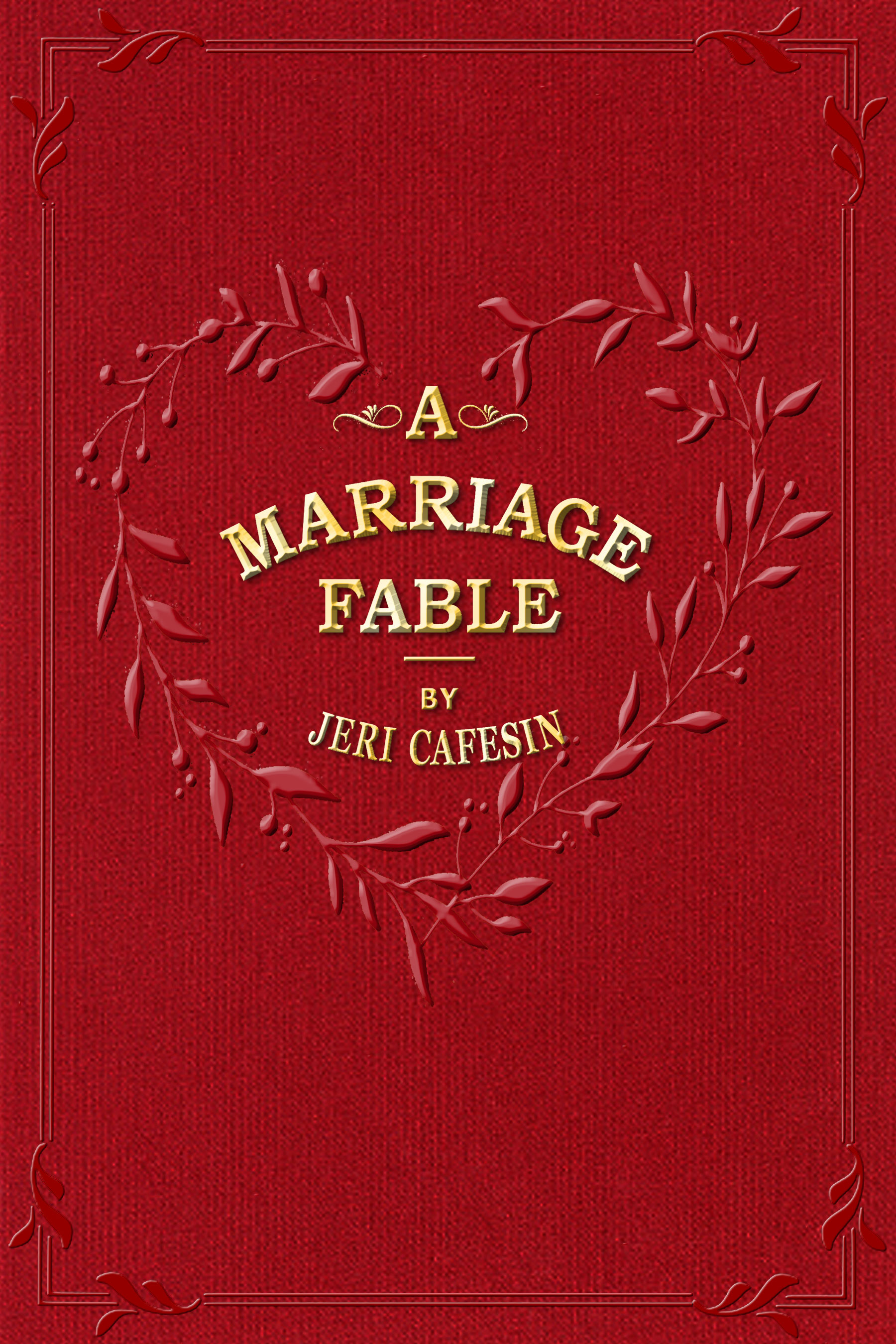
A modern twist on a Christmas Carol, A MARRIAGE FABLE is a novella, another tall tale of the powerful genie, Finnegus Boggs, and his lessons on love that inspires Andrew Wyman, a typical modern-day husband nearing his 25th wedding anniversary, to become a better man.

New #Review:

Journey Toward Enlightenment

If you’re a fan of magical realism like I am, you will enjoy reading this mystical story. A quick read with plenty of drama kept me engaged. It’s a story filled with equal parts regret and redemption. It always feels good when a narcissist jerk gets a taste of his own medicine, and feels even better when this self-absorbed deplorable gets a chance to be a better man. Will he accept this new choice? I’ll never tell. Ask the genie. Do yourself a favor and read this well-written story and find out if there is hope for “this day and every day forward.”

–Ingrid Hart

“A Marriage Fable does for Valentine’s Day what A Christmas Carol did for Christmas Day. A Must Read romantic fantasy!”
– BJ Fera—Goodreads

The Folly of Perception

I’ve been on the outside looking in since I was a little kid. Failing to assimilate, I worked at cultivating unique and different. After achieving this coveted perception, I no longer wish to possess it.

Unique often translates into strange. And as the mother of a 10 and an 8 year old, I do not want to be perceived as strange or different. I want to blend like homogenized milk and give my kids the platform to fit in, be a part of. What I don’t want is for either of my children to be “that kid with the weird mom,” though I fear I may already be there.

My kids still hold my hand, and not just in parking lots or crossing the street. They both still love to snuggle. I am their first choice to talk to, confide in, way beyond their dad, which makes me feel valued, respected and deeply humbled all at the same time. I realize this level of intimacy probably won’t [and perhaps shouldn’t] last as they grow and find their own path, but I don’t want my kids to ever be ashamed of me. I want to be proud of them. I want them to be proud of me.

I try to fit in. I go to the soccer games and the ballet classes and I wait around with the other parents and try to blend. But I don’t. And I get that they notice I don’t. I look different. I’m one of the oldest among them, by a good margin. My kids came late, after six pregnancy losses. I dress for comfort so most everything I have is rather loose. I don’t wear make-up. My hair is long and fine and all over the place. It refuses to stay pulled back in the scrunchy. I never quite look ‘put together.’

But looks aren’t the only thing that separates me.

Through the years I’ve come to realize that I don’t think like most people. The glass wall between me and most of humanity is not just me being paranoid. There is a casualness the parents seem to have with one another as they discuss their kids, or some celebrity or popular new show. I stand there and nod my head when it seems appropriate, but I don’t watch much TV, and really don’t care that Tyler is playing basketball now which conflicts with his sister’s dance schedule.

I’ve tried engaging more personally, ask about jobs, interests outside of family, broached news and current events, but taking a position and endeavoring to discuss it has mostly been met with polite blank stares. Everyone is careful with their words—politically correct and upbeat. I’m neither, and over the years I’ve learned to shut up to avoid discord. The conversations usually segue back to their kids and related activities around family, school, church, which as atheists we don’t attend. I invariably check out of the exchange and focus on the event at hand and cheering on my children.

The game or recital ends but everyone stays and continues talking. I’m on the outside again, feels like I’m lurking while I linger to give my kids time to play. I stand there watching them all integrate, proud of my children for choosing to, and of myself for giving them the opportunity when I’d rather just leave. I watch the parents gaily chat and wish I fit in like that. The folly of unique and different is it’s really quite lonely out here.

Between What is Said and What is Heard

On our drive from school the other day my tweenage son told me a classmate had offered him a joint. I’d been preparing for this moment, staging it in my head for years, ready with my bag full of allegorical stories of my reckless youth before easing into the “Why drugs are bad for you” speech. But as I drove home searching for how to begin, I remembered back when I was a teen, walking in on my sister’s confession, and my twisted interpretation of her troubling story…

I was fourteen, finishing 8th grade. Another sunny day in L.A., and I came into my house sweating from my twenty minute walk home from middle school. I heard my sister talking in our parent’s bedroom, which was usually off limits to anyone but them. When I got to their doorway I saw my sister and mom sitting next to each other on the end of our parent’s bed. They stared at me standing in the threshold, looking more like siblings the way their short, thick dark hair framed their tear-streaked faces.

I migrated into the room looking back and forth between them and asked what was going on. They shared a non-verbal exchange as I sat across from them on the little cushioned chair in front of the mirrored vanity. After some time trying to gain her composure, mom finally launched into the reveal. She wiped away her tears, then told me that my sister had been ill. This was not hard for me to fathom, since in the last year she’d dropped a lot of weight, and more recently, her skin was turning orange. We were not close siblings. She was two years older and had worn her weight loss like a badge of honor, but with my mom’s assertion I felt the ground falling away thinking of cancer or some other horrible life-threatening illness. My mother continued to explain that my sister had been starving herself for the last few years to lose weight, and had started vomiting most of what she did eat this past year to stay thin. She became so overwhelmed with grief in the telling that fresh tears slid down her cheeks. She covered her mouth and sobbed.

My sister took over, delivering her words vacillating between shame and pride. She sat perched on the edge of the bed and confessed to years of fasting and purging because skinny was in, and she didn’t want to be left out. She touched on her orange skin from eating lettuce and carrots exclusively for days. She talked about losing her period, her reason for confessing to our mother, afraid she’d become sterile. Then she changed tracks, and clearly delighted, she spoke of shopping with friends, and finally fitting into the skin-tight Calvin Klein jeans that the actress Brook Shields famously posed in. She’d become part of the in-crowd and reveled in being desired by the popular boys in school. Like most of her high-school girlfriends, she’d finally achieved what I thought impossible for our well-endowed family lineage. She was unarguably thin.

My mother had regained her composure, and sat next to my sister silently ringing her hands. I sat on the little cushioned stool staring at my skinny sister, consumed with jealousy. I wanted to be her.

I, too, wanted to be rail thin, heroin chic, a cover-girl stunner like my big sister. To me, she was beautiful— sleek, tight, hip, slick and trendy. She was what I too aspired to be, what every magazine, TV show and movie showed attractive, desired women should be. Thin.

And she’d just told me how to get there.

What I heard her say that afternoon was starving and vomiting worked to lose weight. I failed to acknowledge her detailed account of the toll the eating disorder took on her body and mind. I stopped listening right after she told me how she’d gotten skinny. Everything that followed was white noise.

From that day forward, and for the next five years I threw up frequently after eating to purge my body of the calories. I starved myself for days, sometimes going for weeks eating just vegetables. I tried to ignore that I was tired all the time, and chronically cranky, and falling into a black kind of depression. The desire to be thin superseded all reason. If my sister could do it, I could, and would, and did, regardless of the health risks.

Several years in therapy with a nutritionist gave my sister the fortitude to eat healthy, combat social pressures and become more accepting of her body. I learned to control my weight with exercise. Racquetball and running eventually replaced retching, but every time I over-indulge I consider throwing up to rid my body of the unwanted calories. To this day my sister’s words still echo in my head and taunt me— not all of what she said, only what I heard.

I pulled my Prius into the garage this afternoon and I looked at my beautiful son in the rear view mirror awaiting my lecture. My stomach hurt from the pasta salad I’d eaten for lunch earlier. My heart hurt— lost for words of wisdom for my kid. I wanted to purge my body of the heaviness, then shook my head in disgust at the notion, hoping my son didn’t catch it. Thirty years later, I’m still fighting the voices inside my head that rationalized my sister’s eating disorder as a workable solution to weight loss.

I led my son into the house for a snack and a chat. And I lied. I made up a tale of ‘a friend’s’ reckless behavior that led to disaster. I told story after story of kids I went to high school with who were users and grew up to be losers (though I knew none). I assured him popularity did not come with using. I left no space for him to surmise drugs were simple fun, or required to be ‘in.’ I chose my words carefully, considered them from many angles for possible distortion before speaking, even asked him to summarize what I’d said often to make sure we were on the same page. And though he parroted my sentiments in detail, in recalling my experience with my sister, I am left with lingering concern he didn’t really hear me.

Sometimes, between what is said and what is heard is the Grand f***ing Canyon.