Marketing 101

I hate running.

It hurts my legs, my lungs, my back, my tits.

I run between 3 and 4+ miles, five days a week. And I’ll continue to run as long as the benefits outweigh the drawbacks.

I hate feeling fat, and running is the quickest calorie burn I know of (my me-time is hugely limited with an active career and two kids). Running helps me think. It not only activates neural connectivity, it’s also a quiet space, undisturbed by kids or clients. I get to listen to my music, blasting through my earbuds, let it absorb me, the rhythm drive me, and in moments it feels like I’m flying.

I run whether I’m healthy, sick with a cold or flu, or anything else that isn’t laying me out on my death bed. I’m afraid if I give myself one excuse not to run it will lead to another, and in short order I’ll quit running. But I won’t quit, as long as the benefits serving my needs outweigh the hardships.

Benefits that fulfill Need/Desire is, or should be, the foundation of all marketing efforts.

Digital advertising is now the hip slick and trendy way to market. And no doubt, there are great marketing opportunities online. Websites, landing pages, social media marketing, e-blasts, analytics…etc, are TOOLS to market with. But marketing online, or offline, IS THE SAME THING. The basic principles of marketing must be applied to sell and grow any company.

Print, online, or on the friggin moon, Marketing is selling BENEFITS that fulfill WANT. There is no such thing as NEED. It is merely a construct of desire. Advertising, PR, branding, visual design, copywriting, marketing communications are, or should be, developed, designed and produced to SELL products/services/ideas/messages. ‘Likes, Engagements, Views, Impressions’ are all bullshit “vanity” metrics to stroke egos so you’ll buy more online ad space.

Startups these days typically begin their marketing efforts by flooding the internet with digital ads, videos, polls, games and such. These branding and selling campaigns push products and services without distinguishing a clear desire or solution for anyone. They do not tout the benefits of what these startups are selling, or identifying any specific groups of people who will likely find value in the features of their offerings. No matter what Google and Facebook tell you about their targeting AI algorithms, online ads are not tightly targeted to people likely to benefit from your specific product, service or message. This “Fire, Aim, Ready” approach clearly illustrates why 90+% of all startups fail.

I’ve been a MarCom specialist in the San Francisco Bay Area for 20 yrs. I’ve worked with a ton of startups who do not consistently promote their offerings features and benefits, or realign their marketing efforts to outshine competition, nor do they invest in developing new products that fulfill anyone’s desires. And I’ve watched them fold again and again, sometimes in ridiculously short order.

Marketing 101— IN ORDER (Ready, Aim, Fire!):

1. Get Ready and Productize Your Idea: Identify the features, benefits and differentiators of your offering that fulfill a desire, or offer a solution to specific target markets likely to find value in your product, service, or message/mission (non-profit).

2. Take Aim and Create Brand Identity, and Marketing Campaigns: Establish an identity (logo), and voice (tagline), as well as marketing efforts—digital, print, and pitch (in-person) campaigns that fulfill a desire, or offer a solution to each specific target audience.

3. Fire!—Launch Marketing Campaigns: Motivate people to ACT—to click, to subscribe, try, or purchase your offering, or buy into your message.

The new order of entrepreneurs are weened on social media and tech. Universities, startup schools and bootcamps generally teach their students to launch backasswards. They promote the MVP model of innovation. Building a MVP (minimum viable product) may have worked for a handful of successful startups, but it took them a hell of a lot longer to reach profitability than necessary. In most cases, MVP is a recipe for failure. Relying on consumers to figure out what benefits your offering should fulfill for them is time consuming, expensive, and lazy. It is the job of the entrepreneur to produce a product or service of value for specific groups of people before launching your business.

Unfortunately, opting for A/B testing, and SEO keyword tricks over real content—selling benefits fulfilling a desire—and relying on Google Analytics doesn’t actually SELL much. Measuring response rates isn’t new. It’s been in the background since advertising began, and generally offers limited utility. Marketing is dynamic! Results vary by target audiences, the day a campaign launches, time of day, day of week, the weather, behavioral trends, sociological and financial climates, to name just a few factors that determine response.

The principles of Marketing may be simple, but motivating people to bend to our will is not easy. Beyond the primary building blocks of any campaign, (Ready, Aim, Fire), at the core of effective Marketing is psychology. Online, or on Mars, understanding your customers and potential customers’ psychology is mandatory if you want the greatest response to your marketing efforts. Marketing pros study people, not code, since coding, especially with ever-emerging technologies, is time consuming to learn, and generally requires a different kind of awareness than psychology. I’ve yet to meet a web developer/designer who’s demonstrated mastery in marketing. Competent at software development means they’re investing their time in technology, not in the study of human behavior.

I tell my clients that digital marketing is not ‘the answer’ to effective marketing. New avenues of selling will arise, and others fade away. But the growth of any business, or nonprofit message, or even activity, like running, depends on the benefits continually fulfilling a desire for a specific group of people.

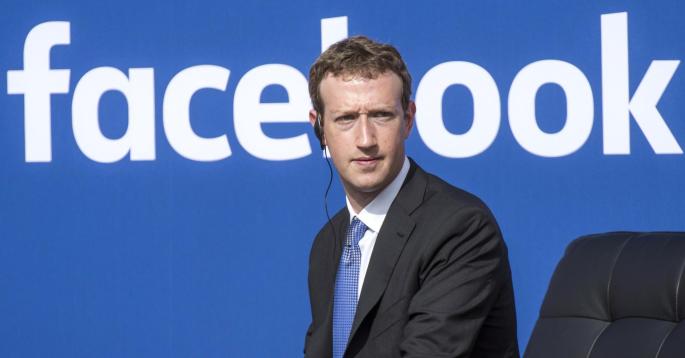
The Truth About Mark Zuckerberg

IMAGINE working your ass off all through high school, studying instead of partying, volunteering with school and community groups so you can into a good college. You send out your applications, to Stanford, Harvard, Princeton, as you have the 4.8 GPA, and all the right clubs on your resume. Your mom kisses each envelope before mailing, “for luck,” then hugs you, with her silent prayer that you’ll be accepted everywhere, that the world will see her beautiful daughter the way she does.

Pins and needles until the letters start coming in, or maybe they won’t, and no college will want you, keeps playing in your head, until February rolls around and letters DO come. Cal Berkeley wants you! UC Davis wants you! Stanford wait-listed you. And Harvard ACCEPTED YOU!! You’re dancing in the kitchen with your mom, dad, and little brother, laughing, hugging, celebrating your achievement of hard work and tenacity. For the moment, you let yourself bask in the glow of your family’s pride.

August comes round, and you are settling into your dorm room at Harvard. Your roommate is nice enough, though she’s hardly there. Unlike you, she’s very social. She got into Harvard on her daddy’s dime. He went there. She had a 3.6 GPA, but got a free pass into the school, as did ex-president George Bush Jr (with a 2.35 GPA). If nothing else, Harvard is incestuous. Many of Harvard students are related to past students, with money.

You love your classes. Your professors. A few months into your Harvard experience you are doing well academically, even if you haven’t made any real friends. You assure your mom you’re fine, though you don’t tell her you’re feeling more than a bit lonely. The popular girls, like your roommate, came in with money, and come from money. They dress trendy, buy expensive, look sharp, act confident. Make it in Harvard, or not, they have no worries after school. The rich rarely have to worry like the rest of us.

You come back to your empty dorm room one afternoon, turn on your computer, and are about to get started on the paper you have to write for Expository, but the image on the screen stops you dead. Your face stares back at you, next to some other young woman. Under her picture it says, “HOT!” Under YOUR PICTURE voters say you are not.

This is the beginning of Facemash, which eventually became Facebook. This is MARK ZUCKERBERG’S idea of fun—making women feel like shit for his entertainment. IMAGINE what that girl must have felt when she saw NOT under her Harvard profile picture. IMAGINE if it was YOUR CHILD. OR YOU.

And here’s what ZUCKERBERG said the first night he released Facemash: “I almost want to put some of these faces next to pictures of some farm animals and have people vote on which is more attractive.

This is MARK ZUCKERBERG then, and THIS IS MARK ZUCKERBERG NOW! He is still the same ugly, petty, small man/child, pulling the same ugly crap, indifferent to anyone but himself, ignoring the pain he is causing across the globe now. Zuckerberg was already a second year student at Harvard. He was not a child. If ZUCKERBERG was a decent man, a man of goodness, not cruelty, he never would have COPIED HOT OR NOT, an app that was already out there. Zucky just ripped it off! To debase Harvard WOMEN. Shame on you ZUCKY, and your MAMA and PAPA, for not teaching you how to treat others with respect and kindness!

ZUCKERBERG is still indifferent to anyone but his own needs, even TODAY. His Facebook recommendation engine helped get TRUMPY ELECTED! And he’ll likely do it again. How? His recommendation engine only shows you what ZUCKY WANTS YOU TO SEE. You do NOT see all your connection’s posts. ZUCKY WON’T LET YOU. He shows you only posts that REFLECT YOU. It helps his advertisers sell you more, to show you only what you’ve shown interest in, or people like you have clicked on. We are all merely seeing posts that reflect our own opinions now.

ZUCKY only sees his own reflection too. It’s what allowed him to debase women at Harvard. It is allowing him to keep his screwed up recommendation engine on and running, as you are more likely to BUY from people reflecting your position. Russians, Republicans spreading lies, ZUCKY doesn’t care. He cares about getting and keeping advertisers. His “fake news” AI department is a joke. I know someone working there, and they tell me he really isn’t trying to stop it at all. It doesn’t serve him to do so. He wants advertisers, and you don’t get them, and keep them, limiting ad sales.

He got lucky debasing women from an app he RIPPED OFF. Now he’s god, to so many. Sadly, they are so blinded by his “success” and they can not see the ugly little man/child he was @Harvard, and still is. Humans get our moral fiber between 0 – 8, maybe up to 10 years old. He clearly didn’t get much moral guidance from his parents. And amoral people rarely change. They need a brick to the head, to ‘hit bottom,’ and ZUCKY ain’t fallin any time soon. Now, he’s guiding the world to disaster, to make money from advertisers, to keep FACEBOOK and INSTAGRAM going. (And this is what Millennials, and MBAs deem “success.”)

Now he’s on to #THREADS, to collect MORE DATA on you to SCREW YOU, this country, the world. Don’t let him! Don’t get on THREADS!

My hope, MARK ZUCKERBERG, is that you learn to THINK beyond yourself, and to ACT with kindness and empathy, instead of what you were obviously raised to be— mean, thoughtless, sexist, totally and completely self-interested. Your power was wielded by the wealth of your parentage, mere chance you were born into money—dumb luck, literally. Imagine how you and your wife, #PriscillaChan, would feel if YOUR DAUGHTERS, #Maxima and #August, were voted NOT HOT, deemed UGLY their first year at Harvard, as no doubt they’ll go there with the money you have made on the trillions of wasted hours all of us have spent on FACEBOOK and INSTAGRAM , and coming soon THREADS.

#DeleteFacebook

#DeleteInstagram

How to Raise a Genius

Went to the Jelly Belly Factory on a field trip with my daughter’s 2nd grade class. The young man assigned to escort us on the tour misquoted a brilliant saying by one of my favorite icons.

The guide delivered his canned speech, spoke of how long and complex the process to make even one single jelly bean, but that nothing great ever came easily, “as the inventor, Thomas Edison said: ‘Genius is 10% inspiration and 90% perspiration.’”

But that is NOT what Tom said. He said, “Genius is 1% inspiration and 99% perspiration.”

So what is my issue with the mere 9% our tour guide misquoted?

Mr. Thomas Alva Edison was trying to tell us that to get good (‘genius’) at ANYTHING takes HARD WORK (‘perspiration’), and a lot of it. He should know. It took him, and an educated team of men many years and over 5,000 exploded glass bulbs to invent the light bulb.

Still, you say, it’s only 9%. The 8 year old’s the tour guide was talking to didn’t even know what “percent” meant. And while this may be true, there were 15 adults with the pack of 40 kids the guide was leading. And the parents understood. Most had probably never heard the quote before. It is somewhat obscure, which is a shame because it is an astounding insight. What the tour guide misquoted did not communicate the gravity of Mr. Edison’s meaning.

In the beginning of the 4th grade our son failed several math tests in a row, and upon inquire we found he didn’t understand the material. When asked why he hadn’t asked for help from either his teacher or us, he confessed he felt afraid he’d look dumb. Having always done fairly well in math, when he got lost, he felt too stupid to ask for help. He was supposed to be smart, but maybe he wasn’t, he cried, clearly shamed.

I hugged him, held him, and reminded him of old Tom’s saying for the hundredth time. Then my husband and I got to work, played tag team, alternating afternoons, evenings and weekends to teach our son what he needed to know. Within three months of daily math lessons he not only grasped the material presented but excelled to the top of Math Swap in his grade level and remained there through elementary school.

Our son now loves math. It’s his favorite subject. He works hard at it and that hard work just placed him in the most advanced math class at his new middle-school. Failing those math tests in the 4th grade turned into a great education for all of us. We got to see directly how hard work pays off. And though our son may not always tow the line of excellence, he now knows that ‘smart’ is not given, but earned.

The New York Times Magazine had an article a while back on ‘genius.’ It sited Anders Ericsson’s research on The Making of an Expert, which concluded ‘genius’ wasn’t born, as previously thought, but made.

“Outstanding performance is the product of years of deliberate practice, not any innate talent or skill,” according to K. Anders Ericsson, Michael J. Prietula, and Edward T. Cokely.

Most everyone starts out with the 1% inspiration. It comes with being human, and our ability to think abstractly.

Few of us have the tenacity, or the determination to endure failure after failure and continue through that last 5-10% it takes to achieve excellence. Most of us settle on gawking at greatness instead of pursuing it.

So, the question is not, ‘What is genius,’ or even excellence, but what motivates persistence?

Achieving good grades, or becoming a killer guitar player, or great at soccer, or even parenting, takes “deliberate practice.” We need to impart Tom’s wisdom to our children, teach them by example, with unwavering diligence, that reaching their potential can not be achieved blowing most of the day binge watching Netflix, or YouTube, or gaming. To actualize ‘greatness’ means devoting the 99% perspiration— the time, energy and effort necessary to create anything of lasting value. Whether it be a school report, a science project or a math test, genius is not only doable for most every child, but for all of us with hard work and persistence.

The Virus Killing Silicon Valley Startups

There is a pandemic in Silicon Valley. It is making startups sick, and 90+% of all small businesses fail. This virus didn’t start in China, or any country. It didn’t begin in crowded, filthy wet markets from different animals swapping genes. It began with Google and Facebook, and their unrelenting greed for profits.

I am currently mentoring startup students at Berkeley-Haas. I also teach entrepreneurs at Stanford and Cal how to achieve that illusive 10% of sustained business success. Without exception, all are starting up in the exact same backasswards way.

1. They begin their business by developing their product or service.

These entrepreneurs have invested their time, and often their own money in creating a MVP (minimum viable product), a concept introduced by Eric Ries in 2011, and the 2nd of 3 primary reasons most startups fail. NEVER begin your business by producing two-thirds of an idea hoping to ‘find’ your customers, and get them to tell you how to improve your offering. In fact, producing your initial offering at all is the wrong way to start any business.

2. The startup, with their developed MVP, create ‘digital’ marketing campaigns.

They launch their website, and create SMM (social media marketing) and PPC (pay per click) ads to get ‘traction.’ Impressions, Engagements, and Likes are virtually meaningless. Sure, Branding is essential to build awareness of a startup, but sales are what makes a business successful. SALES. That’s it. Without sales, or paid subscriptions, or donations in nonprofits, you have a hobby, not a viable business.

Let’s get real. It’s ridiculously simple to use Google Ads, or to place Facebook ads. These platforms spend millions annually to convince entrepreneurs that slamming the net with crappy advertising will make your company successful. It’s BULLSHIT. They are lying to you, pocketing your $3,000 – 5,000 monthly to ‘train’ their AI engines to “target” your business better than you can. In fact, you should KNOW YOUR TARGET AUDIENCE BEFORE YOU PLACE ANY ADS, or even develop your website.

Beyond Google and Facebook, there are tens of thousands of “Digital Marketing” agencies, selling you the same crap Google and Facebook are. They promise to make you money if you spend your money with them because it is equally easy for them to place these PPC ads as these platforms have made it for you. Stop buying into their deadly virus!

The real ROI on “digital advertising” is very hard to find. Google, Facebook and ‘digital’ agencies make these stats almost impossible to come by. Reality check on ROI of “digital” advertising, according to Search Engine Journal: “the average ROAS (return on ad spending) for small accounts is 1.5 to 1% – or barely break even.” Additionally, PPC or CPC means COST PER CLICK, not sales. It is estimated that 25 – 40% of all clicks on ads are fake, meaning you are paying for clicks from Click Farms in the Philippines, or automated systems meant to profit Google while costing you for every fraudulent click.

3. The startup goes after “building market share” with freemium offers, hoping to convert users to paying customers somewhere in the theoretical future.

It’s easy to get people to try, or even use your offering for free, when they have no skin—money—in play. SALES means getting folks to pay for your offering/s. Getting actual sales is a lot harder!

To garner actual SALES, you must first understand the competitive landscape of your product or service. Many startups have no idea the market share they’re seeking has been garnered by another company with the same or similar offerings. And here’s a heads-up to all the entrepreneurs who think your offering is so unique there’s nothing out there like it. Bullshit. In 5 minutes I can find similar offerings to just about anything. Even if your offering has a few more bells and whistles, it’s hard to get people to pay to switch from what they’ve become accustomed to using.

First and foremost, MARKETING is NOT “digital advertising.”

Broadcast, to PR, to networking, the ROI from these mediums average between 2 – 20+%, way more than the .05 – 1% ROI of ‘digital’ advertising.

BUSINESS, any business, BEGINS with MARKETING. Regardless how great your products or services are, your business will NOT be successful without constantly marketing your offerings. Branding is a tool of marketing—campaigns meant to build awareness of your offerings and company. And Marketing takes many forms, way beyond the extremely low ROI of “digital” campaigns.

The Marketing process is far more complex than designing a logo, putting up a website, and slamming the internet with “digital ads,” organic or paid. BEFORE you build your offering, construct a MARKETING FOUNDATION for your startup, (or existing business—better late than never) to create a thriving, sustainable company.

Before investing the time and money to build a product or service, then waste more countless hours and dollars advertising it, BEGIN any startup or business venture by PRODUCTIZING each and every offering IDEA.

PRODUCTIZATION begins by getting intimate with the offering you hope to create. Make lists, actual, physical lists of your idea’s FEATURES, and the BENEFITS or SOLUTIONS the FEATURES your potential offering will provide. Next, create lists of who will benefit from the features of your offering. These are your TARGET AUDIENCES, the people you will market your offering to. These lists also provide SEO content marketing when you begin the process of creating advertising campaigns.

PRODUCTIZING your offering/s means doing COMPETITIVE ANALYSIS every month or so, to be sure you understand what companies are producing similar offerings, and the market share they’re collecting. If your startup has any success at all, others are going to copy what you’re doing, and go after the same targets you’re hoping to attract, and keep. Understanding what your competition has will help you define what makes your offering unique. Your startup’s marketing should always be selling your UVPs (unique value propositions)—what makes your offering better than your competitors.

It is a lot more fun developing products and services—turning a concept into a reality—than PRODUCTIZING an idea. PRODUCTIZATION is time consuming and detail oriented, and a drag comparatively speaking. If you want to have fun, then enjoy your hobby of creating offerings. If you want to be among the 10% that build SUSTAINABLE companies, you must first build a MARKETING FOUNDATION under your startup, which begins with the PRODUCTIZATION of each and every potential offering.

Copywriting “Test”

Had an interview for a Copywriting contract that required a ‘test.’

Here’s the ‘test:’

Create five (5) YouTube Channels that can “go viral,” which, according to this ‘digital marketing agency’ was “20 million views in one week,” with these prompts:

  • Create a “Seek and Find” YouTube channel.
  • Create a “Mouse Maze” YouTube channel.
  • Create a [tween] YouTube channel: “Imagine you are 13 and develop a superpower…”.

I stopped reading the “Test Deliverables” after that because this agency asked for a total of 5 unique YouTube channel ideas, their only instruction to create channels to “go viral, with 20M views weekly.” I hope the absurdity of this request is not lost on you, since about .03% of all YouTube Channels get 1M+ views on any given video.

And remember, this is a Copywriting ‘test,’ not a product development gig, which, seemingly, this marketing agency does not know a BRANDED YouTube channel actually is a product offering, and should be developed and marketed accordingly.

Five, free, viable YouTube channel ideas requiring little copy—this agency did stress an ‘attention-grabbing’ visual—including thumbnail layouts and storyboard drawings. Oh, and they required I sign an NDA saying that whatever I came up with on their ‘test’ was theirs to keep. Five (5). Free Channel ideas. Per applicant.

Their ‘test’ gave no OBJECTIVE for creating these channels—no sales goals for any company, or the channel itself to realize profitability. No reason for asking applicants to create these brain dead types of channels, other than the unmentionable of making the user the PRODUCT by selling their data, then slamming those same users with pay-per-click ads on every webpage visited forward.

The prompts in their ‘test’ were pulled from the latest trending crap on YouTube. The agency asked applicants to pile on more intellectually void baseline garbage to these senseless trending channels, following the Fire, Aim, Ready marketing method of business failure. Clearly this ‘marketing’ agency doesn’t really understand, well, marketing, assuming they were really looking for a copywriter, and not just garnering free content ideas. There are three business MARKETING reasons (not personal, ego-building social sharing) for a YouTube Channel:

  1. As a marketing/branding channel for a business.
  2. As a data collection tool for tightly targeting future marketing campaigns.
  3. Selling collected data to Affliate Marketing brokers.

Applicants for this copywriting gig were not asked to market an offering of value, nor to build a marketing campaign (or YouTube channel) for any specific targets, nor did they instruct applicants to actually create and MARKET (i.e. BRAND) a YouTube channel for any specific business. They are under the delusion if they just get “views,” they’ll get sales, which data shows is a lie (https://freakonomics.com/podcast/advertising-part-2/), promoted by these very ‘digital marketing’ agencies to get clients. (https://www.ippglobal.org/post/truth-about-data-science)

Of course, after reading their ‘test,’ I turned down the prospect of consulting for them. I felt angry though, that they were not only asking for free, unique IP, but also the IP they were asking for was truly thoughtless, flat out bad marketing, sure to put more ‘digital’ garbage on the ever mounting pile of crap already on YouTube. To quell my anger, with my rejection of consulting for their agency, I included an answer to their first prompt:

Create a Hide & Seek” YouTube Channel:

A Year of Free Beer for Finding NAME OF FAMOUS IPA BEER.

AR (augmented reality) game to find the bottle of famous IPA BEER (or any other idiotic thing that’s trending). Everyone 21 or older with mobile can play. AR has NAME OF FAMOUS IPA BEER bottles in places around each major cities, but also standard beer bottles, and area sports team logos, (even cross-sell with image placements) that ‘lead’ you to the ‘right IPA.’ First to find NAME OF FAMOUS IPA BEER (in any given round, which may be a week or more per round) to collect all that global data, (which then can be sold to screw us all further), wins the free beer for a year, every month getting new IPA flavors.

The TARGET USERS of this YouTube Channel will be:

  1. Lowest hanging target is the sudo-intellectual, over-educated ivy-league crowd, mostly White men; Christians, Jews, Agnostics—higher education levels; MMORPG, FPS, and MOD gamer; Software, Marketing, Admin, Finance; STEAM; democrats; mid – upper income; 21 – 60.
  2. Lazy, generally fat, FPS gamers, beer and sports-loving men. White mostly. Conservatives. Apatheist, Christians; low – mid income; blue-collar job; pensions; 18 – 65.