Marketing 101

I hate running.

It hurts my legs, my lungs, my back, my tits.

I run between 3 and 4+ miles, five days a week. And I’ll continue to run as long as the benefits outweigh the drawbacks.

I hate feeling fat, and running is the quickest calorie burn I know of (my me-time is hugely limited with an active career and two kids). Running helps me think. It not only activates neural connectivity, it’s also a quiet space, undisturbed by kids or clients. I get to listen to my music, blasting through my earbuds, let it absorb me, the rhythm drive me, and in moments it feels like I’m flying.

I run whether I’m healthy, sick with a cold or flu, or anything else that isn’t laying me out on my death bed. I’m afraid if I give myself one excuse not to run it will lead to another, and in short order I’ll quit running. But I won’t quit, as long as the benefits serving my needs outweigh the hardships.

Benefits that fulfill Need/Desire is, or should be, the foundation of all marketing efforts.

Digital advertising is now the hip slick and trendy way to market. And no doubt, there are great marketing opportunities online. Websites, landing pages, social media marketing, e-blasts, analytics…etc, are TOOLS to market with. But marketing online, or offline, IS THE SAME THING. The basic principles of marketing must be applied to sell and grow any company.

Print, online, or on the friggin moon, Marketing is selling BENEFITS that fulfill WANT. There is no such thing as NEED. It is merely a construct of desire. Advertising, PR, branding, visual design, copywriting, marketing communications are, or should be, developed, designed and produced to SELL products/services/ideas/messages. ‘Likes, Engagements, Views, Impressions’ are all bullshit “vanity” metrics to stroke egos so you’ll buy more online ad space.

Startups these days typically begin their marketing efforts by flooding the internet with digital ads, videos, polls, games and such. These branding and selling campaigns push products and services without distinguishing a clear desire or solution for anyone. They do not tout the benefits of what these startups are selling, or identifying any specific groups of people who will likely find value in the features of their offerings. No matter what Google and Facebook tell you about their targeting AI algorithms, online ads are not tightly targeted to people likely to benefit from your specific product, service or message. This “Fire, Aim, Ready” approach clearly illustrates why 90+% of all startups fail.

I’ve been a MarCom specialist in the San Francisco Bay Area for 20 yrs. I’ve worked with a ton of startups who do not consistently promote their offerings features and benefits, or realign their marketing efforts to outshine competition, nor do they invest in developing new products that fulfill anyone’s desires. And I’ve watched them fold again and again, sometimes in ridiculously short order.

Marketing 101— IN ORDER (Ready, Aim, Fire!):

1. Get Ready and Productize Your Idea: Identify the features, benefits and differentiators of your offering that fulfill a desire, or offer a solution to specific target markets likely to find value in your product, service, or message/mission (non-profit).

2. Take Aim and Create Brand Identity, and Marketing Campaigns: Establish an identity (logo), and voice (tagline), as well as marketing efforts—digital, print, and pitch (in-person) campaigns that fulfill a desire, or offer a solution to each specific target audience.

3. Fire!—Launch Marketing Campaigns: Motivate people to ACT—to click, to subscribe, try, or purchase your offering, or buy into your message.

The new order of entrepreneurs are weened on social media and tech. Universities, startup schools and bootcamps generally teach their students to launch backasswards. They promote the MVP model of innovation. Building a MVP (minimum viable product) may have worked for a handful of successful startups, but it took them a hell of a lot longer to reach profitability than necessary. In most cases, MVP is a recipe for failure. Relying on consumers to figure out what benefits your offering should fulfill for them is time consuming, expensive, and lazy. It is the job of the entrepreneur to produce a product or service of value for specific groups of people before launching your business.

Unfortunately, opting for A/B testing, and SEO keyword tricks over real content—selling benefits fulfilling a desire—and relying on Google Analytics doesn’t actually SELL much. Measuring response rates isn’t new. It’s been in the background since advertising began, and generally offers limited utility. Marketing is dynamic! Results vary by target audiences, the day a campaign launches, time of day, day of week, the weather, behavioral trends, sociological and financial climates, to name just a few factors that determine response.

The principles of Marketing may be simple, but motivating people to bend to our will is not easy. Beyond the primary building blocks of any campaign, (Ready, Aim, Fire), at the core of effective Marketing is psychology. Online, or on Mars, understanding your customers and potential customers’ psychology is mandatory if you want the greatest response to your marketing efforts. Marketing pros study people, not code, since coding, especially with ever-emerging technologies, is time consuming to learn, and generally requires a different kind of awareness than psychology. I’ve yet to meet a web developer/designer who’s demonstrated mastery in marketing. Competent at software development means they’re investing their time in technology, not in the study of human behavior.

I tell my clients that digital marketing is not ‘the answer’ to effective marketing. New avenues of selling will arise, and others fade away. But the growth of any business, or nonprofit message, or even activity, like running, depends on the benefits continually fulfilling a desire for a specific group of people.

The Gift and Cost of Love

My mother was crying when I walked into the kitchen around sunset, her hips sunk into the linoleum counter top. She was slouched against the handle of the refrigerator door holding on to it as if to hold herself up. I looked over at my father who sat in his usual place at the head of the kitchen table. He had his stoic face on but his sadness was palpable. My sister sat across from him. She too was crying.

“What’s going on?” I was afraid of the answer, hoping it had something to do with my 98-year old grandmother since anything else was sure to be very bad.

“My Pepper dog is dead.” My mother kept her head down but I saw her tears fall to the floor.

No. That can’t be. When I left for the beach that morning she was fine. “Are you kidding?” The words sort of fell out of my mouth, hope trampling reason. It was clear she wasn’t kidding. Everyone stared at me with their jaw somewhat dropped but they didn’t say anything. “What happened?” It just seemed so implausible— not after 14 years and to date the dog had never been sick.

“We think she got bit by a rabid squirrel, or ate something poisonous.” My dad tried to keep his tone even but I caught the quiver. “Mom found her in the backyard in the bushes after calling her in for dinner and she didn’t come.” Then I saw the tears cascade down my father’s cheeks. I’d seen my dad cry only one other time, when JFK was assassinated. That’s when I ran out of the house. And kept running.

No! This can’t be happening. Not Pepper. Not my beautiful pound-hound Shepard. Not my best friend, sometimes my only friend, always there all these years to let me know I was valued. I should have taken her to the beach regardless of the hassle of looking out for her all day, kept her with me, safe, like she’d protected me from lonely. I should have played frisbee with her more, done more road trips, spent more time with her. I ached for more time with my bright-eyed, big eared dog.

I ran as fast and hard as I could, for as long as I could, trying to outrun reality, trying to outrun the hurt in me. My Pepper dog was gone, the first loss of a loved one I’d ever experienced, and the idea of her gone from my life was so profoundly empty, black, lonely, lonely, lonely it made me physically ill by the time I got to the bridge, stopped in the center and threw up over the side into the L.A. wash. When I finished, I leaned my face against the cool metal rail, and cried. 

“I HATE YOU!!” I screamed at the heavens. It was dusk by then. No one was around. Not a whole lot of people even knew about that bridge. At one end was an upscale residential neighborhood, on the other were exclusive condos. “How could you take her away from me?! I HATE YOU!” I yelled at the top of my lungs through my tears, knowing I wasn’t speaking to anyone; no one, nothing was hearing me. I guess what I meant was, ‘I hate me.’ Right at that moment the loss hurt so badly that I hated myself for loving her.

“May I help you Miss?” He asked softly, but it startled me anyway. I hadn’t seen him approach. He had come across [the bridge] from the condo side. He was Indian, from India, with the softest brown eyes I’d ever seen. I think he thought I was going to jump off the bridge.

“My dog died,” I told him. I started crying hard again as that reality sunk into my heart. I don’t know why I told him. So often when people ask we’re supposed to pretend we’re fine because they really don’t want to know anyway. “I really loved her.”

He nodded, let a few moments pass in silence then said, “My aunt died last week. I am still very sad. I miss her very much.” He stood erect a few feet from me, his head slightly cocked to one side. He let his eyes rest on mine for only a moment then he looked down, consumed by the black hole of loss.

“I’m sorry about your aunt,” was all I could think of to say. The man had put his aunt on par with my dog, and I was humbled, and grateful.

“I’m sorry about your dog,” he said. “I hope your sadness will temper in time with good memories.” He gave a slight bow and moved across the bridge.

His kindness tempered my pain, a ray of light in the suffocating blackness. I watched him until he disappeared into the neighborhood beyond, but did not lose sight of his wisdom. 

I left the bridge soon after him. On my way home I let my mind wander over my time with my Pepper dog. I cried. I even smiled once or twice through the tears. 

My sadness has tempered over the years. Most times when I think of her the memories are sweet. But to this day, 35 years later, the pain of her loss still fills me with unmitigated terror, a now ever-present awareness of the enormous cost of love.  

How to End SEXISM

My father raised me to believe my mother was ignorant. “Your mother, (implying like most women) is irrational. Fickle. Full of love and lightness, but not really a [deep] thinker.”

All women were (are) not as… capable as men, according to my father, as the woman’s primary job— her role in society of mom, caretaker, homemaker— isn’t like a real job and doesn’t take much brain power. He actually said to me, “Isn’t it odd that women can’t walk and talk at the same time,” and stopped to tell me this in all seriousness, while we were walking.

My father thought he was inherently smarter than my mother, or any woman. He was a MAN, after all. He claimed to be well read, had to be for business in the real world, unlike silly homemakers. (My mother read the newspaper daily, news magazines, new non-fiction and fiction monthly. My father read only Popular Mechanics, and watched TV. Cop and detective shows mostly, where the main white male character was rescuing ditsy, busty women.)

My mother graduated high school at 16, and attended Florida State University two years before most of the classmates she left behind in New Jersey. My father has no degree beyond high school.

My father went through five or more businesses, several of which failed, none of which ended up in substantial wins. My mother started a pilot magnet program at Cabrillo Marine Museum for underprivileged East L.A. kids, to teach them marine science. For almost 20 yrs she touched thousands of lives, many of whom I met personally, in the store or mall, when they stopped my mom to gush that they were now oceanographers and scientist because of her program. As a woman, she made 1/3 of the men whom she worked beside, offering comparable programs.

What is SEXISM?

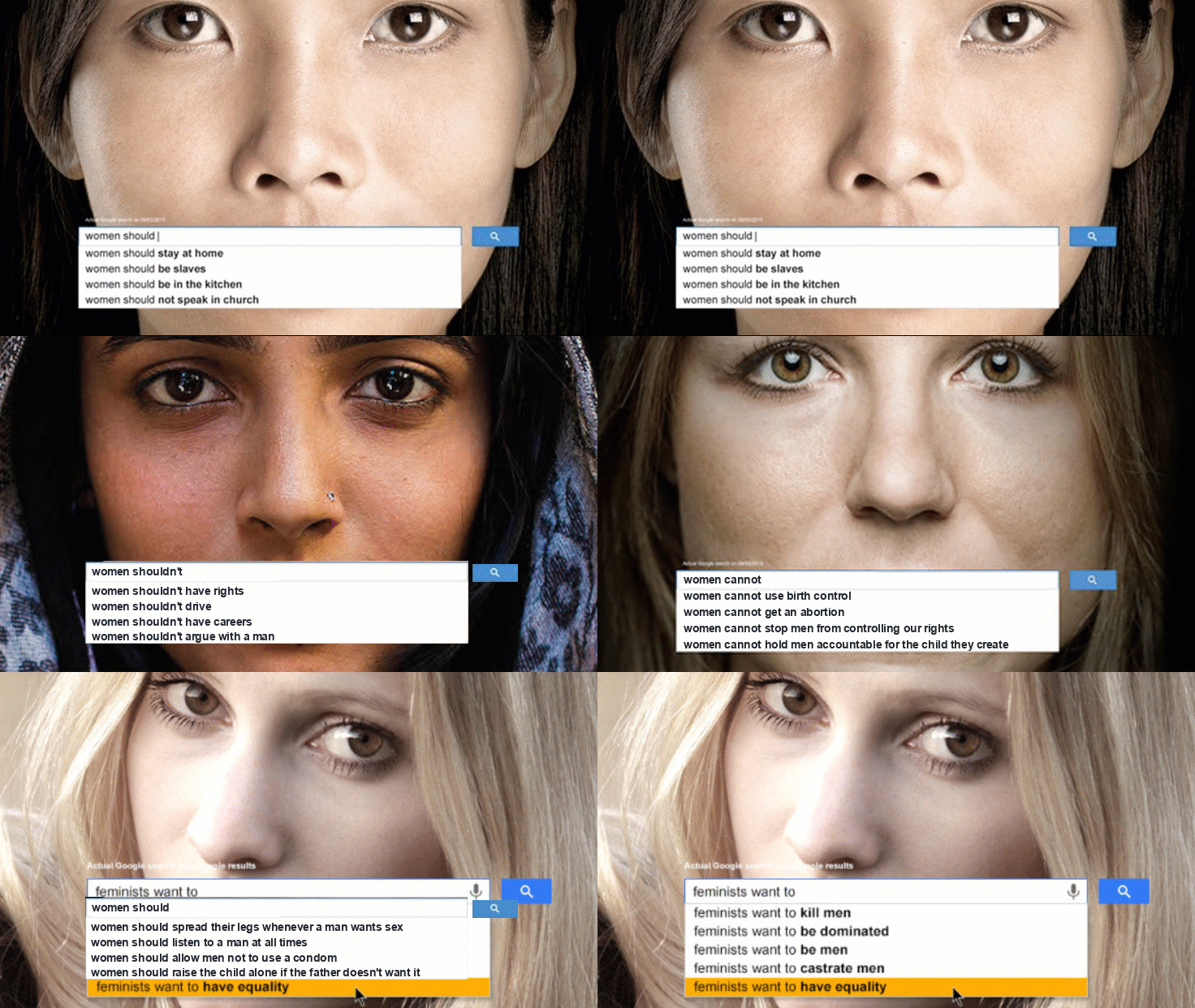
Sure, most of us will agree equal pay for equal work, regardless of gender is an important step in ending sexual inequality. According to Variety, the top paid actress for a single film of 2021 was Jennifer Lawrence, at $25M. Actor Daniel Craig, made $100 million. Women had only 34% of the speaking roles in major movies, according to Women and Hollywood. (Women are half of the human population, yet no actress is even close to #2, 3, 4, in equal pay or presence in film.)

In 2020, almost 60 years after the United States passed the Equal Pay Act, Pew Research says a woman earns only 84% of what a man makes.

So, why, even today, are women fighting so hard for equal pay, which most of us agree is one obvious step to ending SEXISM?

BELIEF. Both sexes still believe women are ‘less’ than men.

My father was born in 1929, when MEN WERE MEN, and everyone ‘knew their role.’ His mother, my grandmother, was a homemaker. His father, my grandfather, was a pianist for the New York Philharmonic, and the breadwinner for his family. To make it through the depression years, and the harsh realities of being a Jew through WW2, each family member had a role, a function to fulfill to assure the family unit was maintained—literally stayed alive, however modest an existence.

From caveman days through the 1940s many jobs required physical labor suited to a man’s physiology, as technology wasn’t here yet. Humans, not robotics, built our vehicles and appliances, and manufacturing was a man’s job even after the war, before it went offshore.

Fast forward to present day. Last Sunday my husband is reading me an article on the feminist #MeToo movement in the New York Times, while I cook pancakes for him and our two teens. At the end of the article he sighs heavily, his ‘this is absurd’ sigh, and says, “It gets so tiresome hearing women complain how hard they have it. It’s equally hard on men, and always has been.”

I looked at him incredulously, and said, “How many times have you been sexually assaulted on the job?”

He didn’t respond to my rhetorical question. I already knew his answer. Zero. He didn’t turn my question around. He knew an investor in my very first startup tried to rape me in my office at our Christmas party, then fired me that night for not letting him assault me. He knew my second job out of college, as an Art Director for 1928 Jewelry Company, the CEO came into the empty conference room moments after me, introduced himself, and instead of taking my outstretched hand, squeezed my breast, as if checking the firmness of an orange. I’ll never forget, he said, “Mmm, Nice!” before I pulled away, shamed as others I’d yet to meet walked in.

My husband wasn’t at my housewarming party, when a relative accompanying an invited guest tried to assault me when I found him at my work-space on my Mac. I could go on, but you get my point. And even knowing all this, my husband is “sick of hearing women whine about how hard we have it.”

Can’t blame him, really. My father-in-law talked down to my mother-in-law, probably all their lives together, but clearly in the 20 years I’d been on the scene of their married life. He was cruel and cutting with a continual barrage of snide ‘jokes,’ if he listened to her at all. My husband tells tales of his mom going ballistic on his dad every few months, probably when she’d had enough of trying to communicate with him while he verbally slammed her, or, by and large, ignored her.

To this day, most men do not BELIEVE a woman is as ‘equal’ to them as other men.

The problem is, most women BELIEVE this too. We do not feel equal. Why would we? We get paid less for the same job. Our bodies are more valued then our minds (as so many men, especially wealthy men—think Amazon’s Jeff Bezos, Fox News Roger Ailes, or Pres. Clinton—can’t seem to get their brain out of their little head). Our personal rights are being stripped away state by state as our Supreme Court dictates what we can do with our own bodies. Women are rarely taken seriously by the overwhelmingly male controlled business world, nor in our home environments.

How many women reading this post did most of the cooking and serving of your last holiday meal, even with a career/job? How many of you do most of the cooking, cleaning, chauffeuring of the kids, even working full time? The fact is, according to the 50 news articles I just read, women still do 80 – 90% of all domestic chores, including kid care, regardless of her job status. Equal pay for equal work, of course, but also equal WORK must be invested by both genders to reach sexual equality.

How do we get there from here? I honestly have no idea, other than to stand up, and say, “NO! Not OK,” whenever you are a victim, or see the action of SEXISM.

Since the mastodons are all gone, and we can now buy packaged meat at Safeway, we no longer require the muscular physique of the male physiology to survive as a race. Since most women are now bringing to the table of any union equal intellectual, logistical and financial support, men are rapidly losing their position of strength, figuratively and literally (with obesity at an all time high).

Men have dominated the business world from the beginning, and this too must change. It isn’t “locker room talk.” It is degrading, and women buy into it, thinking our value really is just in our breasts and how accessible our vagina to those that show interest. At the very least, women are made to feel we must acquiesce to this humiliating behavior men dish out to be heard at all.

This BELIEF, that women are lesser than men, by both genders must end, before SEXISM is a non-issue.

Humans, all of us, ACT as we BELIEVE.

Change the BELIEF, and change the actions of SEXISM.

Why to Choose Living

Actor, Robin Williams; Fashion designer, Kate Spade; Chef, Anthony Bourdain all killed themselves. Prodigal computer hacktivist, Aaron Swartz, hung himself at 26 years old. Miss USA, Chelsi Smith, is the most recent ‘influencer’ suicide as of this writing. In 2020, it’s estimated 1.2 million of U.S. attempted suicide, and over 126 a day actually succeeded in killing themselves. Suicide is the 10th leading cause of death in the U.S., after cancer, car crashes, and Covid-19.

Clearly living is a choice most all of us make every day we live.

Almost 42,000 of U.S. will consider suicide today. Have you? I have. Not once or twice during hard times, and in passing, but many times throughout my lifetime, from my tween years, likely till I die. Yet, virtually daily, I make a conscious choice to stay living.

I don’t believe in any higher power than the laws of physics. There is no “Jealous God” (Exodus 34:14) watching, or judging our behavior from ‘beyond’. There is no heaven or hell. I cease to exist when I die. I’ve never been able to pretend we are more than the collection of cells, chemistry and neural conductivity that make up our bodies and consciousness.

I can choose to go hang myself in the doorjamb of my office after I finish writing this without fear of damnation. The only eternal soul we possess is our hope that we matter past our limited time alive. But we don’t. Not really, beyond our effects on the lives we touch while we are living, like our family, and a handful of friends and colleagues. Even if you’ve done DNA ancestry, other than their genetic contribution to your existence, your dead lineage are names in a ledger, nothing more.

Too dark a view for ya? It ain’t depression. It’s reality, and a scary one knowing that regardless of what we believe, our life adds up to what we DO with our short time of awareness.

Individually, we really have very little effect on, well, anything beyond our small realm. Even those who have ‘made it,’ like celebrities and ‘influencers,’ most will be forgotten over time, and lost to later generations. And we’ll never even know the names of most innovators, especially women, who invented the tech we use today.

For the religious reader, this blog probably isn’t for you. I’ve likely lost you in the opening bit, as suicide in most sects is a ‘sin’. If you are a true believer, it is equally likely you won’t off yourself. The only reason to continue reading is if you want to help someone who seems like they may be suicidal.

How do you know if someone is suicidal? You don’t, and likely won’t. Each of the above celebs were either flat out rich, or at the very least financially comfortable. So, it wasn’t poverty that drove them to suicide. They ‘made it’ doing what they loved, instead of a lifetime at some crappy job just to pay the bills. Yet, each made a choice to die. Why?

Every day I make a conscious choice to keep living, but a lot of days the choice to stay is hard. Very hard. Some days, hope drives me with purpose, that I can make a positive contribution to those I touch. But other days, on days where it feels as if I reach no one, or I get nothing done, or humanity is doomed to our own stupidity, hope abandons me.

Give it up. Walk away. Stop trying so hard. You’re getting nowhere. If there is nothing beyond death, and what I do doesn’t really matter in the scheme of things, then why not just check out, be done. At times, my life feels as if it defaults to the mean of hardship, and I obsess about exiting the scene, fading to black, longing to feel nothing at all.

How do I stop the voices of fear and hopelessness, either before they ramp, or even after they do, when I look up from I laptop to notice I’m not breathing? I think of checking out, conjure my exit strategy. I imagine taking pills, or maybe going into the garage, turning on my car and rolling down the windows.

What stops me?

I picture coming on to the Oxycontin, or choking on carbon monoxide, then throwing up, then blacking out. Then nothing. Ever again. No awareness, no consciousness once the neurons stop firing. No taking it back. No second chance. No waking up. Feel nothing, ever again. Or I try and feel what it feels like to feel nothing, but obviously, this is an oxymoron. Living and feeling are synonymous, as are death and feeling nothing forever— beyond black— non-existence.

When I’ve lost all belief in myself, my work, my world, I’m left with only one reason that keeps me here. Regardless of how lost I feel, how insignificant, how hopeless, I hold on to the one truth I know is real.

Every day I make a conscious choice to stay living— to FEEL.

Living is all about FEELING— glad, sad, mad, good, bad, proud, humbled, jealous, accomplished. And the list goes on… I get to feel them all, and many more throughout my lifetime, expressed in a thousand ways. Enjoying chocolate mint ice cream while watching TV. In awe of natural wonders. Heartbroken with loss. Swooning in love. From the physical to the surreal, we all get to feel— experience being alive.

Strip away the religious sales pitch that rewards us for charitable behavior, in exchange for an eternity in paradise. Ignore the social pressure that tell us our value lies our physicality, or our job title, or the acquisition of wealth. Let go of the pretense we are going to make a substantive difference to anyone beyond our small circle of connections. And the point of living becomes simply to feel the moments of our life.

Death— feeling nothing ever again— will come, regardless if I hasten it. The permanence of suicide becomes daunting when I consider I’d never get to taste anything again. I’d never see, smell, or feel rain on my skin, or someone hold my hand. If I take my own life, I kill even the possibility of feeling different, and finding ways to enjoy more moments of my brief existence.

I teeter on the edge of suicide when all reason and purpose has abandoned me. But you can help me during these times, or others who stand at the precipice of ending their life. When I’m consumed by doubt, black and sticky, pulling me under, please don’t tell me to “Hang in there, it’ll get better.” Though it may be true, as feelings DO change, sometimes in minutes, sometimes days, or even weeks, it feels like bullshit in those moments of darkness, as if blackness is all I’ll ever feel.

To help me, or someone you know whose depression seems all consuming, remind us, with empathy, that living is about FEELING, and the fantastic range of feelings we get to experience being alive.

*National Suicide Prevention Lifeline
Available 24/7: 800-273-8255

STOP Believing. START THINKING

My father is a fervent Republican. My mother was a Democrat. I once saw him put his fist through the maple cabinet an inch from my mother’s head because her vote was going to cancel his in the second Reagan election. Though he never hit her, connected anyway, he often shouted, slammed things, threw things, even at me, when he encountered resistance (reason) when espousing his conservative views.

My father doesn’t believe Global Warming is real or caused by us in any way (absolving himself of conserving resources).

My father believes all non-believers — atheists and agnostics — are dangerous fools to be converted.

My dad distrusts all Muslims.

My dad believes in trickle-down economics, though it’s been proven again and again it makes the rich richer while wiping out the middle class.

My father doesn’t believe in gun control. “If they come for me, I’ll stop them at the door.” He quotes the NRA with fervor! “Take away what kind of guns we get to own, and you chip away at the foundation of the 2nd Amendment,” he preaches.

I remind him he can’t stop a tank with an AK-47. I implore him to examine history, and context, that the right to bear arms our forefathers were talking about were pistols and shotguns that took three minutes to load and didn’t fire straight or would blow up in your face. Automatic assault weapons were neither considered, nor anticipated when the 2nd Amendment was written.

He scoffs. As his daughter, and a woman, I am clueless.

As a mother of two amazing, spectacular children, I am horrified, not only by mass shootings on school campuses, but everywhere else, every time an assault weapon is used against our own because the NRA wants to stay rich. And our government officials, Republican senators in particular, ostensibly “by the people, for the people,” are paid off by gun lobbyists to let them.

I grew up in L.A., on the Valley side of the Hollywood Hills. I went to school with writers, producers, directors’ kids, all fairly to extremely liberal. My father was the outlier in our neighborhood and among my parents’ colleagues and friends. The Great Divide between the Republicans and Democrats, fueled by Reagan pushing religion, conservatism, then ignited by Bush Jr’s Christian administration, and then concretized in lies, ignorance, and hate by Trump, didn’t exist yet. My parents lived together in relative peace, except around election times.

We have become a polarized nation and this serves no one here. On the personal level, it has divided me from my family. My siblings, like my father, are fervent Republicans. My sister, disgusted we’re raising our kids without religion, decided she’d had enough of my liberal leanings and checked out of our lives entirely, leaving our kids deeply hurt their aunt had abandoned them. My brother used to forward me emails from his Born-Again community that Obama was a Jew-hating Muslim who believed it’s okay to kill babies. Trump Made America Great — empowering men to be men again by stripping women our rights. My brother’s ignorance is only eclipsed by his blind faith in his Christian leaders’ conservative rhetoric.

The chasm in our morality and our philosophies is so diametrically opposed at this point that the rare times I talk with my father our dialog quickly sours, then invariably turns contentious. I’ve told him time and again I won’t discuss politics with him, but he insists on little digs, like, “Do you care about your kids?” He has not spoken with our children, his grandkids, in 7 years, or acknowledged them in any way, not birthdays, no calls, ever, and virtually never inquirers about them when I call him, which I always do because he doesn’t call me.

Truth is, it’s getting harder and harder to call him. Almost two decades after my mom’s death, my father is undaunted by age or illness in his quest to spread conservative lies. He’s a true believer (as are most hard-core Republicans) because believing is easier than thinking. Being told what is right and wrong, good or bad, is simpler than considering the complexities of our behavior, and our obligations to each other and the world we inhabit.

My remaining family believes women should not have the right of choice with our own bodies.

My father and siblings believe gays should not have the legal, nor moral right to marry. They believe homosexuality is a mental illness.

My family espouses they believe in “less government,” preaching the Republican’s canonical tagline but want to govern (restrict) women’s choice and limit our birth control resources; govern who is allowed to marry; limit healthcare to those who can afford it; allow corporations to buy politicians for corporate profit. They’d prefer to believe the GOP rhetoric that Global Warming isn’t happening and support the ‘rights’ of Big Oil to drill and frack our planet to death, instead of investing in renewable energy for our kids, and the welfare of Earth forward.

I’ve been wondering when it’s time to say goodbye to family, even before they die. I’ve been grieving my sister’s departure from our lives since her exit 15 yrs ago. The little connection I retain with my brother and father seems… over. My kids have no relationship with either. We have virtually no common ground and share little time that doesn’t quickly turn combative. So really, what’s the point of trying to stay in touch? Harsh? You bet. Ugly? Yeah. I’m profoundly saddened that we’ve come to this impasse. Hurts. A lot, knowing almost half our nation feels as my family does. And I am mystified, disgusted, and shamed by their gullibility in choosing blind faith over science, thought, and reason.

We are again on the precipice of our survival as one nation, but this time the war isn’t with rifles that blow up in our faces. Now we must recognize the enemy is ourselves — choosing ignorance over reason because it’s easier to binge-watch Netflix, peruse Instagram, or stream gameplay on Twitch than it is to think.

My daughter, a recent college grad, told me most of her friends — this new round of young voters — didn’t vote in this last election. They were ‘taking a stand,’ showing how they feel about our government, they claimed, neglecting to understand without voting they essentially voted in Trump. They were told not to vote by Republican ads targeted at them through social media, and blindly believe their feeds, not knowing, or even caring that what they are scrolling through is personally targeted at them, and designed to manipulate them to buy, try, subscribe, and believe in snake oil.

The chasm between us will continue to grow with more believers buying into the derisive rhetoric of their online feeds, their religious leaders, politicians, Google’s search results, and ‘personalized’ targeted marketing on social media platforms and apps. More families are finding themselves on opposite sides of an ideological divide that will likely tear them apart, like mine, unless we STOP believing and start thinking what is right, not only for ourselves and our family, but broader, more complex considerations that include finding and creating ways to help our neighbors, community, this country, and our planet thrive.

VOTE your conscience.

On Being Fat

On the plane coming back from Hawaii, the guy seated in front of me was easily over 300 pounds. He bulged over the armrests on either side of him. When he leaned his seat back, it came back so far it was virtually in my face. A teenage boy of equal girth sat next to him and crowded the small Asian couple on his left.

I felt annoyed, their big bodies invading the little space we all had. Then the woman across the aisle from them handed each a burger, dripping with cheese, and big bags of french fries. I went from irritated to disgusted.

Our family vacation this summer began on the Big Island. Traveling around through large and small towns, within days it was impossible to ignore that a good percentage of the tourists, and seemingly the majority of natives were extremely heavy to outright obese.

Genetically destined to be fat?

Bullshit.

Never been scientifically proven. No one has even come close to finding a ‘fat gene’ that dictates you will or won’t be obese, regardless of calorie intake and lifestyle.

True, it’s been shown that certain genetics pass on the propensity towards producing similar body types of the parents, but ultimately diet and exercise determine individual body mass.

Much more troubling than genetics, studies have also shown cultures pass on habitually destructive behaviors from one generation to the next. Clearly, this plays out on Hawaii’s Big Island, where the pace is beyond slow, bordering reverse. The warm, humid air stifles motion; and the narrow, curvy, hot roads surrounded by desolate lava flows do not entice jogging, or cycling, or even rollerblading any distance. Typical cafes and family restaurants served large portions, piled high with fatty foods, and most were consumed quickly.

It’s no wonder so many Hawaiians we saw were fat

Been there. Done that. Spent my youth in front of the TV, and ate. Of course, I was overweight. Took a lot of ribbing as a plumb kid, and rarely got asked out on a date in my teen years. Made to feel small for being big, so I took the defensive pose and stood on [faulty] moral grounds instead of doing the hard work I knew it would take to lose the weight.

The summer before my senior year of high school my best friend gave me some black pills from her mother’s medicine supply. We both dropped 25 pounds before Christmas break, with ease. It would be another five years before replacing pharmaceuticals with racquetball, but eventually I learned to maintain a ‘normal’ body weight with diet and consistent, rigorous exercise. And I’d love to say staying fit gets easier to maintain with practice, but that too would be crap. A huge amount of my energy is still spent on my internal battle between reason and desire.

I love food. I have a slow metabolism. I always feel hungry. Working out hurts. I’m weak. Addicted. Old, now.

Whatever my excuses, the absolute truth is even running three miles five days a week, and mindful of every mouthful, when I put into my body more calories than I burn, I gain weight. Like it or not, the reality is food has calories that turn to fat if they are not burned for energy. Simple laws of physics, and believe in them or not, we are all beholden to them regardless of genetics.

I am cursed with the proclivity towards obesity. My blood pressure is low, probably from running, which is known to lower heart rate. It takes me longer to use calories than say, my husband, who has always been thin with a fast metabolism. Three out of four of my grandparents died of complications from adult onset diabetes, brought on by consuming too much, and moving too little. My father’s been fat as long as I can remember; desserts high up on his reason for living, and a self-proclaimed connoisseur of just about anything eatable. Sports meant exercise, which was too taxing to even watch on TV, but he loved cop/court dramas, only getting off the couch to get another snack.

I work very hard to maintain what so often feels a facade— my lazy kid who loves to eat always lurking just beneath the surface. She taunts me, tells me sugar cubes aren’t as bad as say, donuts, and tries to persuade me to remain inert since exercise hurts. Well, no shit. Fatiguing and stretching muscles is going to hurt. Jogging is jarring on bones and joints, no doubt. But pursuing trim isn’t simply a matter of being ‘in,’ as in hip, slick and trendy. It continually proves to be healthy.

Running is the quickest calorie burn for me, which is why I do it, but most any rigorous exercise that makes you sweat for half hour or more a day shows substantial health benefits. Cardio workouts are known to strengthen the heart, and our immune system to fight off colds, flu, cancer and more. Staying light increases life expectancy, neural connectivity, reduces depression, and mood swings, and makes it a hell of a lot easier to run. And stretching muscles keeps us limber, less likely for bone loss, or injury, and quicker healing.

And being fit isn’t only socially acceptable, it’s socially responsible. Close to one quarter of our health care costs goes to complications from obesity.

I met a friend at a restaurant in Walnut Creek for dinner last week. I watched her bump and push her way through the crowded entrance. She’s been fat as long as I’ve known her, stands only five feet and weighs no less than 250 pounds. After squeezing into our booth across from me, she first described her recent knee surgery, only months after her back surgery, then spoke at length of her upcoming retirement plans, projecting a long, healthy, happy future well into her 90s.

She had to be kidding.

Obesity takes years off life expectancy, regardless of heredity.

On the plane home from Hawaii, on my way back from the tiny bathroom, I noticed “Proud to be big,” printed across the sweatshirt of the large teen next to the fat guy in front of me. Facebook returned 472 pages of “Fat and Proud” groups.

Are they for real?

Be proud for winning the row with your inner-child demanding instant gratification, not for giving into the brat.

Let’s take off the politically correct gloves and get down to brass tacks.

Nearly 34% of American adults and close to 20% of our kids are obese—30 or more pounds overweight, setting them up with health issues for the rest of their lives

We may have the right to do what we want with our body, but beyond the cost to society, modeling obesity condemns our children to a shorter life, full of health problems, body issues and social stigmas. And, it’s true you don’t have to be a young, anorexic model to be beautiful— but illness is never pretty.

Fat is NOT a state of being. For most, it’s merely a state of mind. Eat salad and fish, not burgers and fries; include a rigorous workout daily, religiously, and most anyone can achieve and maintain fit. It’s going to hurt, especially at first. Get over it. Start slow, work up. Deny yourself that dessert on the knowledge the sugar rush is bad for your body, thin or fat, and calories from sugars convert quickly to fats. Think before shoving crap in your mouth, and get off the couch, and odds are you’ll ultimately feel better, have more energy, get more done; be healthier, happier, smarter, and live longer. Best of all you’ll be modeling healthy living to our kids, and grandkids, and possibly a few generations down the line obesity will be a thing of the past.

Why NOT to Be Proud You’re Fat

#Litchat hosted an author on Twitter who’d recently written a book about being proud to be obese. The author tweeted of being 310 pounds on her 5′ 5” frame. She touted that she was in “great shape, healthy and happy.” Others joined in and congratulated her on finally accepting herself for being fat.

And I had a problem with that.

Annoyed with the conversation, and the politically correct, yet ignorant people stroking the author’s ego with praise, I joined in the dialog.

I tweeted: “As a society, we need to stop making excuses for poor diet and giving into every whim. Self-discipline is key, not self-acceptance.”

The author tweeted back: “I can’t help being fat.”

The following 5 tweets were from the politically correct folks slamming me for being rude to the author.

My next tweet to the author: “Are you one of the less than 2% with a thyroid problem or other medical condition to account for being overweight?”

The author didn’t respond, but the PC tweeters did: “Why so intolerant and provoking to the guest author @jcafesin?” This was retweeted at least 5 times.

While it’s politically correct to have ‘tolerance’ for fat people, it serves only the PC tweeters— helps them look kindly at themselves in the mirror, assure themselves that they are ‘good’ people. But are they? Promoting acceptance of bad/destructive behavior has led to an increase in U.S. obesity prevalence from 30.5% in 2000 to 41.9% by 2020. During this same time period, the prevalence of severe obesity increased from 4.7% to 9.2%.

We all know the facts on obesity. If you don’t, here’s just a few from the CDC

● Obesity-related conditions include heart disease, stroke, Type-2 diabetes, and certain types of cancer, some of the leading causes of preventable death.

● Obese people generally have compromised immune systems that lead to chronic inflammation, metabolic abnormalities, and they’re more likely to contract pandemic influenza, including Covid-19.

● The estimated annual medical cost of obesity in the U.S. was nearly $173 billion in 2019. Medical costs for adults who had obesity were $1,861 higher than medical costs for people with healthy weight.

● Childhood obesity has more than doubled in children and quadrupled in adolescents in the past 30 years.

● Children and adolescents who are obese are at greater risk for diabetes, cancer, Covid-19, bone and joint problems, sleep apnea, as well as social and psychological problems.

● Obese children are likely to become obese adults.

While the politically correct tweeters strive to appear tolerant, they are, in fact, promoting bad behavior by accepting the author’s premise that being fat is just dandy. Accepting obesity inadvertently teaches our children that there’s nothing wrong with being fat. But this is a lie. Promoting self-acceptance of obesity, instead of teaching self-discipline— good eating habits and daily exercise— allows our kids to continue being lazy and making poor eating choices, thus damning them to a host of health problems throughout their lives.

The cost of medical insurance is based on demand of medical services. The more demand, the higher the cost we all pay, fat or not. Every one of us is paying the price to care for medical problems that arise from being obese, from treatment of heart disease, to cancer, to Covid-19.

Google returned 38,200 results for ‘books on “proud to be fat.”‘ Proud to be Fat is a powerful, though misguided movement, spawned by either overweight and/or politically correct people looking to feel good about themselves whatever they do, or choose to be. The Litchat guest author of the proud to be fat book, and the PC tweeters that attacked me copped an attitude that I was cruel and prejudice with my first comment. This too is misguided. I have been fat, spent my youth eating in front of the TV, so of course I was overweight. Growing up in chic L.A., I was bullied and rejected until I lost weight in my junior year of high school. I have struggled with self-discipline my entire life, but it’s a fight worth waging. I am healthier, physically and mentally now that I am in shape.

Contrary to the PC tweets, it IS the author’s fault that she is fat, assuming she is disease free. If I’d had the support of other tweeters, my comments could have been construed as refreshing, enlightening, even rather freeing. My tweet responses, and subsequent healthy suggestions could have empowered her with the knowledge she could, in fact, change— workout, eat right, and really get fit.

Social media is filled with politically correct tweeters, Facebook updaters, bloggers…etc., that tow the PC line, generally serving themselves and no one else. The internet is an incredibly powerful communication tool. For the first time in history it’s providing us a method to individually reach the masses, in which we can effectively help each other be better, smarter, healthier, reach our creative and compassionate potential. But we have to be willing to go out on a limb, stand alone among the hordes of the self-serving ignorant and promote the truth.

Between What is Said and What is Heard

On our drive from school the other day my tweenage son told me a classmate had offered him a joint. I’d been preparing for this moment, staging it in my head for years, ready with my bag full of allegorical stories of my reckless youth before easing into the “Why drugs are bad for you” speech. But as I drove home searching for how to begin, I remembered back when I was a teen, walking in on my sister’s confession, and my twisted interpretation of her troubling story…

I was fourteen, finishing 8th grade. Another sunny day in L.A., and I came into my house sweating from my twenty minute walk home from middle school. I heard my sister talking in our parent’s bedroom, which was usually off limits to anyone but them. When I got to their doorway I saw my sister and mom sitting next to each other on the end of our parent’s bed. They stared at me standing in the threshold, looking more like siblings the way their short, thick dark hair framed their tear-streaked faces.

I migrated into the room looking back and forth between them and asked what was going on. They shared a non-verbal exchange as I sat across from them on the little cushioned chair in front of the mirrored vanity. After some time trying to gain her composure, mom finally launched into the reveal. She wiped away her tears, then told me that my sister had been ill. This was not hard for me to fathom, since in the last year she’d dropped a lot of weight, and more recently, her skin was turning orange. We were not close siblings. She was two years older and had worn her weight loss like a badge of honor, but with my mom’s assertion I felt the ground falling away thinking of cancer or some other horrible life-threatening illness. My mother continued to explain that my sister had been starving herself for the last few years to lose weight, and had started vomiting most of what she did eat this past year to stay thin. She became so overwhelmed with grief in the telling that fresh tears slid down her cheeks. She covered her mouth and sobbed.

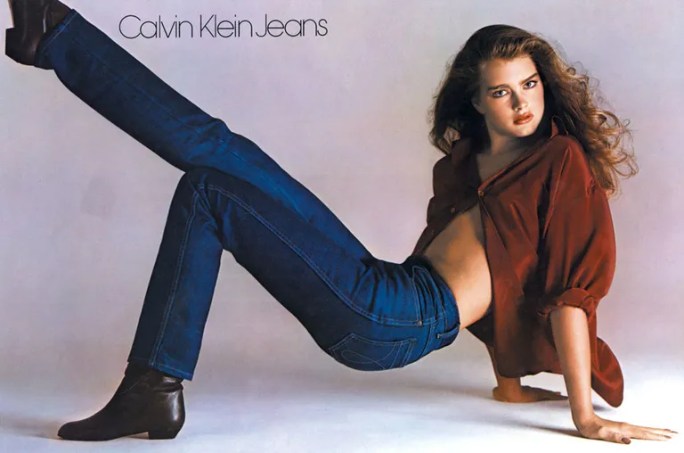
My sister took over, delivering her words vacillating between shame and pride. She sat perched on the edge of the bed and confessed to years of fasting and purging because skinny was in, and she didn’t want to be left out. She touched on her orange skin from eating lettuce and carrots exclusively for days. She talked about losing her period, her reason for confessing to our mother, afraid she’d become sterile. Then she changed tracks, and clearly delighted, she spoke of shopping with friends, and finally fitting into the skin-tight Calvin Klein jeans that the actress Brook Shields famously posed in. She’d become part of the in-crowd and reveled in being desired by the popular boys in school. Like most of her high-school girlfriends, she’d finally achieved what I thought impossible for our well-endowed family lineage. She was unarguably thin.

My mother had regained her composure, and sat next to my sister silently ringing her hands. I sat on the little cushioned stool staring at my skinny sister, consumed with jealousy. I wanted to be her.

I, too, wanted to be rail thin, heroin chic, a cover-girl stunner like my big sister. To me, she was beautiful— sleek, tight, hip, slick and trendy. She was what I too aspired to be, what every magazine, TV show and movie showed attractive, desired women should be. Thin.

And she’d just told me how to get there.

What I heard her say that afternoon was starving and vomiting worked to lose weight. I failed to acknowledge her detailed account of the toll the eating disorder took on her body and mind. I stopped listening right after she told me how she’d gotten skinny. Everything that followed was white noise.

From that day forward, and for the next five years I threw up frequently after eating to purge my body of the calories. I starved myself for days, sometimes going for weeks eating just vegetables. I tried to ignore that I was tired all the time, and chronically cranky, and falling into a black kind of depression. The desire to be thin superseded all reason. If my sister could do it, I could, and would, and did, regardless of the health risks.

Several years in therapy with a nutritionist gave my sister the fortitude to eat healthy, combat social pressures and become more accepting of her body. I learned to control my weight with exercise. Racquetball and running eventually replaced retching, but every time I over-indulge I consider throwing up to rid my body of the unwanted calories. To this day my sister’s words still echo in my head and taunt me— not all of what she said, only what I heard.

I pulled my Prius into the garage this afternoon and I looked at my beautiful son in the rear view mirror awaiting my lecture. My stomach hurt from the pasta salad I’d eaten for lunch earlier. My heart hurt— lost for words of wisdom for my kid. I wanted to purge my body of the heaviness, then shook my head in disgust at the notion, hoping my son didn’t catch it. Thirty years later, I’m still fighting the voices inside my head that rationalized my sister’s eating disorder as a workable solution to weight loss.

I led my son into the house for a snack and a chat. And I lied. I made up a tale of ‘a friend’s’ reckless behavior that led to disaster. I told story after story of kids I went to high school with who were users and grew up to be losers (though I knew none). I assured him popularity did not come with using. I left no space for him to surmise drugs were simple fun, or required to be ‘in.’ I chose my words carefully, considered them from many angles for possible distortion before speaking, even asked him to summarize what I’d said often to make sure we were on the same page. And though he parroted my sentiments in detail, in recalling my experience with my sister, I am left with lingering concern he didn’t really hear me.

Sometimes, between what is said and what is heard is the Grand f***ing Canyon.

Living with Depression

I imagine when all is black in my head and heart, I’ll write something brilliant that justifies the darkness within. But when I’m depressed like this, I can not motivate myself to create, or do anything beyond succumbing to my sadness.

This essay is simply on depression, living with it in a world that wears masks, puts on facades online and in-person, because we’re not allowed to feel bad, or at least show it. We’re allowed to feel frustrated, annoyed, disappointed, in moments, but they better not last too long, or be too intense, like when feeling angry translates into yelling. Even in anger, we’re supposed to retain our composure.

I suck at pretending. I can’t pull off the I’m OK Buddy, when I’m not. Most of you reading this are much better at wearing faces. Most people are. But depression, that feeling there is something stuck in your throat that you can’t swallow, that with every breath it feels as if you’re sighing— trying to shed the weight in your chest— makes putting on a mask particularly difficult because you’re spending so much energy just trying to breathe.

Commercials for drugs to combat depression are all over the media. They come with a list like: Using this product may make you dizzy; nauseous; stop breathing; feel even more depressed; become suicidal even if you didn’t feel that way before the drug; die. Wow. Thanks, but no thanks. I don’t really need to take Lexapro to help motivate me to kill myself.

I’ve tried Prozac, a long time ago. I was allergic. It almost killed me. I’ve tried Xanax, which is by far the most popular drug for depression. All it did was make me sleepy. I’m already tired all the time.

Therapists like to talk, or for me to talk. And talk. And talk. Business 101— you make more money with continuing clients than having to find new ones. I want ACTIONABLE things to do, other than taking drugs or talking to a shrink once a week, which just makes me poorer, and even more depressed.

What is “depression” anyway? I mean, everyone gets depressed occasionally, regardless of the masks we wear. Technically, and absurdly simply, depression lies in our chemistry— dopamine, serotonin, endorphins, and oxytocin— these ‘happiness hormones’ are not adequately delivered to the pleasure centers of our brain. It is commonly accepted that some are born with inadequate levels of these hormones, or there is a problem with their release inside the brain. Clinical depression apparently has a genetic component, but this has yet to be proven as hard fact.

Episodes of depression effect most people when events in our life hurt us. For most, the length and severity of feeling sad is usually consummate with the event itself. Losing a loved one, or loosing the lottery generally solicits dramatically different responses. As it should. Most let their feelings of sadness dissipate, often forget them entirely over time. I’ve spent a lifetime envying these folks.

Those of us suffering from depression internalize pain. It resides in us, like a cut, or injury that just won’t heal. We hang on to our hurts, from minor slights to major loss. And whether born with an imbalance, or too many painful life events, when sadness sticks, builds up and gets thick, every day feels like wading through molasses. If depression festers long enough it will eventually kill you. It strips us of the single motivating factor that keeps us all alive through dark times… hope.

Curing depression for those who experience it, and those who have to live with people who do, is paramount. Over 90% of those who attempt or commit suicide are clinically depressed. Suicide is the 10th leading cause of death worldwide, which is a shame, because so often emotionally wired people are the creators, writers, artists, innovators and builders of societies. It is believed Abraham Lincoln suffered from Depression.

The only way to help reverse, or at least halt the chemical cascade into darkness is to actualize pleasure. I realize an effect of depression is finding no joy in anything, but those of you living with that weight in your chest with most every breath KNOW that joy is attainable, even when we are consumed with sadness. That blackness is the ugly voice in our heads meant to perpetuate depression, and a LIE. A rainbow is still beautiful. A double-rainbow extraordinary. The taste of your favorite foods; a hug when we’re scared, or lonely; backrubs; creating something— these things are still pleasurable. The Pacific cresting at 40ft is still awe-striking; a field of blooming flowers still visually stunning…etc..;-}.

Living, existing as human, is all about FEELING. The good, the bad, the ugly, the wondrous, the awesome, the magnificent empowerment of feeling loved, respected, valued. The charge that comes with creation. The suffocating black hole with loss.

Are you living with Depression?

If so, SEEK and FIND joy, pleasure. NOT self-destructive behavior, like drinking or using drugs for momentary relief, as trying to bury feelings, even temporarily, will increase depression. DO things, stuff that turns you on, makes you feel— if not good— at least glad you get to see it, taste it, experience it—without regret later! ACCOMPLISHING TASKS also lights up our brain’s pleasure centers. String enough joy and accomplishments together, even simple things, and, over time, continually reminding your brain why you are choosing to live will reinforce your desire to do so. 

Chemically Sane

For Lisa, my BFF since elementary school, until her other took over…

I haven’t always been mentally ill. I’ve always been on the fringe of the norm, the glass wall between me and humanity kind of thing, but I didn’t feel myself start to fragment until my mid-twenties.

The first time it happened I was working as a bank teller. It was closing, and I was counting out the cash drawer and doing my balance sheet. I got this idea to close my checking account, take the $5000 I had to my name, and use it as a down payment for a Mercedes. I knew it was a bad idea. I could hardly afford rent. My job, like most of my others, was tenuous at best.

And then I separated.

I stood outside of myself and watched me clear out my account.

At the dealership, I tried to tell the other me not to sign the purchase agreement, but I did anyway. I gave the guy my five grand down payment and drove off in a new midnight-blue SL450 convertible. The other me sat in the passenger seat, her head thrown back, her short hair blowing around wildly. She laughed and laughed. And I let myself get sucked into her lightness.

Two days later I was stuck in traffic on the freeway and it hit me what a stupid idea it had been to buy the Mercedes. I couldn’t return it and get my money back. It wasn’t a pair of jeans. I couldn’t afford it either. I got so depressed about it I got out of the car, left it on the freeway and walked away.

The car was never found. I’d let my insurance lapse so they wouldn’t compensate me, even with my documented tale of someone carjacking me. I was $50,000 in the hole for a car I didn’t have anymore and no way to pay it back.

And I separated again.

Throughout each work day, I started taking money from the bank. The customers actually. I’d take a little off the top of deposits over a grand.

I didn’t. The other me did.

Again I stood outside myself watching this other me steal. I tried to stop her with moral and value judgments. She came back at me with justifications.

You get paid shit. You get treated like garbage- bottom of the rung lackey.

I told her I was afraid of getting caught.

She laughed me off. No one will notice. Nobody keeps tight track of their money these days.

But I knew the bank did. Sooner than later they’d discover what I was doing. Three weeks into stealing, and both sides of me finally came together, now joined by raw, unrelenting fear. So I ran away. Two days before the end of the month audits I left the bank at closing and never went back. I walked away from my life with $17,000 in cash in my pocket and became the other side of me—the wild side, for the next month.

There are only brief, fleeting images of that month. The first thing I remember clearly is my mom standing next to my hospital bed staring down at me, her face tear-streaked and gaunt. She started crying again the moment our eyes meet, and I got how hurt and scared she was. I wanted to hug her but I couldn’t. I was strapped down.

I spent three days at UCLA Medical Center Psych ward. I was diagnosed with Dissociative Identity Disorder, given Thorazine and sent home with my mother.

No cure. No hope for a cure. Manageable only with medication. Side affects to be expected.

The array of antidepressants I now take does keep both sides of me together, but it reinforces the glass wall separating me from the rest of the world. I walk around in this thinly veiled haze, which I suppose is okay, given the alternative. But I often wonder these days if sanity is really worth the price. It’s getting harder and harder to justify feeling sick and tired all the time.