Abortion and Choice

I was 16 weeks pregnant, with my first baby, when the results of an amnio told me that the wanted child I was carrying was not healthy. I have always been pro-choice, and never considered it a moral dilemma to terminate a fetus with severe Down’s Syndrome, or other life threatening, or debilitating abnormalities. Although I was aware that my advanced age of 39 increased my risk of potential problems, I was totally unprepared for the results from this technology, and the choice I would have to make.

We received the news on a gray Thursday afternoon in late December that the baby girl inside of me had an extra X chromosome, also known as Trisomy 47XXX. While waiting for clarification from a genetic counselor on the following Monday, I spent the next three days searching for information. I sat in the old, stone library in Concord, Massachusetts, crying uncontrollably with each line I read from a Psychology Today article on XXX. “Severe learning disabilities.” “Severe emotional disabilities.” “Slow motor development.” “Shy.” “Withdrawn.” I rubbed my swollen belly, trying to feel my daughter inside of me, fear welling up and gathering momentum. My stoic husband sat next to me, silently reading along. On the way home we talked, we cried, we argued about what to do next. We decided to wait to make any decisions until we could get more information, except there was little out there, and everyone we spoke with had some kind of agenda.

The genetic counselor insisted that the information we had gathered over the weekend was outdated and biased. A few minutes later she called in a staff OB/GYN who showed us a picture of a beautiful 8-month old XXX baby, swinging in her electric swing on a whitewashed, sun-drenched porch, smiling happily for the camera. The doctor then asked us if we would be willing to participate in her study if we decided to “keep our daughter.” During the following week, we spoke with doctors from around the world with any knowledge of XXX, who gave us a positive or negative spin depending on their personal views on abortion. We spoke with a social worker that dealt with the parents of handicapped children, who was subtly but clearly for termination.

I solicited advice from my parents. My father (who never changed a diaper in his life) told me to keep her. My mother said not to. We spoke with parents of XXX children. All of the children had suffered learning disabilities, delayed motor skills, were withdrawn, and had required special education. They told us how exhausting it was, how expensive raising a handicapped child. They spoke about mortgaging their home, and going into debt to afford the special care they needed for their XXX child. They spoke of the constant heartache watching their child suffer with depression, anger, loneliness, growing up both physically and academically challenged. But all the parents claimed they loved their daughters.

A decision had to be made quickly, before I felt her moving inside me. I knew if I felt her I could never give her up. At just 4 months, an insentient collection of cells inside me, she was still an abstraction, even though on ultrasound I had seen her entire body, the emerging vertebrae of her backbone, the two hemispheres of her brain, the protrusions of tiny feet and hands. “The ghost in the machine,” my husband had called her. I held my belly and begged my daughter to tell me what she wanted me to do, knowing the decision would be mine, feeling the weight of that decision ripping apart the fabric of my tightly woven self-image.

What kind of person was I that I would kill my daughter because she wasn’t perfect? Faced with the probability of a slow child, spending the rest of my life watching her struggle to fit in, feel accepted beyond our family, focusing every day on the care of a handicapped child, seemed overwhelming. The cost of raising kids without illness would require both my husband and I to work till we died. And while I’d always pictured having two children, gifting them a sibling, a confident for each other, we’d have to forego having another child to afford the continual care required for our XXX daughter.

It occurred to me that most of us go through life thinking we are generally good, honest, caring people because this view is rarely challenged, as most of our actions aren’t based on critical, pivotal, character-defining decisions. From the moment I got the amnio results, I knew my life would never be the same again. Technology had given me insight, and now forced me to make a choice.

This was undoubtedly the hardest decision my husband and I would ever have to make, but it was ours to decide, granted to us alone in a state where abortion is still legal. Only we, the parents of the pregnancy, could decide what we felt capable of providing our child. If we lived in Texas, the state could force us to give birth to an ill baby, spend everything we made on drugs, specialize schools and care, and damn us to the unbearable torture of watching her struggle daily, likely for the rest of our lives.

A week later we arrived at a Planned Parenthood clinic in Waltham, and were assaulted by protesters. They held signs that read, “Save Unborns,” and “Choose Life.” They crowded around my husband and I shouting, “Baby Killers!” and “Murderers!,” preventing us from getting into the building until a cop came out and pushed them back. They were amped on self-righteous indignation, full of religious fervor. They’d go home to their Christian conservative families feeling proud of themselves for making our passage into the clinic even more a nightmare than it already was. Most were young, more men than women, in their teens and early 20s, and likely had no children at all. They had no conception of what it took to raise healthy kids, yet alone devote their lives caring for a physically and emotionally afflicted child.

Doubting our own abilities to provide for a sick child pushed us into the decision that to this day, 20 yrs later, I still find shame in. But I honestly don’t know how the other decision would have played out. One of the mothers of an emotionally and physically disabled XXX 8 year old told me that if she had known that her daughter had the anomaly before she gave birth, she doubts she would have chosen to keep her. I guess when we make a decision with no good choices, the decision we make will never be okay. While I am grateful that the choice was ours to make, the trick is, finding a way to live with that choice.

A year later, and two on that, I was graced with two healthy children, now grown and on their own. But I think of Sierra often, who she would have been, how she would have been, and the lives we would have led with her. And I still ache for her. Through all the heartache that comes with raising a handicapped child, I know I would have loved her, passionately, wholly, felt that awe-inspiring humility, that magnificent intensity of love for her that I get to feel for my kids every day. And to this day, I still question my choice not to have her.

Raising Kids Without Religion

My husband and I raised our children without religion. We gave them no religious identity (as in claiming to be Christian or Jewish because of our parentage). We are both devout atheists, and I use the term devout with purpose. We don’t believe in a higher power, or any gods, or even the possibility of one. We are not agnostic. We believe awareness begins by the sixth month of gestation, and ends at death. Upon birth, our combination of chemistry defines individual uniqueness, so often mislabeled as a ‘soul.’ No heaven, or hell. No rebirth awaits us after death. Reincarnation is a myth. There are no second chances to get living ‘right,’ and we never ‘ascend to a higher plain of existence.’

You, me, Hitler, all end up the same. We cease to exist upon death. Only our contributions throughout our lifetime remain when we die.

Frightening and harsh though this may seem to believers, the fantastical bible stories and the ‘jealous’ malicious god, (Exodus 20:4-5), described in them never resonated with us. Much to our parent’s chagrin, we grew further from all religious ideology with their spiritual indoctrination. Ancient dogma conjured by men to control the masses by creating an outside deity that could not, and by its own commandments, must not be questioned, religious leaders were telling us not to think. They required blind faith, and neither my husband nor I were willing to buy into thoughtless beliefs.

We agreed before having kids that we’d raise them without religion. We could not teach them what we do not believe, and what we both feel is fundamentally destructive at this point in human development. The value system we hoped to impart is based on a keen awareness of self, and others, our planet, and the immense responsibility each of us have to preserve all life here.

Picture a bull’s-eye, we told our kids, like the Target logo. You are the center dot, obviously, as you can only perceive and participate in life while living. The first ring out from you is your immediate family; the second is your extended family and friends. The next ring is your community, then your country and then the world. And all rings must be considered when making choices and/or taking an action.

The Target philosophy is a model for a thriving society. Consciously considering the radiating effects of our actions forces us to think before we act. Our ability to think conceptually, project into the future, then alter our behavior to achieve that projected outcome is what separates the human race from all other life forms here.

There was no need to sell our kids on religious dogma such as promises of heaven, or threats of hell. We taught our kids not only to be considerate and responsible to family and friends, but to humanity as a whole, and all things on this Earth. We expect them to honor their debt to those before them by striving to deliver a better world to those here, and those yet to be.

As atheists, we are considered by many to be heathens– uncultured, uncivilized people. Our parents are constantly trying to convert us, under the delusion that we are what they were raised to believe, whether we admit it or not. They vehemently express their disgust in our ‘denial,’ and barrage us with threats that our children will be lost without a religious upbringing. My brother, a born again Christian, assures us that Christ died for our sins. He promises my children will be ‘saved’ after death from all wrongdoing if they just accept Him as their savior. He never stops to consider the catastrophic lack of responsibility this ideology instills in his, and every other blind believer’s behavior. My brother, and his brethren real estate brokers lie, cheat, and rob unsuspecting clients of their life savings without ever considering the destructive effects of his actions, believing in his own righteousness, having ‘faith’ in the forgiveness promised him.

By everyone’s reckoning who’ve met, or know our children, from family and friends, to teachers, to restaurant servers, my kids are liked and well respected. They are courteous and conscientious, more considerate than most adults, and 90% of their so called ‘god-fearing’ peers. They are team players in sports, strive for excellence in their studies, both straight-A students from grade school forward. They share what they have, and compromise to ensure fair play. And they do all this, not by threats of eternal damnation, but because they understand their role in, and responsibility to humanity, and this planet we inhabit. My children are not lost. They experience no spiritual void. They find beauty and wonder in many things, like nature, and sometimes even in the nature of man.

With the advent of technology and advanced weaponry, our world has become so very small and fragile. We must stop pretending we are powerless, under the will of various deities, or follow the divisive rhetoric of religious leaders who preach if Christ exists than Judaism is wrong. If Allah rules than Christianity is a lie. Religion has become the problem, giving excuses, or worse, forgiveness for whatever crimes we commit. Christ will not save us from global annihilation. We are all responsible to save us from ourselves.

At the dinner table recently, my husband asked our now teen kids a simple question: “What are you?” Both answered: “Human.” Touché! Religion, skin color, and/or economic status, my children see no division between themselves and other people. This position is mandatory for the survival of humanity. We teach our children to recognize their radiating effects on all they touch, and not only acknowledge their mighty power, but embrace the responsibility that comes with it. Humanity’s future depends on each of us taking individual responsibility for the actions we take in life, not for rewards in an afterlife, but to enrich the lives we touch here and now, and to make it possible for those yet to be—the generations to come—to experience the unfathomable wonder in being alive.

LOVE Defined

My sister is dead, I told the bank manager.

She isn’t dead. She lives in Washington with her husband, having recently moved from L.A., where we were both born and raised.

The bank manager expressed his condolences. He accepted the paperwork from our lawyer to remove my sister’s name from our Trust as the potential guardian of our children should my husband and I die before they’re of legal age to care for themselves.

I told him she was dead to delete her from my psyche, distance myself from loving her. Five years ago, she told my husband she didn’t want any contact with him, me, or our kids, her then 7 and 9 yr old niece and nephew, in a response to an email my husband sent her.

Much to my sister’s chagrin, we’ve raised our kids without religion. Cleaning out her Agoura Hills McMansion before moving to her custom built estate in Washington, she sent our kids Hanukkah ‘gifts’ of broken toys that used to belong to her children. She missed acknowledging our daughter’s birthday, again. Three months later, she sent her a present with the one she sent for our son’s birthday, and spelled her name wrong on the card. She’d disappointed our kids time and again, ignoring their birthdays and special events, rarely calling, and talking about her life, not theirs, when she did. Many times after jacking them up that she was coming to visit, on the day she was supposed to arrive, she left it to me to tell our kids she wasn’t coming.

Her sins were many, and mounted with the years without apology. My husband got tired of her hurting our kids, emailed her five sentences politely informing her the correct spelling of our daughter’s name, and requested if she was going to send them birthday cards or gifts to please do so on or around their respective birthdays.

My sister decided he was asking too much and emailed back that “though I am deeply in love with your kids, and it breaks my heart to do so,” she was withdrawing from their lives entirely. She stopped calling every few months. For a couple of years she sent the kids birthday cards when it struck her fancy—weeks late to our daughter, if at all, but managed to get cards to our son within days of his, professing her deep affection and love for him. It took all my will not to shed the cards in a million tiny pieces. Her sentiments to him were totally self-serving, for her ego, her ‘loving’ words meaningless, meant to pump up her self-image alone.

Love is an ACTION, what we do, not some abstract in our heads,” my husband and I teach our kids. “Don’t profess love in words without taking actions to show it,” we preach. “And don’t accept words of love as truth without seeing the actions that actualize their sentiment.”

Over the years my sister had been so disrespectful to our youngest that our daughter never really formed a bond, but her choice to terminate her relationship with our kids deeply hurt our son. She was important to him because the few extended family members we have left, namely my brother and father, didn’t call or acknowledge our children in any way.

My mom died when our daughter was just 2, and our son only 4 yrs old, so she never really got to know our kids. She did love them though. Deeply. Profoundly. And they got that. How did they know?

  • She came to visit often.
  • She called them on the phone every couple of days.
  • She mailed them presents on time, and called to sing Happy Birthday on their special days.
  • She spelled their names right.
  • She stayed abreast of their lives through me, my husband, and through the kids, consistently showed interest in their interests and feelings, and shared her world with them.

My mother often extolled how much she loved our kids, to me, to them, to anyone who’d listen, but she also showed it, so my children knew it was real.

The day my dad called to tell me of my mom’s cancer diagnosis, after I hung up the phone I said to my husband, “Well, that’s the end of my family.” She was the conduit that kept us together, in contact, a feature in each other’s lives. She fervently believed people come and go, but family is forever, the folks with which your love and loyalty should reside. Within a year of my mother’s passing, my sister and father checked out of my life, and the lives of our kids, too busy with their own to bother with me or mine.

My father, like my sister, practices love in the abstract. He never talks to his grandkids, never calls [even me], never asks to talk to them when I call him, and rarely even asks about them. He doesn’t acknowledge their birthdays anymore. I got tired of reminding him with multiple calls and emails weekly the month before their special days, then daily reminders the week before. The rare occasions I call my dad, he always professes how much he loves my kids, how important they are to him, though he does nothing to actually show them this. He never did, I just didn’t notice, as my mother’s effusive love overshadowed his self-love. When I mention his grandkids, he reminds me to tell them that grandpa loves them, and misses them. But I don’t. I tell them, “Popi says hi.” I don’t want our children to ever get the impression it’s acceptable to say you love someone when you take virtually no action to show it.

Her body ravaged by cancer and near death, my mother insisted my father take her to Toys R Us. She bought each of our kids their next birthday gift, and made him swear to mail them on time. She was hoping to establish a tradition (an action) for my father to adopt for his grandchildren after she was gone. He delivered her dying gifts to our kids two years later, on his way to visit my sister in Washington.

In a thousand lifetimes I cannot repay my mom for her precious gift of LOVE I now model to our children. But I cannot buy into her belief [and society’s rhetoric] that family and love are synonymous anymore.

LOVE, like potential, is meaningless unless put into ACTION.

Jobless America

Took a family vacation to Yellowstone last summer. After a day of exploring the spectacular park, we ate dinner at Canyon Village, a sprawling commercial development in the mist of the natural wonders. The kids wanted some souvenirs so we stopped in the gift shop before eating. The clerk at check-out was a kid, no more than 20, as was most of the customer service staff in the park. His name tag said Mal-Chin, and under his name was his country of origin: Korea.

Seated inside the restaurant we were served water by Jianyu, his country of origin: China.

We were served rolls by Mi-Cha, Korea again.

Earlier in the day, when visiting the geyser, Old Faithful, we stopped in the mini-mart at Yellowstone Lodge. The check-out guy was Yeo, China again. At breakfast, at the restaurant in the lodge, our waitress was Fedheeta, country of origin: India.

Our waitress at dinner was Kathy, her country of origin: USA. She was probably 1 of 10 Americans out of the 50 or more employees of the park I saw that day.

Yellowstone is the United State’s first national park. Over 2 million acres of pristine, protected wilderness resides in a massive cauldron of a dormant super-volcano in the states of Montana and Idaho, with the majority of the park in Wyoming. The USA preserved this land for families and fans of natural beauty to come explore, discover and study natures wonders for present and future generations. Tens of millions of taxpayer dollars goes to maintaining Yellowstone National Park annually.

So why are most of their service staff from everywhere but the USA? I asked our waitress, Kathy, at dinner in Canyon Village. Why are our kids not landing these jobs, which provide a great opportunity to acquire sales and communications skills, add to college applications…etc?

The American kids get fired here constantly, Kathy told my family after taking our order. They party a lot, get drunk, don’t show up for work, and are rude to the customers. They write the orders wrong, or charge people the wrong amount because they can’t do simple math quickly. The management can’t keep them for more than a few weeks into the summer because they’re mostly irresponsible and lazy.

Her words literally hurt me, because I knew they were the truth.

Kathy went on to describe the programs that land the out-of-country kids the jobs at our national parks. They pay thousands just to get here, she said, which is generally less than the salary for six days of work a week, including the food and lodging during their contract with the park. They clearly want to be here very badly, usually to acquire work skills and develop their English fluency, and they do an excellent job. It’s easy to see why management prefers them.

Heavy sigh.

World News Tonight on ABC used to have a segment they called Made in America. It was a joke, an embarrassment to any sensible, educated, aware adult who knows that China produces over 1/3 of all global manufacturing, with Mexico and Korea close behind them. The World News segment was touchy-feely, saccharin and all smiles with David Muir interviewing American manufactures of unique hats and scarves, or a cupcake maker gone viral, and then touted these businesses as being the cornerstones of our future success. This segment is no longer produced.

Hats and cupcakes won’t cure our supply-chain issues. The USA is not, and will never reclaim its manufacturing base when we charge in excess of ten times as much to do the work other nations are willing to do, and do well, for so much less.

The internet has united our world, as it gives most everyone the opportunity to see how others live. It’s easy to find the American lifestyle attractive. Our families generally have warm houses with running water, electricity for light, computers, entertainment systems, cars in almost every garage, freedom from religious and/or political persecution (sort of). Most countries still aspire to be US, to model our independence and luxuries.

Watch World News Tonight’s entire broadcast, and David Muir will tell you all about rising inflation, families charging groceries and gas just to get to work and feed their families, maxing out their credit limits. He’ll tell you about our personal debt crisis, where the average American has over $15,000 in credit card debt, and he’ll introduce you to one of the many families bankrupted from a medical catastrophe not cover by their insurance or Medicare.

This decline in the American lifestyle will continue for most U.S. citizens, and eventually even the 1% wealthy will be effected, guaranteed, if we stay the course we are on.

Like it or not, we are a global world now. Today’s manufacturing, trade and technology bind us, and gives us the opportunity to thrive as a people, a planet; or we can destroy everything we have here, through our laziness and greed.

Our K-12 public education system is failing our kids, regardless that we keep pumping more and more tax dollars into education. U.S. now ranks 36th out of the 79 countries and regions in math, behind China, South Korea, even Canada. It is no wonder U.S. kids aren’t hired for even the simplest retail positions at our national parks. Our kids are unprepared to compete globally. And according to our server, Kathy, at Yellowstone, who went to a private school back home in New York, the American employees clearly demonstrated their lack of education in their reading, writing, and math skills, in addition to their poor interpersonal skills with customers.

Cutting school hours of instruction with “teacher furlough days,” short days, and extending ‘teacher work days’ has not, does not, and will not produce a nation of creators. It takes education, practice, and focused persistence to produce anything of value. For the U.S. to achieve the potential our parent’s achieved—have jobs, and retain the lifestyle to which most of the middle-class has become accustomed, we’re going to have to limit our play/relax time, and work a hell of a lot harder.

Partying, with attitude, instead of doing their work, like the stream of U.S. kids fired from Yellowstone; playing Halo, or killing endless hours on TikTok or SnapChat, or binge watching Netflix instead of studying math and science won’t help our kids compete in the job market locally or globally. H1B visas requested by Google, Facebook, Microsoft and other tech companies reached a whopping 308,613 H-1B registrations for 2022, a 12.5% rise over 2021.

Greed, laziness, the-world-owes-me work ethic so many Americans possess won’t win us jobs, or help us keep them here in the States. We must teach our kids that PRACTICE is the only way to get good at anything. This means investing the time and energy into academics instead of iPhones, social media and video games, which means parents need to pay more attention and invoke more discipline. It means educators need to step up to the plate and give more homework, harder tests, teach longer hours for the same money because giving more money to education shows little improvement in student performance.

We are a nation of [mostly] Christian believers, but if Jesus really saves, he’d better start saving our kids, because it sure as hell isn’t our education system, and clearly most parents aren’t doing any better. Raising a generation of spoiled, unmotivated, under-educated Americans can not, does not, and WILL NOT compete in our global economy.

The Terrorist Within

Strong winds shake the plane and rain sheets off the wings and streaks down the small windows as we sit on the runway waiting to take off. The 737 engines ramp to a high pitch roar. My three year old daughter sitting next to me suddenly grabs my hand as our plane accelerates, faster and faster down the runway, throwing us back in our seats.

The plane rocks with the storms powerful crosswinds as it lifts from the ground. My daughter stares at me wide-eyed and her face drains of color. Two seconds in the air and the plane drops ten feet. A quick collective gasp ripples through the cabin. My daughter is now china white and statue still.

I squeeze her hand in both of mine and tell her everything is fine and try to believe it. The plane pitches and tosses as it climbs through the clouds. Moments feel like hours as my mind plays out crash scenarios, and quiets only after the captain comes on announcing we’ve reached our cruising altitude of 35,000 feet with the promise of a smoother flight ahead.

Sunlight blazes through the windows. Above the clouds in the boundless blue our plane steadies. The collective sigh is almost audible.

Calm warms me just as my daughter announces she’s going to be sick, leans forward and throws up. Rancid chunks of egg and pancake from the morning’s breakfast soak her shirt. I stroke her head and back with one hand while frantically searching for a barf bag in the mesh pouch on the back of the seat in front of me. Two Sky Magazines and an Emergency Procedures brochure, but that’s it.

My daughter cries, ashamed, and tries to hold back throwing up more but I encourage her to let it out, though I’m helpless to contain it. Bile covered clumps drip from the armrest, her lap, and her seat to the floor. My husband sits across the aisle and I ask him to go get a stewardess and a bag of some sort. He unbuckles his seat belt and makes his way down the narrow aisle to the attendants putting snacks and drinks onto a metal serving cart.

Moments later my husband is back with five sheets of paper towel. No bag of any kind, and no stewardess. Apparently when he alerted them of our situation they told him he could find paper towels in the bathrooms.

I unbuckle my seat belt and stand, take the sheets and start cleaning the mess. Five small squares of thin brown paper isn’t going to do it, so I ask my husband to go get more, and again request he summon assistance. He comes back with another handful of paper towels. Alone.

My ire rises. I leave my husband the task of caring for and cleaning up our daughter. The plane rides level and smooth as I make my way down the aisle toward the back of the plane where a steward and stewardess on either side of the metal cart are passing out snacks. I inform them of my situation and ask for their help, or at least a bag of some sort. Both curtly assure me they’ll get to me when they can and tell me to return to my seat, as ‘federal law’ says passengers can not be standing when the fasten seat belt sign is still on. As I turn back up the aisle to go back to my seat a little bell rings and the seat belt sign goes off.

It takes quite some time to strip and clean my daughter. I dress her in the only shirt I have available- the over-shirt I’m wearing. I feel cold (and naked) in only my sheer camisole. I clean the seat, the armrest, and am on my knees for another 10 minutes cleaning the smelly mess off the floor. My ire grows to anger when the cart stops at our row and the stewardess asks me if I want chips or cheese and crackers. I want to spit at her. Again I ask her for a bag and indicate the pile of soaked paper towels I’ve collected on the floor. She pulls a small plastic bag from a cabinet in the metal cart and hands it to me without comment. I glare at her as she moves on.

My husband fills the bag with the smelly, messy towels to capacity. Appeals for additional bags are ignored and eventually I go to the kitchenette and get them myself. The stewardess refuses to dispose of our waste and tells me where to throw it away myself. I have to get up to ask for water, for some crackers to settle my daughter’s stomach, for blankets, and then I’m told to search the overhead compartments to see if there are any left. At no point during the five and a half hour flight does anyone respond to our request for assistance light, nor inquire as to my daughter’s welfare though I’d reported her ill.

The plane finally lands and we all shuffle out. The crew stands by the curved doorway with smiles and standard quips. The captain is young, good-looking, smiles broadly at me and nods. Three stewardesses and the steward stand together. They smile at me, then down at my daughter asleep in my arms. Both women thank us for flying with them, then their eyes drift to my husband behind me and their smiles remain as they repeat the phrase to him.

I manage to refrain from flipping them off as I hustle my child off the plane.

I’m halfway up the collapsible corridor when I ask my husband to take our daughter and wait for me at the top of the gangway. Before he can question me I turn away and head back toward the plane. There are just a few passengers still exiting and I make my way around them until I’m standing in front of the cabin crew.

I tell them my name, that I was on their flight, and that my daughter threw up shortly after take-off. Then I ask why, after repeated requests, they did not offer any assistance. They look at each other, then at me, and then the captain speaks. If I have a complaint, he instructs, I should write a letter to American Airlines.

I just want an answer to my question, I insist.

His eyes narrow, his handsome smile evaporates. He tells me under the Homeland Security Act if I don’t exit the aircraft immediately he’s going to call airport security. I stare at him. He’s serious. I’m too scared to laugh. I glare at the attendants one last time, shake my head and leave the plane.

My recent flight experience is typical of late. I hear complaint on complaint about the growing lack of service, and often the down right rudeness of most major airlines these day. Consumer advocacy groups are forming against them. Even if these groups manage to push through legislation defining acceptable conduct for airlines to adhere to, the problem, systemic to our society today, runs deeper than that.

We can’t legislate people to care.

Recognizing and responding to each others needs is a personal choice. It is also a global imperative for humanity’s survival.

Extremists from the outside are not all we should fear.

Indifference among us is the terrorist within.

On Being Cool

Had a meltdown on my tween son when he asked, yet again, for an iPad at breakfast this morning.

Before the iPad he wanted a laptop. He’d insisted he needed my old HP the moment I purchased my Toshiba, though he could give no reason why he had to have it, since he had a powerful PC with an enhanced graphics card for gaming in his room. After weeks of needling me, I finally gave him my old laptop to share after backing up [mostly] everything. He loaded the same games he had on his PC, and played them in bed on the laptop for about a week, until he inadvertently downloaded a virus which destroyed every program, every file on the machine—all seven years of my work. (Between ‘mostly’ and ‘everything’ I’d backed up turned out to be the Grand F**king Canyon.)

Prior to the laptop, he needed an iPhone. He’s had a cellphone since the 5th grade, when he started walking the quarter mile home from school. In the two years he’s had it, he forgets it at home most of the time unless I remind him to bring it with him. More often than not the phone has no charge because he doesn’t remember to charge it. Though all his friends have cellphones, he’s exchanged numbers with no one, and, upon inquiry, this seems fairly typical among his contemporaries.

Before the iPhone he had to have a video camera, which he got for his birthday. He used it a few times to tape episodes of Sponge Bob off the TV so he could view them later through the camera’s viewfinder. That lasted about a month, until he tired of it and he hasn’t touched the camera since.

An iPod was before the video camera. I use his iPod when I’m recharging mine, since in the four years he’s owned it, he’s used it maybe 10 times collectively.

He sat at the kitchen table this morning eating his cereal telling me how badly he needed an iPad. They are so cool, he insisted, giving me his puppy face, and good for school, he assured me, though was unable to define how, since a home PC with internet access was all his middle school required. He kept at it throughout breakfast, bargaining away all other gifts for his upcoming birthday in exchange for just one iPad.

And I blew a gasket.

He wanted too damn much! He asked for too much with no purpose. What the hell was the point of all these things when he didn’t even use them?

To be cool, mom, he said through tears.

His palpable shame was a knife through my heart. At 11 years old, crying had ceased to be acceptable, except in tragic situations, and me yelling at him wasn’t tragic. I sat down at the table adjacent to him and stared at my son, fighting tears from overwhelming me as well.

Being cool isn’t about what you have, I reminded him gently. Cool is about what you are, who you are, what you do that makes you special, separates you from the crowd. He was a straight A student, in advanced at math, played electric guitar, but every accomplishment I pointed out just made him cry harder.

None of that matters, he insisted. No one cares about that stuff. And being a nerd might pay off later, but right now no one his age knew or cared who Bill Gates was, he said, throwing my refrain back at me.

Your dad would ask why cool matters, was the lame response I came up with. I knew cool mattered, even to me, but especially for a kid becoming a teen.

It just does, my son assured me. And I’m not, he added shakily, unable to stop the new round of tears.

My heart in my throat, and struggling to swallow back my own tears stopped me from lecturing, but I again reminded my son that iPads and iPhones and video cameras are tools, nothing more, and possessing them doesn’t make one cool.

Yes, mom, he patronized me. But an iPhone is still cool, and so are iPads.

They are cool, undeniably, I told him. And that makes the engineers who invent Apple’s products cool, but not so much the people who use them. I needed to be sure he understood what “cool” really is, and perhaps remind myself as well.

Michael has an iPhone and an iPad and he’s totally popular, my son insisted. Everyone likes him. He has tons of friends and no one picks on him, ever.

Cool means Popular when you’re 11, and I suppose even for adults. Most of us want to be liked, admired, feel special, unique, seen as cool. But I knew Michael wasn’t popular because of his iPad and went about trying to enlighten my son without losing his attention. I pointed out Michael’s rather jovial demeanor, and reminded my son that this popular kid was also an avid sportsman, into soccer, basketball, baseball…etc, the ultimate key to cool for boys in school.

Perhaps Michael’s popularity had nothing to do with his iPad, I suggested. And to further my reasoning I asked, If Evan had an iPhone or iPad do you think he’d be more popular?

Evan is a jerk, my son proclaimed. He’s mean and rowdy, and he has an iPhone, mom. His eyes seem to sparkle with awareness of his own words. Then he smiled. He got it, and I smiled, too, for about a second, until his expression darkened again. But I’ll never be like Micheal, do what he does. I suck at sports and don’t really care about ’em. And I’m not exactly what you’d call upbeat.

And I’ll never write like Stephen King, or Ray Bradbury, or John Fowles,” I said.

Who are they? he asked.

Famous authors you’ve obviously never heard of. Forget it. Tell me, who else is cool, dude? Name five, other than your classmate, Michael. Anyone. Doesn’t even have to be one of your contemporaries.

Greenday, he looked to me for approval.

Okay. Who else?

Death Cab [for Cutie] (another rock band). Thomas Edison. Einstein. And Jason, at school. All the girls really like him.

I laughed. Why?

I don’t know. He’s short, but kind of buff already, I guess. He’s on the track team, and the basketball team, and he tells everyone he lifts his dad’s weights. He’s really into working out.

And what do all five you just named have in common?

He fiddled with the remainder of the Crispex in his bowl as he pondered my question.

They’re all good at something.

And how do you get good at anything? yet another of my canonical refrains.

Practice.

You bet. Find something you love, that turns you on, and work at it, my beautiful son. Practice your guitar more, and become a great musician. Invent a new video game instead of playing someone else’s creation. Learn how to program and develop apps, show us you need an iPad as a tool to create with.

He brightened, smiled at me. I had his full attention again, my reason for slipping in the iPad comment.

Owning an iPad is easy, my baby, and meaningless, just one of many who do, and more who will. Creating with one is cool. Cool is as cool does, kid. Pursue a passion and you’ll be engaged, entertained, and so enraptured in the process you won’t notice or care if you’re popular. And how cool is that! ; – )

The Power of Love

My son’s guitar teacher was freaking out the other day over the impending arrival of his first child. Beyond a healthy birth, he was consumed with anxiety over the care and feeding of an infant, all the way up through guiding his child through their teen years. As a parent of two tweens, I shared with him the secret of parenting, what makes the sacrifice not only tolerable but wildly enjoyable, and he calmed, and smiled, allowed his excitement to peek through.

It’s never talked about—that intense, profoundly magnificent feeling a parent gets to embrace the moment their child is born, and forever forward. It’s expected we love our kids, and therefore taken for granted, which is a shame, because the intensity of that feeling is so spectacular and unique.

I’d listen to my contemporaries talk about their children before I had kids. They spoke of the long nights with crying, colic infants, “the terrible two’s,” “the f***ing four’s,” surviving the teen years. Sometimes, they’d comment their Kylie had made Honor role, or that Jordan had just got first chair for his violin, and their entire countenance would light up. But those moments were rare compared to the complaints.

Like most women, I simply assumed I’d have children. I planned to have two kids in my early to mid-30s after I’d established my career and proven my own greatness. But it wasn’t until I was almost 40 that I became pregnant with my son, my first baby to survive after six miscarriages.

Nine and a half months of pregnancy, connected to the infant growing inside, and everyday was fraught with wonder, and fear. Five days of labor, and the moment I held my son for the first time, minutes after delivery, his tiny warm body on mine, a tsunami of humbling awe so overwhelmingly powerful swept through me it literally took my breath away. And as I kissed his downy head, his hands, each finger, I realized the joyful contentment, the sense of energized completeness, that electric connection I felt to him, for him— was love.

Never in my wildest dreams did I imagine the intensity of love that could be attained until having children. I’ve been lucky and had loving parents, a few dear friends, the love I now feel for my husband, passionate and true. But it doesn’t touch the intensity of the love I feel for my kids. Virtually every time I am with my children, snuggle with them, kiss them goodnight, or just see them across a room, I feel that all encompassing love fill me up and consume me with tenderness, compassion and humility. Now 9 and 12, and they still take my breath away. Every day.

People who never have children, or don’t devote their life to raising them— as with adoption— will never know this level of love. In their lifetime, they will never understand the feeling that we call ‘love’ can be this intense. I’ve heard many of my contemporaries say with conviction that they’ve never wanted, and will never have kids, with rationalizations like “I’m just selfish, I guess.” But the truth is they’re only robbing themselves.

Life’s greatest gift is our ability to feel. We all experience pain and sorrow, happiness and joy to varying degrees. The unspoken gift of parenting is getting to feel the fulfillment and richness of that intense love integrated into every aspect of our lives, motivating us to be positive examples, and challenging us to consider others, and the future beyond ourselves.

The price of living with this intensity of love is the amorphic fear of losing it, which is why parents worry so much. Through the tantrums and the tears, the joy and the fears in sharing life with kids, the ultimate reward in parenting is the privilege of loving our children.

Letting Go of Our Kids

Our son went on a camping trip with his 5th grade class last week. He was gone four days, spent three nights bunking with eight of his classmates and a high school chaperon. They shared a cabin (with heated floors and a private bathroom), one of many scattered around Camp Arroyo, nestled in the eastern foothills of the San Francisco Bay.

High drama days before he left. Lots of spontaneous hugs. He’d grab me on the stairs, or in the kitchen while I stood cooking at the stove, wrap his arms around my waist, bury his face in me and say, “I’m going to miss you, mom.” And, of course I returned the sentiment, which seemed to sate him, and me momentarily. I put on a brave front, but as his day of departure drew nearer, I dreaded how much I’d surely miss him.

My son’s first overnight experience without mom or dad was a weekend on his first Boy Scout camp-out. He didn’t seem all that enamored with camping. Dirty and tired when he got back (after less than 24 hours away), he endlessly repeated, “It’s so great to be home.”

My son was not the only kid feeling nervous about the 5th grade camp-out. Two of his friends admitted feeling scared. Several parents laughingly confessed to feeling anxious about missing their kids over the four days they’d be gone. Many had yet to be away from their children for more than a weekend, during sleepovers at the grandparents.

I, too, felt apprehensive. My child wouldn’t be safe at home where I could watch out for him, be there for him if he needed me. A long time ago, when I was in my late teens, my mother told me she never fell asleep all the way until me and my sister were safely ensconced in our beds at night. Only then would she be able to rest. At the time, I figured she was trying to guilt me out for coming home late a lot. But as I helped my son pack for camp the night before his departure, I anticipated three restless nights without him.

Dropped him off at school the next day like any other morning, except for the sleeping bag and pillow he put down on the curb so he could hug me goodbye. He held me hard, and long, which was weird right in front of his school and classmates. I hugged him back, tried to transfer my love without too much drama and left. Heavy sigh as I drove away, watching him in my rear view mirror struggle with his gear and then disappear into the school.

And quite unexpectedly, I burst out crying.

My son was growing up. He needed me less and less. As he moved into his teen years we’d naturally separate, until he’d no longer be completely immersed in my life. We’d been bonded for 11 plus years and I could feel it coming to an end. And sadness consumed me on my way back home, but only for the first block from the school.

As suddenly as I started crying, I stopped. The next four days I didn’t have to stop working at 2:30 p.m. (and 1:00 p.m. every Wednesday) when he came home from school. I didn’t have to be the constant nag, reminding him every other minute to study, practice guitar, do his homework or his chores. The dinner menu didn’t need to be altered to my son’s particular tastes. Sushi was a distinct possibility since our daughter was generally open to trying different foods. And best of all, I didn’t have to play ref or break up their petty sibling rivalries.

The four days my son was away with his 5th grade class passed in the blink of an eye. I published two new articles, finished the second chapter of the final, final, final…etc. draft of my second novel. I finished the French screens I was building, found and set my daughter up with a great new 2nd grade math program, and shared with her some of the best Japanese food ever—turning her on to a brand new cuisine. There were no sleepless nights while my son was gone.

He hugged me when I picked him up from school after his trip last Friday. His embrace was warm, and tender as usual, but over quickly. He pulled away, looked around to see if anyone saw him, and then picked up his stuff. I carried his pillow to stop him dragging it along the ground as we walked home. He told me about his time away, but I had to prompt him a lot, and though he insisted he was just tired, I felt a contextual difference between us, a distance imposed by him, or me, or both.

We were quiet for quite a bit of the walk, but it didn’t feel awkward. He seemed introspective, more grown up than little kid. His youth, like much of our time together was passing, as it should be, but none the less, there is sadness in this. The upside is as my son moves on, I get to as well. As he embarks on life on his own, I can get back to mine—the life that became secondary when my kids arrived on the scene. From the day they were born they’ve been my first priority, and though perhaps they always will be, their daily demands are getting less as they become more self-sufficient. And as we all grow and mature, I find I no longer fear, but accept, and even sometimes welcome the natural separation occurring between us.

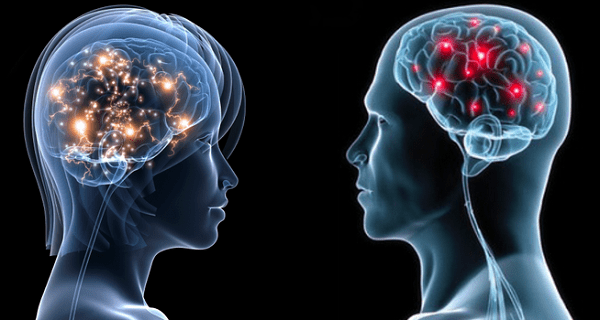
The Difference Between Men and Women

I’m a guy’s girl, meaning I’ve spent most of my life hanging out with men instead of women. Like the freight train comin at ya, I prefer men’s straightforward nature, their directness, their unwavering, solution-oriented trajectory. Men are simpler than women. Not less intelligent, just not round-about, underneath, from behind.

Women, by contrast, are the poison in your food. Eons of subjugation have forced us to become puppet-masters to get what we want. Not a judgment call, simply a fact that until very recently might was right, and men assumed they controlled the household with superior strength—at first to kill the mastodon and be the provider of food, and in the modern world, until recently, be the supplier of money. Back as late as the 1990s, women were still, and believe it or not still are, the primary homemakers, caring for the kids, shopping for and preparing the meals…etc. In fact, 99% of all household product commercials still show the women cleaning up, even when the men create the mess.

Notice I said, “men assumed they controlled the household.” Well, you know what happens when you ass (of) u (and) me…; -}

Seriously though, probably pretty early on, like cavemen times, women figured out how to get men to do what we want using our wiles—wits. Genetic transfer of memory over thousands of generations of women passing on how to be manipulative eventually became woven into our DNA and imprinted on our XX chromosomes.

Regardless of why women became…complex, the fact that we are scares me about us. Women don’t only manipulate men. Quite often our children, sometimes even our friends. I’d much rather face a freight train because if I’m paying attention I can get off the tracks before getting slammed. This also plays to why I’m a guy’s girl, why most of my friends have been men.

I knew I wanted kids for as long as I can remember. Two boys, I’d told any possible stakeholders, because boys are easier to raise. I now have two kids—a boy, 19, and a 16 year old girl, both of whom I’m madly in love with. Beyond proud, I’m humbled to know them. True to their ‘nature,’ my son is very direct with his feelings, practically the instant he feels something. He rarely lies, probably because he sucks at it, his facial expressions to the pause in his delivery clear indicators he’s not telling the truth or copping to. He’s a consummate whiner, but he respects the family rules and parental restrictions. My son is trustable, for which I’m eternally grateful.

My daughter, on the other hand, listens carefully, expresses just the right amount of contrition and understanding with every lecture, then does whatever she wants, whenever she wants, if she can get away with it. Went to kiss her goodnight a few nights ago and she was underneath her blanket watching Manga videos on her cellphone. She’d been viewing nightly since we took away her Kindle two weeks ago for watching videos on it instead of reading. Reading is all she’s allowed to do on the tablet, per our agreement when she got it for her birthday. (Is it too much to expect a 16½ year old to honor such an agreement when she gets plenty of electronics time on the weekends?)

While my son barely notices his reflection, my daughter spends hours in front of the mirror, preening. For eons a huge part of a woman’s value was/is defined by our physicality, so it’s natural, part of our nature now that our looks are important to us, or at the very least, more important to us than most men. My son likes violent movies. My daughter does not. She is deeply affected when families split up, or a parent or child dies in films, and even in books. Maternal instincts—reproducing and then caring for our offspring—is genetically encoded in our DNA. In fact, her reaction is not uncommon for most women.

Violent movies and video games are targeted at men because they are by far the predominant audience to engage with them.

Times truly are changing, though. Want part of a mastodon, a small ice-age relic? Buy one on Amazon. Most educated women who pursue a career path can pay their own way through life now, even if we still typically make less than men. Most of us don’t need a man’s support to survive, or even thrive. Technology, from the Pill to the personal computer has made it possible for women to control our own destinies, and function equally along side men in today’s business environments.

Sociological shifts in behavior are glacial, and true sexual equality is probably still a few generations in coming. Perhaps our great-grandchildren will share equal incomes, and split the household tasks of rearing the children to doing the dishes equitably as well.

From the dawn of man to present day the divide in humanity is not our race, religious orientation, education or income level. Our greatest division has been between men and women. I’m humbled to bear witness to a quantum shift in our evolution, that, for first time in our history, technology is providing us the ability to become an egalitarian race, and close this great divide.


PAY ATTENTION!

Regardless that these are babies, child or adults feel connected, safe, when the people in our lives SHOW they care about us, what we want, how we feel, and why. Shutting down, shutting those we ostensibly care about out, to self-protect, is destructive in the extreme.

From the clip:

“When she’s grounded, is comfortable in her world, she can explore, meet other people, try new things, as she’s got that safe base she can rely on.”

In other words, communication builds trust, and trust is the foundation of love.