The Folly of Perception

I’ve been on the outside looking in since I was a little kid. Failing to assimilate, I worked at cultivating unique and different. After achieving this coveted perception, I no longer wish to possess it.

Unique often translates into strange. And as the mother of a 10 and an 8 year old, I do not want to be perceived as strange or different. I want to blend like homogenized milk and give my kids the platform to fit in, be a part of. What I don’t want is for either of my children to be “that kid with the weird mom,” though I fear I may already be there.

My kids still hold my hand, and not just in parking lots or crossing the street. They both still love to snuggle. I am their first choice to talk to, confide in, way beyond their dad, which makes me feel valued, respected and deeply humbled all at the same time. I realize this level of intimacy probably won’t [and perhaps shouldn’t] last as they grow and find their own path, but I don’t want my kids to ever be ashamed of me. I want to be proud of them. I want them to be proud of me.

I try to fit in. I go to the soccer games and the ballet classes and I wait around with the other parents and try to blend. But I don’t. And I get that they notice I don’t. I look different. I’m one of the oldest among them, by a good margin. My kids came late, after six pregnancy losses. I dress for comfort so most everything I have is rather loose. I don’t wear make-up. My hair is long and fine and all over the place. It refuses to stay pulled back in the scrunchy. I never quite look ‘put together.’

But looks aren’t the only thing that separates me.

Through the years I’ve come to realize that I don’t think like most people. The glass wall between me and most of humanity is not just me being paranoid. There is a casualness the parents seem to have with one another as they discuss their kids, or some celebrity or popular new show. I stand there and nod my head when it seems appropriate, but I don’t watch much TV, and really don’t care that Tyler is playing basketball now which conflicts with his sister’s dance schedule.

I’ve tried engaging more personally, ask about jobs, interests outside of family, broached news and current events, but taking a position and endeavoring to discuss it has mostly been met with polite blank stares. Everyone is careful with their words—politically correct and upbeat. I’m neither, and over the years I’ve learned to shut up to avoid discord. The conversations usually segue back to their kids and related activities around family, school, church, which as atheists we don’t attend. I invariably check out of the exchange and focus on the event at hand and cheering on my children.

The game or recital ends but everyone stays and continues talking. I’m on the outside again, feels like I’m lurking while I linger to give my kids time to play. I stand there watching them all integrate, proud of my children for choosing to, and of myself for giving them the opportunity when I’d rather just leave. I watch the parents gaily chat and wish I fit in like that. The folly of unique and different is it’s really quite lonely out here.

On Writing Fiction

Am I two inches from the floor I can’t see, or the next step is a 200 ft drop?

Been fighting myself over this since I started writing fiction. I face this battle every damn day I sit in front of my laptop, the cursor blinking at me, waiting patiently for me to decide if I should quit fine writing today, and go back to writing copy, because unlike continuing to write fiction, a ‘real’ job will get my kids through college.

Then the voice of Fantasy taunts: “It is possible if you keep writing and marketing your fiction that you’ll get well known enough to make a living as a fine writer… I could be an inch from the ground right now… it’s possible…”

This voice is evil. A demon. The idiot in my head that keeps me fine writing. People who’ve read me, and contacted me with praise, they too encourage my stupidity, bolster my Fantasy voice that spurs me on to continue writing fiction, even though I don’t make any real money at it, and likely never will. The more I’m purchased, or even just read online, the more I’m ripped off. Hundreds of affiliate marketing sites pop up when searching my name now, offering downloadable PDFs of my work. Free.

I dream of making fine writing my sole focus, market only my books, and quit taking on marketing gigs. But I don’t. The smarter part of me knows that focusing my creative energy fine writing puts me precariously on the precipice of that 200 ft drop in income.

I write to be read. So, not making an income, as long as I’m read, which I am more and more, wouldn’t really bother me, except I need money.

My Fantasy demon goes to war with my voice of Reason daily. The battle goes something like this:

What needs to get done today?

Well, you should get the, ­(fill in current project), stuff started/done.

Or, you could write The Power Trip.

Hmm…

Fantasy is so much better than reality. It’s why I write—to escape here, into a world that’s never boring, tedious, tiring, like the real one is so often.

I’m told by selling authors that I should pick a genre and write religiously to that genre to market myself more effectively. In fact, series are even better. I must write series. Romantic detective series, or dystopian fantasies with a strong female lead, as women empowerment is all the rage for the foreseeable future. Over the last 10 years I’ve been writing to publish, I’ve watched genre and series writers become known using the Freemium marketing model. Give away the first in the series and charge for the next book, and then spend the next ten years writing the same basic tale with the same cast of characters over and over.

Shoot me now if being a successful writer means traveling the Freemium series road. Fiction should evoke feelings, thinking, create new ideas (like H.G. Wells, whose words have been actualized into today’s tech). How can an author hope to achieve this, focused on production writing for sales, instead of substantive content? I want to read about complex characters in the first book, learn about them, from them, and about myself. I don’t want to read characterizations where actual people never emerge from the repetitive story line.

My Twitter profile says: Novelist. Essayist. Realist. Idealist. A recent follower inquired how I am both a realist and idealist simultaneously. “Doesn’t that make you, well, like crazy?”

It’s true. I’m crazy. I get it. And it’s also true that between Fantasy and Reality is the Grand fucking Canyon. The problem is, I can’t seem to get off the wire of Hope that bridges them.

On Self-Doubt

I had a meltdown about writing—the process of—this morning. Simultaneously, my son, a recent computer science graduate, did too—about job hunting.

He emailed me while I’m melting down:

I’m applying for jobs and contacting these people but when absolutely no one contacts me back I feel like I’m sinking. I just feel like a fucking failure.

I emailed him back:

The only thing I know that works for me to shed feelings of doubt is WRITING them down. I’m doing that now. Literally. I had a meltdown this morning so I’m journaling. I will for a page or so, then get on with watching Twitch streamers to educate myself before I continue writing the Power Trip—which is what I melted down about this morning.

From my journal:

‘The absolute hardest part about writing fiction is shutting out the voices in my head that tell me I am not good enough to write this:

  • I’ll never get this right.
  • It’s too complex.
  • It’ll take too much research.
  • I’m too fragmented.
  • The subject won’t be topical if it takes too long to write.
  • I can’t DO this.
  • I keep losing the string.
  • I get too wrapped up in superfluous details.
  • I don’t get to the point quick enough.
  • I’m too heady.
  • Too technical.
  • Too too too…
  • Give it up. Too much work you’ll never finish anyway.
  • This is stupid to pursue.
  • You are wasting your time, not living your best life.
  • You’ve been working at this too long and are still nowhere…’

His email back:

This is exactly what I freak out about as well. Just replace writing with coding.

Me:

Thing is, you have to combat the bullshit voices in your head. They are half-truths. Not lies, cuz there IS truth in our fears, but only HALF truths. I can counter every one of the voices I just wrote in my journal.

Him:

But there’s always these looming feelings that I’ve accomplished nothing, done nothing. Am nothing.

Me:

That’s fear—like you are a failure—because you’re scared you will be. And while the fear is valid, real, true, because there is a vague possibility you won’t find a job you want, the WHOLE TRUTH is you are virtually 100% guaranteed to find a job if you keep looking for one, and likely a coding job you’ll like.

Another truth is you’ve proven you can code as a straight-A graduate with a CS degree, which was your primary goal the last 4 years. And you did it. Well done!”

Him:

I seem to be unable to compartmentalize my feelings.


Me:

This is LEARNING, E.M., applying for your first real job that isn’t a part-time, low-level gig. You’re launching your career, and that’s a big deal. Let yourself feel scared, and frustrated, and excited and every other feeling that arises through this process. And you WILL get a job. Guaranteed, IF you keep working at it!! Just like I’ll get the Power Trip written. See, I’ve already proven I can write with 7 books out, with mostly good reviews… And the voices of doubt gather like locusts as I write the last two lines above:

  • Yeah, you’ve written 7, but they’re all crap. 
  • And the good reviews, well, they were just being nice. 
  • The bad reviews are the truth about your writing. 
  • So GIVE IT UP BITCH. You will always fail at this. 
  • and so on…

But again, I can COUNTER all of these doubts with another POV:

  • Yeah, you’ve written 7, but they’re all crap. BULLSHIT. I’ve gotten mostly good reviews.
  • And the good reviews, well, they were just being nice. BULLSHIT. Just bullshit cuz this is such a stupid thought.
  • Bad reviews are the truth about your writing. NOPE. They are HALF THE TRUTH, or a percentage, and in most cases the greater percentage of my reviews are positive.
  • So give it up bitch. You will always fail at this. FUCK OFF, BITCH OF DOUBT.

Now GET TO WORK, honey, cuz writing is the only way you’re going to become a better writer.

His response:

Emoji smile. Clapping hands. Thank you hands.

An Atheist on Morality

Einstein did not believe in God, as many [mistakenly] claim.

Albert Einstein said, “My position concerning God is that of an agnostic.” He clarified with, “The word God is, for me, nothing more than the expression and product of human weaknesses, the Bible a collection of honorable, but still primitive legends. No interpretation no matter how subtle can (for me) change this.”

Atheist don’t believe in God either. Not any god/s. Ever. Unlike Agnostics, open to the possibility of a ‘higher power,’ or ‘collective, sentient being,’ Einstein believed in neither. Agnostic is politically correct, less threatening, especially during his time, born a Jew, and existing on federal and university funding.

I am an Atheist. I do not recognize the Old/New Testament, and related works illuminating the adventures of a divine being as anything more than fiction—parables by some wise, some ignorant, but guaranteed partisan male scribes with an agenda to dominate and control human behavior. (The defense that organized religion was necessary to reign us in when we were small warring tribes has been [and still is] proselytized by every power-hungry, self-proclaimed ‘person-of-god’ out there.)

So when I need money, [as an Atheist] why don’t I go rob someone. Or shoplift?

When I’m attracted to my neighbor’s husband, why don’t I hit on him, get intimate if he’s into it?

When I get pissed off at the driver on their cellphone that just cut me off, why don’t I just shoot her?

Snatch & Run, even drive-by’s these days, and the odds of getting caught for these crimes is somewhat nominal if I’m discreet. Fear of being busted is not the main motivation that prevents me from committing these, and ‘lesser’ crimes like lying, cheating and behaviors that most others would agree, religious or not, are moral infractions.

If I believe I answer to no higher power, where do I get my morality?

Einstein said, “We have to content ourselves with our imperfect knowledge and understanding and treat values and moral obligations as a purely human problem—the most important of all human problems.”

Believer or not, what are your ‘Moral Obligations?’

Mine, as an Atheist and a Human being, is to support our continued evolution. Part of my Moral Obligation is to reproduce, and extend the magnificent, wondrous, glorious feelings of being alive to someone else, as it has been gifted to me. In keeping with this particular Moral Obligation, bringing kids into the world comes with more Moral Obligations. Reproducing requires me to care for my progeny above myself, especially through childhood, teach them things I’ve learned so far, and to lay a foundation of trust, respect and love that my parents neglected to give to me. But my moral obligations extend far beyond having kids.

I am born owing Humanity that came before me, and everything on this planet that supports us.

We all are. Global warming, climate change, believe in them or not, what is your Moral Obligation to creating a more sustainable future for everything here? It may seem we have little control over our environment, but we have more than we think, or at least are practicing. My M.O. is to do better at preserving life, and the earth itself from our crap—our toxic emissions, our trash, our fecal waste, killing forests for toilet paper, over-farming, over-fishing, fracking, and the list goes on and on.

Another M.O. I follow is to THINK, a lot, about most anything and everything. Research, question, and learn are all important M.O.s. So, I research how I, as just one person, can fulfill my Moral Obligation to care for our planet better and came up with a lot of ways:

  • Use LED or CFL lightbulbs
  • Stop eating beef
  • Stop eating fish unless it is sustainably caught
  • Drive a fuel-efficient vehicle
  • Recycle
  • Use recycled products

Sure, I can use the excuse that as only one person doing any of these things won’t matter to the big picture. But I’d be denying one of my Moral Obligations to do better at preserving life here. Praying for better weather won’t change anything. I must actualize the action items in the list above to do my minuscule part in insuring life here continues long after my time, and that my children’s children’s children evolve to more fully embrace our spectacular creativity, our ingenuity, our capacity for kindness and our amazing ability to share love.

“…treat values and moral obligations as a purely human problem,” Einstein said. In other words, morality is determined by human beings, not handed down from on-high by some obscure being requiring blind obedience invented by men looking to control the ignorant masses.

Religious or Atheist, we all must recognize and actualize our Moral Obligations to each other and this planet for humanity to survive, and thrive.

Cited Notable Facts:

Murder rates are lower in more secular nations and higher in more religious countries where belief in God is deep and widespread. (Jensen 2006; Paul 2005; Fajnzylber et al. 2002; Fox and Levin 2000)

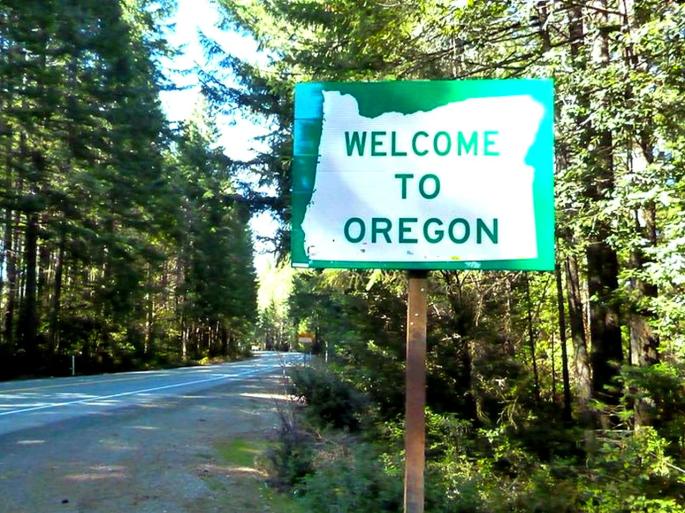
Within U.S., the states with the highest murder rates tend to be highly religious, such as Louisiana and Alabama, but the states with the lowest murder rates tend to be among the least religious in the country, such as Vermont and Oregon. (Ellison et al. 2003; Death Penalty Information Center, 2008)

Rates of most violent crimes tend to be lower in the less religious states and higher in the most religious states. (United States Census Bureau, 2006)

The top 50 safest cities in the world, nearly all are in relatively non-religious countries, and of the eight cities within the United States that make the safest-city list, nearly all are located in the least religious regions of the country. (Mercer Survey, 2008)

Domestic terrorists of the American far right are driven by zeal for heretical distortions of Christian theology. (Paul de Armond, DOJ, 1999) Christian nationalism [is] a serious and growing threat to our democracy. (Robert P. Jones, TIME Magazine, 2022)

Making It With Your Muse

How do you get good at anything?

Practice.

How do you get great? 

Obsession—Practice most all the time.

Pick any famous author, artist, musician, and they’ll all have obsession in common. And while we, the public, enjoy the fruits of their creative labor, those closest to these individuals were/are generally left wanting more of them, more from them.

Charles Schulz, creator of the Peanuts comic strip, “was an indifferent and often inattentive father and husband.”

Rod Serling, of Twilight Zone fame, “worked 12 hours a day seven days a week, [and] his wife, Carol, tended to their daughters, Jodi and Anne.

Adrienne Armstrong, wife of Billy Joe Armstrong of Greenday, said of her husband after the release of the album American Idiot, “I think it challenged us to a new level, pushed us pretty far, the farthest I ever want to go.”

The creatives above are all men. All married and all had/have children.

Now let’s explore a few famous women.

The romance novelist Jane Austen never married. She was, in fact, ‘relieved in later life to have avoided the pitfalls of married life, not least the huge risks of childbirth, “all the business of Mothering.’”

Georgia O’Keeffe, the surrealist painter, “wanted to have children but agreed with him [her husband, Alfred Steiglitz] that motherhood was incompatible with her art. She needed to focus all of her attention on her painting.”

Oprah Winfrey, the media mogul has never married. “The very idea of what it means to be a wife and the responsibility and sacrifice that carries — I wouldn’t have held that very well.” And she never had children. “If I had kids, my kids would hate me. They would have ended up on the equivalent of the “Oprah” show talking about me; because something [in my life] would have had to suffer and it would’ve probably been them.”

Ms. Winfrey had the guts to address the unvarnished, unspoken truth when she referred to the “responsibility and sacrifice,” in being a partner. She understood the investment of time, physical and mental energy it takes to be a conscientious parent would have interfered, even waylaid immersion with her creative siren to grow a multi-billion dollar empire.

Men have historically been the breadwinners in the family environment. And while this trend is slowly changing, the fact is women who seek personal excellence, especially in the arts, often have to choose between pursuing greatness and being, at least, an available partner and parent. Even today, men rarely have to make this choice. Regardless of this disparity, anyone, man or woman, obsessed with becoming great [at anything] should recognize the sacrifice and costs of pursuing brilliance.

As a wife, mother, and a writer, my creative muse is constantly vying for prominence in my hierarchy of desires. When my kids were babies, my creative process encountered fewer distractions. I could stay rapt in storytelling, run dialog in my head while watching them play at the park or practice Lil’ Kicker’s soccer. Small kids, small problems. Now the parent of two teens, my muse is often drowned out by the very real traumas and trials of adulthood my children face every day. To help them navigate these tumultuous times, I question, probe, even invade their space to stay connected, be there for them as a sounding board, a trusted confidant, be their ground when they’re falling and envelop them in a hug.

I chose to marry and have kids. And while I was present, available for my family, forfeiting the hours I could have been making it with my muse was a battle I engaged in daily. Much of my fiction focuses on this internal war. My novel, Reverb, illustrates the cost of a guitarist’s obsession with creating music. Disconnected confronts the reality that women can’t ‘have it all’—be everything we want to be, and still be there for our kids and family.

We glorify the brilliant author, the renown artist, the genius scientist, successes in business, often secretly wish to be one of them. Entrepreneurs that have built global companies made their startup their newborn, investing their time and energy in growing the business. To become great at anything means obsessively working at that job or craft, honing a skill set with relentless practice, which is the fundamental reason why genius is so rarely achieved.

Google “Genius,” and “Einstein” is in the first several pages of search returns. Einstein had intellectually incoherent views on politics, economics, and psychology, and by most accounts from colleagues and family, he sucked at relationships. Focusing solely on math and physics, he neglected most everything else, but he was one hell of a physicist.

Regardless of where we began, obsessive practice, to the exclusion of most everything else is a reliable indicator of achieving genius status. And now that my kids are grown and on their own, I have more time to make it with my muse, and I do. But truth be told, while years ago it mattered to me to be someone, achieve ‘famous writer’ status, or at least a Wiki page, not so much anymore. I’d never have been an art director, or an entrepreneurship educator, or cultivated the intimate relationships I now have, or earned the status of partner and Mom if I’d chosen the road of pursuing the genius title. I’d miss too much living such a hyper-focused life. Besides, it’s much easier to hang at home and watch Netflix than it is to pursue greatness. {- ;

You Are NOT Safe from Web 3.0

I’ll never forget the first time I saw the world wide web. It was 1995. I was in my rented townhome in Alameda, a small island on the east bank of the San Francisco Bay. I already had a dial-up modem plugged into my Mac LC that I used to send graphic files to lithographers and printers through FTP (File Transfer Protocol).

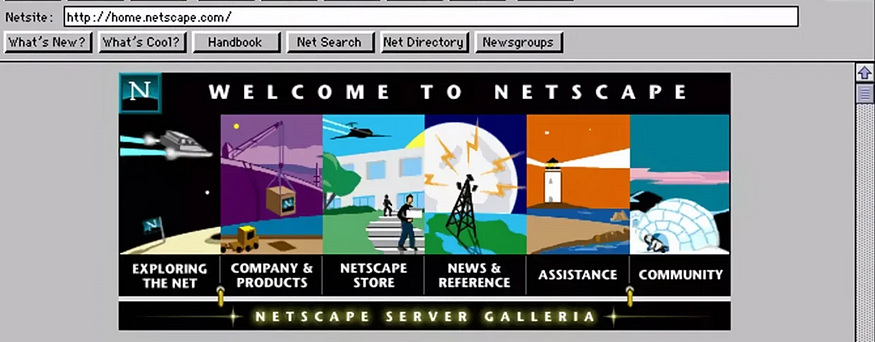
I don’t know where I heard about Netscape, probably from a business associate. But I remember the afternoon I logged on for the first time. The interface was full color visual, the first I’d seen, since FTP was only black text on a white screen and no images. The Netscape logo— the uppercase N sinking into a black globe against a starry aquamarine sky, was… beautiful.

Once I registered, the next screen had bright, colorful illustrations of a spacecraft, a construction site, a radio tower and more. Under each drawing white text against the black frames said, “Explore the Net. Company and Products. News and Reference. Community.” I was floored, drop-jawed. The interface gave me choices to go anywhere. Netscape was a portal to news sites, businesses with ‘websites,’ online communities, a virtual store, and reference libraries from around the world.

I called my roommate into my bedroom/office space to show her what I was seeing on my screen. “This changes everything,” I practically whispered, sure that this portal was the beginning of a connected world I only dreamt of as a kid.

As I sat there clicking on each navigation link, then exploring each site the Netscape browser delivered, I recalled when I was 8 years old, sitting in the back seat of my mother’s huge Chevy while she drove me and my sister home from school.

“One wish,” my mom asked us spontaneously. “One wish. Right now. If you could have anything you want, what would it be?” She often came up with non-sequiturs like this to fill the void of silence after she’d asked about our day at school and got, “Fine,” from both of us.

I answered instantly. “World peace,” and I meant it. My brother had come back from Vietnam a wreck. Depressed. Angry. I’d watched war on TV nightly.

“That’s a stupid wish,” my sister said, sitting up front in the passenger seat. I cowered in the back seat, and shut up. “It’ll never happen. Human’s are selfish. It’s part of our nature. We can’t change who we are.” She was 2 yrs older than me. Surely, she must be right. She wished for a new purse.

“This changes everything,” I’d said to my roommate as I browsed the internet that first time. And I believed it. A portal to the world would let us see how others lived, and let others see what was possible. In 1960s to 1990s U.S., most of us had a place to live in, and enough to eat every day. Most kids were vaccinated from horrific diseases, and didn’t die from the flu. We got a free education, through at least high school, and 20–30% of the population got a college education as well. And in California, college was cheap, making it accessible to most anyone.

My roommate stood over my shoulder staring at my screen as I went from site to site through Netscape’s ‘portal.’ She seemed unmoved by what we were seeing, and in short order went back to her room. I stayed online the rest of the night and into the early morning hours, amazed. I perused news sites, read articles from all over the world. We could never ignore atrocities happening anywhere. Millions would know instantly, and the United Nations would have to stop them! The privileged would no longer be able to turn a blind eye on poverty or disease, even in the most remote places seeing it daily on their computers. We could talk to people around the block or in other countries we’d never meet, and share ideas, and feelings. We’d see how similar we all are, how we all feel sad, or happy, or mad at times. We could connect 24/7, and never feel isolated or lonely again. The internet was a window to the world, and the view would surely motivate all of us to care for each other like never before.

This is the argument I gave to my dad at Saul’s Deli, eating bagels and lox a few years later. As a lover of technology since childhood, he too was on the internet, one of the first adopters in his advanced age group. He shook his head and gave me his indulgent smile, pausing before taking another bite of his bagel.

“The internet changes nothing. It is a tool, like a screwdriver. It won’t change human nature. And it won’t save us,” he said. “We’re going to have to do that. Until we learn to care for each other beyond ourselves, we are doomed.” He took a bite of his bagel and savored the mix of salmon, onions and bread, satisfied in the moment.

“You’re wrong, dad,” I exclaimed with certainty. “The internet is connecting the planet. For the first time in human history we are becoming one world.”

“One very small world, which everyone wants their piece of,” he said. “We’ve invented technology we can’t handle, from the Bomb to this internet. Getting bombarded with information isn’t going to change how we react to it. And the more technology we invent, the more likely we’ll implode with it.” He sighed, looked at me lovingly. “You can’t change the world, baby. Best just to focus on taking care of yourself, and your family.”

It was 1998. I had no idea what was coming with Web 2.0 and now 3.0, how the internet would evolve into the dangerous, manipulative MARKETING PLATFORM it has become. But I left Saul’s Deli that morning sure my father was wrong.

As it’s turned out, he wasn’t.

Love Letter from CA Native

I’m a native Californian, born and raised in paradise. The weather along our more than 3,000 miles of tidal coastline is spectacular practically every day. The Sierra Mountains are our border sentinels, over 14,000 feet at their peaks, stretching 400 miles long of pristine wilderness to world-class resorts. Ski after brunch and be tanning, running, biking on the beach by the afternoon—from mid-October through early June. Ask me my religion, and I’ll say I’m Californian. We are a culture all our own out here; active, progressive, wildly creative—fantastically separate from anywhere else, yet intricately connected to the world.

I was married a little over a year when my husband sold his software to a company in Concord, Massachusetts. A three year onsite contract was part of the purchase deal. After the blood oath that we’d return to California when the three years were up, I agreed to leave my family, friends, and Bay that I loved, and move to one of the oldest towns in the U.S.

I’ve never been a fan of the east coast. The weather sucks most of the time. Even the young people look older than most old people in California. I’d visited Boston just once, ten years earlier. Mid-August, and it was hot and wet and sticky. The city was dirty, crowded, crumbling, aged, with an excessive number of churches. I don’t remember finding anything I actually liked about the place other than the dim sum in Chinatown.

A decade later and Boston hadn’t changed much, at least from the plane’s view as we flew through the thick air over the dilapidated city into Logan Airport. The sweltering July heat came through the crack where the gangway met the plane and felt like a sizzling brick wall. I hesitated as I stepped onto the walkway, fighting the urge to run back on the plane and beg them to fly me home.

My husband waited for me at the end of the walkway, all smiles. I wanted to slug him. He’d come to Mass. a week before me and found us a rental in Concord, and the entire drive there he chatted it up—how beautiful the historic area was; the one-bedroom with studio house he’d found with its great location just blocks from town center.

What I saw out the passenger window after passing through congested Boston and manicured Cambridge was swampland. Rivulets lined with oak, birch, and pines were all that broke up the tangled shrubs and thorny vines that covered the ground and wrapped the fallen trees. I half-expected to catch a glimpse of the Creature from the Black Lagoon moving through the dark, heavily forested rolling hills.

My mood went from bad to black as we came into Concord’s tiny town center. Culture shock wouldn’t touch what I felt. Graveyards were the front lawns of the churches that stood on every other corner. Old stone and brick buildings lined the main streets of the town. Old meaning 1600 and 1700’s. Art galleries, bakeries, bank branches and real estate offices occupied these crumbling two-story structures, which met at the town circle.

The thick smell of mold and the cloying scent of decay hit me as I got out of the car in front of the ramshackle Colonial Inn, which was used as a hospital during the Revolutionary War, according to their bronze plaque. The air was stifling and still. I could barely breathe. People on the streets milled about as if in slow motion. Three years would be an eternity here.

The oppressive heat was suffocating. I had to find air. My husband suggested we go to the Concord River where he assured me there was always a breeze. We drove to Minuteman Park, walked to the end of a creaky wooden pier and looked out across the river to the old stone bridge where the first battle of our War for Independence was waged. I was immersed in the past and felt the weight of it upon me, but I didn’t feel any breeze. 

The screened porch of our rented one-bedroom house turned out to be a haven, shadowed from the heat and separate from the bugs, except for the hive of wasps in the dormer of the upstairs studio/attic we spent the first afternoon eradicating.

Summer passed to Fall, and the brilliant colors of the foliage was only marred by the attack of the insect population as it moved indoors in search of food and shelter from the impending cold. Autumn lasted about three weeks until the first frost when everything died and became flat gray.

The only season in Massachusetts I looked forward to [back in California] was winter, anticipating the pristine beauty of snow. And its splendor can not be denied while it’s falling. But shoveling the drive, managing the icy roads, and freezing my ass off from early November until mid-April was harsh at best. And within hours of falling, the clean white blanket was speckled brown with road grime from the plows and street traffic.

Spring in Mass. brought allergies from hell. I felt like I had the flu for a straight month when everything was blooming. Then summer set in, and there was no air in the air again. There were excessively heavy rain storms though, that invariably flooded the basement numerous times from mid-July through late-August.

I’d left paradise for purgatory.

There were times of spectacular beauty in MA—those few weeks of fall, or a couple weeks in the spring when gray gave way to vibrant greens and crystal blue skies. But the days of sunlight and life were few and far between. Through the late spring and summer months, every night at sunset was Attack of the Monster Mosquitoes! The other eight months everything was frozen or dead, and it was too snowy and/or cold to go anywhere.

For two and a half years I endured Concord. It got, if not easier, more routine serving my time there. I learned to dress for the cold weather, especially in layers because restaurants, theaters and clubs were usually blazing hot in the winter for some unfathomable reason. Other than a few affable store clerks and a couple of business associates, I never made any real friends there. Most of the people were as cold as the place, and prided themselves on their rudeness. By late fall of my third year, after totaling my car while nine months pregnant when a snowplow on the other side of the road dumped fresh snow on my side, I’d had more than enough of Massachusetts.

Two months after our son was born, and four months before his contract with the Concord based company expired, my husband accepted a job offer from a tech startup back in California.

We drove through several blizzards across the northern U.S. in mid-winter because it was the quickest route to get home. The February afternoon we drove onto Alameda Island in the San Francisco Bay it was 70 degrees and sunny. Across the sparkling blue water the sun was setting behind the city. The air was crisp, almost sweet with the fragrance of fog, the wind whipping around us with the windows rolled down as we cruised along Shoreline Drive. People were walking, running and cycling along the strand. A few die-hard wind surfers were out on the bay doing their last sail for the day. And I said a silent prayer to hope that we were home to stay.

Learning How to Learn

My daughter is studying for her SAT—her college admissions test. I never took the SAT because I got a D in algebra, twice. To advance to geometry, I took the same class again, from the same teacher that didn’t explain anything the first time. I didn’t get the concepts behind the equations, or Mr Mulvaney’s assertion that “it’s just the way it is.” Even algebra has a reason for why it works the way it does.

I didn’t take the SAT because I was afraid I’d fail it with no math background. In fact, every time I even thought of math, I felt anxious. I was a failure, stupid that I didn’t get quadratic equations, as most of my classmates seemed to. I couldn’t apply to a California university, or any four year college worth attending without taking the SAT. Instead, I attended Jr College for two years before transferring to UCLA. I studiously avoided math classes, as they were not required for a degree in Design.

Fast forward 5 years, and I wanted to apply to graduate school to study Education. Not only did I have to take the GRE, which had advanced math, but before registering for the test, I had to have teaching experience, in a real classroom, which required I pass the CBEST, which also had algebra and geometry. Panic. How was I supposed to pass any standardized test when I never passed algebra, and never learned the higher levels of math that was sure to be on these tests?

Enter my friend, Bert. “Don’t worry about it. I’ll teach you algebra, and geometry, and any other basic math you need. You’ll pass the tests.”

He had to be kidding. “I failed algebra twice! I’ll never be able to learn all the math I need to pass these tests.”

“Don’t be absurd. You are one of the smartest people I know. Of course you can learn algebra.”

The familiar terror was choking. Did he not hear me? “I FAILED IT TWICE, and never advanced to geometry. I suck at math!”

“Not likely,” he said with confidence. “More likely, you got turned off of it by some careless teacher, and the gates in your brain shut down. All you need to do is get out of your own way. Open your brain back up, so you can learn what you need to know.”

“I’m an artist, a qualitative person, not quantitative. I’m just not into math.” I was trying not to kill his delusion that I was smart.

“But you need to know it to pass these tests to get into a graduate program. So suck it up, let go of your fear, and get it done.” Bert was already in graduate school, studying for his doctorate in Psychology. “You have some worthy goals. Make them happen. I’ll help you.”

I didn’t want his help. I didn’t want to learn math, or, more likely not learn math, prove to him, and myself, how stupid I really was. He was being so kind it was impossible to keep defending myself. But I still did not believe him. “Maybe I’m just not smart enough for advanced math.”

“Hmm,” he said, staring at me intently. “Remember the show Get Smart?”

Ok…“Yeah.”

“Remember the opening? Max enters that hallway with the thick metal doors that slide open one by one as he approaches them. And each slams shut behind him as he walks down the hall?”

“Yeah.”

“Well, that’s what your brain is doing when you think of math. The doors, or gates to learning are shutting down in your head. You are so freaked out because some lazy teacher made you feel stupid, and you bought it, hook, line and sinker. Stop it! You’ll make a great teacher, or professor, or whatever you want to do with education. Learn math, and move forward.”

“You make it sound so simple.”

“But it is. You just have to open the gates in your brain that make it possible to learn, well, anything.” He smiled. I did too, couldn’t help it. With his words, he’d just introduced hope.

We were having this dialog at Jerry’s Deli, in L.A. Bert took the pen the waiter left to sign for our bill, and on an unused napkin wrote out a quadratic equation. I frowned, felt anxious. Here we go. Now he’ll see how stupid I really am.

“I can see by your face, you’re already freaking out.” He laughed. I scoffed. “This is good!” He was clearly excited. I felt pissed off, embarrassed. “Let’s explore that feeling. Talk to me about it, what does it feel like?”

“I feel scared, and stupid.”

“That’s your first two gates. Big, thick, metal doors shutting you out of learning. So, let’s start with feeling stupid, because that’s likely why you’re feeling scared, that I’ll see you, or you’ll see yourself, as stupid.”

“OK…”

“Do you think you’re stupid?”

“With math!”

“Our brains don’t work that way. You can’t just be stupid in one area. Either you have a functioning brain, or you don’t. Most of us have functioning brains. Are you telling me you don’t believe you do?”

I thought about that. Of course I have a functioning brain. I graduated college. I got good grades, even in high school, except for math. “I have an OK brain, I guess.”

He laughed. “So, there goes your first gate. Poof! It’s gone. It was bullshit anyway. Good riddance.”

I smiled, but fear and doubt still lingered.

“Here’s the deal,” he continued. “Every time you think of math, or we work on equations, notice how you feel. Pay attention to how your brain is operating. Examine the messaging it’s feeding you, and the bullshit it’s telling you. Qualitatively break it down to check if it’s right. Every time your brain says, ‘I can’t do this. I’m not smart enough,’ call BULLSHIT. Counter the voices of doubt. YES, I AM SMART ENOUGH! Then go back to the problem and work at figuring it out.” He took a sip of his tea. “Work at it long enough, and hard enough, and you will.”

‘The gates in my brain’… I could literally feel them all of a sudden. Bert was right. Every time I even thought of math the gates in my brain shut. And not only with math. Every single time I found it hard to learn something, anything, I now could see it was me, getting in my own way, allowing my brain to convince me of bullshit. All I had to do was examine my own feelings more carefully, embrace the ones that supported my success, and reject those that didn’t.

I studied algebra and geometry in a three week refresher course offered through the CBEST testing program. I passed the test, and subsequently my GRE, and though I never followed through with my graduate degree in Education, as having kids and writing became my priority, I teach at some of the top universities on the planet.

The best bit, I now know how to prevent the gates in my brain from shutting. As long as I identify my fear, face it, dispel it with reason, I can keep my brain receptive to learning. And with enough hard work, I can learn, well, just about anything.

Marketing 101

I hate running.

It hurts my legs, my lungs, my back, my tits.

I run between 3 and 4+ miles, five days a week. And I’ll continue to run as long as the benefits outweigh the drawbacks.

I hate feeling fat, and running is the quickest calorie burn I know of (my me-time is hugely limited with an active career and two kids). Running helps me think. It not only activates neural connectivity, it’s also a quiet space, undisturbed by kids or clients. I get to listen to my music, blasting through my earbuds, let it absorb me, the rhythm drive me, and in moments it feels like I’m flying.

I run whether I’m healthy, sick with a cold or flu, or anything else that isn’t laying me out on my death bed. I’m afraid if I give myself one excuse not to run it will lead to another, and in short order I’ll quit running. But I won’t quit, as long as the benefits serving my needs outweigh the hardships.

Benefits that fulfill Need/Desire is, or should be, the foundation of all marketing efforts.

Digital advertising is now the hip slick and trendy way to market. And no doubt, there are great marketing opportunities online. Websites, landing pages, social media marketing, e-blasts, analytics…etc, are TOOLS to market with. But marketing online, or offline, IS THE SAME THING. The basic principles of marketing must be applied to sell and grow any company.

Print, online, or on the friggin moon, Marketing is selling BENEFITS that fulfill WANT. There is no such thing as NEED. It is merely a construct of desire. Advertising, PR, branding, visual design, copywriting, marketing communications are, or should be, developed, designed and produced to SELL products/services/ideas/messages. ‘Likes, Engagements, Views, Impressions’ are all bullshit “vanity” metrics to stroke egos so you’ll buy more online ad space.

Startups these days typically begin their marketing efforts by flooding the internet with digital ads, videos, polls, games and such. These branding and selling campaigns push products and services without distinguishing a clear desire or solution for anyone. They do not tout the benefits of what these startups are selling, or identifying any specific groups of people who will likely find value in the features of their offerings. No matter what Google and Facebook tell you about their targeting AI algorithms, online ads are not tightly targeted to people likely to benefit from your specific product, service or message. This “Fire, Aim, Ready” approach clearly illustrates why 90+% of all startups fail.

I’ve been a MarCom specialist in the San Francisco Bay Area for 20 yrs. I’ve worked with a ton of startups who do not consistently promote their offerings features and benefits, or realign their marketing efforts to outshine competition, nor do they invest in developing new products that fulfill anyone’s desires. And I’ve watched them fold again and again, sometimes in ridiculously short order.

Marketing 101— IN ORDER (Ready, Aim, Fire!):

1. Get Ready and Productize Your Idea: Identify the features, benefits and differentiators of your offering that fulfill a desire, or offer a solution to specific target markets likely to find value in your product, service, or message/mission (non-profit).

2. Take Aim and Create Brand Identity, and Marketing Campaigns: Establish an identity (logo), and voice (tagline), as well as marketing efforts—digital, print, and pitch (in-person) campaigns that fulfill a desire, or offer a solution to each specific target audience.

3. Fire!—Launch Marketing Campaigns: Motivate people to ACT—to click, to subscribe, try, or purchase your offering, or buy into your message.

The new order of entrepreneurs are weened on social media and tech. Universities, startup schools and bootcamps generally teach their students to launch backasswards. They promote the MVP model of innovation. Building a MVP (minimum viable product) may have worked for a handful of successful startups, but it took them a hell of a lot longer to reach profitability than necessary. In most cases, MVP is a recipe for failure. Relying on consumers to figure out what benefits your offering should fulfill for them is time consuming, expensive, and lazy. It is the job of the entrepreneur to produce a product or service of value for specific groups of people before launching your business.

Unfortunately, opting for A/B testing, and SEO keyword tricks over real content—selling benefits fulfilling a desire—and relying on Google Analytics doesn’t actually SELL much. Measuring response rates isn’t new. It’s been in the background since advertising began, and generally offers limited utility. Marketing is dynamic! Results vary by target audiences, the day a campaign launches, time of day, day of week, the weather, behavioral trends, sociological and financial climates, to name just a few factors that determine response.

The principles of Marketing may be simple, but motivating people to bend to our will is not easy. Beyond the primary building blocks of any campaign, (Ready, Aim, Fire), at the core of effective Marketing is psychology. Online, or on Mars, understanding your customers and potential customers’ psychology is mandatory if you want the greatest response to your marketing efforts. Marketing pros study people, not code, since coding, especially with ever-emerging technologies, is time consuming to learn, and generally requires a different kind of awareness than psychology. I’ve yet to meet a web developer/designer who’s demonstrated mastery in marketing. Competent at software development means they’re investing their time in technology, not in the study of human behavior.

I tell my clients that digital marketing is not ‘the answer’ to effective marketing. New avenues of selling will arise, and others fade away. But the growth of any business, or nonprofit message, or even activity, like running, depends on the benefits continually fulfilling a desire for a specific group of people.