Cafe 42 Blog

I See You

I am an Empath.

Wait! Before you roll your eyes and click off this post, I don’t have paranormal powers. It isn’t magic that I can read people. I’m not psychic. I can’t glean people’s “energy,” whatever that means, or any of that mystical crap. I am a devout atheist and use the word “devout” with purpose.

What I can do, is tell you what you’re thinking and feeling, generally before you know.

How?

If I’m in physical proximity to you, your body (posture, eye contact…etc.), and facial expressions give me tons of data about what you are experiencing inside your head. We all have this ability to read physicality, though most people hardly pay attention to one another, except on rare occasions.

Ever had a blind date? The first second you see your date in person, you can tell if they like how you look.

In-person, or not — over the phone, or web — I ask a LOT of questions. And I listen to your answers. My brain picks up inconsistencies in what you’re saying, telling me you are lying to yourself, and subsequently… me.

The first time my husband met my mother, she said to him, “My daughter (me) was born old.”

What she meant was, I was born plugged in outside myself. I don’t know why. A genetic anomaly? My senses feel hypercharged. Touch, taste, sound, even vision (clarity in peripheral sight) seems heightened compared to most (and not just by my reckoning). I live outside my own head while in the company of others. Watching. Questioning. Listening, my brain identifying and coalescing patterns of behavior. OCD? Bipolar? Maybe. I’ve spent a lifetime trying to process the massive amount of information I get from others, and it’s exhausting. And I wish I could shut it down, live like most everyone else.

Sort of…

I’ve picked up patterns in human behavior along the way. Lots! It’s another reason I can tell what you’re feeling, often before you know. I can now predict likely responses to an enormous array of specific stimuli. It’s a fantastic tool for writing believable characters. And understanding what motivates people is equally beneficial for developing marketing campaigns with great response rates.

Yet, I struggle with living plugged in outside myself. It’s emotionally costly. I lose myself while inside others, acutely feel their sadness, their fears, and hopes. I’ve tried to shut my senses down with drugs, prescription, and not. I had an allergic reaction to Prozac that almost killed me, and no reaction at all to weed over time.

I’ve become a recluse for the most part. I avoid crowds, and limit my intimate friendships to very few. I stay plugged into my two kids, my husband, our bratty, but cute Shepard pound-hound, which serves them well, though at times, probably not me so much. I disappear, absorbed in them, their feelings often muddling my own. (To be fair, the dog’s needs are simple. No hidden agendas, no unconscious complexities. She makes her feelings obvious. Thank you, Elly!)

I am grateful and humbled in the extreme by the immense and intense range of feelings we all get to experience being human. I am energized by celebrations like New Years Eve, or friends and family joys. Sometimes dark feelings overshadow all lightness, and it feels like the only way out of seeing so much, feeling so much, is to check out. I get that living is a choice we make, daily. While I’ll continue to choose living, be here for my friends and family as long as I can, I must admit, there is, and has always been a beckoning to shut it all down, kill the noise of others in my head, turn off the input. Unplug, for good. I’ll never check though, regardless of how weighted living feels sometimes. As an empath, and an atheist, feeling seems better than not, knowing I’ll eventually cease to exist and feel nothing at all. Forever.

The Upside of Dementia

She walked to the bank on the last Friday of every month to deposit her social security check. She’d been doing it on her own for a long time, since her husband of 49 years died of a brain tumor ten years back. She folded the check in half then put it in her wallet, in the zippered part, then clicked her wallet shut and put it in her pocketbook. After securing the purse strap on her shoulder, Grandma put her navy peacoat on, over her handbag to hide it, and left her one-bedroom apartment on Hobart Street in the heart of L.A.

Every so often if I was in town, I’d join Grandma on her monthly walk. We were never particularly close. She’d always been contentious, but she once had a quick wit and delivered it with sharp humor, both of which left her years ago, as did the radiant beauty she once possessed. Conversations were now limited to her endless list of complaints — physical, familial, and social. Visiting was always a chore, but she was all the extended family either of us had. And family is family.

Her bank was on the corner of Wilshire and Vermont, a particularly noisy, crowded intersection of two major thoroughfares, but Grandma was used to the hustle and bustle. She was a city girl — from Manhattan first, lived above a candy/soda fountain shop she ran with her husband. She and my granddad followed their daughter to California and rented the flat on Hobart Street, locally known as the Miracle Mile District. She’d lived there for the last 45 years, took no vacations, and never traveled beyond the L.A. area since arriving.

We walked down her quiet street of whitewashed art deco apartments at a hurried pace with purpose. And she was fast, especially for an 87-year-old woman who stood a mere 4 feet 9 inches tall. It was generally difficult to keep up with her. But on this particular Friday when we turned off her quiet corner onto Wilshire Blvd., Grandma startled, and stopped, clearly confused.

I practically ran into her. My intrusion into her space brought her back to the present. She scolded me for not paying attention and we were on our way again. Her pace was slower now, more cautious, and I knew something was wrong but couldn’t figure out what. I suggested we go back to her place to get my car and I’d drive her to the bank. By the tone of her refusal, it was clear she didn’t care for my implication she was unable to manage on her own.

She picked up her pace so I hurried alongside her in silence the rest of the way to the bank. Grandma opened the glass door, took a few steps inside and stopped dead. I stood panting beside her as she stared around the large, brightly lit space — at the tellers behind the long counter, and the desks of the managers and sales reps across the way. She took on this horrified expression, brought her hand to her mouth as if to stifle a scream, and her eyes filled with tears that slid down her face when she blinked.

I was taken aback. I’d never seen my grandmother cry, not even at her husband’s funeral. She was a hard woman.

“I have no idea where I am, or why I’m here,” she whispered, clearly shamed. “I know I’m losing my mind. I can feel it but I can’t stop it.” Then she looked away, out the wall of windows at the crowded intersection beyond.

My mom/her daughter had been telling me for months that Grandma was losing it. Her normally sharp tongue was telling tales of things that never happened, my mom warned. She was hospitalized twice for taking too much medication because she’d forgotten she’d taken it earlier. Lacking the space and knowledge to care for her mother through end-of-life, my mom still struggled with the notion of putting her mother in an elder care facility.

Grandma stood in the middle of the bank crying, and I stood there gaping without a clue what to do. People started staring so I took her by the arm and led her to a chair by an empty desk. I knelt in front of her, held her hands in mine, and told her to look at me. She did. Her gray eyes focused on me, and I saw the fear of old age in them. I spoke softly — told her where we were and why, and that we’d walked to the bank together.

Recognition filled her face, but her gloom remained. She retrieved a Kleenex from the small travel pack she kept in her purse, dabbed her face, and wiped her nose. She needed a minute before going to a teller window and depositing her check. For the life of her, she couldn’t remember how to do the math required for the cashback she needed.

“I’m going crazy. I just know it.” She looked at me, and I felt her begging me for salvation.

I gave her my pocket calculator, and while I taught her how to work it, I reassured her she no longer needed simple math skills. We filled out her deposit slip together and then checked the math with the machine at the teller window. Grandma slipped her $50 into the zippered part of her wallet then put it in her pocketbook and we were on our way.

Though I wanted to, I thought better of suggesting she stay at the bank and I go get my car. She seemed back to her old self, hustling along Wilshire Blvd. I paced her in silence back to her flat. Inside her own environment, she seemed at ease. We watched her favorite soap opera and then she made us scrambled eggs with onions for a late lunch. I helped her with the dishes and left, making light of her dementia with senior moment jokes of how we all forget stuff, and feeling confident Grandma was going to be just fine.

I did not accompany her to the bank on the Friday a month later. When she got to the teller window and realized she’d lost the calculator I gave her, she panicked and became disoriented again. The teller was kind enough to call my mom, who came from the Valley to pick her up and drive her the half mile home. That afternoon, an hour or two after my mom left her, Grandma took three doses of Valium in less than an hour and ended up in the hospital getting her stomach pumped from the overdose.

Not too long after that my mother got a court order for legal custody of her mother. At first, when my grandmother was still lucid, she resented the hell out of her daughter’s authority, and the Home she was forced to reside in. When I’d pick her up for family functions, she’d spend the entire ride slamming my mom. But within a few months, her anger gave way to wonder as dementia took hold. Memories of her limited life experience were replaced by complex fantasies of exotic places she’d traveled, gala events she never attended, and interactions with famous people she’d never met.

Less than a year after the second bank incident my grandmother did not recognize her family, did not know me, or her own daughter, and claimed she’d never had a child. Though my mother continued to visit her weekly for the next two years, Grandma never acknowledged she had a daughter. Pretending to be a visiting friend instead of her child took its toll on my mom, but my grandmother was none the wiser. She enjoyed the visits. Over just a few months she seemed lighter, brighter than she’d ever been. She seemed happier since crossing the line of reality all the way. Her flat gray eyes filled with excitement when she told of her fantastical adventures on Safari in the jungles of Africa, or the time she did the Atlantic crossing on the Queen Mary.

Her fantasies shielded her from harsh realities present and looming. At 89, her body and mind were shutting down, her time running out. She was on the fringe of life now, and almost invisible. Surely she felt it too. Perhaps so many old people lose their mind because the reality of their marginal existence is just too heavy to bear. Dementia was her reprieve. Insanity served her. But getting there — watching herself lose her own mind must have been hellish.

A few years after grandma passed, my mom died of cancer. She never lost her mind, was sentient to the bitter end. But my father is 84, and his sharp mind is clearly going. He repeats the same sentence several times. He slurs words, jumbles them, can’t find the right ones. He is on scores of medications for his heart, blood pressure, liver, and other vital organs shutting down with age. Once an articulate pontificator, my dad talks mostly of his many ailments now. He tries to assure me he’s ‘accepted his lot,’ living in a private apartment in Building One of the retirement Home he recently moved to in Washington, far from the California sunshine he loved, but nice, and affordable.

On the phone with him last Saturday, I heard the fear, the raw terror in his voice as he spoke of the terminal patients in Building Three of the Home. I sought words of wisdom to lighten his load but could think of none. My heart ached for him, missing him while he is still here. I wanted to save him, but know I can not. As I hung up the phone, as harsh as it seems, even to me, I wished for my father a speedy journey into a pleasant dementia.

Do NOT take PAXLOVID

After over 60+ hr of the most current research, and taking it myself with very bad side-effects, I recommend you do NOT take PAXLOVID!

Please do NOT listen to your doctor, or Pfizer, who tells you to take PAXLOVID for Covid.

Pfizer is LYING TO YOU, especially if you are fully vaxed!

Your doctor is LYING TO YOU, when he prescribes PAXLOVID, as your doc DOES NOT DO THE MOST CURRENT RESEARCH, and most doctors simply quote Pfizer’s marketing material! DO NOT BELIEVE PFIZER, and/or your doctor quoting Pfizer’s literature.

FOLLOW THE MONEY…

Pfizer made $100 BILLION last year, $12.2 BILLION from PAXLOVID.
Don’t listen to drug-pushing doctors sold on the drug by some busty actress, offering the doc perks to push PAXLOVID.

Here is what the most current data (your doc doesn’t bother to research) says about PAXLOVID. Read it all carefully and DO YOUR OWN RESEARCH by limiting Google/Bing/DuckDuckGo search returns to 1 month out, and ignoring the shitload of bullshit ads and articles funded by Pfizer about how great PAXLOVID is because THEY ARE LYING TO YOU:
https://lnkd.in/ga-4Yc3v
https://lnkd.in/gWaCsARy

For the record, I am fully vaxed and have no political agenda in regard to Covid cures. I took PAXLOVID and had every side-effect listed, as many others reported, (and I still don’t know about long-term damage to my liver), and now have COVID REBOUND, a COMMON OCCURANCE (regardless of Pfizer’s denials) that comes from taking PAXLOVID.

On the Train to Auschwitz

Electricity is shooting from my fingertips. My heart is racing. My breathing fast, too fast.

“I can’t understand your accent. I’d like to talk with a supervisor, NOW!” My fifth ask.

I’m on the phone with COMCAST, have been for the last 2 hrs today; 3 hrs on Tuesday, 2 more last Friday…etc.

“I sody mem for the inconvenents,” the COMCAST operator delivers his line politely, though I’m yelling at him.

I’m yelling at him because he’s the 17th Indian employee, talking to me from India, I’ve spoken with in the last year alone, and I’ve been trying to get my internet connection stabilize, i.e. consistently ON for FOUR YEARS NOW.

“I here do help you, mem. Wvat is you account numba?” He’s lying. He doesn’t want to help me. He wants me on the line so he has a job tomorrow, because he wants to feed his family. So do Americans, but he doesn’t care about that either.

“I want to speak with a supervisor NOW, dickhead. Do you fucking understand me?” I’m getting mean. I’ve learned not to care about him, as he doesn’t care about me, or even the problem I’m having with COMCAST. He does not deserve my respect. Past experience with COMCAST customer service has taught me that he is the enemy, making sure he takes care of himself, regardless that he’s screwing the very people he’s supposed to be working for—the COMCASTcustomer.

Germans drove trains, turned in their neighbors, sent millions to slave labor and gas chambers to protect their own asses. They didn’t stand up to Nazis (AMAZON, MICROSOFT, COMCAST, PG&E, VERIZON…etc). They let the German government tell them what to do, how to think, what to say, what not to, just like COMCAST teaches their employees, Indian or otherwise.

It is insanity that COMCAST delivers HALF THE SERVICE they claim to offer, but I have to pay ALL OF MY BILL monthly. Sure, I can go with AT&T, who were just fined $18.25M for STEALING FROM THEIR CUSTOMERS, cutting internet speeds to you and me, to give more bandwidth to whoever they liked. And do you REALLY believe that AT&T will stop stealing time and hurting productivity for small businesses like yours and mine after this fine? Seriously. They’ll do what they want, get sued again, then raise their rates to pay for the lawsuits. Just like PG&E, who MURDERED 8 people in San Bruno, destroyed an entire neighborhood, was fined the most EVER in a lawsuit of its kind, and simply raised their rates to cover the suit. We’re all paying to let them get away with murder.

Is this the society you all want? It makes my skin crawl every time my husband insists on paying a bill that is wrong because COMCAST and AT&T make it a 2 hr journey of frustration to talk to an operator in India or the Philippines who has little to no training, can barely speak English, and who DON’T GIVE A SHIT ABOUT YOUR PROBLEM. They have to feed their families, on the backs of Americans, because their governments are so corrupt that only the wealthy thrive, while the rest of their people struggle to get by. Or flat out starve, like the begging children that surround foreigners in India.

Well, now our government is equally corrupt, placating to CORPORATIONS and big business lobbyists. And WE ALL LET THEM.

My father-in-law spent between the ages of 13-18 in Auschwitz after watching his entire family murdered by Nazis. His neighbors, their kids that he used to play soccer with, all turned a blind eye. AMERICANS ARE NOW DOING THE SAME THING. We’ve become complacent, as long as we have Netflix, and Amazon, and Uber for food delivery. He told me once that anything becomes acceptable to most people, that watching Nazis murder children daily, for sport, or seeing prisoners throw themselves against electric fences to commit suicide became the norm in Auschwitz. It is now the norm to accept bad behavior from big business. And regardless of our Supreme Courts twisted decision that “Corporations are people, too,” there are actual people working for them, greedy management making decisions that screw their customers, that are at the core of this issue.

The German train drivers, or the local store owners that stopped serving Jews and Gays and Gypsies, they were simply “following orders,” like the Indian rep working for COMCAST delivering the company’s lies with every line he spoke. 

Those who ignore the past are condemned to repeat it. 

You can all plug into your devices and apps and ignore the news, and pretend the economy is stable for you, even though it’s a house of cards with Disney and other major employers firing U.S. workers and replacing them with H1Bs, and just bend over and pay every bill without protest. You can choose to be one of the Nazis, or the ‘good Germans’ who turned their heads while their neighbors were murdered.

Harsh? You bet. But again, is a society where the few rich thrive, and do whatever they want, whenever they want, with NO ACCOUNTABILITY, or real punishment, where you want to live?

DO THE RIGHT THING!!

Protest—tweet, update, share your stories when you are screwed by COMCAST, AT&T, PG&E. Take the time to tell the world that SAMSUNG put a ton of apps on the phone you just purchased that you don’t use, don’t want, and YOU ARE PAYING FOR in load time and battery life, while they exploit your personal data with recommendation engines to use against you. Sign petitions by people who give a shit enough to fight corruption and are looking for support to stop it, and not just causes that adversely effect you directly, but humanity, and the planet. Fight every bill that’s wrong. Don’t speak with respect to the CS reps who show you none! Their politeness is a facade, taught to them by greedy, ugly management who are happy to keep you on the line repeating the same information to the next rep who doesn’t take notes, maybe is even illiterate, and has no clue what your issue is. 

Show your outrage passionately!! Make their job hard, because they are willingly stealing your time, and your income, and most assuredly making you miserable not caring about your needs to guarantee their jobs. And if you think these reps are not aware of what is happening on the back end, that’s BULLSHIT—an excuse to remain ignorant, especially since almost every call they get is from beleaguered customers like me who take them to task on COMCAST FAILING TO DELIVER on their promises. If you make it miserable to work at COMCAST, perhaps they’ll look for real jobs that require thinking, literacy, and actually add value—benefit customers—instead of blindly obeying the Nazi leadership of the COMCAST (or pick your fav corp) regime.

[Spider’s] Web 1.0

I’ll never forget the first time I saw the World Wide Web. It was 1995. I was in my rented townhome in Alameda, a small island on the east bank of the San Francisco Bay. I already had a dial-up modem plugged into my Mac LC that I used to send graphic files and documents to my lithographers and commercial printers through FTP (File Transfer Protocol).

I don’t know where I heard about Netscape, probably from a business associate. But I remember the afternoon I logged on for the first time. The interface was full-color visual, the first I’d seen. FTP was only black text on a white screen and no images. The Netscape logo — the uppercase N sinking into a black globe against a starry aquamarine sky, was… beautiful.

Once I registered, the next screen had colorful, clickable illustrations to explore the Net. I was floored, drop-jawed. The interface gave me choices to go anywhere. Netscape was a portal to the world.

I called my roommate into my bedroom/office space to show her what I was seeing on my screen. “This changes everything,” I practically whispered, sure that this portal was the beginning of the connected world I only dreamt of as a kid.

As I sat there exploring each site the Netscape browser delivered, I recalled when I was 8 years old, sitting in the back seat of my mother’s huge Chevy while she drove me and my sister home from school.

“One wish,” my mom asked us spontaneously. “One wish. Right now. If you could have anything you want, what would it be?” She often came up with non-sequiturs like this to fill the void of silence after she’d asked about our day at school, and got, “Fine,” from both of us.

I answered instantly. “World peace,” and I meant it. My brother was in Vietnam. We watched the war on TV nightly. I was always afraid I’d spot him among the troops in the jungle, and then see him get shot. “I wish there was no war, and that we all took care of each other instead of fighting so much.”

“That’s a stupid wish,” my sister said, sitting up front in the passenger seat. I cowered in the back seat and shut up. “It’ll never happen. Humans are violent. It’s part of our nature. We can’t change who we are.” She was 2 yrs older than me. Surely, she must be right. She wished for a new purse.

“This changes everything,” I’d said to my roommate as I browsed the internet that first time back in 1995. And I believed it. A portal to the world would let us see how others lived, and let others see what was possible.

My roommate stood over my shoulder staring at my screen as I went from site to site through Netscape’s ‘portal.’ She seemed unmoved by what we were seeing, and in short order went back to her room.

I stayed online the rest of the night and into the early morning hours, amazed.

I pursued news sites and read articles from all over the world. We could never again pretend that holocausts weren’t happening. We’d find out about atrocities taking place anywhere, instantly, and the United Nations would have to stop them! The privileged would no longer be able to turn a blind eye to poverty or disease, even in the most remote places in Africa, or the Middle East, seeing it daily on their computers. We could talk to people around the block or in other countries we’d never meet, share ideas, and feelings. We’d see how similar we all are, how we all feel the same things: sad, or happy, or mad, at times. We could connect 24/7, and never feel isolated or lonely again. The internet was a window to the world, and the view would surely motivate all of us to care for each other like never before.

This is the argument I gave to my dad at Saul’s Deli while eating bagels and lox a few years after my first experience on the Netscape browser. As a lover of technology since childhood, he too was on the internet, one of the first adopters in his advanced age group. He shook his head and gave me his indulgent smile, pausing before taking another bite of his bagel.

“The internet changes nothing. It is a tool, like a screwdriver. It won’t change human nature. And it won’t save us,” he said. “We’re going to have to do that. Until we learn to care for each other beyond ourselves, we are doomed.” He took a bite of his bagel and savored the mix of salmon, red onions, cream cheese and bread, satisfied in the moment.

“You’re wrong, Dad,” I exclaimed with certainty. “The internet is connecting the planet. For the first time in human history, we are becoming one world.”

“One very small world, which everyone wants their piece of,” he said. “We’ve invented technology we can’t handle, from the Bomb to this internet. Getting bombarded with information isn’t going to change how we react to it. And the more technology we invent, the more likely we’ll implode with it.” He sighed and looked at me lovingly. “You can’t change the world, baby. Best just to focus on taking care of yourself, and your family.”

It was 1998 when I had this dialog with my dad at Saul’s. I had no idea what was coming, how the internet would evolve into the ugly, manipulative MARKETING PLATFORM it has become. I had no clue that seeing how others live would engender jealousy, promote hate, violence, ignorance, and threaten our democracy daily. But I left Saul’s Deli that morning sure my father was wrong.

As it’s turned out, he wasn’t. ■

The Good Life

To escape the bickering, and whining, and catering to the needs and desires of everyone’s demands, I took our dog, Annie, for a walk on a quiet fire trail near our house. Bright and beautiful out, a sweet sea breeze came over the Oakland Hills with the afternoon sun. The mile and a half dirt path along the base of the foothills was mostly vacant, rarely used by even residents of the neighborhood, so I did not leash my dog for the walk.

I saw someone from where I stood on the ridge while I waited for Annie to finish marking her territory in an open field. A woman was coming towards us on the trail below, and I tensed as I scanned for the dog she was most likely walking, but saw none. Still, I called my 70-pound Shepherd-mix to me. My beautiful pound-hound was a bit unpredictable with other dogs. Play. Fight. Run. I never knew which, or why. She passionately loved people, though most didn’t appreciate her bounding up to greet them.

Annie came to me, and I held her collar as we stood on the ridge and watched the woman trudge up the hill. Her white hair looked almost like a silver helmet in the sunlight. She walked slowly, and carefully, and hunched. I made her out to be in her mid-70s. My dog started whining the moment she noticed the woman approaching, then practically yanked my arm off trying to pull away from me and go meet her potential new friend.

The woman was 30 feet away when she noticed us, looked up and stopped. I loudly assured her my dog was very friendly and loved everybody, and that I held her securely, asserting there was no need to worry. The old woman looked at my dog wagging her tail wildly and whining incessantly, and she smiled. She confidently told me she loved dogs, then called mine to her with a pat on her legs and words of welcome. I let go of Annie’s collar. She lopped over to the woman, ears back, but tail up and swishing, and sidled up to her, leaning her downy-soft, muscular frame into the woman’s legs. I joined them on the path where the woman stood stroking my pound-hound.

The old woman gently ran her hand along the length of Annie’s back again and again while extolling the animal’s Sphinx-like appearance and friendly nature. Annie was mesmerized with her touch, as my dog was with just about anyone’s, but the woman seemed to really enjoy the contact as well, her expression set in a soft, contented smile. She explained she’d had several dogs during the years she and her husband raised their three kids. The dogs had passed on, the kids had moved on, now with families of their own. Her husband died two years back and for the first time in her life she was alone.

Her kids, even her grandkids kept telling her to get a dog. I chimed in with words of encouragement, told her about getting my dog at eight weeks old from a kill shelter in Manteca, and ranted about some great local shelters where she could find a great companion.

My graceful hound took off after a squirrel, startling us both. The woman began brushing the dog hair off her pants, but a lot of short hairs were woven into the navy polyester and clung to her pant legs where the dog had leaned against her. “I’ve spent the last 50 years of my life attending to others needs—cooking, cleaning, and more cleaning, and taking care of everyone else. I told myself I deserved a break after my husband lost his three-year battle with brain cancer. I would travel, get out to the movies and play canasta, live the good life.”

Annie came bouncing back, long tongue dangling from her panting (grinning?) mouth. She came to me first to get my pat, then went back to the old woman for more strokes, which the woman gave willingly. “I’ve been on three cruises in the last two years. I play canasta twice a month, and see all the new movies I want.” Again she seemed…pacified, by patting my dog. “Turns out, the good life was when I was needed. Being counted on made me feel vital, and valued. Now, no matter what I do, I mostly just feel lonely.” She straightened and brushed her pant legs off again as my dog swaggered over to the tall grass and lay in it. “I think you all may be right. It’s time I got a dog.” She gave me a pleasant smile. “It’s been a pleasure chatting. Good day to you.” And she went on her way.

I stood there watching her walk along the path, her words echoing in my head. My kids were 12 and 14, and beyond their bickering, and continual demands of my time and energy, parenting them was simply the richest, most rewarding experience of my life. They made me feel vital. Valued. And with my life so integrated into theirs, and my husband by my side joining me in this grand adventure, I virtually never felt lonely anymore, like I had so often before them.

Annie lay in the grass sunning herself. I gave a quick whistle, and she popped up and joined me on our walk home. I stroked my dog as she walked by my side, glad to have her with me, counting on me, as my kids and my husband did, and probably would for many years to come. I imagined the old woman’s empty house and anticipated the tumult in mine.

And suddenly, I felt very lucky indeed to be living the good life.

Storytelling is Truth Tweaked

Way before writing novels, I was a storyteller. Before I could write, I used to come to breakfast and recount tales of elaborate adventures I’d had during the night with my stuffed dog, Checkers. The purpose was to garner my mother’s attention, a precious commodity given mainly to my manic-depressive brother and egocentric sister. The stories I chose to relay often had a point, a message I was trying to communicate. I was saved from evil kidnappers by a kind stranger because my parents weren’t there to help me. I climbed the Matterhorn ride at Disneyland and rescued the children stuck at the top, illuminating my prowess, and kindness.

Like most professional writers, I’ve written since learning to write, at first in diaries, then personal journals. I now publish essays, short stories, and novels. I love the process of writing, even editing, again and again—honing my words to transmit to the reader the scenes unfolding in my head, and the essence of those in the narrative.

Similar to storytelling as a little kid, each work I pen to publish has a point. I write fairy tales that challenge social norms. I write personal essays against the grain of the status quo that often inflame readers. But beyond writing to publish, I still am and will always be a storyteller. I use stories as parables, to teach with, to convey ideas, thoughts, and feelings, to my kids, my husband, my students, my peers, basically most anyone I interact with. The stories I share are things that happened—sometimes to me, though often just things I’ve heard along the way—to communicate, or to fit the lesson. More precisely, I elaborate on things that happened. I fabricate truths to add drama, or context to the tale, or to drive a point home. Admit it, or not, we all do.

Long time ago, I was told the best way to pull off a lie is to keep it as close to the truth as possible, just “tweak the truth.” It’s easy to pull off a realistic tale this way, since most people aren’t paying that close attention anyway. We take what is said (or what we read) at face value, only questioning its validity if it’s too far out there. I find I need to tweak the unvarnished truth more often than not to be heard, or believed, as truth is either too boring, or too bizarre—truly stranger than fiction so much of the time.

Fiction may be truth, tweaked, but so are blogs, memoirs, non-fiction, even ‘news’ articles—they are all simply the point of view of the writer/storyteller trying to communicate a feeling or message. FOX Media is the Republican point of view, and will give you a completely different take on the ‘news’ than CNN, or PBS. But truth tweaked goes far beyond the news media. Even the most far out fiction like Twilight or Harry Potter resonates with us because they communicate real, true feelings that are familiar to us all. They exploit the truth of our hopes for a better world, a more just society.

Storytelling is the foundation of human communication. Before written languages, sharing stories was how we passed on our history, learned from our experiences, instilled morality into our communities, and advanced our race. We all elaborate on our stories, writing them down, or simply recounting an event in our day. We all tweak the truth to serve us, to present an image, teach our children, or convey our fears, desires, and dreams.

For as long as I can remember, most every time I tell anyone I’m a writer, they respond with, ‘Oh, I write, too,’ (because they keep a diary), or, ‘I’m going to write my story soon.’ Used to bug me. I felt dissed by their self-proclaimed association, while they invested little to no effort in my chosen, but absurdly challenging profession. And though most will never actualize their writing ambitions, the fact is, they too are telling a tale to communicate an image to me, and to themselves—that their stories are valuable, their life meaningful, tweaking the truth to serve their agenda. We are all storytellers indeed. 

IDEA to PRODUCT for PROFIT Webinar

Eventbright Webinar: https://lnkd.in/gETT2C_S

Have a biz IDEA you think will SELL?

PROVE IT…BEFORE YOU BUILD IT, with the Productization process.

Over 500,000 startups launch in the U.S. annually. More than 90% fail from bad to no marketing.

Marketing is NOT advertising! Marketing any product or service BEGINS (or should) in product development of the IDEA. Running ads through Google or on Insta, to print and viral campaigns only happens after your IDEA has been validated—productized—as a marketable offering of value.

“IDEA to PRODUCT for PROFIT,” is a 50 minute presentation exposing a distinct pattern that leads to business failure time and again, then introduces a unique marketing paradigm to build, brand, and grow a successful business. Originally developed for the Stanford entrepreneurial community, the RAF Marketing Method is a proprietary marketing model that makes effectively marketing a business doable, in sequential, actionable steps.

This webinar is Lean Business Marketing PROCESS, a step-by-step marketing template that delivers a clear and specific path, a roadmap for consistently creating (or directing those you hired to produce) digital, print and viral campaigns that build your brand image and motivate sales. Attendees will learn how to set up a solid foundation for marketing their offerings, and branding their venture into a sustainable business.

This presentation empowers entrepreneurs, engineers to CEOs with a proven method of effectively marketing an idea, or a new or existing offering, step-by-step, into a thriving company.

Attendees will learn:

  • MBA to Marketing novice, learn Marketing PROCESS, like never before.
  • The RAF Marketing Method to avoid the three primary points of business failure.
  • Productization of your product, service, or nonprofit, into a marketable offering of value.
  • How to effectively build Brand awareness of your offerings and company.
  • Effective Multichannel marketing for branding and conversion.

10 minute Q & A follows the presentation.

Speaker Bio

Creative/Art Director Jeri Cafesin, inspired by over two decades marketing seed startups to Fortune 500s, brings practical, doable, lean Marketing PRACTICE to Silicon Valley. A MarCom specialist for over two decades, and founder of IPPglobal.org—Lean Marketing Workshops for Entrepreneurs—her marketing strategies and campaigns have helped build thriving companies that realize sustained business growth.

The Yin/Yang of Love

Got the call at 7:50 this morning and knew something was wrong. No one calls when I’m getting the kids ready for school unless it’s bad news. And there was no possible way my 14 yr old son could have made it to school on his bike so fast.

Could hardly hear the woman over the sound of traffic digitally amplified through her cell, informing me my son had been in a bike accident. I finally got that he was pretty badly battered, but conscious. He was bleeding, she said, quite a bit, but seemed in tact. The moment she said where they were, and before she finished speaking, I put the phone on the kitchen table, called for my 7 yr old daughter to come with me and we got in my car and went to my son a few blocks away.

He was sitting on the curb when I pulled up behind the car I later found out belonged to the good folks who stopped to help my kid. They were in traffic and saw him on the side of the road crying and bleeding, his bike crumpled in front of him. I managed to get out of my car without faltering, and my son managed to stand so we could hug, feel each other, body to body, soul to soul.

“I don’t know what happened,” my newly taller than me kid cried into my shoulder. “I didn’t see the trash can. They’re usually out tomorrow. I wasn’t expecting them today. I didn’t see it.”

His face was a bloody mess, bleeding across his chin, his upper lip, his shoulder, scrapes on his arm. He couldn’t move his left hand. I didn’t cry. He needed me to be strong. God, if he only knew how fragile and afraid I felt right then. The idea of him leaning on me was on par with absurd in my head. But I didn’t cry. I thanked the woman and the man she was with probably fifty times in the space of five minutes. The man graciously put my son’s bike in my car as I helped my kid in, and we went home.

My son walked away from the bike accident with a fractured wrist, abrasions, a loose front tooth that the dentist thinks will be fine down the line. In fact, in time, he should heal just fine. He will. I won’t.

Went out to my office once my son was squared away and cried my eyes out. If I could have prayed, I would have right then, and did thank dumb luck all day, and even still as I write this, and forever forward, my kid wasn’t killed, or injured beyond repair for life. He was careless, and the laws of physics that say we can’t move through solid objects came into play. I know this law to be true, I believe in this law because I’ve spent a lifetime witnessing it. I’ve never seen anyone walk through walls, or pass a hand through glass, except magicians, which we all know is an illusion, a trick of eye, not physically possible.

There have been many times, like this bike accident with my son, I’ve wished I could believe in something, anything to justify events other than just entropy, but I’ve always been an empiricist—show me, don’t tell me because I won’t believe you. On the outside of our religious world, at times lonely to the extreme, I went searching in my early twenties for an ideology to be a part of, and that’s when I discovered Taoism.

I am not a Taoist. I am an atheist, and do not believe in any ‘supreme ultimate.’ And though I’ve read the Tao Te Ching through, many times, I understand little of the poems of Laozi. It was through Taoism, however, I first heard of the concept of yin/yang. 陰陽

The Taijitu ☯, the commonly known yin/yang symbol from 14th century China, represents a philosophy first seen in the Tao Te Ching in the 4th century BC, though many believe the concept of opposites in harmony define balance existed many millennium before the writings. Black/white, day/night, male/female, dull/bright—in yin/yang ideology, with everything there is an equal opposite occupying the same space, intertwining, even mixing, actualizing each other’s existence, and keeping the natural balance of the whole, that which is all.

Heady, to be sure, but not when you break it down to what we experience daily. We can’t really know happy never having felt sad. Can’t have a bottom without a top. There is no such thing as right with no wrong (or left..;  ). These are abstracted, philosophical truths. Just like physics, yin/yang’s empirical proofs play out in every aspect of living, which can never be fully appreciated without death.

While I believe the yin/yang philosophy to be truth, a basic physical and metaphysical law, and understand the balance interconnected opposites provide, I can’t help resent this fundamental aspect of natures structure in times like this morning when my child’s life is put on the line. The cruelest, sickest, most twisted opposites of all is the spectacular, magnificent, breath-taking, electric-connection we get to feel for our kids, and the choking, terrifying, heart-stopping fear of losing them— the yin/yang of love and loss.

The Character of Places

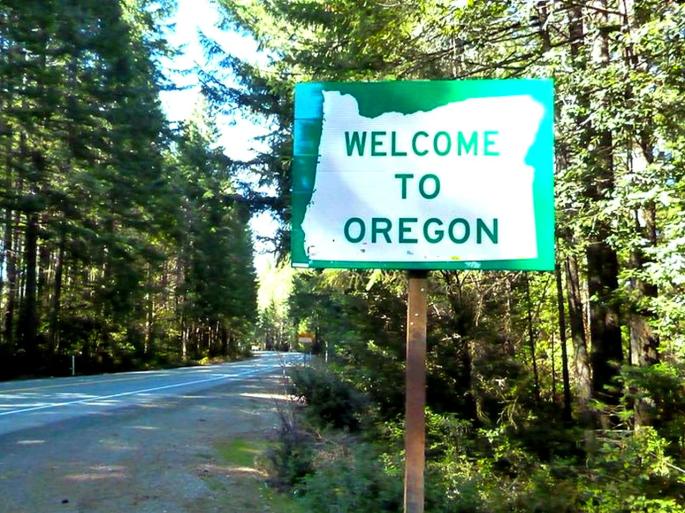
I was 19 the first time I remember it happening. I was driving north from L.A. to Seattle, and it hit me like running into a brick wall when I saw the Welcome to Oregon sign— something was wrong with the place.

Not wrong, exactly. But not what I thought it would be since I’d never been there. I’d always assumed Oregon was a liberal state. They were the first to legalize medical marijuana. I’d imagined ex-hippies and weed farmers pretty much ran the place.

I don’t know what triggered the awareness, the absolute certainty that, at least, southwest Oregon through Grant’s Pass was a hard-core conservative area. I pulled off for gas and up to the pump behind a rusted flat bed truck with a rifle on a rack in the back window of the cab. His bumper sticker was the Confederate flag with an AK47-type weapon across it, and confirmed my sense of the place. For the next 250 miles more than half of the vehicles I saw along I-5 had bumper stickers of bible quotes, NRA, anti-Gay, anti-abortion propaganda, and mirrored the sentiments on the billboards along the highway. Almost every radio station was proselytizing Christianity—rock music to talk forums.

It happened again a year or so later at the old Ben Gurion airport in Tel Aviv. I was disembarking the plane, navigating the staircase down to the tarmac when it hit me—the slight breeze like a hard slap to my cheek—something was wrong with the place. A few minutes inside the terminal played out my flash of perception outside. Bullet holes riddled the walls, with plaques under them, documenting this or that terrorist attack. Military police were everywhere, young soldiers, men and women, passing by with huge guns on their shoulders and grenades on their green belts. A tension-filled month in the Middle East, under the constant threat of violence, had me on my knees and kissing my hardwood floor when I got back to my apartment in Santa Monica.

Getting an instant impression on the character of a place happened more and more as I traveled. Cairo to Athens to Grand Junction Colorado, each area had a flavor, a common thread connecting the people living there I was [generally] able to discern almost instantly upon arrival.

On a recent family vacation we did a road trip up the east coast from Florida to Toronto. On the way home at the end of the trip we crossed the Canadian/US border at Buffalo in the middle of a drenching downpour. Just past the city we headed south. Fifty miles into western NY it hit me. Something was wrong with the place.

“I don’t have a clue why,” I announced to my DH and our two teens in the backseat. “But it feels like we’ve just entered the deep South. Like Alabama, or Mississippi.”

“New York is a liberal state,” my husband said with certainty.

‘Not out here it isn’t,’ I almost said, but didn’t. I had no facts to back up my sense of the place as we drove past well-kept, classic New England clapboard homes tucked into the thick foliage of the Allegheny foothills.

The further south we drove, the more prevalent my sense we’d entered ultra-conservative territory became. But when I saw the Welcome to Pennsylvania sign on the side of Hwy 219, I suddenly was acutely aware that the inhabitants of the areas we were passing through were on the opposite page of most everything I believe in.

“New York may be liberal, but I guarantee you Pennsylvania is not,” I announced.

My son, the family historian, reminded all of us that PA was on the Union side of the Civil War, backing his dad’s position my perception was faulty.

We stopped for lunch at a roadside bar/restaurant near Ridgeway, sat two to two on the stools around the sticky table, and after ordering looked at the menagerie covering the walls. A huge Confederate Flag was pinned over the dark wood bar that ran the length of the place. A moose head, and the head of a buck, both with full antlers, were mounted on either side of their array of liquor. Pics of hunters by their kill, holding their rifles on the carcass of lions, tigers, rhinos to crocodiles were sprinkled among the mostly text posters of sayings like, “Alcohol is the cause of, and the solution to, all of life’s problems…” a la Homer Simpson.

“What’s this symbol mean, Mom?” My daughter was examining a small tarnished emblem, hanging on a red and black stripped ribbon, mounted to the wall next to her.

“It’s a German cross.”

“What’s the double-X thing in the middle.”

I focused on the small circle in the center of the memorabilia, and though I saw it clearly the first time, had to do a double take before answering her. “It’s a Swastika, the Nazi symbol.”

My DH and I quickly exchanged glances. His father’s family was murdered by the Nazi’s in 1939. His dad, our kids’ granddad, was a slave in Auschwitz from 13 to 18 yrs old.

We all focused back on the walls of the bar. I spied several more ‘medals’ where the Swastika was prominent. But even more disturbing were the small, framed texts: “What’s the differance between a catholic wife and a jewish wife? A catholic wife has real orgasms and fake jewellery!”(And no, it’s not my spelling errors.) “Life without women would be a pain in the ass, literaly,” another on the wall near my husband’s head read.

I called our White, blond, blue-eyed waitress over and asked for our order to go, paid the check then left the bar and went outside to breathe.

“We should have just left, not paid the check, not bought their food, and just left.”

“That’s not right,” my DH said upon joining me at our car. “We already ordered it.”

Back on Hwy 219, the further south we traveled, the more ramshackle the passing homes became. Hidden in groves of pines, spruce and maple, most of the housings’ wood-planked siding was rotting, or missing. Many seemed as if their foundations had shifted, and the entire house was tilted. And a reoccurring theme on most all of them— they were flying the Confederate flag. It hung from dilapidated porches, as a curtain to a second-story window, as banners in storefronts of the small towns we passed through.

Quite frankly, I was horrified. Pennsylvania fought against the South. The Confederate flag was once hated here, a derisive symbol of division created for the Civil war, as the Nazi flag was by Germany for WW2. The Battle at Gettysburg was fought on these hallowed grounds.

“Two things are infinite: the universe and human stupidity, and I’m not sure about the universe,” Einstein ostensibly said. (And no, he wasn’t Jewish. He was a self-proclaimed Atheist.) Displaying the Confederate flag anywhere is a proclamation of ignorance, proven by justifications like: “It’s part of our rich history in the South, and we have pride in our culture.” No one should be proud their ancestors found it acceptable to enslave others, then go to war for wealthy land owners looking to avoid paying taxes. Even the Germans know better than to puff with pride they were once Nazis.

I don’t get what cues me up to the character of places upon seeing their Welcome signs. When I was young, I’d frequently see the future before it happened, so my perception of an area upon arrival might be connected to that phenomenon. I don’t know, and don’t really care. What strikes me as the odd bit is the intent of my perceptions—always a warning, an impending threat to what I know to be right, moral, and in the interest of the collective well-being.