Cafe 42 Blog

Storytelling is Truth Tweaked

Way before writing novels, I was a storyteller. Before I could write, I used to come to breakfast and recount tales of elaborate adventures I’d had during the night with my stuffed dog, Checkers. The purpose was to garner my mother’s attention, a precious commodity given mainly to my manic-depressive brother and egocentric sister. The stories I chose to relay often had a point, a message I was trying to communicate. I was saved from evil kidnappers by a kind stranger because my parents weren’t there to help me. I climbed the Matterhorn ride at Disneyland and rescued the children stuck at the top, illuminating my prowess, and kindness.

Like most professional writers, I’ve written since learning to write, at first in diaries, then personal journals. I now publish essays, short stories, and novels. I love the process of writing, even editing, again and again—honing my words to transmit to the reader the scenes unfolding in my head, and the essence of those in the narrative.

Similar to storytelling as a little kid, each work I pen to publish has a point. I write fairy tales that challenge social norms. I write personal essays against the grain of the status quo that often inflame readers. But beyond writing to publish, I still am and will always be a storyteller. I use stories as parables, to teach with, to convey ideas, thoughts, and feelings, to my kids, my husband, my students, my peers, basically most anyone I interact with. The stories I share are things that happened—sometimes to me, though often just things I’ve heard along the way—to communicate, or to fit the lesson. More precisely, I elaborate on things that happened. I fabricate truths to add drama, or context to the tale, or to drive a point home. Admit it, or not, we all do.

Long time ago, I was told the best way to pull off a lie is to keep it as close to the truth as possible, just “tweak the truth.” It’s easy to pull off a realistic tale this way, since most people aren’t paying that close attention anyway. We take what is said (or what we read) at face value, only questioning its validity if it’s too far out there. I find I need to tweak the unvarnished truth more often than not to be heard, or believed, as truth is either too boring, or too bizarre—truly stranger than fiction so much of the time.

Fiction may be truth, tweaked, but so are blogs, memoirs, non-fiction, even ‘news’ articles—they are all simply the point of view of the writer/storyteller trying to communicate a feeling or message. FOX Media is the Republican point of view, and will give you a completely different take on the ‘news’ than CNN, or PBS. But truth tweaked goes far beyond the news media. Even the most far out fiction like Twilight or Harry Potter resonates with us because they communicate real, true feelings that are familiar to us all. They exploit the truth of our hopes for a better world, a more just society.

Storytelling is the foundation of human communication. Before written languages, sharing stories was how we passed on our history, learned from our experiences, instilled morality into our communities, and advanced our race. We all elaborate on our stories, writing them down, or simply recounting an event in our day. We all tweak the truth to serve us, to present an image, teach our children, or convey our fears, desires, and dreams.

For as long as I can remember, most every time I tell anyone I’m a writer, they respond with, ‘Oh, I write, too,’ (because they keep a diary), or, ‘I’m going to write my story soon.’ Used to bug me. I felt dissed by their self-proclaimed association, while they invested little to no effort in my chosen, but absurdly challenging profession. And though most will never actualize their writing ambitions, the fact is, they too are telling a tale to communicate an image to me, and to themselves—that their stories are valuable, their life meaningful, tweaking the truth to serve their agenda. We are all storytellers indeed. 

IDEA to PRODUCT for PROFIT Webinar

Eventbright Webinar: https://lnkd.in/gETT2C_S

Have a biz IDEA you think will SELL?

PROVE IT…BEFORE YOU BUILD IT, with the Productization process.

Over 500,000 startups launch in the U.S. annually. More than 90% fail from bad to no marketing.

Marketing is NOT advertising! Marketing any product or service BEGINS (or should) in product development of the IDEA. Running ads through Google or on Insta, to print and viral campaigns only happens after your IDEA has been validatedproductized—as a marketable offering of value.

IDEA to PRODUCT for PROFIT,” is a 50 minute presentation exposing a distinct pattern that leads to business failure time and again, then introduces a unique marketing paradigm to build, brand, and grow a successful business. Originally developed for the Stanford entrepreneurial community, the RAF Marketing Method is a proprietary marketing model that makes effectively marketing a business doable, in sequential, actionable steps.

This webinar is Lean Business Marketing PROCESS, a step-by-step marketing template that delivers a clear and specific path, a roadmap for consistently creating (or directing those you hired to produce) digital, print and viral campaigns that build your brand image and motivate sales. Attendees will learn how to set up a solid foundation for marketing their offerings, and branding their venture into a sustainable business.

This presentation empowers entrepreneurs, engineers to CEOs with a proven method of effectively marketing an idea, or a new or existing offering, step-by-step, into a thriving company.

Attendees will learn:

  • MBA to Marketing novice, learn Marketing PROCESS, like never before.
  • The RAF Marketing Method to avoid the three primary points of business failure.
  • Productization of your product, service, or nonprofit, into a marketable offering of value.
  • How to effectively build Brand awareness of your offerings and company.
  • Effective Multichannel marketing for branding and conversion.

10 minute Q & A follows the presentation.

Speaker Bio

Creative/Art Director Jeri Cafesin, inspired by over two decades marketing seed startups to Fortune 500s, brings practical, doable, lean Marketing PRACTICE to Silicon Valley. A MarCom specialist for over two decades, and founder of IPPglobal.org—Lean Marketing Workshops for Entrepreneurs—her marketing strategies and campaigns have helped build thriving companies that realize sustained business growth.

The Yin/Yang of Love

Got the call at 7:50 this morning and knew something was wrong. No one calls when I’m getting the kids ready for school unless it’s bad news. And there was no possible way my 14 yr old son could have made it to school on his bike so fast.

Could hardly hear the woman over the sound of traffic digitally amplified through her cell, informing me my son had been in a bike accident. I finally got that he was pretty badly battered, but conscious. He was bleeding, she said, quite a bit, but seemed in tact. The moment she said where they were, and before she finished speaking, I put the phone on the kitchen table, called for my 7 yr old daughter to come with me and we got in my car and went to my son a few blocks away.

He was sitting on the curb when I pulled up behind the car I later found out belonged to the good folks who stopped to help my kid. They were in traffic and saw him on the side of the road crying and bleeding, his bike crumpled in front of him. I managed to get out of my car without faltering, and my son managed to stand so we could hug, feel each other, body to body, soul to soul.

“I don’t know what happened,” my newly taller than me kid cried into my shoulder. “I didn’t see the trash can. They’re usually out tomorrow. I wasn’t expecting them today. I didn’t see it.”

His face was a bloody mess, bleeding across his chin, his upper lip, his shoulder, scrapes on his arm. He couldn’t move his left hand. I didn’t cry. He needed me to be strong. God, if he only knew how fragile and afraid I felt right then. The idea of him leaning on me was on par with absurd in my head. But I didn’t cry. I thanked the woman and the man she was with probably fifty times in the space of five minutes. The man graciously put my son’s bike in my car as I helped my kid in, and we went home.

My son walked away from the bike accident with a fractured wrist, abrasions, a loose front tooth that the dentist thinks will be fine down the line. In fact, in time, he should heal just fine. He will. I won’t.

Went out to my office once my son was squared away and cried my eyes out. If I could have prayed, I would have right then, and did thank dumb luck all day, and even still as I write this, and forever forward, my kid wasn’t killed, or injured beyond repair for life. He was careless, and the laws of physics that say we can’t move through solid objects came into play. I know this law to be true, I believe in this law because I’ve spent a lifetime witnessing it. I’ve never seen anyone walk through walls, or pass a hand through glass, except magicians, which we all know is an illusion, a trick of eye, not physically possible.

There have been many times, like this bike accident with my son, I’ve wished I could believe in something, anything to justify events other than just entropy, but I’ve always been an empiricist—show me, don’t tell me because I won’t believe you. On the outside of our religious world, at times lonely to the extreme, I went searching in my early twenties for an ideology to be a part of, and that’s when I discovered Taoism.

I am not a Taoist. I am an atheist, and do not believe in any ‘supreme ultimate.’ And though I’ve read the Tao Te Ching through, many times, I understand little of the poems of Laozi. It was through Taoism, however, I first heard of the concept of yin/yang. 陰陽

The Taijitu ☯, the commonly known yin/yang symbol from 14th century China, represents a philosophy first seen in the Tao Te Ching in the 4th century BC, though many believe the concept of opposites in harmony define balance existed many millennium before the writings. Black/white, day/night, male/female, dull/bright—in yin/yang ideology, with everything there is an equal opposite occupying the same space, intertwining, even mixing, actualizing each other’s existence, and keeping the natural balance of the whole, that which is all.

Heady, to be sure, but not when you break it down to what we experience daily. We can’t really know happy never having felt sad. Can’t have a bottom without a top. There is no such thing as right with no wrong (or left..;  ). These are abstracted, philosophical truths. Just like physics, yin/yang’s empirical proofs play out in every aspect of living, which can never be fully appreciated without death.

While I believe the yin/yang philosophy to be truth, a basic physical and metaphysical law, and understand the balance interconnected opposites provide, I can’t help resent this fundamental aspect of natures structure in times like this morning when my child’s life is put on the line. The cruelest, sickest, most twisted opposites of all is the spectacular, magnificent, breath-taking, electric-connection we get to feel for our kids, and the choking, terrifying, heart-stopping fear of losing them— the yin/yang of love and loss.

The Character of Places

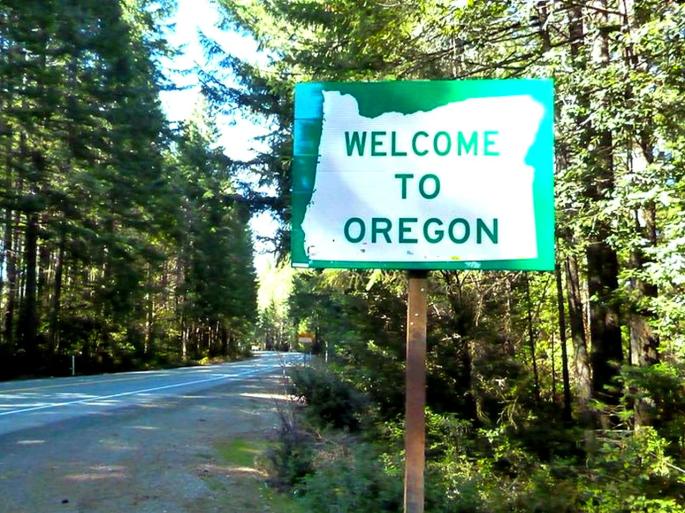
I was 19 the first time I remember it happening. I was driving north from L.A. to Seattle, and it hit me like running into a brick wall when I saw the Welcome to Oregon sign— something was wrong with the place.

Not wrong, exactly. But not what I thought it would be since I’d never been there. I’d always assumed Oregon was a liberal state. They were the first to legalize medical marijuana. I’d imagined ex-hippies and weed farmers pretty much ran the place.

I don’t know what triggered the awareness, the absolute certainty that, at least, southwest Oregon through Grant’s Pass was a hard-core conservative area. I pulled off for gas and up to the pump behind a rusted flat bed truck with a rifle on a rack in the back window of the cab. His bumper sticker was the Confederate flag with an AK47-type weapon across it, and confirmed my sense of the place. For the next 250 miles more than half of the vehicles I saw along I-5 had bumper stickers of bible quotes, NRA, anti-Gay, anti-abortion propaganda, and mirrored the sentiments on the billboards along the highway. Almost every radio station was proselytizing Christianity—rock music to talk forums.

It happened again a year or so later at the old Ben Gurion airport in Tel Aviv. I was disembarking the plane, navigating the staircase down to the tarmac when it hit me—the slight breeze like a hard slap to my cheek—something was wrong with the place. A few minutes inside the terminal played out my flash of perception outside. Bullet holes riddled the walls, with plaques under them, documenting this or that terrorist attack. Military police were everywhere, young soldiers, men and women, passing by with huge guns on their shoulders and grenades on their green belts. A tension-filled month in the Middle East, under the constant threat of violence, had me on my knees and kissing my hardwood floor when I got back to my apartment in Santa Monica.

Getting an instant impression on the character of a place happened more and more as I traveled. Cairo to Athens to Grand Junction Colorado, each area had a flavor, a common thread connecting the people living there I was [generally] able to discern almost instantly upon arrival.

On a recent family vacation we did a road trip up the east coast from Florida to Toronto. On the way home at the end of the trip we crossed the Canadian/US border at Buffalo in the middle of a drenching downpour. Just past the city we headed south. Fifty miles into western NY it hit me. Something was wrong with the place.

“I don’t have a clue why,” I announced to my DH and our two teens in the backseat. “But it feels like we’ve just entered the deep South. Like Alabama, or Mississippi.”

“New York is a liberal state,” my husband said with certainty.

‘Not out here it isn’t,’ I almost said, but didn’t. I had no facts to back up my sense of the place as we drove past well-kept, classic New England clapboard homes tucked into the thick foliage of the Allegheny foothills.

The further south we drove, the more prevalent my sense we’d entered ultra-conservative territory became. But when I saw the Welcome to Pennsylvania sign on the side of Hwy 219, I suddenly was acutely aware that the inhabitants of the areas we were passing through were on the opposite page of most everything I believe in.

“New York may be liberal, but I guarantee you Pennsylvania is not,” I announced.

My son, the family historian, reminded all of us that PA was on the Union side of the Civil War, backing his dad’s position my perception was faulty.

We stopped for lunch at a roadside bar/restaurant near Ridgeway, sat two to two on the stools around the sticky table, and after ordering looked at the menagerie covering the walls. A huge Confederate Flag was pinned over the dark wood bar that ran the length of the place. A moose head, and the head of a buck, both with full antlers, were mounted on either side of their array of liquor. Pics of hunters by their kill, holding their rifles on the carcass of lions, tigers, rhinos to crocodiles were sprinkled among the mostly text posters of sayings like, “Alcohol is the cause of, and the solution to, all of life’s problems…” a la Homer Simpson.

“What’s this symbol mean, Mom?” My daughter was examining a small tarnished emblem, hanging on a red and black stripped ribbon, mounted to the wall next to her.

“It’s a German cross.”

“What’s the double-X thing in the middle.”

I focused on the small circle in the center of the memorabilia, and though I saw it clearly the first time, had to do a double take before answering her. “It’s a Swastika, the Nazi symbol.”

My DH and I quickly exchanged glances. His father’s family was murdered by the Nazi’s in 1939. His dad, our kids’ granddad, was a slave in Auschwitz from 13 to 18 yrs old.

We all focused back on the walls of the bar. I spied several more ‘medals’ where the Swastika was prominent. But even more disturbing were the small, framed texts: “What’s the differance between a catholic wife and a jewish wife? A catholic wife has real orgasms and fake jewellery!”(And no, it’s not my spelling errors.) “Life without women would be a pain in the ass, literaly,” another on the wall near my husband’s head read.

I called our White, blond, blue-eyed waitress over and asked for our order to go, paid the check then left the bar and went outside to breathe.

“We should have just left, not paid the check, not bought their food, and just left.”

“That’s not right,” my DH said upon joining me at our car. “We already ordered it.”

Back on Hwy 219, the further south we traveled, the more ramshackle the passing homes became. Hidden in groves of pines, spruce and maple, most of the housings’ wood-planked siding was rotting, or missing. Many seemed as if their foundations had shifted, and the entire house was tilted. And a reoccurring theme on most all of them— they were flying the Confederate flag. It hung from dilapidated porches, as a curtain to a second-story window, as banners in storefronts of the small towns we passed through.

Quite frankly, I was horrified. Pennsylvania fought against the South. The Confederate flag was once hated here, a derisive symbol of division created for the Civil war, as the Nazi flag was by Germany for WW2. The Battle at Gettysburg was fought on these hallowed grounds.

“Two things are infinite: the universe and human stupidity, and I’m not sure about the universe,” Einstein ostensibly said. (And no, he wasn’t Jewish. He was a self-proclaimed Atheist.) Displaying the Confederate flag anywhere is a proclamation of ignorance, proven by justifications like: “It’s part of our rich history in the South, and we have pride in our culture.” No one should be proud their ancestors found it acceptable to enslave others, then go to war for wealthy land owners looking to avoid paying taxes. Even the Germans know better than to puff with pride they were once Nazis.

I don’t get what cues me up to the character of places upon seeing their Welcome signs. When I was young, I’d frequently see the future before it happened, so my perception of an area upon arrival might be connected to that phenomenon. I don’t know, and don’t really care. What strikes me as the odd bit is the intent of my perceptions—always a warning, an impending threat to what I know to be right, moral, and in the interest of the collective well-being.

The Future Out of Time

I was 9 years old the first time I saw the future before it happened.

Dad and I were up on the flying bridge of our 30-foot cabin cruiser doing the crossing from Long Beach to Catalina Island. I sat on the padded bench on top of the boat that warm fall evening, marveling at the 360° unobstructed view of the ocean and sky. My dad stood, his huge hands on the big wooden wheel attached to the bridge in front of us, reeling off fish stories. We sang old ’40s tunes he’d taught me and reveled in the beauty of the setting sun over the languid Pacific as we made the two-hour voyage.

It was well after dark when we pulled into Avalon. The harbor master pulled his boat alongside ours and informed us there were no moorings available in the protected harbor. We had to pick up a mooring at St. Catherine’s, a small inlet on the north side of Avalon exposed to the open ocean. Boats moored there continually pitched and tossed. Mom wasn’t going to be happy when she arrived with my sister in the morning. They were taking the ‘cattle boat,’ the harbor ferry, afraid to cross the volatile Pacific at night in our small craft.

I stood at the bow railing as we went around the Avalon breakwater, my heart racing. I was afraid of falling off the boat while trying to lift the mooring, or looking like a little kid failing to secure it to our vessel. Dad got our boat in position at St. Catherine’s and I grabbed the flag attached to the mooring line. I yanked the heavy rope out of the water, secured it to the bow cleat then ran the line along the side of our boat to the stern while Dad lay the anchor off the bow. We caught the first water taxi to Avalon and dined at the Flying Yachtsman, a favorite steak house for boaters and locals. Just me and Dad, captain and first mate, we ate mostly in silence, relishing the good meal after our long journey.

We were finishing dinner when Jim Nelson, my father’s Coast Guard buddy, happened by and offered us a ride back to our boat in his dinghy. I sat at the bow of Jim’s eight-foot skiff and dangled my hand over the side, letting my fingers comb the frothy waves created by the dinghy’s forward motion. My father sat in the center to keep the weight balanced, and Jim practically yelled over the loud outboard engine as he drove it. He described the damage from the Santa Anna winds that had blown through the island the previous week. Huge waves, some over 20 feet had flooded Avalon storefronts. Several boats smashed into the shore when their mooring lines ripped from the ocean floor in St. Catherine’s, the inlet in which we were moored.

And that’s when my reality shifted. My awareness of where I was became distant, background to another. On some level, I knew I was still on Jim’s skiff rounding the breakwater to the open sea on the way to our boat. But that’s not what I saw

I’m startled awake in the dark by the sudden pitch of our boat. I lift my head to see the deep red light of the digital clock mounted on the polished wood dashboard of the helm turn from 3:30 to 3:31. It must be later tonight I figure as I glance over at my father sleeping next to me on the big pullout bed in the main cabin. I’d have been relegated to the small bunk in the dank cabin below if my mother and sister had arrived. Dad’s turned away from me, on his side, snoring loudly. I sit up and slide the small curtain aside to glance out the window. Instead of the expected dark sea swells tossing our boat about, I see a sleek white sailboat a bit larger than our 30′ cruiser a couple of yards off our starboard side. It’s rocking so heavily with the swells its huge mast comes within feet of hitting our flying bridge. It takes me a second to realize that we’re about to smash into that sailboat, as somehow I’m suddenly aware that during the night our mooring line broke and we are free floating. Their deck lights lit and mast lights on, every detail of the sailboat registers in my head—white, with light blue trim around the portholes and polished teak decks; identification numbers on the bow: K6749.

Then I was back in the dinghy, my fingers freezing in the water. I snatched my hand out of the sea, tucked both hands between my legs and sat rigid as Jim pulled his dinghy up to the stern of our boat. What was that? echoed in my head. Not a dream. I knew I’d been awake the whole ride. I’d seen real time unfolding, just in the background. What did I just see then? But as my father bid Jim goodnight with thanks and we boarded our vessel I knew. And before Dad crossed the deck to the main cabin I started ranting.

“Our mooring line is going to break tonight and we’re going to hit a sailboat!” My heart was racing and it felt like my eyes were gonna pop out of my head as I stared at my father, scared I’d be unable to convince him of our urgent situation.

“What are you talking about?” He stopped and turned to face me.

“I saw it. We’re going to smash into a sailboat at 3:30 in the morning. We have to move the boat now!”

“What do you mean, you ‘saw it?'”

I just stood there staring at him. I knew he wouldn’t believe me if I told him I had a ‘vision.’ But I knew what happened, what I saw on Jim’s dinghy wasn’t a dream or fantasy. I was sure I’d seen the future. So I went back to proof by insistence.

“Dad, our mooring line is going to break tonight and we’re going to hit a white sailboat with the call numbers K6749 if we don’t move our boat.”

My father took the empirical position as always. “Do you see any white sailboats anywhere near us?”

By the moonlight, the closest one I could see was moored a few rows up and far to the right. I couldn’t make out the call numbers, but I could see it had long, narrow, rectangular windows, not portholes. I shook my head.

“Okay. And hasn’t our boat been secured here all evening, the mooring clearly holding fast?”

“Yes.”

“And even if our mooring did break, we’d have the front anchor to secure the boat from drifting, isn’t that right?”

“Yeah. I guess.” I started to doubt my vision with his compiling logic.

“Well, I’m guessing when Jim Nelson told us the mooring lines in St. Catherine’s broke last week that it scared you. Did you hear him say all the lines have been replaced with new ones?”

No. I’d missed that part because I was inside my head living an alternate reality at the time. “I didn’t hear him say that.”

“It’s late, sweetie,” my dad said, turning away and going into the cabin. “Go get ready for bed.”

I tried to stay awake. I lay next to my dad listening to him snore and kept my eyes open waiting to hear our mooring line break. I was determined to rouse my dad before we hit the sailboat, but I drifted off with the swaying of our boat and the lateness of the hour.

A pitch of the boat woke me in the middle of the night. I lifted my head to see the digital clock on the helm dashboard turning from 3:30 to 3:31. I knew instantly that my earlier vision on Jim’s dinghy had not been a fantasy born of fear. I held my breath as I sat up and moved the curtain aside. I knew before actually seeing it that we were almost on top of a white sailboat. It must have moored next to us while we slept.

I woke my father, screaming for him to get up as I scurried off the bed. Out on deck I got the push pole from the rack but before I could put it between our boats my dad took it from me. He held the rubber tip of the pole against the starboard side of the sailboat to prevent our boats from smashing into each other while I put out the side bumpers as he instructed. It was cold, windy, rocky and dark, and I was scared out of my mind navigating the slick, narrow ledge around the side of our boat as I tied off each bumper’s rope to a cleat then dropped them over the side, but even in all the mayhem I noticed the call numbers K6749 printed on the sailboat’s bow.

“Hey!” my dad yelled at the sailboat. “Hey! Get up! On deck!” His light blue pajamas rippled with the wind as he struggled to keep the push pole on the bobbing sailboat in the heavy swells of high tide rushing into St. Catherine’s inlet.

It was clear our mooring line had broken because the heavy rope was no longer along the side of the boat, and the flag was also gone from the bow deck. Our anchor had dragged quite a bit without the mooring to hold our boat in place and we were now on top of the sailboat moored next to us.

The captain of the sailboat finally came on his deck, got his push pole and kept our boats apart. My father went up to the flying bridge helm and yelled at me on the bow deck below to lift our anchor, then he ignited our diesel engines. Slipping and sliding with our boat bobbing, I struggled to crank the pulley to lift the heavy anchor out of the water, then finally managed to secure the clips holding the anchor on the bow of our slick deck.

My dad managed to move our boat away from the sailboat safely. I sat on the bow deck shivering as we went around the breakwater into Avalon. I was likely in shock because I don’t remember thinking or feeling anything right then but cold. The harbor master assigned us a mooring in the protected harbor after hearing of our perils. My dad positioned our boat for me to grab the flag and as I lifted the mooring onto our bow I slipped. I flopped on my belly. One leg went off the deck and I grabbed the railing before my body followed. My father saw me almost fall off the boat, and to this day, over 40 years later, he focuses on that bit of the mooring incident—that raw fear a parent gets when they see their kid in mortal danger. He invariably adds, “Something else happened weird that night…” but he can never recall what. I’ve not reminded him, but I’ll never forget.

***

A few weeks home from Catalina I started to doubt my vision in Jim’s dinghy. I put the experience down to childhood imaginings, or a faulty memory, or ‘just one of those things.’ Then it happened again, just months later. I had a ‘dream’ we had an earthquake. I woke in the night panicked, somehow knowing it wasn’t a dream but a vision, similar in feeling to the one in Jim’s skiff. I lay there trying to quelled my gnawing fear with the improbability I’d seen the future, but recalling the mooring debacle, I could not convince myself it was just a dream. I stood on my bed looking out my window at my dark, quiet, tree-lined street and waited for it.

An hour or so later, I heard it far off. It sounded like a freight train coming down our street. The rumbling got louder and louder, then the house started shaking and I started screaming, horrified. In my dream I’d seen a freeway overpass fall on several cars and an apartment building crumble on residence. Only days later, once power was restored, I saw on the news what I’d seen happen in my dream.

I saw the future out of time many times growing up and throughout my early twenties. The visions came without warning, usually triggered by something someone said, and I would experience a reality shift in a flash. Sometimes, it came in the form of a dream, but upon waking, I knew it wasn’t a dream. Unlike a dream or hallucination, the visions were not disjointed. They were visceral, linear, sequential— unfolding in real time without gaps—a complete and instant emergence into another reality, separate from, yet similar to my experience of present time.

And I quickly grew to hate them.

I would often see earthquakes before they occurred, know how strong they were going to be and the damage they’d leave in their wake. Unusual events, generally with life-threatening potential, were also triggers, though rarely involving someone I knew. I saw car accidents every few months or so, sometimes through the eyes of the drivers, and experienced what it was like in that car moments before the crash, and then upon impact. I’d hear about the accident creating the traffic I was stuck in on the radio the next day, though I’d seen the crash happen a day or two before in a vision.

I have not experienced the future out of time in over 20 years and I have no wish to. They were fundamentally frightening, uncontrollable. The few times I told someone what I’d seen before the event went down, no one ever believed me until after it happened. And I was never able to stop an event from occurring. Not once.

Over the years I’ve pondered what these glimpses of the future were. I do not believe a ‘higher power’ gave them to me. Any ‘god’ who’d force me to witness the future without the ability to change it would be a sadist.

Of course, it can be argued I did change the future by alerting my father and thus avoiding a collision with the sailboat. But I never saw us hit each other in my vision on Jim Nelson’s dinghy. I saw the exact same scene as the one that unfolded in reality hours later that night, when our boats were still a couple yards apart…

About Face—A Dog Story

I got her at the pound on my 26th birthday, a fluff-ball Shepherd mix with big brown eyes, floppy ears, and a perfect black diamond dead in the center of her tan forehead. She was just seven weeks old, not yet ready for adoption. I lied to get her out. They found her in the San Fernando hills and thought she was feral, but I told them she was mine and I’d lost her on a hike up near Mt. Wilson.

I named her Killer Dog Face. Killer as in cool. Dog because she was one. And Face after a term of endearment my mother used to call me. I figured she deserved three names like most everyone else had, but I called her by her last name almost all the time.

My beautiful Face.

Over two feet tall and 70 pounds by her first birthday, her paws and ears remained adorably exaggerated against her slender but muscular frame, and for almost ten years everyone thought she was still a puppy. An impressive athlete, she could pace me on my bike at 25 miles an hour, and clear a five-foot wall or a six-foot wide river in one fluid motion.

I worked from home, so we were together practically 24/7. Tail would be swishing and she’d have her happy smile on when she’d periodically lope in throughout the day from sunbathing or chasing squirrels and crows in the backyard. She’d smooch her muzzle into my thigh, then rub her body along my legs rather cat-like, soliciting for strokes. I loved her company, felt sated when she was with me. Face was easy to be with, required little and listened well. And she always made me feel important, and valued.

I taught her to Stay. Drop. Leave it! And that was about it. Stupid dog tricks were degrading. She accompanied me everywhere, muzzle out the window, jowls flapping in the wind while she took it all in, reminding me to get out of my head and absorb the moments at hand. She greeted most everyone with a tail wag and her happy grin. Face was a gentle lass and she genuinely liked pretty much everybody. I gave her a home, and the attention she required for her security. She made me feel wanted, appreciated, safer, and not so alone. Forever forward, our relationship will remain one of the most stable, even exchanges of love and respect I will ever know.

I found out about the slip disks in her spine a few months after her 10th birthday. We had gone hiking in the coastal mountains of Marin and she took off after something pacing us along a grove of redwoods. When I called for her, she was way down in a gulch, and I could tell she was struggling to make it back up the hill to me. The vet said she’d probably messed up her back, and that even though it was treatable with vitamin supplements, eventually she would get arthritis from the bad disks pinching her nerves. And though it took another five years, the vet turned out to be right.

I never expected to be faced with having to put her down. I assumed she’d go off a cliff chasing a squirrel or miss when jumping over a river and I wouldn’t be around to save her. Everyone kept telling me it was time. At 16 she had hip problems, and walking problems, and was becoming incontinent. I felt sad for her a lot, watching her struggle to get up or stay up while excreting. And then I had my son. And Face wasn’t the baby anymore. And she was sad a lot too. Her health problems went from bad to worse and picking up her poop all over the house where an infant crawled was more than just disgusting. It was a health hazard.

I’ve always thought that if I ever got a terminal disease, I would choose to end my life before I was unable to do so. Before I lost all my faculties I’d go in the garage and turn on the car or find the right drugs to take me over the edge. It never dawned on me to think differently until I was faced with the responsibility of having to make that choice for a loved one.

I sat on the floor next to my dog in her newly confined space in the tile entry wishing she could tell me what to do. She lay in her bed with her head in my lap as I scratched her muzzle, then behind her ears. She rolled onto her side for me to scratch her belly. Her pained expression turned to momentary bliss as I gently stroked her, recalling some of our time together. Yellowstone; Breckenridge; Yosemite; the Grand Canyon; watching her tear after birds on the countless shorelines we’d strolled. We’d shared some grand adventures, but mostly quiet exchanges of affection, like the one we were sharing right then. Perhaps these moments — the times I stroked her or rubbed her belly made living in pain worth it. Who was I to facilitate her death? I was suddenly torn by the choice I had to make.

I had her put down eight months after her 16th birthday. She couldn’t walk. Her hind legs kept giving out. She wasn’t eating, or even drinking much anymore. I made the call on a Saturday morning. A certified veterinarian came to my house with a truck, complete with a metal table and loaded with medical equipment. I carried Face to the truck and placed her on the table, then stood there stroking her and crying. The doctor softly informed me that he would be giving my dog a tranquilizer, then taking her to his office where he would administer the fatal cocktail that would kill her. He assured me she would drift into blackness forever without waking. I didn’t ask what they’d do with her body. I didn’t want to know.

I held my dog’s head in my hands while the vet administered the tranquilizer. “Thank you for sharing your life with me, for being my friend,” I whispered to her as the doctor removed the needle from her hindquarters. “I love you. I will think of you often. I’ll miss you terribly, my beauty. Goodbye, sweet Face.”

She lay on the cold metal table and stared at me until her eyes closed. I stroked her head one last time, lay my hand on the black diamond marking on her head and kissed her between the eyes.

As I left the truck the doctor assured me I’d made the right decision, the “humane choice.” I stood at the curb until the truck pulled away, held my arms clasped on top of my head to hold in my brain, and contain my emotions. My quiet street was deserted again, and I looked around for my dog to come inside with me when it hit me, my Killer Dog Face was gone. My arms came down and with it any facade of composure. I sank to the sidewalk sobbing. I must have sat there for 20 minutes crying, until I got up and started walking, then running.

I ran as fast and hard as I could, for as long as I could, trying to outrun reality, trying to outrun my grief. My beautiful Face was dead, the first loss of a loved one I’d ever experienced, and the idea of her gone from my life was so profoundly empty, black, lonely, that it made me physically ill by the time I got to the bridge. I stopped in the center and threw up over the side into the L.A. wash.

When I finished vomiting I stood gripping the cool metal railing of the bridge and staring down at the thin stream of water below. “I HATE YOU!” I screamed. It was dusk by then. No one was around. Not a whole lot of people even knew about that bridge. At one end was an upscale residential neighborhood, on the other were exclusive condos. “You killed her and I HATE YOU!” I yelled at the top of my lungs, knowing I wasn’t speaking to anyone, nothing was hearing me.

“May I help you, Miss?” He asked softly, but it startled me anyway. I hadn’t seen him approach. He had come across [the bridge] from the condo side. He was Indian, from India, middle-aged, with soft brown eyes and dark, close cropped hair. I think he thought I was going to jump off the bridge.

“My dog died,” I told him. I started crying hard again hearing that reality aloud. I don’t know why I told him. So often when people ask we’re supposed to pretend we’re fine because they really don’t want to know anyway. “I really loved her.”

He nodded, let a few moments pass in silence then said, “My aunt died last week. I’m still very sad. I miss her very much.” He stood a few feet from me, his head slightly cocked to one side. He let his eyes rest on mine.

“I’m sorry about your aunt,” was all I could think of to say. The man had put his aunt on par with my dog, and I was humbled, and grateful.

“I’m sorry about your dog,” he said. “I hope your sadness will temper in time with good memories.” He gave a slight bow and moved across the bridge.

I watched him until he disappeared into the neighborhood beyond, and left the bridge soon after him. On my way home I let my mind wander over my time with my Killer Dog Face. I cried. I even smiled once or twice through the tears.

My sadness has tempered over the years. Most times when I think of my beautiful Face the memories are sweet. But to this day, 20 years later, the pain of her loss still fills me with unmitigated terror, a now ever-present awareness of the enormous cost of love.

Atheism and Morality

An Atheist on Morality…

Einstein did not believe in God, as many [mistakenly] claim.

Albert Einstein said, “My position concerning God is that of an agnostic.” He clarified, “The word God is, for me, nothing more than the expression and product of human weaknesses, the Bible a collection of honorable, but still primitive legends. No interpretation no matter how subtle can (for me) change this.”

Atheists don’t believe in God either. Not any god/s. Ever. Unlike Agnostics, open to the possibility of a ‘higher power,’ or ‘collective, sentient being,’ Einstein believed in neither. Agnostic is politically correct, less threatening than Atheist, especially during Albert’s time, born a Jew, and existing on federal and university funding.

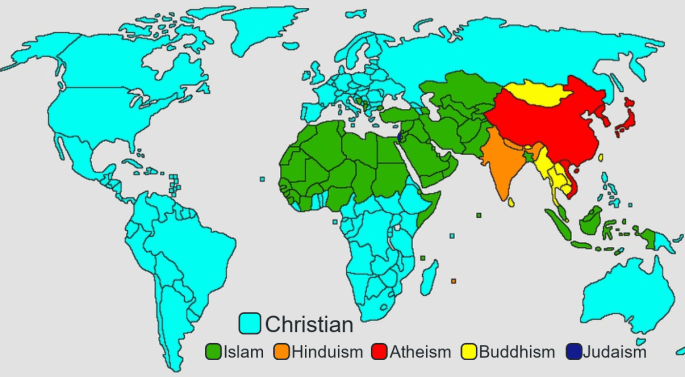
I am an Atheist. I do not recognize the Old or New Testament, and related works illuminating the adventures of a divine being as anything more than fiction — parables by some wise, some ignorant, but guaranteed partisan male scribes with an agenda to dominate and control others.

So, when I need money, [as an Atheist] why don’t I go rob someone? Or shoplift?

When I’m attracted to my neighbor’s husband, why don’t I hit on him, get intimate if he’s into it? 

When I get pissed off at the driver on their cellphone that just cut me off, why don’t I just shoot her?

Snatch & Run, illicit affairs, even murder these days, and the odds of getting caught for these crimes are somewhat nominal if done discreetly. Fear of being busted is not the main motivation that prevents me from committing these, and ‘lesser’ crimes, like lying, cheating, and behaviors that most would agree, religious or not, are moral infractions.

If I believe I answer to no higher power, where do I get my morality?

Einstein said, “We have to content ourselves with our imperfect knowledge and understanding and treat values and moral obligations as a purely human problem — the most important of all human problems.”

Without a priest, rabbi, or holy man telling me what to think and how to vote, and with no guidance from an omniscient god, or unbiased media outlet, I must consider my moral obligations

Why should I bother, and how do I know ‘right from wrong’ without a ‘divine doctrine’ to guide me?

If my parents had not gifted me life, and their parents before them…etc., I would not be here now, emersed in this experience of living. I am born owing Humanity and everything on this planet that supports our life here. We all are. All of us have a moral obligation to do our part to ensure the human race survives, and gift those to be the experience of being human.

Humans are social beings. It is mandatory we work together to survive and even thrive. We require a social structure — laws, and rules of conduct with mutually agreed-upon baselines we all must practice to partner. Breaking these rules annihilates our trust in each other, corrupting the very foundation on which relationships are built.

As an Atheist, why don’t I steal?

Do Not Steal is [generally] a mutually agreed-upon baseline. Contrary to religious rhetoric, it is not a biblical notion by some partisan scribe. Way before the written word, it proved to be a sensible rule to build trust.

I used to shoplift. My older sister showed me how when I was 7, and I stole from the local art supply store a few times until I got busted for pocketing Prismacolor pencils. The shop clerk called my mother instead of the cops. Riding home with my mom that afternoon, she explained to me that I was robbing her, my dad, and most everyone else, including myself because the store passed on the lost income from shoplifting by increasing the cost of their products. 

I created a rift with my mom, who was disappointed in me for stealing when she ‘taught me better than that.’ I created a rift with the art supply shop clerk who I saw often as a frequent customer of the store. And with my mom’s information, I understood I was serving no one shoplifting, perhaps especially myself.

Trust is the foundation of all relationships. It encourages communication, connection, and intimacy. Intimacy incentivizes reproduction. Having children ensures the human race continues to exist. (Most of us have heard the derisive term “Breeders,” referring to parents, but the absurdity of this view is lost on the idiots who use this word, as they could not utter it if they’d never been born.)

As an Atheist, why don’t I screw my neighbor’s husband?

I’ve been married for 27 years, and I have not and will never have an affair. Why? Thou shalt not commit adultery (Exodus 20:14) is not strictly biblical either. Ancient scribes adopted this notion as law from observing 200,000 years of human history.

If I have an affair with my neighbor’s husband (or wife), I am participating in creating a rift in their marriage. Even if our affair goes undiscovered, it changes the dynamic between the married couple with an intimate third now part of their once exclusive, mutually agreed-upon partnership. The rift generates a ripple effect of discord that touches the lives of many, even the adulterers, dividing households, destroying friendships, business relationships, and sometimes lead to war

Humans must work together to survive and thrive. War in our house or our nation is divisive and counterproductive to our continued evolution.

As an Atheist, why don’t I shoot the driver on her cell?

I fantasize about it sometimes, don’t you? Vaporizing at the idiot driver in front of you going 45 miles an hr in the fast lane while she’s texting. Seriously, I want her off the road, gone from harming anyone with her sheer arrogance in acting as if she is the One who can manage driving when statistically she is the cause of most accidents today. The cross dangling from her neck neglected to instill the value system Jesus preached: “Love your neighbor as yourself,” (Mark 12:31).

It is our moral obligation to watch out for each other. Caring for others beyond ourselves is part of what makes our social structure work. If that bitch behind the wheel on her cell hurts me, or my kids, or anyone I care about, I’m going to want to hurt her. It’s human nature to want to hurt those who have hurt us. Hurting each other, whether by thoughtlessness or intent threatens our survival and our ability to thrive.

Religion did not invent morality.

Our collective value system, the laws and rules of engagement most of us live by, religious or not, may have been written by biblical scribes, but not invented by them. The history of humanity has shown us what works and what doesn’t to preserve and encourage our evolution.

“…treat values and moral obligations as a purely human problem,” Einstein said. In other words, morality is determined by humans, not handed down from on-high by some obscure being requiring blind obedience invented by partisan men looking to control the masses.

Praying for less extreme weather [from global warming], or lunatics with AR-15s to stop mass killings, or for equitable socioeconomics won’t change anything. Even if you don’t text or scroll while driving, or participate in sexual affairs, or steal, we all have a moral obligation to ensure life continues here long after we’re dead. We owe those that follow us the complex and spectacular journey of being human that we have been gifted.

Atheist or religious, we all must recognize and actualize our moral obligations to each other and this planet for humanity to survive, and thrive.

— 

Cited Notable Facts:

Murder rates are lower in more secular nations and higher in more religious countries where belief in God is deep and widespread. (Jensen 2006; Paul 2005; Fajnzylber et al. 2002; Fox and Levin 2000)

Within U.S., the states with the highest murder rates tend to be highly religious, such as Louisiana and Alabama, but the states with the lowest murder rates tend to be among the least religious in the country, such as Vermont and Oregon. (Ellison et al. 2003; Death Penalty Information Center, 2008)

Rates of most violent crimes tend to be lower in the less religious states and higher in the most religious states. (United States Census Bureau, 2006)

The top 50 safest cities in the world, nearly all are in relatively non-religious countries, and of the eight cities within the United States that make the safest-city list, nearly all are located in the least religious regions of the country. (Mercer Survey, 2008)

Domestic terrorists of the American far right are driven by zeal for heretical distortions of Christian theology. (Paul de Armond, DOJ, 1999) Christian nationalism [is] a serious and growing threat to our democracy. (Robert P. Jones, TIME Magazine, 2022)

Marketing Religion blog post with additional cited notable facts.

Image by Stefan Keller from Pixabay

The Butterfly Effect

Monica Lewinsky sucked Pres. Clinton’s cock, getting George W. Bush elected, which led to the 2008 financial meltdown with the Republican’s anti-regulation policies. The real estate recession of 2009 left not only millions of people without any retirement, but my father without enough money to care for himself, compelling us to use our little savings to help him. This investment into my father’s care comes out of our kids’ college funds and will most likely affect them down the line.

My husband was freaking out when he called me from his job at a well-known Silicon Valley startup a couple months ago. He’d entered the stairwell and saw the married CEO of his company sucking face with an employee. He had a right to be upset. The CEO is putting the company, its pre-IPO stock value, and its almost 300 employees at risk by displaying his extra-marital affair publicly. His sloppy behavior can not only get him fired, but eventually, lead to the demise of the company with scandalous press chasing away customers and business associations alike. And, of course, there are his two kids and a wife at home who will suffer, possibly lifetime scars from his selfish indiscretions.

When a butterfly flaps its wings in Central Park, it does NOT cause a typhoon in India. But the Butterfly Effect is very real, and very personal, for all of us.

The CEO sucking face with his employee saw my husband in the stairwell. He called my DH into his office later that day and made excuses that he was “just comforting” his graphic designer who [ostensibly] was grieving the death of her dog. Originally hired by the CEO, my husband had never had any issues working with the man until that day in the stairwell. After that day, the CEO was his new micro-manager, and my husband, tired of the bullshit, left the company a month later.

We all engage in the Butterfly Effect in one way or another. When my DH and I fight, I’m more apt to yell at our kids, causing them to snipe at each other. Continual fighting over time may result in fierce sibling rivalry. Instead of becoming balanced, socially aware people, they grow up defensive and afraid, and become CEOs and Presidents who seek physical contact over emotional intimacy to combat their gnawing loneliness.

The Butterfly Effect is an unalterable phenomenon of the human condition, but that doesn’t mean we must be doomed by it. Our ability to perceive the future, and then adapt our behavior in response is also uniquely human, and dramatically separates us from every other life form on this planet, and one of our greatest strengths.

Had President Clinton been thinking with his brain instead of his little head, or Ms. Lewinsky had stopped to consider the possible ramifications of Bill Clinton’s solicitation, perhaps either would have made a better choice. (Why do I sight Monica? Those who cheat are culpable for their actions, but those who are party to cheating are equally culpable.)

Like a gun sitting on a table, the Butterfly Effect is neutral, but it can generate productive outcomes by simply starting from a positive position. Awareness that no man, or woman, is an island is the key to directing the Butterfly Effect to consistently positive outcomes. Every day we touch the lives of many others, whether we’re at home, on the internet, at work, or shopping at Target. Holding a door open, giving a compliment, or showing appreciation for service rendered can make someone’s day a bit better. We affect those around us, our environment locally, even globally with our consumption of resources. Choosing a Prius over an SUV, and picking the appropriate sexual partners; helping someone in need, not just during the holidays but any day improves all our lives collectively.

Be acutely aware of your connection to others, and the cascading Butterfly Effect, and it may just be the lives you touch in your hometown today will indeed lead to the cure for cancer from someone on the other side of the world tomorrow.

New Book Review

New Book Review for A MARRIAGE FABLE:

Journey Toward Enlightenment
If you’re a fan of magical realism like I am, you will enjoy reading this mystical story. A quick read with plenty of drama kept me engaged. It’s a story filled with equal parts regret and redemption. It always feels good when a narcissist jerk gets a taste of his own medicine, and feels even better when this self-absorbed deplorable gets a chance to be a better man. Will he accept this new choice? I’ll never tell. Ask the genie. Do yourself a favor and read this well-written story and find out if there is hope for “this day and every day forward.”
–Ingrid Hart

A modern adaptation of A Christmas CarolA MARRIAGE FABLE is a novella, another tall tale of the powerful genie Finnegus Boggs, and his lessons on love that inspires Andrew Wyman, a typical modern-day husband nearing his 25th wedding anniversary, to become a better man.

“A Marriage Fable does for Valentine’s Day what A Christmas Carol did for Christmas Day. A Must Read romantic fantasy!”
–BJ Fera, Goodreads