J. Cafesin is a Creative Director, an author of riveting, mind-bending fiction, and a MarCom specialist in the San Francisco Bay Area. She is a native Californian (Silicon Valley), and the founder of Lean Startup Marketing Entrepreneurial Workshops—the step-by-step process to marketing an idea, or developing product, for profit. J. Cafesin also is a Stanford educator, in Copywriting and Startup Marketing.
NOTHING TO HIDE? You never know… This IS what Insta, Google, FB, ChatGPT and every other big data SaaS app out there is doing with your personal information:
“The Third Reich was a diagnosis regime, obsessed with sorting the population into categories, cataloging people by race, religion, politics, sexuality, criminality and purported biological, mental and behavioral defects. Nazi officials created massive population indexes that compiled individuals’ medical, financial, educational, criminal and welfare records — even sports club files. (By 1942, approx. ten million Reich citizens had been indexed — 12% of the total population. These files, then, established the grounds for sterilization, deportation and extermination.” https://lnkd.in/d9txaahS)
Now our data is used to market us into buying, and believing (politics, social views and values) with recommendation systems.
Why U Can’t Get that House, that Job, those Tickets…
I’ve been house hunting on REDFIN for over 5 yrs with no luck. The homes I want are either too expensive, a flat-out ripoff, or an offer is accepted within 24 hrs of listing. We’ve bid on 5 houses, and we’ve been ‘out bid’ every time.
I’ve defaulted to using Redfin.com almost exclusively, as they released MLS (Multiple Listing Service [of homes for sale]) data within minutes of the broker’s listing. ZILLOW, REALTOR.com, and their like often show new MLS listings hours later.
I assumed that Redfin was helping me find a home. But what this SaaS (Software as a Service) offering is really doing is screwing most potential home buyers like you and me. Making MLS listings available the moment a property is listed for sale to everyone online, globally, does NOT ‘level the playing field.’ Democratizing MLS listings introduces 50+ interested buyers at every doorstep, jacking up housing prices with fierce competition for the same property.
Real estate brokers love this software! They now give you access to their paid MLS subscription (Matrix), knowing we all get it from Redfin anyway. Promoting “competitive bidding” makes them richer with every sale.
Book a trip on HOTELS.com or EXPEDIA lately? Ever? If you use travel apps you are spending more than you need to. Guaranteed! You’ll get a better hotel rate if you call the places you’d like to stay, and talk directly to their front desk. I’ve booked family vacations for 21 yrs now, and every single time, without fail, from Victoria, Canada, to Venice, Italy, the rates are cheaper if you book directly by calling the places you plan to stay.
The original idea with travel apps was they’d buy in bulk and sell at a discount. But like Pets.com, these sites quickly learned the destinations were not very flexible on their rates, so they ‘pivoted’ their SaaS with marketing. They sold users on ‘Packaged Deals,’ but you’ll be locked in to their ‘deals,’ which often aren’t ideal, and your vacation will cost more booking through them, even though they advertise that they save you money. Travel apps offer you no real value, and often rip you off, adding charges to cover the cost of maintaining their business.
Same goes for most middlemen SaaS offerings. It cost money to run their platforms, and they pass that cost on to their paying customers.
Ever use ANGIE’S LIST, or HOME ADVISOR, or THUMBTACK to get recommendations for services from contractors to dentists? Most of their good ratings are LIES. Angi’s, and their like, are advertising platforms. They are like Phone Books in the olden days. The BUSINESS PAYS these SaaS apps to have their name appear in search results. Even on Angi, the listing may be free, but your business will be buried in their search returns if you do not pay their ‘premium’ rate. Few (if any) of the good ratings and reviews awarded the businesses are real. Either the business solicited friends and family to post good reviews, and/or they hired an outside marketing firm to create high ratings (usually from India or the Philippines doing click scams). Angi and their like bury the negative reviews (as does Google), as pissing off their paying clients would be bad for their SaaS business.
These SaaS recommendation sites say they do a standard background check, meaning criminal records to professional license, but that’s about it. A few say they reach out to the vendor’s customers by phone, which they may, but with contacts the business gives them. Maybe they get the wife of the vendor on the phone, and of course, she just loves his work! High ratings mean you’re more likely to hire them. And the business is more likely to keep paying Angi and Thumbtack to appear on their lists.
Developers and marketers of middlemen SaaS apps will argue they are “doing good” for the world, whatever that means. (Doing good for them?) They are ‘setting information free to form an egalitarian society,’ Silicon Valley types profess. But I’ve already established that these apps, and their like jack up the cost of goods and services, as IRL middlemen do. Creators of middlemen software will tell you they are offering you a ‘convenience.’ Bullshit. With a few clicks you too can book flights, hotels, car rentals, arrange appointments with contractors, find a [good] dentist. Do your research and go beyond Google to Bing, DuckDuckGo, Reddit, ChatGPT, Nextdoor…etc., and you can find all kinds of information about a company or vendor, including reviews across a broad spectrum, not just the paid ratings on Expedia or Angi.
Most SaaS apps today require you give them a ton of personal data to utilize their ‘service.’ Additionally, they put ‘cookies’ on your mobile and PC that track everywhere you go online, and IRL (through your phone). Not conspiracy theory. Cookies (sweet and inviting name, right), track and log your behavior to ‘improve your overall [online] experience,’ as well as more tightly target you with advertising the app believes you’re more likely to respond to.
Ever wonder why entertainment events have gotten so expensive? The only way to buy tickets these days is through a SaaS app like TICKET MASTER. And you better hope when you log on the broker site doesn’t crash, or sell you fake tickets, or sell out in the first 3 minutes with millions vying for the same show. And good luck getting a refund if you need to cancel, or the event is canceled. The software IS the service, which generally means little to no actual customer support.
Wanted to go see Barbie a week after it opened with my daughter on her short visit home from college. There were no tickets available at any theater within a 100 mile radius the 5 days she was home because they’d all been purchased in advance online. Before the ‘convenience’ of apps like FANDANGO, or AMC, or REGAL, we’d at least have had a chance to see the movie if we waited in line, even if it meant getting to the theater early to ensure we got tickets. It is neither convenient nor cost effective buying movie tickets with SaaS apps. In addition to the high costs of the tickets, these movie apps charge an additional fee for ‘online processing.’
Look for a job on LINKEDIN or INDEED lately? Find a job post that interests you, and even if the ad has been online less than 24 hrs it still has hundreds of applicants. You’d better have one hell of an amazing skill set, and a CV with all the right keywords that fit the exact niche of the job requirements to get noticed among your competition.
The introduction of a democratic system or democratic principles.
The action of making something accessible to everyone.
SaaS developers and marketers inject this buzzword into most pitches these days. They’re democratizing the web, upholding democracy, doing good, they’ll tell you. Not sure how many buy into this rhetoric to make themselves feel and appear philanthropic, or it’s all a big sales pitch while they’re dreaming of a billion dollar acquisition or going public and becoming instant millionaires.
Seriously, how convenient is it being robbed of our money and information every time we use software ‘services’?
Let’s get real. Democratizing MLS listings—making them accessible to everyone on the internet—is a BAD IDEA for home buyers, now forced to compete for a home against 20 other offers, a third of those offering cash by corporations that can afford to pay tens of thousands over asking. Democratizing movie tickets forces movie goers to buy tickets sometimes weeks before the film’s release without ever hearing if the movie is any good. Democratizing plane tickets to hotel reservations raises the cost of travel for everyone by exponentially increasing the demand.
Democracy [a la Google] “is a system of government by the whole population or all the eligible members of a state, typically through elected representatives.” As for upholding democracy, I had no representation to help me get back the over $300 AMAZON PRIME ripped off from me when they signed me up without my knowledge and then made it almost impossible for me to cancel the account.
We are not a democracy, as this country is run by big business, in particular FAAMG (Facebook, Amazon, Apple, Microsoft, Google), the gatekeepers of our personal data run [a muck] by greedy, unregulated children.
Want to know why you can’t afford to buy a home today?
Is the cost of events and movie tickets keeping you home watching NETFLIX (yet another SaaS app that eats up your money, and worse your life’s time, but at least they deliver entertainment)?
Even ChatGPT could not give me an estimate on the number of SaaS applications online today. (It had no clue what ‘middlemen’ software is.) The consensus of search results from multiple sources agree the SaaS industry is growing so rapidly, virtually exponentially, estimates have to be based per industry. According to Statista, the SaaS industry is worth $197 billion U.S. dollars and estimated to reach $232 billion by 2024.
While many SaaS apps provide value, especially for running a business, from CRMs, to CMS, to ERP, most consumer-facing middlemen SaaS apps are not only valueless, they are dangerous. Sucking people in with lies about savings on movies or when booking travel through their app; democratizing information making it impossible for anyone but the uber-rich or cash-flushed corps to act on, and rising the cost of, well, everything, ultimately is neither convenient nor cost effective for 99% of us.
Wait! Before you roll your eyes and click off this post, I don’t have any paranormal powers. It isn’t magic that I can read people. I’m not psychic. I can’t glean people’s “energy,” whatever that means, or any of that mystical crap. I am a devout atheist and use the word “devout” with purpose.
What I can do, is tell you what you’re thinking and feeling, generally before you know.
How?
If I’m in physical proximity to you, your body (posture, eye contact…etc.), and facial expressions give me tons of data about what you are experiencing inside your head. We all have this ability to read physicality, though most people hardly pay attention to one another, except on rare occasions. Ever had a blind date? The first second you see your date in person, you can tell if they like how you look.
In-person, or not — over the phone, or web, I ask a LOT of questions. And I listen to your answers. My brain picks up inconsistencies in what you’re saying, telling me you are lying to yourself, and subsequently… me.
The first time my husband (of 26 yrs now) met my mother, she said to him, “My daughter (me) was born old.”
What she meant was, I was born plugged in outside myself. I don’t know why. A genetic anomaly? My senses feel hypercharged. Touch, taste, sound, even vision (clarity in peripheral sight) seems heightened compared to most (and not just by my reckoning). I live outside my own head in the company of others. Watching. Listening, my brain constructing patterns of behavior. OCD? Bipolar? Maybe. I’ve spent a lifetime trying to process the massive amount of information I get from others, and it’s exhausting. And I wish I could shut it down, live like most everyone else.
Sort of…
I’ve picked up patterns in human behavior along the way. Lots! It’s another reason I can tell what you’re feeling, often before you know. I can now predict likely responses to an enormous array of specific stimuli. It’s a fantastic tool for writing believable characters. And understanding what motivates people is equally beneficial for developing marketing campaigns with great response rates.
Yet, I struggle with living plugged in outside myself. It’s emotionally costly. I lose myself while inside others, acutely feel their sadness, their fears, and hopes. I’ve tried to shut my senses down with drugs, prescription, and not. I had an allergic reaction to Prozac that almost killed me, and no reaction at all to weed over time.
I’ve become a recluse for the most part. I avoid crowds. I limit my intimate friendships to very few. I stay plugged into my two kids, my husband, our bratty, but cute Shepard pound-hound, which serves them well, though at times, probably not me so much. I disappear, absorbed in them, their feelings often muddling my own. (To be fair, the dog’s needs are simple. No hidden agendas, no unconscious complexities. She makes her feelings obvious. Thank you, Elly!)
I am grateful and humbled in the extreme by the immense and intense range of feelings we all get to experience being human. However, I’ve felt consumed with anger, fear, isolated, lonely, left wanting of myself and others. Sometimes dark feelings overshadow all lightness, and it feels like the only way out of seeing so much, feeling so much, is to check out.
I get that living is a choice we make, daily. While I’ll continue to choose living, be here for my friends and family as long as I can, I must admit, there is, and has always been, a beckoning to shut it all down, kill the noise in my head, turn off the input. Unplug, for good. I’ll never check though, regardless of how weighted living feels sometimes. As an empath, and an atheist — knowing I’ll eventually cease to exist — my greatest fear is feeling nothing at all. Forever.
She walked to the bank on the last Friday of every month to deposit her social security check. She’d been doing it on her own for a long time, since her husband of 49 years died of a brain tumor ten years back. She folded the check in half then put it in her wallet, in the zippered part, then clicked her wallet shut and put it in her pocketbook. After securing the purse strap on her shoulder, Grandma put her navy peacoat on, over her handbag to hide it, and left her one-bedroom apartment on Hobart Street in the heart of L.A.
Every so often if I was in town, I’d join Grandma on her monthly walk. We were never particularly close. She’d always been contentious, but she once had a quick wit and delivered it with sharp humor, both of which left her years ago, as did the radiant beauty she once possessed. Conversations were now limited to her endless list of complaints — physical, familial, and social. Visiting was always a chore, but she was all the extended family either of us had. And family is family.
Her bank was on the corner of Wilshire and Vermont, a particularly noisy, crowded intersection of two major thoroughfares, but Grandma was used to the hustle and bustle. She was a city girl — from Manhattan first, lived above a candy/soda fountain shop she ran with her husband. She and my granddad followed their daughter to California and rented the flat on Hobart Street, locally known as the Miracle Mile District. She’d lived there for the last 45 years, took no vacations, and never traveled beyond the L.A. area since arriving.
We walked down her quiet street of whitewashed art deco apartments at a hurried pace with purpose. And she was fast, especially for an 87-year-old woman who stood a mere 4 feet 9 inches tall. It was generally difficult to keep up with her. But on this particular Friday when we turned off her quiet corner onto Wilshire Blvd., Grandma startled, and stopped, clearly confused.
I practically ran into her. My intrusion into her space brought her back to the present. She scolded me for not paying attention and we were on our way again. Her pace was slower now, more cautious, and I knew something was wrong but couldn’t figure out what. I suggested we go back to her place to get my car and I’d drive her to the bank. By the tone of her refusal, it was clear she didn’t care for my implication she was unable to manage on her own.
She picked up her pace so I hurried alongside her in silence the rest of the way to the bank. Grandma opened the glass door, took a few steps inside and stopped dead. I stood panting beside her as she stared around the large, brightly lit space — at the tellers behind the long counter, and the desks of the managers and sales reps across the way. She took on this horrified expression, brought her hand to her mouth as if to stifle a scream, and her eyes filled with tears that slid down her face when she blinked.
I was taken aback. I’d never seen my grandmother cry, not even at her husband’s funeral. She was a hard woman.
“I have no idea where I am, or why I’m here,” she whispered, clearly shamed. “I know I’m losing my mind. I can feel it but I can’t stop it.” Then she looked away, out the wall of windows at the crowded intersection beyond.
My mom/her daughter had been telling me for months that Grandma was losing it. Her normally sharp tongue was telling tales of things that never happened, my mom warned. She was hospitalized twice for taking too much medication because she’d forgotten she’d taken it earlier. Lacking the space and knowledge to care for her mother through end-of-life, my mom still struggled with the notion of putting her mother in an elder care facility.
Grandma stood in the middle of the bank crying, and I stood there gaping without a clue what to do. People started staring so I took her by the arm and led her to a chair by an empty desk. I knelt in front of her, held her hands in mine, and told her to look at me. She did. Her gray eyes focused on me, and I saw the fear of old age in them. I spoke softly — told her where we were and why, and that we’d walked to the bank together.
Recognition filled her face, but her gloom remained. She retrieved a Kleenex from the small travel pack she kept in her purse, dabbed her face, and wiped her nose. She needed a minute before going to a teller window and depositing her check. For the life of her, she couldn’t remember how to do the math required for the cashback she needed.
“I’m going crazy. I just know it.” She looked at me, and I felt her begging me for salvation.
I gave her my pocket calculator, and while I taught her how to work it, I reassured her she no longer needed simple math skills. We filled out her deposit slip together and then checked the math with the machine at the teller window. Grandma slipped her $50 into the zippered part of her wallet then put it in her pocketbook and we were on our way.
Though I wanted to, I thought better of suggesting she stay at the bank and I go get my car. She seemed back to her old self, hustling along Wilshire Blvd. I paced her in silence back to her flat. Inside her own environment, she seemed at ease. We watched her favorite soap opera and then she made us scrambled eggs with onions for a late lunch. I helped her with the dishes and left, making light of her dementia with senior moment jokes of how we all forget stuff, and feeling confident Grandma was going to be just fine.
I did not accompany her to the bank on the Friday a month later. When she got to the teller window and realized she’d lost the calculator I gave her, she panicked and became disoriented again. The teller was kind enough to call my mom, who came from the Valley to pick her up and drive her the half mile home. That afternoon, an hour or two after my mom left her, Grandma took three doses of Valium in less than an hour and ended up in the hospital getting her stomach pumped from the overdose.
Not too long after that my mother got a court order for legal custody of her mother. At first, when my grandmother was still lucid, she resented the hell out of her daughter’s authority, and the Home she was forced to reside in. When I’d pick her up for family functions, she’d spend the entire ride slamming my mom. But within a few months, her anger gave way to wonder as dementia took hold. Memories of her limited life experience were replaced by complex fantasies of exotic places she’d traveled, gala events she never attended, and interactions with famous people she’d never met.
Less than a year after the second bank incident my grandmother did not recognize her family, did not know me, or her own daughter, and claimed she’d never had a child. Though my mother continued to visit her weekly for the next two years, Grandma never acknowledged she had a daughter. Pretending to be a visiting friend instead of her child took its toll on my mom, but my grandmother was none the wiser. She enjoyed the visits. Over just a few months she seemed lighter, brighter than she’d ever been. She seemed happier since crossing the line of reality all the way. Her flat gray eyes filled with excitement when she told of her fantastical adventures on Safari in the jungles of Africa, or the time she did the Atlantic crossing on the Queen Mary.
Her fantasies shielded her from harsh realities present and looming. At 89, her body and mind were shutting down, her time running out. She was on the fringe of life now, and almost invisible. Surely she felt it too. Perhaps so many old people lose their mind because the reality of their marginal existence is just too heavy to bear. Dementia was her reprieve. Insanity served her. But getting there — watching herself lose her own mind must have been hellish.
A few years after grandma passed, my mom died of cancer. She never lost her mind, was sentient to the bitter end. But my father is 84, and his sharp mind is clearly going. He repeats the same sentence several times. He slurs words, jumbles them, can’t find the right ones. He is on scores of medications for his heart, blood pressure, liver, and other vital organs shutting down with age. Once an articulate pontificator, my dad talks mostly of his many ailments now. He tries to assure me he’s ‘accepted his lot,’ living in a private apartment in Building One of the retirement Home he recently moved to in Washington, far from the California sunshine he loved, but nice, and affordable.
On the phone with him last Saturday, I heard the fear, the raw terror in his voice as he spoke of the terminal patients in Building Three of the Home. I sought words of wisdom to lighten his load but could think of none. My heart ached for him, missing him while he is still here. I wanted to save him, but know I can not. As I hung up the phone, as harsh as it seems, even to me, I wished for my father a speedy journey into a pleasant dementia.
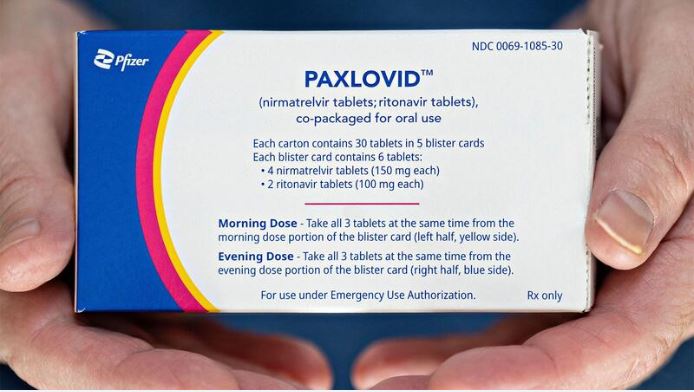
After over 60+ hr of the most current research, and taking it myself with very bad side-effects, I recommend you do NOT take PAXLOVID!
Please do NOT listen to your doctor, or Pfizer, who tells you to take PAXLOVID for Covid.
Pfizer is LYING TO YOU, especially if you are fully vaxed!
Your doctor is LYING TO YOU, when he prescribes PAXLOVID, as your doc DOES NOT DO THE MOST CURRENT RESEARCH, and most doctors simply quote Pfizer’s marketing material! DO NOT BELIEVE PFIZER, and/or your doctor quoting Pfizer’s literature.
FOLLOW THE MONEY…
Pfizer made $100 BILLION last year, $12.2 BILLION from PAXLOVID. Don’t listen to drug-pushing doctors sold on the drug by some busty actress, offering the doc perks to push PAXLOVID.
Here is what the most current data (your doc doesn’t bother to research) says about PAXLOVID. Read it all carefully and DO YOUR OWN RESEARCH by limiting Google/Bing/DuckDuckGo search returns to 1 month out, and ignoring the shitload of bullshit ads and articles funded by Pfizer about how great PAXLOVID is because THEY ARE LYING TO YOU: https://lnkd.in/ga-4Yc3v https://lnkd.in/gWaCsARy
For the record, I am fully vaxed and have no political agenda in regard to Covid cures. I took PAXLOVID and had every side-effect listed, as many others reported, (and I still don’t know about long-term damage to my liver), and now have COVID REBOUND, a COMMON OCCURANCE (regardless of Pfizer’s denials) that comes from taking PAXLOVID.
Electricity is shooting from my fingertips. My heart is racing. My breathing fast, too fast.
“I can’t understand your accent. I’d like to talk with a supervisor, NOW!” My fifth ask.
I’m on the phone with COMCAST, have been for the last 2 hrs today; 3 hrs on Tuesday, 2 more last Friday…etc.
“I sody mem for the inconvenents,” the COMCAST operator delivers his line politely, though I’m yelling at him.
I’m yelling at him because he’s the 17th Indian employee, talking to me from India, I’ve spoken with in the last year alone, and I’ve been trying to get my internet connection stabilize, i.e. consistently ON for FOUR YEARS NOW.
“I here do help you, mem. Wvat is you account numba?” He’s lying. He doesn’t want to help me. He wants me on the line so he has a job tomorrow, because he wants to feed his family. So do Americans, but he doesn’t care about that either.
“I want to speak with a supervisor NOW, dickhead. Do you fucking understand me?” I’m getting mean. I’ve learned not to care about him, as he doesn’t care about me, or even the problem I’m having with COMCAST. He does not deserve my respect. Past experience with COMCAST customer service has taught me that he is the enemy, making sure he takes care of himself, regardless that he’s screwing the very people he’s supposed to be working for—the COMCASTcustomer.
Germans drove trains, turned in their neighbors, sent millions to slave labor and gas chambers to protect their own asses. They didn’t stand up to Nazis (AMAZON, MICROSOFT, COMCAST, PG&E, VERIZON…etc). They let the German government tell them what to do, how to think, what to say, what not to, just like COMCAST teaches their employees, Indian or otherwise.
It is insanity that COMCAST delivers HALF THE SERVICE they claim to offer, but I have to pay ALL OF MY BILL monthly. Sure, I can go with AT&T, who were just fined $18.25M for STEALING FROM THEIR CUSTOMERS, cutting internet speeds to you and me, to give more bandwidth to whoever they liked. And do you REALLY believe that AT&T will stop stealing time and hurting productivity for small businesses like yours and mine after this fine? Seriously. They’ll do what they want, get sued again, then raise their rates to pay for the lawsuits. Just like PG&E, who MURDERED 8 people in San Bruno, destroyed an entire neighborhood, was fined the most EVER in a lawsuit of its kind, and simply raised their rates to cover the suit. We’re all paying to let them get away with murder.
Is this the society you all want? It makes my skin crawl every time my husband insists on paying a bill that is wrong because COMCAST and AT&T make it a 2 hr journey of frustration to talk to an operator in India or the Philippines who has little to no training, can barely speak English, and who DON’T GIVE A SHIT ABOUT YOUR PROBLEM. They have to feed their families, on the backs of Americans, because their governments are so corrupt that only the wealthy thrive, while the rest of their people struggle to get by. Or flat out starve, like the begging children that surround foreigners in India.
Well, now our government is equally corrupt, placating to CORPORATIONS and big business lobbyists. And WE ALL LET THEM.
My father-in-law spent between the ages of 13-18 in Auschwitz after watching his entire family murdered by Nazis. His neighbors, their kids that he used to play soccer with, all turned a blind eye. AMERICANS ARE NOW DOING THE SAME THING. We’ve become complacent, as long as we have Netflix, and Amazon, and Uber for food delivery. He told me once that anything becomes acceptable to most people, that watching Nazis murder children daily, for sport, or seeing prisoners throw themselves against electric fences to commit suicide became the norm in Auschwitz. It is now the norm to accept bad behavior from big business. And regardless of our Supreme Courts twisted decision that “Corporations are people, too,” there are actual people working for them, greedy management making decisions that screw their customers, that are at the core of this issue.
The German train drivers, or the local store owners that stopped serving Jews and Gays and Gypsies, they were simply “following orders,” like the Indian rep working for COMCAST delivering the company’s lies with every line he spoke.
Those who ignore the past are condemned to repeat it.
You can all plug into your devices and apps and ignore the news, and pretend the economy is stable for you, even though it’s a house of cards with Disney and other major employers firing U.S. workers and replacing them with H1Bs, and just bend over and pay every bill without protest. You can choose to be one of the Nazis, or the ‘good Germans’ who turned their heads while their neighbors were murdered.
Harsh? You bet. But again, is a society where the few rich thrive, and do whatever they want, whenever they want, with NO ACCOUNTABILITY, or real punishment, where you want to live?
DO THE RIGHT THING!!
Protest—tweet, update, share your stories when you are screwed by COMCAST, AT&T, PG&E. Take the time to tell the world that SAMSUNG put a ton of apps on the phone you just purchased that you don’t use, don’t want, and YOU ARE PAYING FOR in load time and battery life, while they exploit your personal data with recommendation engines to use against you. Sign petitions by people who give a shit enough to fight corruption and are looking for support to stop it, and not just causes that adversely effect you directly, but humanity, and the planet. Fight every bill that’s wrong. Don’t speak with respect to the CS reps who show you none! Their politeness is a facade, taught to them by greedy, ugly management who are happy to keep you on the line repeating the same information to the next rep who doesn’t take notes, maybe is even illiterate, and has no clue what your issue is.
Show your outrage passionately!! Make their job hard, because they are willingly stealing your time, and your income, and most assuredly making you miserable not caring about your needs to guarantee their jobs. And if you think these reps are not aware of what is happening on the back end, that’s BULLSHIT—an excuse to remain ignorant, especially since almost every call they get is from beleaguered customers like me who take them to task on COMCAST FAILING TO DELIVER on their promises. If you make it miserable to work at COMCAST, perhaps they’ll look for real jobs that require thinking, literacy, and actually add value—benefit customers—instead of blindly obeying the Nazi leadership of the COMCAST (or pick your fav corp) regime.
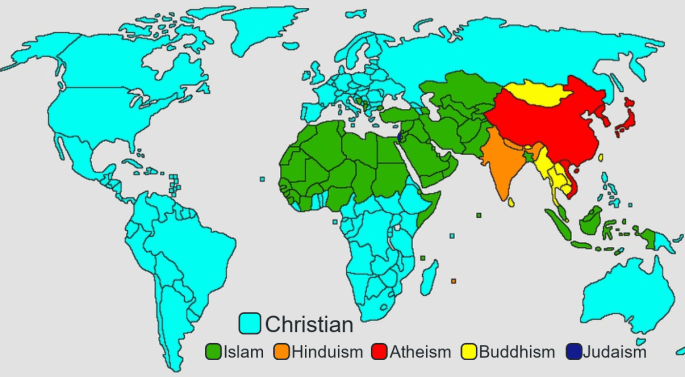
When I say I’m an atheist, the very next question most people ask is: “Well, what were you raised? What were your parents?”
Human beings.
Somehow that answer isn’t good enough. They’re looking to place me in a spiritual box and lock me into a religion and all the stereotypes that go along with it.
All my life I’ve been told I’m a Jew — by my parents, by my relatives, by society at large, simply because my parents professed to be Jews. But if I don’t believe in god, or any supreme being, or even higher power; if entropy is what rules my universe, then am I still Jewish?
Jew’s believe in one god.
I believe in none.
Some would argue I am culturally Jewish, a product of my parentage. But it’s ludicrous I’m considered Jewish solely because my parents were (and technically just my mother need be, according to Jewish law). Let’s get one thing straight. Judaism is NOT a race. It is practiced globally, from members of our Supreme Court to jungle tribes in Africa that pray to one God with ancient Hebrew texts. The thread that holds them together is not racial, or even cultural, but spiritual — a belief system. There are no cultural similarities between the African tribes and our former or current Chief Justices. Take away the religious string and there’s really nothing left of their Judaism.
I adhere to no religion, don’t celebrate any religious holidays, and believe passing down to our children fantastical mythologies that promote intellectual laziness is dangerous at best. Growing up, my family celebrated the major Jewish holidays, though I never cared for the antiquated rituals and sexist roles we all played. Jewish parables were too often warped tales filled with praising their solipsistic god instead of people for their hard-earned achievements. I don’t like brisket, noodle koogle, or most deli foods. And as holidays go, the Fourth of July and Thanksgiving always meant the most to me culturally, and the food is far better.
If I’m culturally anything, it’s white, middle-class, American. Like most of us, I grew up with people of my socioeconomic status. I was raised in a relatively safe, suburban neighborhood — religiously, even racially diverse, but everyone made around the same amount of money. More fine grain, I’m culturally a native Californian. We have a whole other way of thinking out here than the rest of the world. Level of intelligence would be my third greatest cultural influence. I find I gravitate to thinkers — those who explore and question.
So how does this make me a Jew?
Liking bagels, or preferring salmon to ham, doesn’t define one culturally. Nor does espousing the virtues of education, or denouncing violence, or promoting empathy. These ideologies are widely held by most of our modern age. I’m not a Taoist because I believe in living a balanced life. And I’m not a Christian because I think Christ, or likely his myth, had a lot of charitable ideas.
What does it mean to say you are Jewish, or Christian, or Mormon, if you don’t embrace their belief system? If you were raised Christian and you didn’t believe in God, or Christ, would you still be considered a Christian? Hell, if you believed in God, but NOT Christ, could you still be a Christian?
What religion are you?
Most would respond with whatever religion we were raised. We practice the rituals our parents bestowed upon us. But the more important question is: What do you believe?
Think about it.
Have you let your parents define your spirituality? Beyond what you’ve been raised, have you considered what religious ideologies you actually believe in, if any? ‘Be kind. Work hard. Love your family and neighbors.’ These cultural beliefs began 200,000 years ago when we were still living in caves, and aren’t exclusive to any particular religion. They may have been adopted as Christian, or Jewish morality, but the truth is ‘Be kind’ stemmed from our need to be social. Humans are social creatures, and greedy, ungrateful, thoughtless behavior does not win friends, or attract lovers.
Omitting how you were raised, what do YOU actually believe in?
If you don’t believe the bible stories, Old or New Testament, are real — a recounting of historic events — then it’s likely you understand these books were written by literate MEN — the highest echelon of society at the time — to control the masses of illiterate layman with parables that instilled fear. You also likely know that these powerful men imposed rules and roles to maintain the social structure they created, and assigned the administration of this order to an almighty [jealous and vengeful (Nahum 1:2–8)] God whose authority could not (as an ethereal being), and must not be questioned. If you do not believe in this God, or that his adventures in these bibles are real, then you are likely an agnostic or an atheist.
ag·nos·tic (a la Google); noun
a person who believes that nothing is known or can be known of the existence or nature of God or of anything beyond material phenomena; a person who claims neither faith nor disbelief in God.
a·the·ist (a la Google); noun
a person who disbelieves or lacks belief in the existence of God or gods.
You don’t have to subscribe to a religion to be spiritual. You can feel connected to this earth and all that’s here without being a Buddhist. You can believe in charity without being a Christian. You can encourage education without being Jewish. You don’t have to pass on horrific tales to frighten children into adhering to rules handed down from men on high thousands of years ago. You can practice and teach values — choose to live a moral life: be kind, generous, honest, empathetic, loving, compassionate, without religion. Why would you choose to do so without a vengeful God threatening Hell if you’re ‘bad?’ You are advanced enough to understand each of us must continually contribute to humanity, and this planet we inhabit, for our race to survive, and thrive.
I’ll never forget the first time I saw the World Wide Web. It was 1995. I was in my rented townhome in Alameda, a small island on the east bank of the San Francisco Bay. I already had a dial-up modem plugged into my Mac LC that I used to send graphic files and documents to my lithographers and commercial printers through FTP (File Transfer Protocol).
I don’t know where I heard about Netscape, probably from a business associate. But I remember the afternoon I logged on for the first time. The interface was full-color visual, the first I’d seen. FTP was only black text on a white screen and no images. The Netscape logo — the uppercase N sinking into a black globe against a starry aquamarine sky, was… beautiful.
Once I registered, the next screen had colorful, clickable illustrations to explore the Net. I was floored, drop-jawed. The interface gave me choices to go anywhere. Netscape was a portal to the world.
I called my roommate into my bedroom/office space to show her what I was seeing on my screen. “This changes everything,” I practically whispered, sure that this portal was the beginning of the connected world I only dreamt of as a kid.
As I sat there exploring each site the Netscape browser delivered, I recalled when I was 8 years old, sitting in the back seat of my mother’s huge Chevy while she drove me and my sister home from school.
“One wish,” my mom asked us spontaneously. “One wish. Right now. If you could have anything you want, what would it be?” She often came up with non-sequiturs like this to fill the void of silence after she’d asked about our day at school, and got, “Fine,” from both of us.
I answered instantly. “World peace,” and I meant it. My brother was in Vietnam. We watched the war on TV nightly. I was always afraid I’d spot him among the troops in the jungle, and then see him get shot. “I wish there was no war, and that we all took care of each other instead of fighting so much.”
“That’s a stupid wish,” my sister said, sitting up front in the passenger seat. I cowered in the back seat and shut up. “It’ll never happen. Humans are violent. It’s part of our nature. We can’t change who we are.” She was 2 yrs older than me. Surely, she must be right. She wished for a new purse.
“This changes everything,” I’d said to my roommate as I browsed the internet that first time back in 1995. And I believed it. A portal to the world would let us see how others lived, and let others see what was possible.
My roommate stood over my shoulder staring at my screen as I went from site to site through Netscape’s ‘portal.’ She seemed unmoved by what we were seeing, and in short order went back to her room.
I stayed online the rest of the night and into the early morning hours, amazed.
I pursued news sites and read articles from all over the world. We could never again pretend that holocausts weren’t happening. We’d find out about atrocities taking place anywhere, instantly, and the United Nations would have to stop them! The privileged would no longer be able to turn a blind eye to poverty or disease, even in the most remote places in Africa, or the Middle East, seeing it daily on their computers. We could talk to people around the block or in other countries we’d never meet, share ideas, and feelings. We’d see how similar we all are, how we all feel the same things: sad, or happy, or mad, at times. We could connect 24/7, and never feel isolated or lonely again. The internet was a window to the world, and the view would surely motivate all of us to care for each other like never before.
This is the argument I gave to my dad at Saul’s Deli while eating bagels and lox a few years after my first experience on the Netscape browser. As a lover of technology since childhood, he too was on the internet, one of the first adopters in his advanced age group. He shook his head and gave me his indulgent smile, pausing before taking another bite of his bagel.
“The internet changes nothing. It is a tool, like a screwdriver. It won’t change human nature. And it won’t save us,” he said. “We’re going to have to do that. Until we learn to care for each other beyond ourselves, we are doomed.” He took a bite of his bagel and savored the mix of salmon, red onions, cream cheese and bread, satisfied in the moment.
“You’re wrong, Dad,” I exclaimed with certainty. “The internet is connecting the planet. For the first time in human history, we are becoming one world.”
“One very small world, which everyone wants their piece of,” he said. “We’ve invented technology we can’t handle, from the Bomb to this internet. Getting bombarded with information isn’t going to change how we react to it. And the more technology we invent, the more likely we’ll implode with it.” He sighed and looked at me lovingly. “You can’t change the world, baby. Best just to focus on taking care of yourself, and your family.”
It was 1998 when I had this dialog with my dad at Saul’s. I had no idea what was coming, how the internet would evolve into the ugly, manipulative MARKETING PLATFORM it has become. I had no clue that seeing how others live would engender jealousy, promote hate, violence, ignorance, and threaten our democracy daily. But I left Saul’s Deli that morning sure my father was wrong.
Saw #60Minutes last night with Google’s CEO #SundarPichai on the current state of #AI.
The opening bar, the interviewer, #ScottPelley, asked #SissieHsiao, Google’s VP, what Google’s new chatbot, #Bard, is for.
“It’s really here to help you brainstorm ideas to generate content like a speech or a blog post or an email,” she said with confidence, that made my skin crawl.
So, she’s suggesting that we shut off our brains, and rely on more software to construct our personal content. Let’s all stop exercising our neural connectivity to do tasks like writing an email, or posting a blog, like this one, that requires disciplines in linear thinking, quantitative and qualitative reasoning, real news research, and engagement of my MIND to construct. Ms Hsiao is suggesting that doing these tasks that demand, and PROMOTE brain power are worthless wastes of our time, and that Google’s AI can not only do better, but quicker.
So, Ms. Hsiao, where does that leave human brain power, assuming we aren’t all paid the big bucks by Google to fuck up humanity even more than you already do? A hint, honey: STUPID. Do that research Google, and even your software will find recent data that humanity is getting dumber:
Next, Scott Pelley was “speechless” that Bard made up a story from Hemingway’s six-word flash piece.** Mr. Pelley was so overwhelmed, he said, “Bard appears to possess the sum of human knowledge.”
BULLSHIT.
Bard does not know what it FEELS LIKE to be humiliated, admired, disrespected, loved. It does not know what it FEELS LIKE about anything. It does not know compassion, or empathy, regardless of what words it spits out because these things are ACTIONS! Words, like, “Our hearts and prayers are with the victims,” of the latest mass shooting, are meaningless, like so much of AI.
Beyond Bard having no knowledge of FEELINGS, it also does NOT have the “sum of human knowledge,” because Google scraps the internet, and every email exchange, and text conversation you have.
I gave away all my albums when CDs came out, thinking I’d replace them with disks, except I like obscure alternative music, and most of my record collection never made it to CDs. Just like MOST of human knowledge is NOT on the internet, and in our texts. Sorry Google, even YOU don’t have access to MOST OF HUMAN KNOWLEDGE, so your #MachineLearning data sets are woefully inaccurate. Which brings me to the pic for this post…
In the picture attached about the New Testament, Scott Pelley asked Google’s chatbot, Bard, to “summarize the New Testament.” In 5 seconds, Bard came back with “The New Testament is the story of God’s love for humanity, which was revealed through Jesus Christ.”
BULLSHIT.
The actual Bible is filled with a jealous, angry, vengeful god (Corinthians 10:22; 2 Corinthians 11:2), who murders millions of people at his whim. Jesus is hateful to Jews (John 8:44) and others. He tells parables in which beatings, and even killings, of household slaves are affirmed as ‘disciplinary measures’ (Luke 12:45-47). Revelations, the last chapter in the New Testament, tells of God, and Jesus inflicting the “punishment of eternal destruction,” (2 Thessalonians 1:5-10) on anyone who doesn’t agree with, or believe in them. Strip away blind faith, this is called TOTALITARIANISM.
So why did Google’s Bard call the New Testament a “story of God’s love for humanity?” My human interpretation of the New Testament is, “The New Testament is a collection of violent stories that center around two jealous, angry narcissists who inflicted hardships, loss, plagues, and other forms of gruesome violence on humans.”
Google’s AI engine is trained on ALL THE DATA ON THE INTERNET, and your texts, and your emails, and everything you do on your phones, and ‘smart’ devices. This includes digital marketing—all those annoying ads—but also what people are saying, via texts, and posts, and blogs…etc., about any given subject. At least 80+%† of the U.S. identify as religious, or spiritual. Christianity alone touts 64% of the U.S. as believers, and, by far, puts out the most advertising. Christian marketing is close to a trillion-dollar a year industry.
Bard is a combination of Machine Learning, Natural Language Processing, Deep Learning…etc, algorithms. That’s it. Garbage scraped from the internet and into the AI software, like Christian advertising, and people chatting up their spiritual beliefs, leaders, and groups, led Bard to spew Garbage Out—i.e. its positive, loving spin on the New Testament—even though the book itself, well… isn’t.
Since 99.999%…etc. of all that data Google’s collecting confirms both Bibles are good, righteous, and loving, Bard LEARNS that these books are, in FACT, what most everyone says they are. Google’s AI WEIGHTS the importance of data by consensus, NOT TRUTH, or even FACTS. Truth by majority consensus, like Germans who became Nazis, or religious believers convinced their religion is the only ‘truth.’ If only 30% of data collected on Christianity, for example, were positive, Bart would likely not have come up with the nonsense it did. If Scott Pelley hadn’t been religious himself, and questioned Bard’s translation of the New Testament, or the CEO of Google had pointed out that their AI is a WEIGHTING SYSTEM, where it places more ‘value’ on the masses than the FACTS, perhaps those of you who’ve read this far will get how dangerous these continuing developments in AI really are.
Another question from Scott Pelley: “Is Bard safe for society?”
Sundar Pichai: “I THINK so…”
—
**Human Idiocracy:
How many of you remember (or ever learned) phone numbers, now that you have them on speed dial. (Why does it matter? Try calling your kid in an emergency without your contacts list).
Who remembers, without the help of Google Maps, how to get to a place you’ve only been to once? Or even 20 times? For that matter, which of you even knows how to read a real map?
How many of you even know that the “news,” and information you’re getting through Google (or any) Search is only a fraction of what is on the internet, and worse, it is a reflection of how YOU think, delivered to you via recommendation engines that reinforce your own perspective? Essentially rec engines make you THINK you’re smart, but only make you dumber by serving up no other perspective than your own.
**Bard’s AI story, prompted from the words of Hemingway’s 6-word tale: “For sale. Baby shoes. Never worn,” missed the subtext of Hemmingway’s words entirely. No one buys baby shoes for a child yet to be born, which Google’s AI story suggests. Hemingway’s story, (and the original he stole it from), is about the loss of a baby already born. Infants get booties. Baby’s get shoes. So, it’s likely the baby was a year or more in age. Bard missed all of this completely, and made up a story virtually unrelated to Heminway’s 6-word tale.
† People who identify as nonreligious, but claim to be spiritual, are known as “NONES”.
To escape the bickering, and whining, and catering to the needs and desires of everyone’s demands, I took our dog, Annie, for a walk on a quiet fire trail near our house. Bright and beautiful out, a sweet sea breeze came over the Oakland Hills with the afternoon sun. The mile and a half dirt path along the base of the foothills was mostly vacant, rarely used by even residents of the neighborhood, so I did not leash my dog for the walk.
I saw someone from where I stood on the ridge while I waited for Annie to finish marking her territory in an open field. A woman was coming towards us on the trail below, and I tensed as I scanned for the dog she was most likely walking, but saw none. Still, I called my 70-pound Shepherd-mix to me. My beautiful pound-hound was a bit unpredictable with other dogs. Play. Fight. Run. I never knew which, or why. She passionately loved people, though most didn’t appreciate her bounding up to greet them.
Annie came to me, and I held her collar as we stood on the ridge and watched the woman trudge up the hill. Her white hair looked almost like a silver helmet in the sunlight. She walked slowly, and carefully, and hunched. I made her out to be in her mid-70s. My dog started whining the moment she noticed the woman approaching, then practically yanked my arm off trying to pull away from me and go meet her potential new friend.
The woman was 30 feet away when she noticed us, looked up and stopped. I loudly assured her my dog was very friendly and loved everybody, and that I held her securely, asserting there was no need to worry. The old woman looked at my dog wagging her tail wildly and whining incessantly, and she smiled. She confidently told me she loved dogs, then called mine to her with a pat on her legs and words of welcome. I let go of Annie’s collar. She lopped over to the woman, ears back, but tail up and swishing, and sidled up to her, leaning her downy-soft, muscular frame into the woman’s legs. I joined them on the path where the woman stood stroking my pound-hound.
The old woman gently ran her hand along the length of Annie’s back again and again while extolling the animal’s Sphinx-like appearance and friendly nature. Annie was mesmerized with her touch, as my dog was with just about anyone’s, but the woman seemed to really enjoy the contact as well, her expression set in a soft, contented smile. She explained she’d had several dogs during the years she and her husband raised their three kids. The dogs had passed on, the kids had moved on, now with families of their own. Her husband died two years back and for the first time in her life she was alone.
Her kids, even her grandkids kept telling her to get a dog. I chimed in with words of encouragement, told her about getting my dog at eight weeks old from a kill shelter in Manteca, and ranted about some great local shelters where she could find a great companion.
My graceful hound took off after a squirrel, startling us both. The woman began brushing the dog hair off her pants, but a lot of short hairs were woven into the navy polyester and clung to her pant legs where the dog had leaned against her. “I’ve spent the last 50 years of my life attending to others needs—cooking, cleaning, and more cleaning, and taking care of everyone else. I told myself I deserved a break after my husband lost his three-year battle with brain cancer. I would travel, get out to the movies and play canasta, live the good life.”
Annie came bouncing back, long tongue dangling from her panting (grinning?) mouth. She came to me first to get my pat, then went back to the old woman for more strokes, which the woman gave willingly. “I’ve been on three cruises in the last two years. I play canasta twice a month, and see all the new movies I want.” Again she seemed…pacified, by patting my dog. “Turns out, the good life was when I was needed. Being counted on made me feel vital, and valued. Now, no matter what I do, I mostly just feel lonely.” She straightened and brushed her pant legs off again as my dog swaggered over to the tall grass and lay in it. “I think you all may be right. It’s time I got a dog.” She gave me a pleasant smile. “It’s been a pleasure chatting. Good day to you.” And she went on her way.
I stood there watching her walk along the path, her words echoing in my head. My kids were 12 and 14, and beyond their bickering, and continual demands of my time and energy, parenting them was simply the richest, most rewarding experience of my life. They made me feel vital. Valued. And with my life so integrated into theirs, and my husband by my side joining me in this grand adventure, I virtually never felt lonely anymore, like I had so often before them.
Annie lay in the grass sunning herself. I gave a quick whistle, and she popped up and joined me on our walk home. I stroked my dog as she walked by my side, glad to have her with me, counting on me, as my kids and my husband did, and probably would for many years to come. I imagined the old woman’s empty house and anticipated the tumult in mine.
And suddenly, I felt very lucky indeed to be living the good life.