Cafe 42 Blog

Married? Wish He Was…Better?

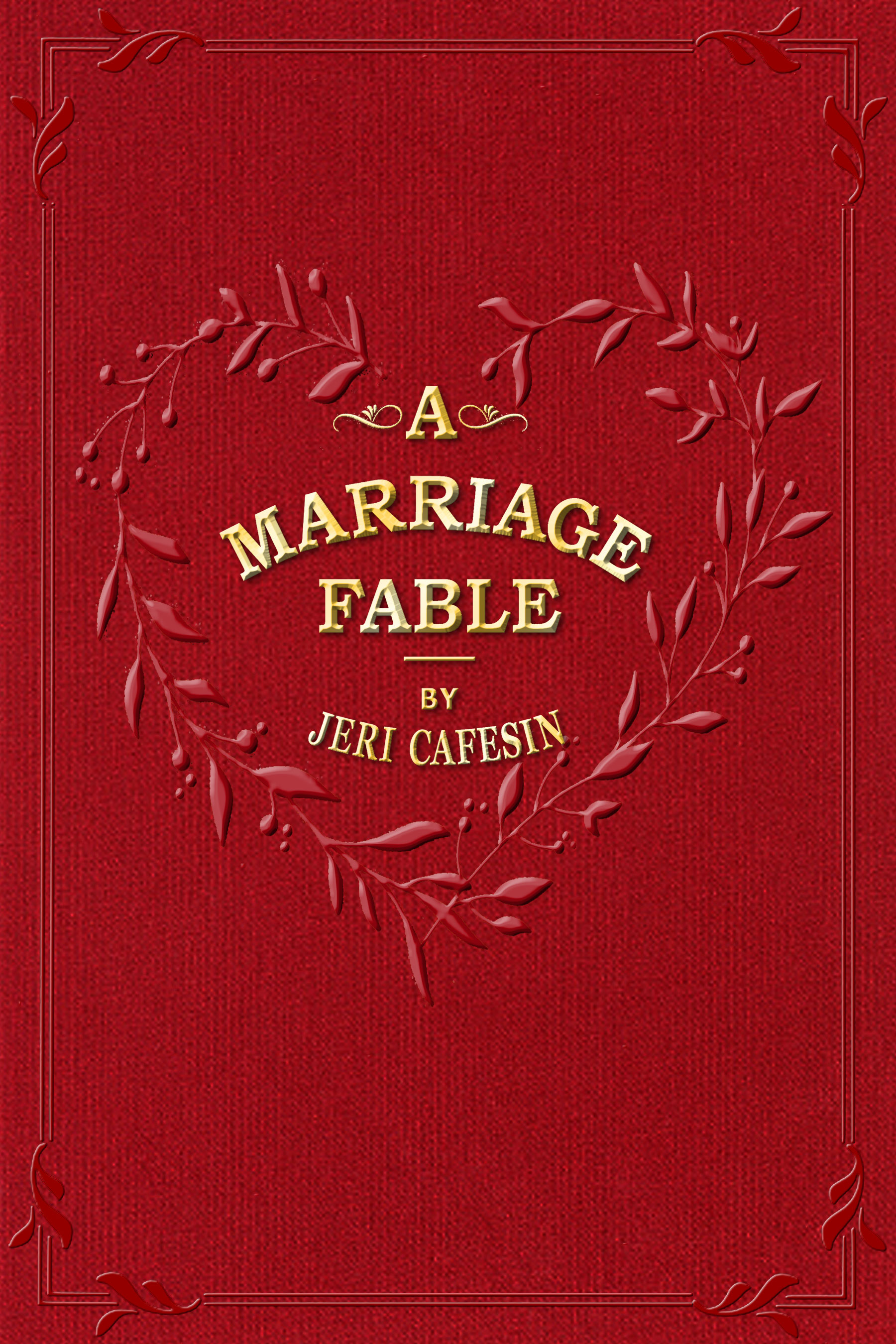
A modern twist on a Christmas Carol, A MARRIAGE FABLE is a novella, another tall tale of the powerful genie, Finnegus Boggs, and his lessons on love that inspires Andrew Wyman, a typical modern-day husband nearing his 25th wedding anniversary, to become a better man.

New #Review:

Journey Toward Enlightenment

If you’re a fan of magical realism like I am, you will enjoy reading this mystical story. A quick read with plenty of drama kept me engaged. It’s a story filled with equal parts regret and redemption. It always feels good when a narcissist jerk gets a taste of his own medicine, and feels even better when this self-absorbed deplorable gets a chance to be a better man. Will he accept this new choice? I’ll never tell. Ask the genie. Do yourself a favor and read this well-written story and find out if there is hope for “this day and every day forward.”

–Ingrid Hart

“A Marriage Fable does for Valentine’s Day what A Christmas Carol did for Christmas Day. A Must Read romantic fantasy!”
– BJ Fera—Goodreads

The Truth about Immigrants

Had some yard work done that required cutting concrete. My gardener gave me a quote of $150 to do the job. I accepted his bid as fair and equitable and we agreed he’d do the work last Sunday.

He arrived promptly 8:30 Sunday morning and began cutting our concrete patio. He used a small electric saw with a 4-inch blade, which I thought odd, since the last guy I’d seen cut concrete had a major power saw that had to be held with both hands and came with a water supply to keep the blade cool.

Our gardener struggled to cut a mere 20 inches of concrete less than a half inch thick for over four hours. He left once, to buy new blades for his little saw. He did not take a lunch break. In fact, he took no breaks at all.

It was ninety-four degrees at mid-day when I brought him some ice water. Sweat dripped down his face and cut brown lines in the concrete chalk covering his skin. He gave me a crooked-tooth grin of thanks, took a long drink then wiped his forehead with the back of his hand. “Caliente!” (Hot!)

I nodded agreement and pointed to his little saw. Pequeño (Small), I said, closing the gap between my thumb and forefinger. Why so small? Harder to cut the concrete. I spoke in English, as my Spanish sucks, but he got it.

He laughed. You’re right. Yes! Si! Demasiado pequeño (too small). Herramienta incorrecta (wrong tool). He picked up his tiny cutter. Muy caro! Expensive! $100 for herramienta. $35 for blades. Aye yai yai!

I was paying him $150 for the job. He’d just spent over that buying equipment to do the work. I was mind boggled. I assumed he had all he needed to do the job when he gave me his bid. He went back to work and I went inside and got the receipt from the equipment rental place I’d visited the previous week. Only $24.99 to rent a jigsaw for 24 hours! At the time I rented the jigsaw, I inquired about renting a concrete cutter. $59.00 for 24 hours. Why hadn’t my gardener just rented the right equipment? He could have got the job done in half an hour and actually made money.

I took the receipt outside and showed it to him. Do you know of this place? Just down the road?

He took the receipt and studied the logo at the top of the paper. His expression brightened. Si! Yes! Alquiler de equipos. Rents. Yes?

Yes! Concrete saw is $59.00 bucks for all day. Thirty minutes, a half an hour, to do the job. That’s it. Why didn’t you rent a saw? Using hand signals and body gestures I somehow communicated.

Ah. No. No rent. Can’t. No license. No seguro (insurance). Not legal here.

Four years running our gardener’s been coming and he is easily the best gardener I’ve ever had. More than a gardener, he fixes our watering system, landscapes, trims trees, sets fences. He comes every Tuesday around 9:00am, rain or shine, and is on time, every time. He always smiles and waves when we cross paths. He is a stellar model of a dedicated hard worker for our children, and our community at large. I’ve recommended him to neighbors and soccer moms, as they have to their communities, allowing him to build a side business gardening and landscaping on weekends and evenings.

Yet, he can not get a Green Card. 

His company won’t sponsor him. He has no legal relatives here. He is not a refugee. Even if he could get one, the process of applying and then waiting for the Card takes years. My gardener needs, and in fact, has work now. He can’t wait years to get government approval to work for a living.

Why doesn’t he leave his job for Americans and just go back to Mexico? Without him, and immigrants like him, our free market economy would get even more expensive for us in the middle. Capitalism requires competition to keep prices of labor and costs of goods moderated.

I had three other bids on the concrete work I needed. A neighborhood contractor quoted me $1,600 to do the job. A mason didn’t want the job because it was 20 miles from his location and not worth the trip. A local handyman quoted $800, but couldn’t start the job for over two months, and required half upfront to hold my time slot. All were licensed, bonded, U.S. Citizens. With the right cutting tool, which was rentable for $59, I knew the job should take 15 minutes, 30 on the outside. I originally considered doing it myself, but the saw seemed heavier than I could manage.

I had no idea my gardener was here illegally and driving without a license until our conversation last Sunday. The man looks in his mid-40s but he told me on Sunday that he’s only 32. He’ll die young from hard labor, lack of medical care, working with poor or improper equipment, like breathing toxic concrete dust without a mask, carcinogenic construction materials, garden poisons. If he is graced with children, and I hope he is, and will pass on his excellent work ethic to them, he still will not be granted U.S. Citizenship. He is always at risk of deportation, more or less depending on who is in the White House. Like many illegals lately, he could end up having to take his American children back to live in the Mexico he left for a ‘better life.’ 

Sunday alone, our gardener put over $150 into the U.S. economy, counting just his little saw and multiple blades. He will buy his food here, pay for his housing here, his utilities, his fuel costs. He lives here, and contributes to our economy with every dollar he spends. He probably pays taxes, as do many illegals working for large companies. My gardener is an employee of a huge gardening and landscaping corporation.

Next time you bite into that peach, remember it only costs $0.39 because illegals planting and picking the fruit are cheap labor. (Your iPhone is made in China for the same reason, yet Apple is rewarded with tax breaks instead of kicked out of the country.). Illegals contribute billions in tax dollars and consumer spending in the U.S. annually, yet they get none of the protections of citizenship. No medicare. No social security or unemployment benefits. No welfare or government handouts. Illegals are invisible here.

I am privileged by birthright for the lifestyle we live, and can provide for our kids. I haven’t a clue, and never want one, how it feels to be so far from home, without ‘inalienable rights.’ But I know one thing for sure—our gardener deserves the ‘better life’ he sought when moving here, the one [ostensibly] available to most citizens who work hard to prosper.

On Networking

My second job out of college I was the Art Director for 1928 Jewelry Co. The company is still alive and vital today, quite a monument to startup lore. My boss, Fred Burglass, was the best boss I’ve ever had. Funny. Kind. Patient. Smart. I really loved that man. He was like a father to me, taught me many things about marketing, business, and people. Yet I still struggle to adhere to possibly his greatest lesson.

I’d been working there over a year and had neglected to attend any of the executive parties the company threw in their beach house in Malibu. Fred called me into his office one afternoon and insisted I come to the upcoming holiday party, as it was part of my job to schmooze with our current and potential new buyers, and my executive co-workers.

The Friday night before the Saturday party I called my assistant into my office. She’d wanted to go to the party, so I suggested she pretend that she’d come with me. I asked her if anyone was looking for me there, like our boss, Fred, to tell them she just saw me on the beach, or on the deck, or downstairs talking with the Macy’s buyer. I thought I was being clever, outsmarting Fred by telling him I’d be there, and then setting up my assistant to lie for me so he’d never know I wasn’t. The Malibu property was an estate home and easy to get lost in. My assistant was charming and smart and would have no problem pulling it off.

Monday morning Fred called me in his office. I know you weren’t there on Saturday night, he began. But the truth is, you’re just screwing yourself. You want to build your career, maybe your own company down the line, or even write novels full time? Business success, in whatever you choose to do, requires networking, he assured me.

Sadly, I’d pretty much tuned him out. Network. Network. Network. Building relationships is the only way you’ll propel your career forward, Fred consistently preached, so I’d heard all this before.

Problem was, I’ve always been a recluse. An artist by nature and trade, I likely landed in the arts because I have a hard time being with people. I suck at small talk. And I’ve learned getting too personal with questions or opinions is a fast way to shut down dialog. It’s exhausting walking the line of popular decorum, putting on that public face and pretending I believe the guy, or am even interested in how successful he thinks his startup is going to be when he doesn’t even know the SaaS he’s built is already being done by someone else. Ever hear of Competitive Analysis? I want to ask him, but don’t. I used to, but it wasn’t received well.

I give myself all kinds of excuses for not networking. I’m just not good with people. I’m better at creating than chatting. I’m an empath—get too much input around people so I need to limit my contact. But I know it’s all bullshit. You are a brilliant creator, Fred used to tell me. But no one will know that if you don’t meet the right people who recognize your talent and connect you with others to help you exploit it. You must network!

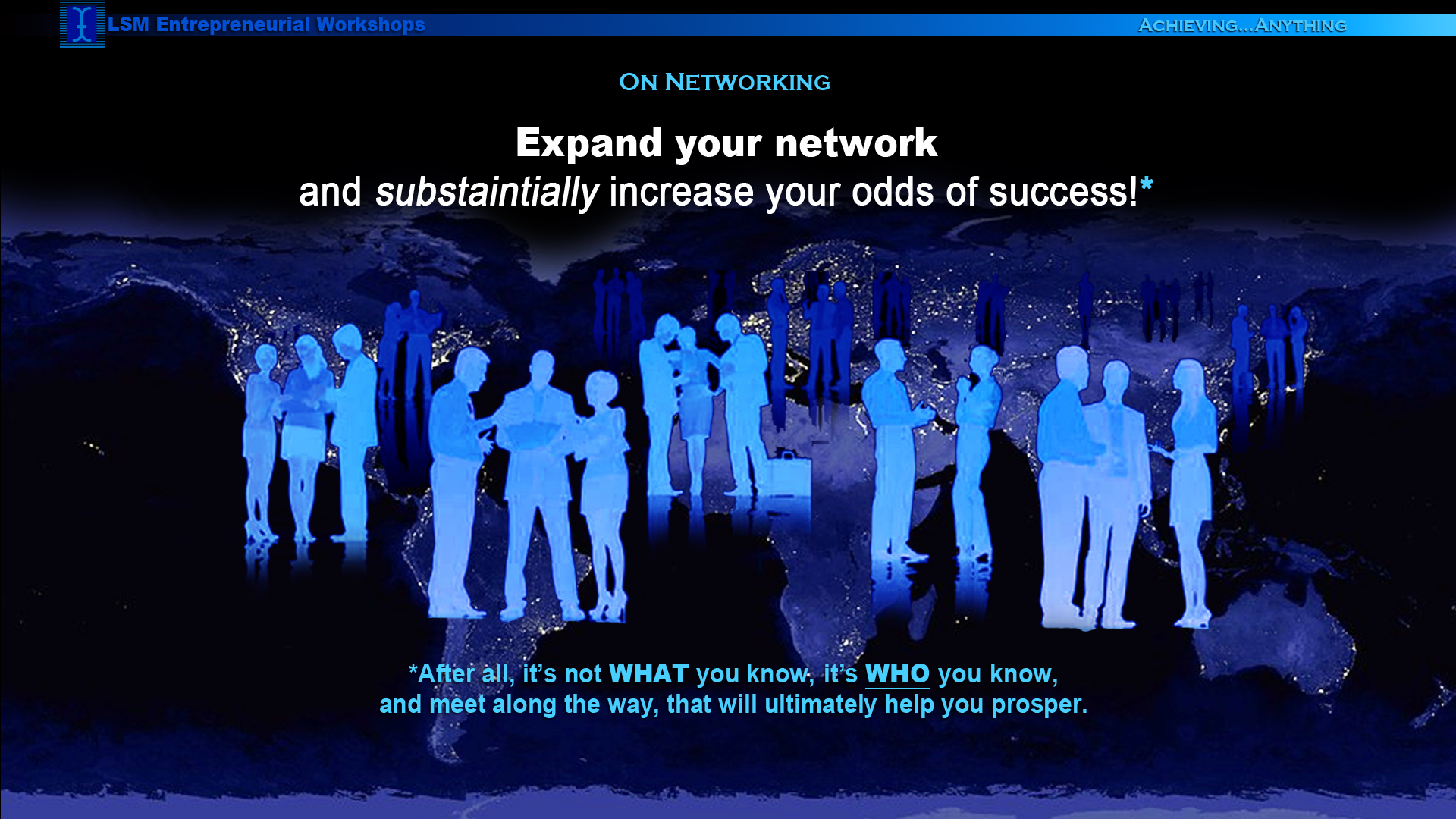
He was right, of course. Digital advertising—Facebook to Google to TikTok—has a very low ROI, generally between .05 – 1.5%. Print is usually higher, but not by a lot, assuming the targeting and messaging are equally tight. Building relationships in-person or online can yield far greater ROI, if done right. Amazon built an empire on exceptional customer service, eliminating the risk of online purchasing by making returns easy, garnering staunch brand advocates. Shark Tank candidates aren’t on the show just for VC money. They’re there for Lori Greiner’s connection to the shopping channel, QVC. The tech entrepreneurs want Mark Cuban’s contacts in the Silicon Valley community.

While networking ROI may seem harder to quantify than digital ads or even direct mail, consistently talking with people in your industry [and related industries] at meetups, SIG meetings, trade shows, webinars, conferences, biz and tech talks, and even office parties, over time will yield better ROI—broader brand recognition and more sales—than any other form of marketing/advertising.

Starting a startup, or finding a job or getting clients, the more you network with your industry and target markets, the greater your odds of building a thriving business. After all, it’s not what you know, but who you know that will help you pave your path to success.

A Little Kindness

The other day I was running my usual route and a woman pulled her car out of a business park driveway and blocked my path. The instant she saw me approaching she pulled her car back, allowing me room to continue running on the sidewalk instead of into the street to get around her. I smiled. Waved thanks as I passed in front of her car. She smiled and waved back. Felt nice, made the rest of my run less jarring, lighter somehow. Simple really, but oh, what a simple little kindness can do…

Most every day someone does something kind; lets us into their lane on the highway; opens a door, holds an elevator; Likes our update or post; simple acts of kindness that personify our potential for goodness. And while this may seem small on the surface, the residual effects of these displays of caring build trust, connecting us to each other, reminding us we are not invisible but valued, and giving us hope in our humanity.

We hear about the bad all the time. We hear about the good, too, but on the large scale, like doctors going to Nepal after the quake, or philanthropic superstars and their latest causes. But it’s really the little acts of kindness that unite us, everyday simple actions that show we care for one another, and the world we inhabit, that build a solid foundation for our race to thrive.

What simple act of caring did you give or receive today?

Please SHARE the act of kindness here in comments, and exchange a little hope…

The Folly of Perception

I’ve been on the outside looking in since I was a little kid. Failing to assimilate, I worked at cultivating unique and different. After achieving this coveted perception, I no longer wish to possess it.

Unique often translates into strange. And as the mother of a 10 and an 8 year old, I do not want to be perceived as strange or different. I want to blend like homogenized milk and give my kids the platform to fit in, be a part of. What I don’t want is for either of my children to be “that kid with the weird mom,” though I fear I may already be there.

My kids still hold my hand, and not just in parking lots or crossing the street. They both still love to snuggle. I am their first choice to talk to, confide in, way beyond their dad, which makes me feel valued, respected and deeply humbled all at the same time. I realize this level of intimacy probably won’t [and perhaps shouldn’t] last as they grow and find their own path, but I don’t want my kids to ever be ashamed of me. I want to be proud of them. I want them to be proud of me.

I try to fit in. I go to the soccer games and the ballet classes and I wait around with the other parents and try to blend. But I don’t. And I get that they notice I don’t. I look different. I’m one of the oldest among them, by a good margin. My kids came late, after six pregnancy losses. I dress for comfort so most everything I have is rather loose. I don’t wear make-up. My hair is long and fine and all over the place. It refuses to stay pulled back in the scrunchy. I never quite look ‘put together.’

But looks aren’t the only thing that separates me.

Through the years I’ve come to realize that I don’t think like most people. The glass wall between me and most of humanity is not just me being paranoid. There is a casualness the parents seem to have with one another as they discuss their kids, or some celebrity or popular new show. I stand there and nod my head when it seems appropriate, but I don’t watch much TV, and really don’t care that Tyler is playing basketball now which conflicts with his sister’s dance schedule.

I’ve tried engaging more personally, ask about jobs, interests outside of family, broached news and current events, but taking a position and endeavoring to discuss it has mostly been met with polite blank stares. Everyone is careful with their words—politically correct and upbeat. I’m neither, and over the years I’ve learned to shut up to avoid discord. The conversations usually segue back to their kids and related activities around family, school, church, which as atheists we don’t attend. I invariably check out of the exchange and focus on the event at hand and cheering on my children.

The game or recital ends but everyone stays and continues talking. I’m on the outside again, feels like I’m lurking while I linger to give my kids time to play. I stand there watching them all integrate, proud of my children for choosing to, and of myself for giving them the opportunity when I’d rather just leave. I watch the parents gaily chat and wish I fit in like that. The folly of unique and different is it’s really quite lonely out here.

On Writing Fiction

Am I two inches from the floor I can’t see, or the next step is a 200 ft drop?

Been fighting myself over this since I started writing fiction. I face this battle every damn day I sit in front of my laptop, the cursor blinking at me, waiting patiently for me to decide if I should quit fine writing today, and go back to writing copy, because unlike continuing to write fiction, a ‘real’ job will get my kids through college.

Then the voice of Fantasy taunts: “It is possible if you keep writing and marketing your fiction that you’ll get well known enough to make a living as a fine writer… I could be an inch from the ground right now… it’s possible…”

This voice is evil. A demon. The idiot in my head that keeps me fine writing. People who’ve read me, and contacted me with praise, they too encourage my stupidity, bolster my Fantasy voice that spurs me on to continue writing fiction, even though I don’t make any real money at it, and likely never will. The more I’m purchased, or even just read online, the more I’m ripped off. Hundreds of affiliate marketing sites pop up when searching my name now, offering downloadable PDFs of my work. Free.

I dream of making fine writing my sole focus, market only my books, and quit taking on marketing gigs. But I don’t. The smarter part of me knows that focusing my creative energy fine writing puts me precariously on the precipice of that 200 ft drop in income.

I write to be read. So, not making an income, as long as I’m read, which I am more and more, wouldn’t really bother me, except I need money.

My Fantasy demon goes to war with my voice of Reason daily. The battle goes something like this:

What needs to get done today?

Well, you should get the, ­(fill in current project), stuff started/done.

Or, you could write The Power Trip.

Hmm…

Fantasy is so much better than reality. It’s why I write—to escape here, into a world that’s never boring, tedious, tiring, like the real one is so often.

I’m told by selling authors that I should pick a genre and write religiously to that genre to market myself more effectively. In fact, series are even better. I must write series. Romantic detective series, or dystopian fantasies with a strong female lead, as women empowerment is all the rage for the foreseeable future. Over the last 10 years I’ve been writing to publish, I’ve watched genre and series writers become known using the Freemium marketing model. Give away the first in the series and charge for the next book, and then spend the next ten years writing the same basic tale with the same cast of characters over and over.

Shoot me now if being a successful writer means traveling the Freemium series road. Fiction should evoke feelings, thinking, create new ideas (like H.G. Wells, whose words have been actualized into today’s tech). How can an author hope to achieve this, focused on production writing for sales, instead of substantive content? I want to read about complex characters in the first book, learn about them, from them, and about myself. I don’t want to read characterizations where actual people never emerge from the repetitive story line.

My Twitter profile says: Novelist. Essayist. Realist. Idealist. A recent follower inquired how I am both a realist and idealist simultaneously. “Doesn’t that make you, well, like crazy?”

It’s true. I’m crazy. I get it. And it’s also true that between Fantasy and Reality is the Grand fucking Canyon. The problem is, I can’t seem to get off the wire of Hope that bridges them.

On Self-Doubt

I had a meltdown about writing—the process of—this morning. Simultaneously, my son, a recent computer science graduate, did too—about job hunting.

He emailed me while I’m melting down:

I’m applying for jobs and contacting these people but when absolutely no one contacts me back I feel like I’m sinking. I just feel like a fucking failure.

I emailed him back:

The only thing I know that works for me to shed feelings of doubt is WRITING them down. I’m doing that now. Literally. I had a meltdown this morning so I’m journaling. I will for a page or so, then get on with watching Twitch streamers to educate myself before I continue writing the Power Trip—which is what I melted down about this morning.

From my journal:

‘The absolute hardest part about writing fiction is shutting out the voices in my head that tell me I am not good enough to write this:

  • I’ll never get this right.
  • It’s too complex.
  • It’ll take too much research.
  • I’m too fragmented.
  • The subject won’t be topical if it takes too long to write.
  • I can’t DO this.
  • I keep losing the string.
  • I get too wrapped up in superfluous details.
  • I don’t get to the point quick enough.
  • I’m too heady.
  • Too technical.
  • Too too too…
  • Give it up. Too much work you’ll never finish anyway.
  • This is stupid to pursue.
  • You are wasting your time, not living your best life.
  • You’ve been working at this too long and are still nowhere…’

His email back:

This is exactly what I freak out about as well. Just replace writing with coding.

Me:

Thing is, you have to combat the bullshit voices in your head. They are half-truths. Not lies, cuz there IS truth in our fears, but only HALF truths. I can counter every one of the voices I just wrote in my journal.

Him:

But there’s always these looming feelings that I’ve accomplished nothing, done nothing. Am nothing.

Me:

That’s fear—like you are a failure—because you’re scared you will be. And while the fear is valid, real, true, because there is a vague possibility you won’t find a job you want, the WHOLE TRUTH is you are virtually 100% guaranteed to find a job if you keep looking for one, and likely a coding job you’ll like.

Another truth is you’ve proven you can code as a straight-A graduate with a CS degree, which was your primary goal the last 4 years. And you did it. Well done!”

Him:

I seem to be unable to compartmentalize my feelings.


Me:

This is LEARNING, E.M., applying for your first real job that isn’t a part-time, low-level gig. You’re launching your career, and that’s a big deal. Let yourself feel scared, and frustrated, and excited and every other feeling that arises through this process. And you WILL get a job. Guaranteed, IF you keep working at it!! Just like I’ll get the Power Trip written. See, I’ve already proven I can write with 7 books out, with mostly good reviews… And the voices of doubt gather like locusts as I write the last two lines above:

  • Yeah, you’ve written 7, but they’re all crap. 
  • And the good reviews, well, they were just being nice. 
  • The bad reviews are the truth about your writing. 
  • So GIVE IT UP BITCH. You will always fail at this. 
  • and so on…

But again, I can COUNTER all of these doubts with another POV:

  • Yeah, you’ve written 7, but they’re all crap. BULLSHIT. I’ve gotten mostly good reviews.
  • And the good reviews, well, they were just being nice. BULLSHIT. Just bullshit cuz this is such a stupid thought.
  • Bad reviews are the truth about your writing. NOPE. They are HALF THE TRUTH, or a percentage, and in most cases the greater percentage of my reviews are positive.
  • So give it up bitch. You will always fail at this. FUCK OFF, BITCH OF DOUBT.

Now GET TO WORK, honey, cuz writing is the only way you’re going to become a better writer.

His response:

Emoji smile. Clapping hands. Thank you hands.

An Atheist on Morality

Einstein did not believe in God, as many [mistakenly] claim.

Albert Einstein said, “My position concerning God is that of an agnostic.” He clarified with, “The word God is, for me, nothing more than the expression and product of human weaknesses, the Bible a collection of honorable, but still primitive legends. No interpretation no matter how subtle can (for me) change this.”

Atheist don’t believe in God either. Not any god/s. Ever. Unlike Agnostics, open to the possibility of a ‘higher power,’ or ‘collective, sentient being,’ Einstein believed in neither. Agnostic is politically correct, less threatening, especially during his time, born a Jew, and existing on federal and university funding.

I am an Atheist. I do not recognize the Old/New Testament, and related works illuminating the adventures of a divine being as anything more than fiction—parables by some wise, some ignorant, but guaranteed partisan male scribes with an agenda to dominate and control human behavior. (The defense that organized religion was necessary to reign us in when we were small warring tribes has been [and still is] proselytized by every power-hungry, self-proclaimed ‘person-of-god’ out there.)

So when I need money, [as an Atheist] why don’t I go rob someone. Or shoplift?

When I’m attracted to my neighbor’s husband, why don’t I hit on him, get intimate if he’s into it?

When I get pissed off at the driver on their cellphone that just cut me off, why don’t I just shoot her?

Snatch & Run, even drive-by’s these days, and the odds of getting caught for these crimes is somewhat nominal if I’m discreet. Fear of being busted is not the main motivation that prevents me from committing these, and ‘lesser’ crimes like lying, cheating and behaviors that most others would agree, religious or not, are moral infractions.

If I believe I answer to no higher power, where do I get my morality?

Einstein said, “We have to content ourselves with our imperfect knowledge and understanding and treat values and moral obligations as a purely human problem—the most important of all human problems.”

Believer or not, what are your ‘Moral Obligations?’

Mine, as an Atheist and a Human being, is to support our continued evolution. Part of my Moral Obligation is to reproduce, and extend the magnificent, wondrous, glorious feelings of being alive to someone else, as it has been gifted to me. In keeping with this particular Moral Obligation, bringing kids into the world comes with more Moral Obligations. Reproducing requires me to care for my progeny above myself, especially through childhood, teach them things I’ve learned so far, and to lay a foundation of trust, respect and love that my parents neglected to give to me. But my moral obligations extend far beyond having kids.

I am born owing Humanity that came before me, and everything on this planet that supports us.

We all are. Global warming, climate change, believe in them or not, what is your Moral Obligation to creating a more sustainable future for everything here? It may seem we have little control over our environment, but we have more than we think, or at least are practicing. My M.O. is to do better at preserving life, and the earth itself from our crap—our toxic emissions, our trash, our fecal waste, killing forests for toilet paper, over-farming, over-fishing, fracking, and the list goes on and on.

Another M.O. I follow is to THINK, a lot, about most anything and everything. Research, question, and learn are all important M.O.s. So, I research how I, as just one person, can fulfill my Moral Obligation to care for our planet better and came up with a lot of ways:

  • Use LED or CFL lightbulbs
  • Stop eating beef
  • Stop eating fish unless it is sustainably caught
  • Drive a fuel-efficient vehicle
  • Recycle
  • Use recycled products

Sure, I can use the excuse that as only one person doing any of these things won’t matter to the big picture. But I’d be denying one of my Moral Obligations to do better at preserving life here. Praying for better weather won’t change anything. I must actualize the action items in the list above to do my minuscule part in insuring life here continues long after my time, and that my children’s children’s children evolve to more fully embrace our spectacular creativity, our ingenuity, our capacity for kindness and our amazing ability to share love.

“…treat values and moral obligations as a purely human problem,” Einstein said. In other words, morality is determined by human beings, not handed down from on-high by some obscure being requiring blind obedience invented by men looking to control the ignorant masses.

Religious or Atheist, we all must recognize and actualize our Moral Obligations to each other and this planet for humanity to survive, and thrive.

Cited Notable Facts:

Murder rates are lower in more secular nations and higher in more religious countries where belief in God is deep and widespread. (Jensen 2006; Paul 2005; Fajnzylber et al. 2002; Fox and Levin 2000)

Within U.S., the states with the highest murder rates tend to be highly religious, such as Louisiana and Alabama, but the states with the lowest murder rates tend to be among the least religious in the country, such as Vermont and Oregon. (Ellison et al. 2003; Death Penalty Information Center, 2008)

Rates of most violent crimes tend to be lower in the less religious states and higher in the most religious states. (United States Census Bureau, 2006)

The top 50 safest cities in the world, nearly all are in relatively non-religious countries, and of the eight cities within the United States that make the safest-city list, nearly all are located in the least religious regions of the country. (Mercer Survey, 2008)

Domestic terrorists of the American far right are driven by zeal for heretical distortions of Christian theology. (Paul de Armond, DOJ, 1999) Christian nationalism [is] a serious and growing threat to our democracy. (Robert P. Jones, TIME Magazine, 2022)

Making It With Your Muse

How do you get good at anything?

Practice.

How do you get great? 

Obsession—Practice most all the time.

Pick any famous author, artist, musician, and they’ll all have obsession in common. And while we, the public, enjoy the fruits of their creative labor, those closest to these individuals were/are generally left wanting more of them, more from them.

Charles Schulz, creator of the Peanuts comic strip, “was an indifferent and often inattentive father and husband.”

Rod Serling, of Twilight Zone fame, “worked 12 hours a day seven days a week, [and] his wife, Carol, tended to their daughters, Jodi and Anne.

Adrienne Armstrong, wife of Billy Joe Armstrong of Greenday, said of her husband after the release of the album American Idiot, “I think it challenged us to a new level, pushed us pretty far, the farthest I ever want to go.”

The creatives above are all men. All married and all had/have children.

Now let’s explore a few famous women.

The romance novelist Jane Austen never married. She was, in fact, ‘relieved in later life to have avoided the pitfalls of married life, not least the huge risks of childbirth, “all the business of Mothering.’”

Georgia O’Keeffe, the surrealist painter, “wanted to have children but agreed with him [her husband, Alfred Steiglitz] that motherhood was incompatible with her art. She needed to focus all of her attention on her painting.”

Oprah Winfrey, the media mogul has never married. “The very idea of what it means to be a wife and the responsibility and sacrifice that carries — I wouldn’t have held that very well.” And she never had children. “If I had kids, my kids would hate me. They would have ended up on the equivalent of the “Oprah” show talking about me; because something [in my life] would have had to suffer and it would’ve probably been them.”

Ms. Winfrey had the guts to address the unvarnished, unspoken truth when she referred to the “responsibility and sacrifice,” in being a partner. She understood the investment of time, physical and mental energy it takes to be a conscientious parent would have interfered, even waylaid immersion with her creative siren to grow a multi-billion dollar empire.

Men have historically been the breadwinners in the family environment. And while this trend is slowly changing, the fact is women who seek personal excellence, especially in the arts, often have to choose between pursuing greatness and being, at least, an available partner and parent. Even today, men rarely have to make this choice. Regardless of this disparity, anyone, man or woman, obsessed with becoming great [at anything] should recognize the sacrifice and costs of pursuing brilliance.

As a wife, mother, and a writer, my creative muse is constantly vying for prominence in my hierarchy of desires. When my kids were babies, my creative process encountered fewer distractions. I could stay rapt in storytelling, run dialog in my head while watching them play at the park or practice Lil’ Kicker’s soccer. Small kids, small problems. Now the parent of two teens, my muse is often drowned out by the very real traumas and trials of adulthood my children face every day. To help them navigate these tumultuous times, I question, probe, even invade their space to stay connected, be there for them as a sounding board, a trusted confidant, be their ground when they’re falling and envelop them in a hug.

I chose to marry and have kids. And while I was present, available for my family, forfeiting the hours I could have been making it with my muse was a battle I engaged in daily. Much of my fiction focuses on this internal war. My novel, Reverb, illustrates the cost of a guitarist’s obsession with creating music. Disconnected confronts the reality that women can’t ‘have it all’—be everything we want to be, and still be there for our kids and family.

We glorify the brilliant author, the renown artist, the genius scientist, successes in business, often secretly wish to be one of them. Entrepreneurs that have built global companies made their startup their newborn, investing their time and energy in growing the business. To become great at anything means obsessively working at that job or craft, honing a skill set with relentless practice, which is the fundamental reason why genius is so rarely achieved.

Google “Genius,” and “Einstein” is in the first several pages of search returns. Einstein had intellectually incoherent views on politics, economics, and psychology, and by most accounts from colleagues and family, he sucked at relationships. Focusing solely on math and physics, he neglected most everything else, but he was one hell of a physicist.

Regardless of where we began, obsessive practice, to the exclusion of most everything else is a reliable indicator of achieving genius status. And now that my kids are grown and on their own, I have more time to make it with my muse, and I do. But truth be told, while years ago it mattered to me to be someone, achieve ‘famous writer’ status, or at least a Wiki page, not so much anymore. I’d never have been an art director, or an entrepreneurship educator, or cultivated the intimate relationships I now have, or earned the status of partner and Mom if I’d chosen the road of pursuing the genius title. I’d miss too much living such a hyper-focused life. Besides, it’s much easier to hang at home and watch Netflix than it is to pursue greatness. {- ;

You Are NOT Safe from Web 3.0

I’ll never forget the first time I saw the world wide web. It was 1995. I was in my rented townhome in Alameda, a small island on the east bank of the San Francisco Bay. I already had a dial-up modem plugged into my Mac LC that I used to send graphic files to lithographers and printers through FTP (File Transfer Protocol).

I don’t know where I heard about Netscape, probably from a business associate. But I remember the afternoon I logged on for the first time. The interface was full color visual, the first I’d seen, since FTP was only black text on a white screen and no images. The Netscape logo— the uppercase N sinking into a black globe against a starry aquamarine sky, was… beautiful.

Once I registered, the next screen had bright, colorful illustrations of a spacecraft, a construction site, a radio tower and more. Under each drawing white text against the black frames said, “Explore the Net. Company and Products. News and Reference. Community.” I was floored, drop-jawed. The interface gave me choices to go anywhere. Netscape was a portal to news sites, businesses with ‘websites,’ online communities, a virtual store, and reference libraries from around the world.

I called my roommate into my bedroom/office space to show her what I was seeing on my screen. “This changes everything,” I practically whispered, sure that this portal was the beginning of a connected world I only dreamt of as a kid.

As I sat there clicking on each navigation link, then exploring each site the Netscape browser delivered, I recalled when I was 8 years old, sitting in the back seat of my mother’s huge Chevy while she drove me and my sister home from school.

“One wish,” my mom asked us spontaneously. “One wish. Right now. If you could have anything you want, what would it be?” She often came up with non-sequiturs like this to fill the void of silence after she’d asked about our day at school and got, “Fine,” from both of us.

I answered instantly. “World peace,” and I meant it. My brother had come back from Vietnam a wreck. Depressed. Angry. I’d watched war on TV nightly.

“That’s a stupid wish,” my sister said, sitting up front in the passenger seat. I cowered in the back seat, and shut up. “It’ll never happen. Human’s are selfish. It’s part of our nature. We can’t change who we are.” She was 2 yrs older than me. Surely, she must be right. She wished for a new purse.

“This changes everything,” I’d said to my roommate as I browsed the internet that first time. And I believed it. A portal to the world would let us see how others lived, and let others see what was possible. In 1960s to 1990s U.S., most of us had a place to live in, and enough to eat every day. Most kids were vaccinated from horrific diseases, and didn’t die from the flu. We got a free education, through at least high school, and 20–30% of the population got a college education as well. And in California, college was cheap, making it accessible to most anyone.

My roommate stood over my shoulder staring at my screen as I went from site to site through Netscape’s ‘portal.’ She seemed unmoved by what we were seeing, and in short order went back to her room. I stayed online the rest of the night and into the early morning hours, amazed. I perused news sites, read articles from all over the world. We could never ignore atrocities happening anywhere. Millions would know instantly, and the United Nations would have to stop them! The privileged would no longer be able to turn a blind eye on poverty or disease, even in the most remote places seeing it daily on their computers. We could talk to people around the block or in other countries we’d never meet, and share ideas, and feelings. We’d see how similar we all are, how we all feel sad, or happy, or mad at times. We could connect 24/7, and never feel isolated or lonely again. The internet was a window to the world, and the view would surely motivate all of us to care for each other like never before.

This is the argument I gave to my dad at Saul’s Deli, eating bagels and lox a few years later. As a lover of technology since childhood, he too was on the internet, one of the first adopters in his advanced age group. He shook his head and gave me his indulgent smile, pausing before taking another bite of his bagel.

“The internet changes nothing. It is a tool, like a screwdriver. It won’t change human nature. And it won’t save us,” he said. “We’re going to have to do that. Until we learn to care for each other beyond ourselves, we are doomed.” He took a bite of his bagel and savored the mix of salmon, onions and bread, satisfied in the moment.

“You’re wrong, dad,” I exclaimed with certainty. “The internet is connecting the planet. For the first time in human history we are becoming one world.”

“One very small world, which everyone wants their piece of,” he said. “We’ve invented technology we can’t handle, from the Bomb to this internet. Getting bombarded with information isn’t going to change how we react to it. And the more technology we invent, the more likely we’ll implode with it.” He sighed, looked at me lovingly. “You can’t change the world, baby. Best just to focus on taking care of yourself, and your family.”

It was 1998. I had no idea what was coming with Web 2.0 and now 3.0, how the internet would evolve into the dangerous, manipulative MARKETING PLATFORM it has become. But I left Saul’s Deli that morning sure my father was wrong.

As it’s turned out, he wasn’t.