R.I.P. Information Hwy

I’m watching The Politician on Netflix while working out. Deep into the second season, the scene unfolds on a teen and mom in their kitchen, arguing about which state senator to vote for in the upcoming New York election.

Teen is a first-time voter, just 18, and wants to vote for the 24 yr old male candidate running on the Green ticket, vs. the mid-aged female 20 yr incumbent, virtually unchallenged in every election till now.

Boomer,” the child mocks her mother who is listing the contributions of the older incumbent against the sole climate platform the 24 yr old is running on. “The world is gonna end in 10 yrs, Mom.”

“I am barely a boomer, okay?” the mom defends. “So don’t throw that shit at me,” she says. “And the world is not going to end in 10 yrs, Jayne!” She goes on and lists all she does for her daughter, the vegan cooking, the composting, and even the hyper-vigilant recycling her child insists on. “And still, I am the problem, according to you.”

“Not YOU, Mom. People your age.”

Right about now I feel my body tense as I run on the machine. I AM her mother’s age.

“Let me tell ya something, Jayne. People YOUR age think you know everything and you are fucking naive. When I was your age, I thought I knew everything too.”

“We’re not naive, Mom. We’re INFORMED. You had, what, like two newspapers, three networks. I’ve got a SUPER COMPUTER in my pocket.”

She is, of course, referring to her cellphone, and, in fact, showing the viewer how naive this child really is.

Unfortunately, Mom didn’t come back at Jayne. Mom doesn’t know (nor the writers of the show apparently) that the SUPER COMPUTER in both their pockets, well, isn’t informing them of anything but what they already believe. So, in effect, it is MANIPULATING this ignorant, yet rather arrogant child, and anyone else who believes they have a SUPER COMPUTER in their cellphone.

The cellphone you all carry around, (as I don’t have a smartphone, so really, it is all of you), is a RECOMMENDATION ENGINE. It isn’t INFORMING you, it is RECOMMENDING you read, watch, buy, and even think about what Google, Facebook, Instagram…etc., wants you to. Every social platform you are on, every YouTube vid you watch, every document you SEARCH for, shows you what they think you will be RECEPTIVE to. Marketing pros know that it’s off-putting to get information opposed to what we already believe, regardless of the truth in the information. And they want to endear themselves to customers, not piss us off.

Today’s internet is NOT unlimited access to unfettered information like the world wide web once was. You’ll be hard-pressed to find anything through SEARCH that isn’t already somewhere in your belief system. Searching for anything now, you will only get back what Google thinks you should see, to manipulate you to buy the offerings, or into the messaging of their affiliate marketers. A crystal-clear example of this can be seen in the Netflix film The Great Hack. Russia paid Google and Facebook fortunes in ad campaigns pushing the conservative Republican agenda to get Trump elected.

Now, the internet is a MARKETING ENGINE to make these social media platforms money. Every time you log onto Instagram, Facebook, YouTube, or Google, they ‘scrape’ your posts, simultaneously putting ‘cookies’ on your mobile and laptop to follow you wherever you go on the net, and in real life. Your mobile has an accelerometer in them, which says how fast you are moving, and GPS to inform Google and their like where you are on the planet, revealing when and where you shop, what you buy, how much you spend, what you read, watch, glance at, or frequently visit.

Machine Learning, Natural Language Process, Deep Learning, AI, are all software processes that analyze all that data from trillions of posts, texts, IMs, and searches, and then CORRELATE that data for patterns of behavior through COLLABORATIVE FILTERING.

COLLABORATIVE FILTERS [à la] Wikipedia:

Collaborative filtering is a method of making automatic predictions (filtering) about the interests of a user by collecting preferences or taste information from many users (collaborating).

In other words, gathering and filtering your data from the net tells Google and Facebook what you (and those like you) will likely buy, or what rhetoric you’ll likely believe in the future. Then these social platforms slam you with marketing targeted AT You, not “For You,” as they claim.

They tell you it’s to HELP YOU find things you’ll like quicker. But this is a flat-out lie. They want to SELL YOU offerings and ideas supported by their affiliate marketers (like Russia).

Google SEARCH is the only way to find anything now, locally or globally, since phone books don’t exist anymore. But Google is ONLY returning the businesses buying the most ad space and spending the most money on their platforms. I used to get pages and pages of returns on any given subject 10 yrs ago. Now I only get a few pages before Google says, “We have omitted some entries very similar to those already displayed.” And while they do indicate you can search the omissions, this too is a joke. Google simply will not give you information that they feel you don’t need (and won’t serve their agenda), based on your internet and cellphone usage history.

My 19 yr old daughter, and most of her friends, are on the same page as Jayne in The Politician. They are simply ignorant of what it is they are addicted to, and how their phones are manipulating them to THINK, FEEL and ACT the way these social platforms and their affiliate marketers want them to. She is SURE that “no one is manipulating ME, Mom!” She “knows” when she’s being hit with ads, and she “just ignores them.”

BULLSHIT.

My daughter, you, me, can’t ignore them when we don’t even know they are happening while we IM through Facebook on our mobile.

Example:

Mary is IMing a good friend on Facebook, whining about her marriage “in crisis.”

Facebook’s algorithms are scraping her and her friend’s IM for SENTIMENT ANALYSIS to find out where Mary might be vulnerable to purchase something…anything really, as FB has advertisers that sell just about everything.

The next ad Mary sees on her mobile is for a singles dating site. The ad is targeted at divorcees, showing an older woman having fun with a stunning man, and the copy says, “Your second chance at true love.” In a few short sentences, the copy describes the relationship you’ll find on their site like a Cinderella story, the evil stepmom played by the partner’s spouse.

A while later, Mary goes on to YouTube, and the next series of ads she sees vacillate from singles dating sites to divorce lawyers. The ads appear on the side of her emails, and in her Instagram feed, and most anywhere she goes online.

Mary never mentioned divorcing her husband when IMing her friend. She’d not even thought of it, really. In fact, she’s frequently sounded off about her relationship to friends through IM, as many do. And it isn’t the first time Mary has gotten these dating and lawyer ads. It’s been going on a long time now, one ad after the other every time she even posts a back-handed joke about marriage in general, regardless if through her phone or laptop. And after this last fight with her husband, well, like the ads keep saying, Mary deserves more! Like the ads say, she can find someone better than her husband. And like the ads say, a divorce will, “Open her life to the possible!”

These ads appear whenever Mary is feeling vulnerable about her marriage. (Marketing is an iterative process.) And instead of looking to make it work with her husband, after a while all Mary wants to do is divorce and open her life up to new possibilities.

To Google, Facebook, Mary’s divorce is a WIN! Their algorithms and the engineers who code them don’t know they’ve torn apart a family, for their profit. The software did its job and rewarded their advertisers. Some lawyer who advertises on their site just got themselves a client. Some dating app that spends millions annually in affiliate marketing on their platform just got a new subscriber. Multiply that with the hundreds of thousands of businesses doing affiliate marketing on the net, and you have, well, today’s internet.

NOT a SUPER COMPUTER. And no longer, “The Information Highway.”

But simply a RECOMMENDATION ENGINE, a marketing tool in which YOU are a PRODUCT of the platforms you frequent.

Engage in Learning About People

Marketing 101: How to motivate people to DO what you want them to do…

An entrepreneur recently asked me: “What specific skills or knowledge do you believe will be most crucial for aspiring entrepreneurs in 2025 to navigate this complex and dynamic environment?”

My response: “The greater understanding one has of what motivates people, individually and in groups, the greater chance of success in any field. The trick — how to open yourself up beyond just yourself to become aware of those around you.”

Most of us live inside our own heads, thinking about whatever, but rarely watching others closely. Time to step outside your own head, and think differently. To become proficient at marketing, you must watch what people DO to understand what attracts our attention and motivates us to ACT — buy; try; subscribe; give.

All of us engage in marketing every day of our lives. We market to ourselves to exercise, eat right, take care of business when we really would rather be binging Netflix. We market to our kids to get good grades, clean their rooms, make friends IRL, not just on their devices. We market to our partners to be fair and equitable. We market to potential bosses for a job, or actual bosses or clients to sell them on our efforts.

I teach Lean Startup Marketing @Stanford. I also mentor startup teams and individual entrepreneurs with an idea they want to license or build into a sustainable business. Below is one of the first Challenges I give my students to help them become proficient at marketing — i.e. motivating people to do what we want them to do.

CHALLENGE #3

1. For ONE WEEK, seven full days, observe and journal about the people you see (at work, at home, at Starbucks). Watch what we actually do, (not what we say we will), and write down what you observe, into your laptop, onto your phone, or actual pieces of paper.

• Keep each observations under 100 words (preferably less). Observe and journal only scenes to which you play no part. You must be an impartial observer of what you choose to describe.

• Create separate documents per day with [at least] five observations of any individual’s behavior, or of two or more people interacting. Observations can be people at school, work, or someone at a cafe, but you must not have any interaction within the scenes you observe and document.

• OBSERVE CAREFULLY, and write down only what you see and hear. Do NOT add or embellish anything you see when documenting your observations. Do NOT judge, or give your opinion on what you see. Simply transcribe each event as they unfold.

Choose to document scenes of interest. Do NOT describe someone passing you on the sidewalk staring at their cellphone like everyone else you pass by. NOTICE the subtleties, if they exist. What are they doing on their phone (if you can see)? Three out of the five cellphone screens that I could see at Back-to-School night at my kids high school, the people — mostly women, mid 30s to late 50s, White and Asian, upper-income — were checking their email, or Facebook feed, or playing some inane online game like Candy Crush.

Pay close attention to your subject’s mannerisms, how they talk — expressive, with a lot of hand gestures? Low key, quietly leaning in to whomever they are speaking? You may see an extreme expression like a frown, or a broad smile or outright laughter, but try NOT to interpret an expression as “they looked bored,” or “happy,” or any other judgment call. Do NOT give any interpretation of what you see. Write only what you observe and hear watching any individual, couple, or group of people.

2. Log Demographic, Geographic, Psychological, and Behavioral data:

• Title each entry with the DATE, TIME and LOCATION of each observation.

• Start your observation with gender, age (approx.), race, and other obvious demographic data, like someone wearing a religious symbol, we can assume they follow that particular religion.

• Note mannerisms and behavior. Does your subject look away when someone looks at them? Do they boldly stare back? Solicit conversation with someone close by, or are so absorbed in their cellphone they hold up the line at your cafe?

• Note purchases at shops in the mall, or at the grocery store when you’re waiting in the checkout line. What is being purchased, in what sizes (small or large), in what quantity, by whom?

Example: I’m in Nordstrom’s, watching a 20-something, slender Black woman in a tan blouse tucked into a straight, knee-length navy blue skirt, try on six pairs of shoes. She finally purchases a pair that look just like the black pumps she wore into the store.

You likely have not gone a day in your life without marketing to yourself or someone else. Even screaming during infancy is essentially marketing to a parent or guardian to take care of your needs.

At the foundation of marketing — figuring out what really motivates ourselves and others — is Psychology. And the human psyche is massively complex. We lie. ALL of us lie — to ourselves and everyone else — to look smart, capable. To feel good about our choices and behavior regardless how counter-productive, or flat our destructive it may be.

Potential and intent are worthless constructs, marketing we tell ourselves and tout about others. (He is so smart!). To understand what really motivates people, you must observe our behavior and actions.

Want to get that job, get your husband to do the dishes, convince your kids to study? Sell your baked goods or software service (SaaS)? Take CHALLENGE #3 to learn how to get this person (even yourself), or that group to DO what you want them to do.

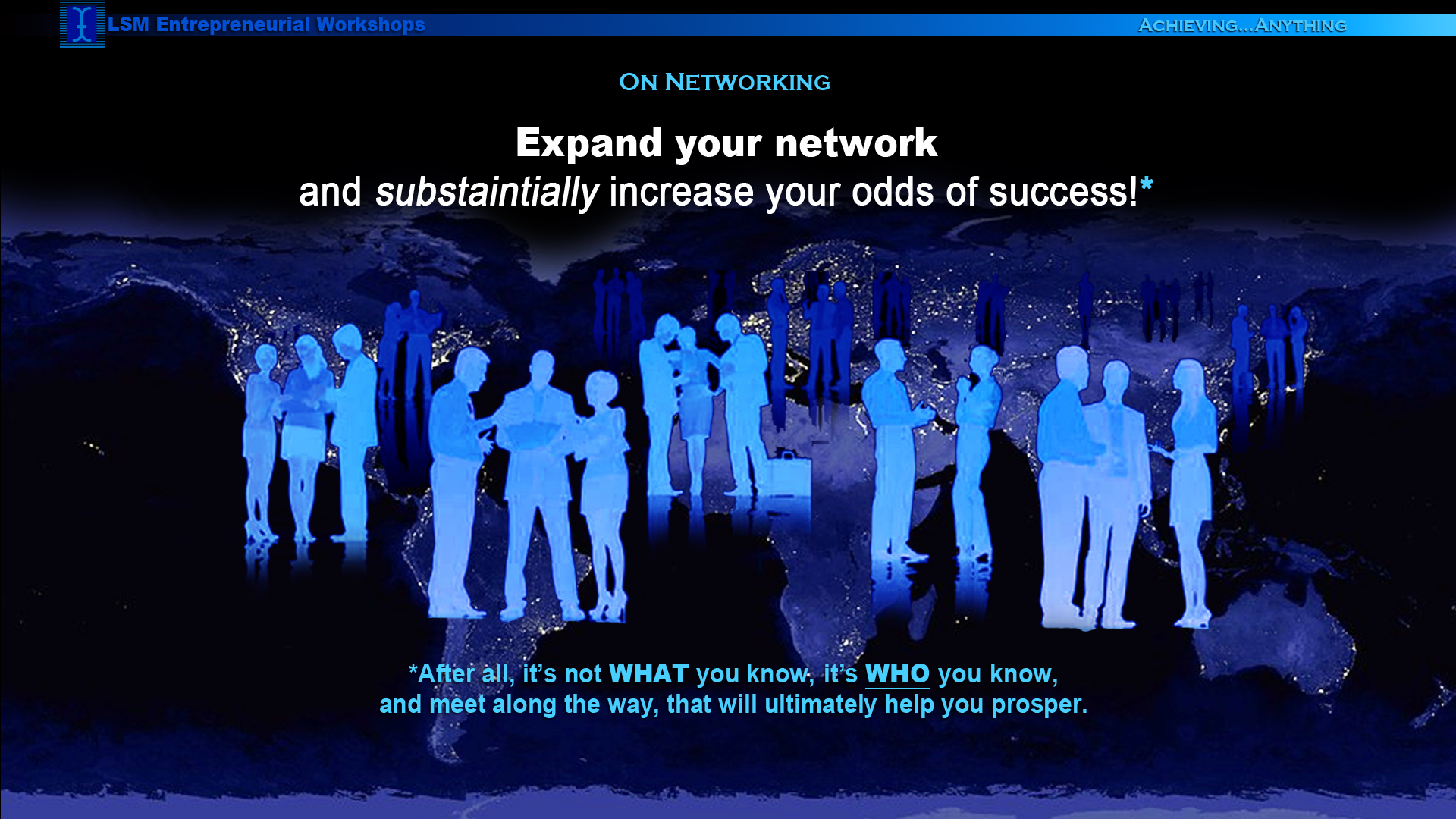
On Networking

My second job out of college I was the Art Director for 1928 Jewelry Co. The company is still alive and vital today, quite a monument to startup lore. My boss, Fred Burglass, was the best boss I’ve ever had. Funny. Kind. Patient. Smart. I really loved that man. He was like a father to me, taught me many things about marketing, business, and people. Yet I still struggle to adhere to possibly his greatest lesson.

I’d been working there over a year and had neglected to attend any of the executive parties the company threw in their beach house in Malibu. Fred called me into his office one afternoon and insisted I come to the upcoming holiday party, as it was part of my job to schmooze with our current and potential new buyers, and my executive co-workers.

The Friday night before the Saturday party I called my assistant into my office. She’d wanted to go to the party, so I suggested she pretend that she’d come with me. I asked her if anyone was looking for me there, like our boss, Fred, to tell them she just saw me on the beach, or on the deck, or downstairs talking with the Macy’s buyer. I thought I was being clever, outsmarting Fred by telling him I’d be there, and then setting up my assistant to lie for me so he’d never know I wasn’t. The Malibu property was an estate home and easy to get lost in. My assistant was charming and smart and would have no problem pulling it off.

Monday morning Fred called me in his office. I know you weren’t there on Saturday night, he began. But the truth is, you’re just screwing yourself. You want to build your career, maybe your own company down the line, or even write novels full time? Business success, in whatever you choose to do, requires networking, he assured me.

Sadly, I’d pretty much tuned him out. Network. Network. Network. Building relationships is the only way you’ll propel your career forward, Fred consistently preached, so I’d heard all this before.

Problem was, I’ve always been a recluse. An artist by nature and trade, I likely landed in the arts because I have a hard time being with people. I suck at small talk. And I’ve learned getting too personal with questions or opinions is a fast way to shut down dialog. It’s exhausting walking the line of popular decorum, putting on that public face and pretending I believe the guy, or am even interested in how successful he thinks his startup is going to be when he doesn’t even know the SaaS he’s built is already being done by someone else. Ever hear of Competitive Analysis? I want to ask him, but don’t. I used to, but it wasn’t received well.

I give myself all kinds of excuses for not networking. I’m just not good with people. I’m better at creating than chatting. I’m an empath—get too much input around people so I need to limit my contact. But I know it’s all bullshit. You are a brilliant creator, Fred used to tell me. But no one will know that if you don’t meet the right people who recognize your talent and connect you with others to help you exploit it. You must network!

He was right, of course. Digital advertising—Facebook to Google to TikTok—has a very low ROI, generally between .05 – 1.5%. Print is usually higher, but not by a lot, assuming the targeting and messaging are equally tight. Building relationships in-person or online can yield far greater ROI, if done right. Amazon built an empire on exceptional customer service, eliminating the risk of online purchasing by making returns easy, garnering staunch brand advocates. Shark Tank candidates aren’t on the show just for VC money. They’re there for Lori Greiner’s connection to the shopping channel, QVC. The tech entrepreneurs want Mark Cuban’s contacts in the Silicon Valley community.

While networking ROI may seem harder to quantify than digital ads or even direct mail, consistently talking with people in your industry [and related industries] at meetups, SIG meetings, trade shows, webinars, conferences, biz and tech talks, and even office parties, over time will yield better ROI—broader brand recognition and more sales—than any other form of marketing/advertising.

Starting a startup, or finding a job or getting clients, the more you network with your industry and target markets, the greater your odds of building a thriving business. After all, it’s not what you know, but who you know that will help you pave your path to success.

The 5% Factor in Finance  

I had a conversation with my former financial advisor when the markets were crashing back in ‘08. I asked him to give me an estimate, his best, ostensibly educated guess when the market might turn around or at least stabilize. He assured me it would be soon. The credit default scandal had already been exposed. Real estate foreclosures had been assessed and the projected losses factored in to financial projections. The fact is, he offered with conviction, in any industry one had to account for a certain amount of corruption. Maybe 5% of the people in any given field were evil. The evil had now been weeded out and the markets would bounce back to its mean of 8 to 10% growth or better annually very soon.

Turns out, evil abounds in the financial industry. From Bernie Madoff to AIG to JP Morgan Chase and their corporate cronies with 7, 8 figure bonuses; to banks and mortgage brokers hording stimulus funds, my advisor had to be grossly low on his 5% estimate of evil in finance.

According to forensic psychologist and author Robert Hare, it is possible, even likely, that the percentage of evil is greater in the financial industry than most any other field. Money attracts greedy people. Those who choose a career pursuing money, instead of building, inventing, engineering, teaching, are generally looking for what they can get from society instead of what they can give to it. In Snakes in Suits, Mr. Hare claims at least 10% of all those in finance are psychopaths.

The 5% (or more) who callously exploit the rest of us is what makes the free-market system they purport a myth. That 5% evil controls 95% of the financial markets of the world. The enormous scale of capital they play with has proven to collapse economies, robbing millions of their life savings, their jobs, their homes.

Most of us put our earnings in the bank or the market and hope our savings will go up. We depend on those in charge of most everyone’s money to know what they’re doing and manage the money we entrust to them wisely. Most of us don’t have the time or inclination for in-depth study and monitoring of the markets. Even if we did, it is rarely possible to get an intimate and transparent view inside most corporations. We rely on our government to monitor the SEC and avoid financial catastrophes. The Bush administration is an example of what happens when they don’t.

A ‘free-market’ system strives to maintain very few restrictions, touting supply and demand will regulate economics. And though this is a lovely idea, like communism, it doesn’t work in the real world. The economy collapses when demand is only from the [wealthy] 1% of the population that can afford anything. Public companies with no limits on growth, minimal regulations, limited liability and lack of transparency virtually inviteexploitation by the small, but none the less formidable percentage of evil. Our ‘free-market’ invariably becomes controlled by a small minority who represent only their own interests. This corrupts the entire society by shifting the balance of power to a handful of narcissists, if not out and out psychopaths, as Robert Hare claims.

Republicans and conservatives threaten socialism if the government regulates the markets beyond ‘protection of property and against force or fraud.’ But everyone pays the price for the 5% that continually redefine the term ‘fraud.’ The 5% evil at AIG, and more recently JP Morgan Chase that took ridiculous risks for excessive short term yields to line their pockets continue to send shock waves throughout our financial industry and beyond. And the fact is, it IS socialism when taxpayers are forced to bail out banks and brokers who were, and are still indifferent to the suffering they cause—the very definition of ‘Psychopath.’

We will never be able to ‘weed out’ evil from humanity. A certain percentage of our population will always be narcissists, care exclusively about their own welfare over the society in which they live. Regulations on our financial industry must be imposed and upheld to keep evil in-check, and limit the damage the 5% factor will surely cause again and again. We are more than willing to put sanctions on countries that support terrorism. If we are truly ‘by the people, of the people and for the people‘ of this nation, we must sanction the evil in our system as well.